
☁️ Emerald Knight Fringe Tree
What it looks like
Why this variety
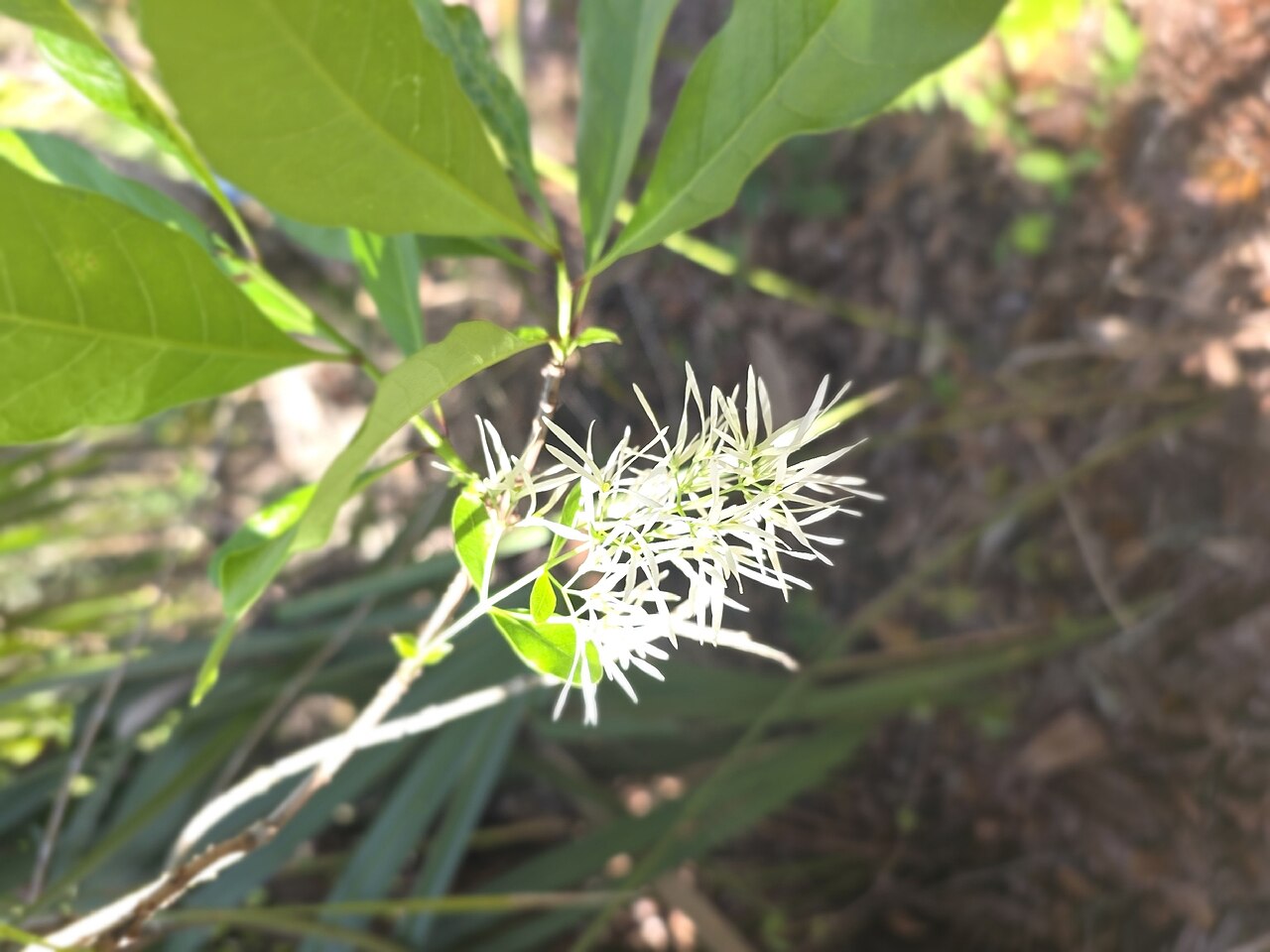
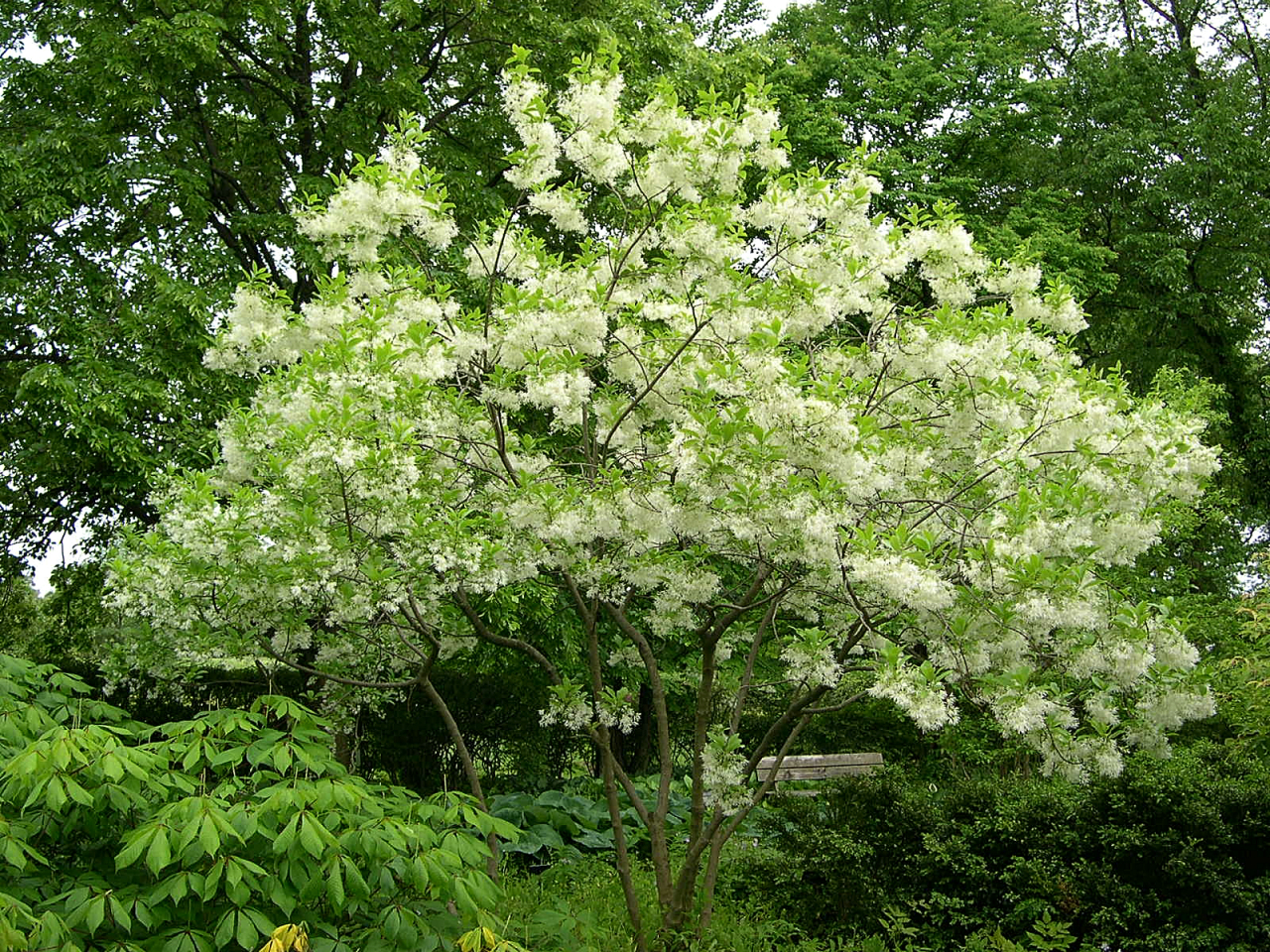
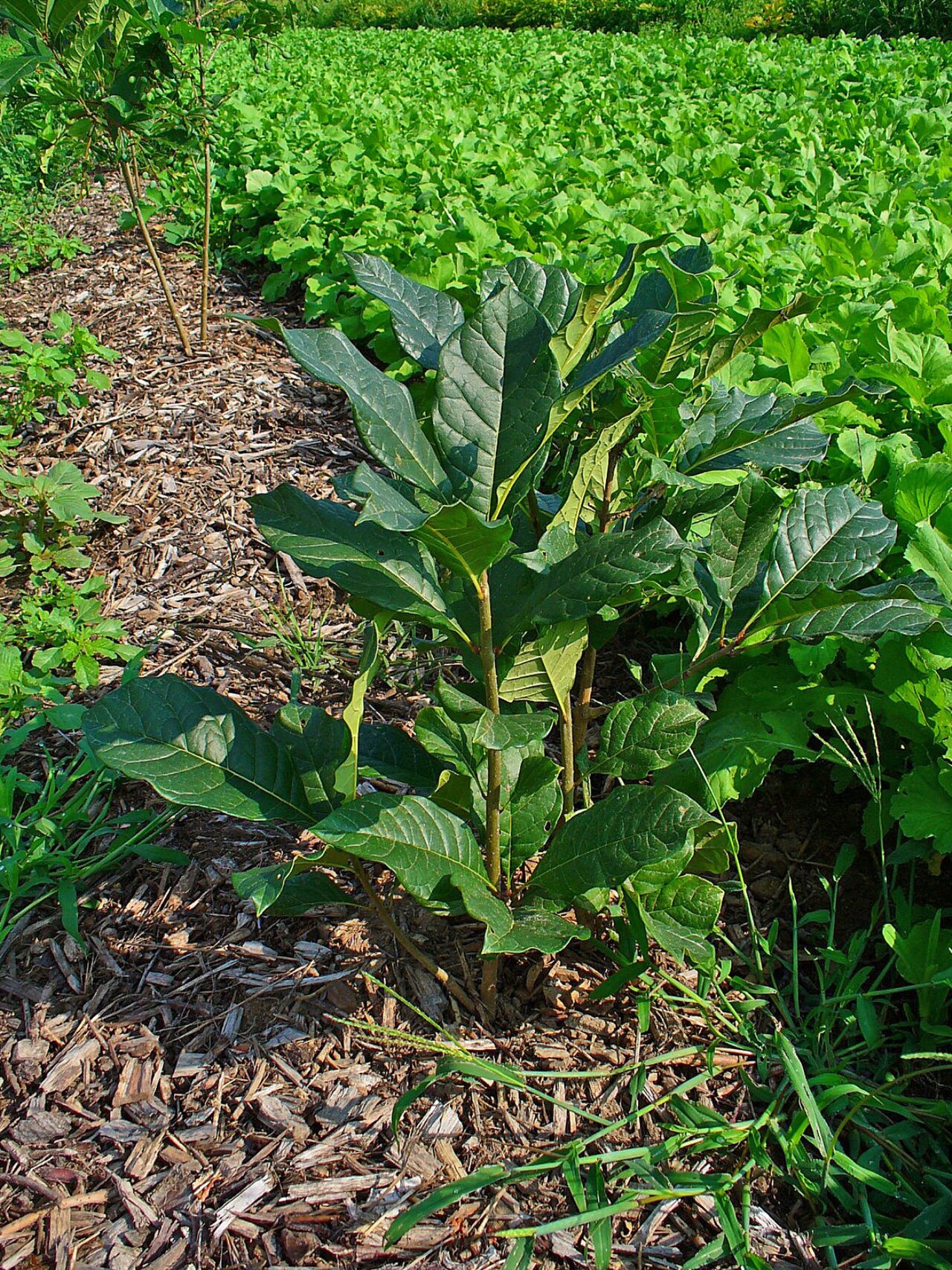
Emerald Knight is the fringe tree for gardeners who want the cloud with structure: a male selection with dense, dark green, glossy leaves and an upright habit, carrying an abundance of white fringe flowers in late spring that make the whole tree look like a nebulous cloud. Where seedling fringe trees can be loose and irregular, Emerald Knight is more formal — a tree with presence even out of bloom, thanks to foliage so dark and glossy it reads as almost evergreen in summer. And like Spring Fleecing it is male, so there is no fruit to clean up and no gamble on sex: every Emerald Knight is a flowering tree, full stop.
The trade-off is the same bargain as every male fringe tree: no fruit means no fall berries for birds, so a wildlife garden should pair it with a female or a seedling rather than planting males alone. Emerald Knight is also, by nursery accounts, tough to propagate, which is why it is less common and sometimes pricier than seedling trees — you are paying for the selection and the grafting. Give it moist, fertile, slightly acidic soil and full sun for the best bloom, water through establishment, and be patient: fringe trees take a few years to hit their stride, and a young Emerald Knight is a promise, not yet a cloud.
If you are new to choosing between cultivars, the Varieties Matter guide explains why the name after the plant matters as much as the plant itself. Emerald Knight is a perfect example: it is not just a fringe tree in the abstract, it is a fringe tree with a specific job, a specific history, and specific strengths.
Florida honesty: fringe tree is a North and Central Florida plant, native to the Southeast and at home in Florida heat, though it leafs out late and looks alarmingly dead in early spring — do not remove it in March. It tolerates wet sites, which suits many Florida yards, and its late-spring bloom extends the flowering season past dogwood and redbud. In South Florida it is beyond its comfortable range; plant it in North and Central Florida, give it room to become a small tree, and wait out the slow start.
How to grow
Plant in fall or spring in full sun to part shade and moist, fertile, slightly acidic soil — fringe tree is a small native tree that wants sun for the best bloom and soil that holds moisture without waterlogging. Work worm castings and compost into the planting hole, water through the first seasons, and be patient: fringe trees are slow to establish and may take several years before they bloom heavily. Prune little — remove dead wood and crossing branches in late winter — and do not panic when it leafs out late in spring, because fringe tree is always the last tree to wake up.
Set plants 15-20 feet apart in soil with a pH around 5.5-6.5. Work worm castings into the bed at planting and mulch to hold moisture. A well-fed fringe tree plant rewards that care directly: steadier growth, better bloom, and a show that actually shows up.
Water & feeding
Keep soil moist but not waterlogged — fringe tree wants damp-meadow moisture, tolerates wet sites, and sulks in drought, especially when young. Water at the soil line, mulch deeply to hold moisture, and feed lightly: castings and compost at planting plus a spring top-dress. In a dry spell, water deeply and regularly, because a young fringe tree that dries out stalls for a season. Once established it tolerates more drought, but it never loves it, and a fringe tree in a dry, sunny corner will bloom thinly.
Common problems
- Slow establishment — fringe trees take years to bloom heavily; judge them in year five, not year one, and do not remove a young tree for being slow.
- Late leaf-out looking dead — fringe tree leafs out last in spring; wait until late spring before declaring it dead, because it almost never is.
- No fruit on male selections — Spring Fleecing and Emerald Knight are male and never fruit; plant a female or seedling if you want bird-friendly berries.
- Scale insects on stressed trees — treat with horticultural oil and improve vigor with water and mulch; healthy fringe trees rarely suffer.
- Poor bloom in shade — fringe tree needs sun for the best bloom; a shaded fringe tree gives foliage and few flowers.
Harvest
There is no flower harvest in the cutting sense — fringe tree flowers are best admired on the tree, where their lilac scent carries on a spring evening and their cloud-like show lasts for weeks. Female trees set dark blue fruit in fall that birds eat eagerly; do not harvest it for yourself, because it is bird food and the tree’s wildlife payoff. The seasonal work is minimal: prune dead wood in late winter, mulch to hold moisture, and wait — a fringe tree’s harvest is the two weeks in spring when it looks like a cloud got caught in the branches, and that is enough.
Browse all plant & pest guides
Saving seeds
Emerald Knight is a male fringe tree selection, and male selections are propagated vegetatively — buy a nursery tree, since seedlings won’t hold its formal upright habit or its guaranteed flowering. The Saving seeds section of the Fringe Tree guide covers seed for the species generally.