
🐍 Extra Long Snake Gourd
What it looks like
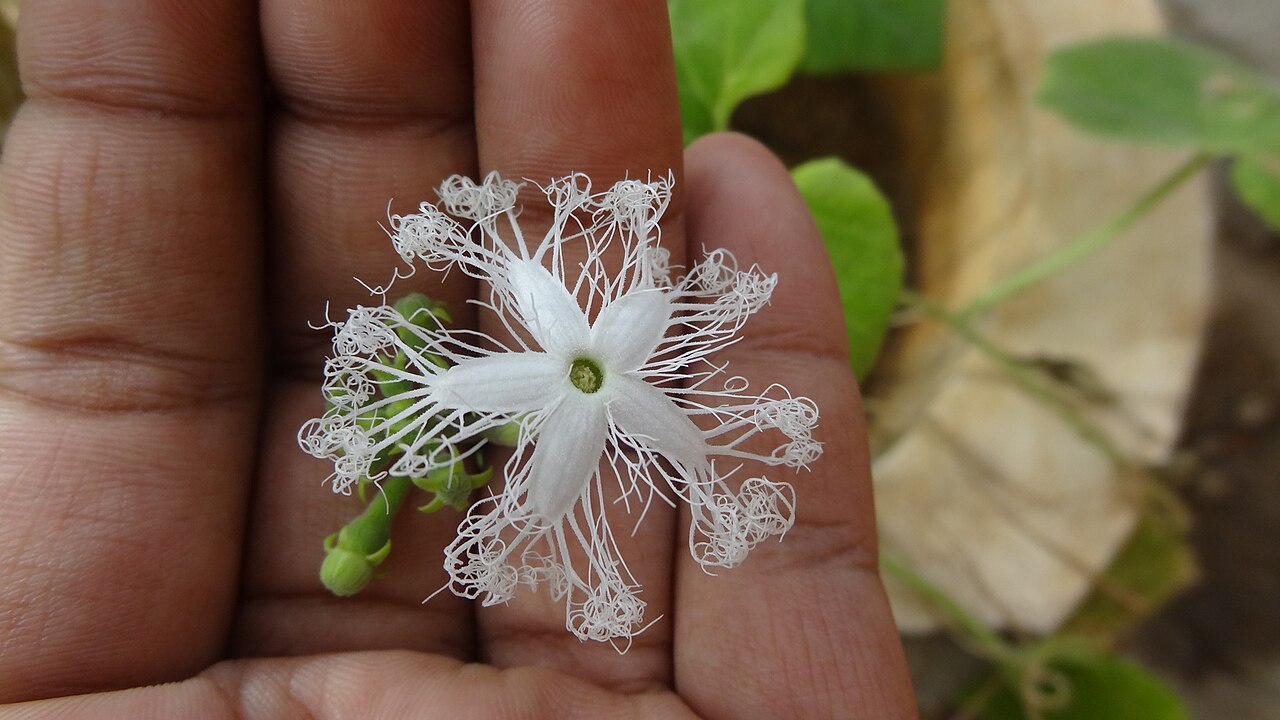
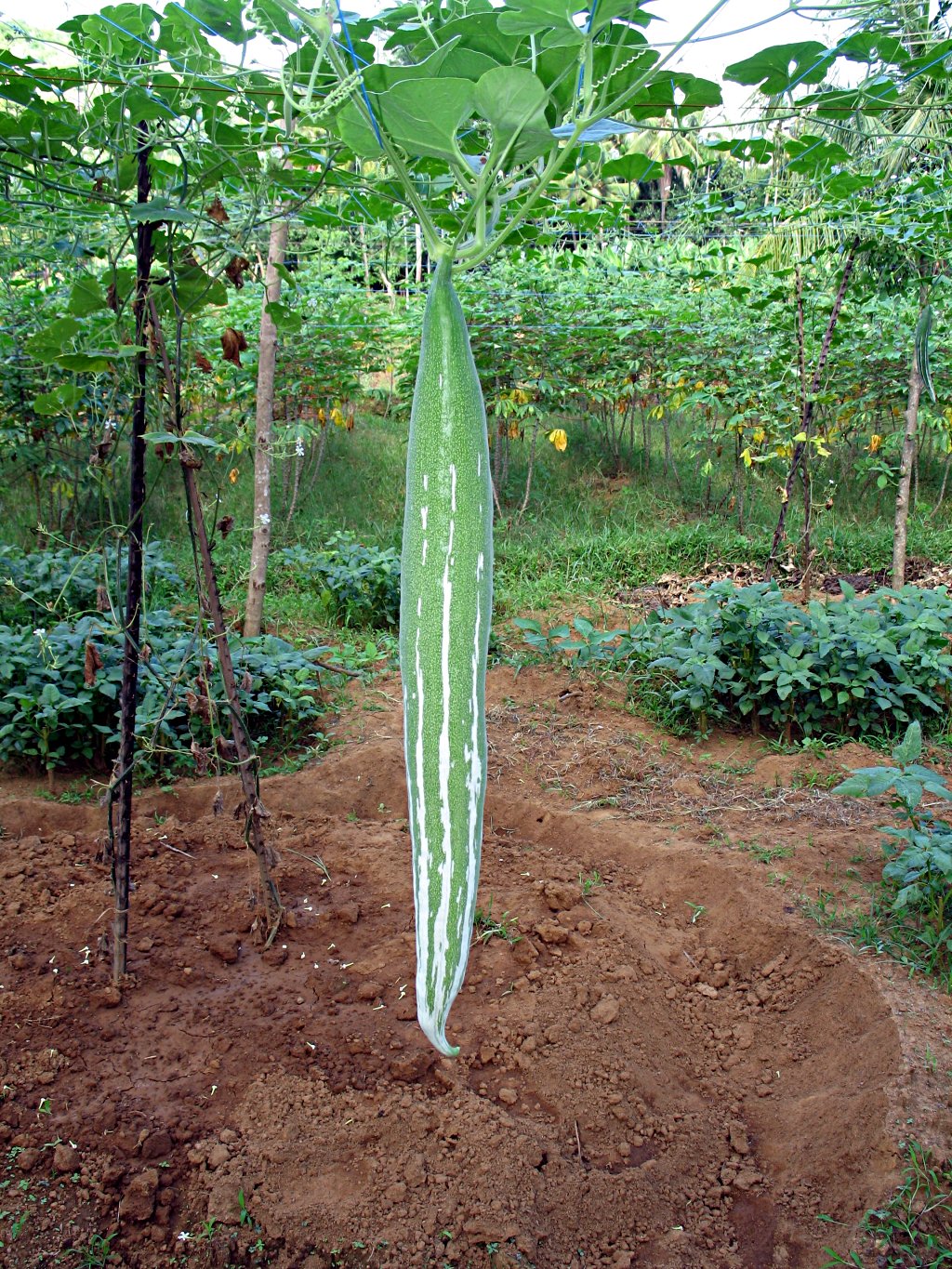
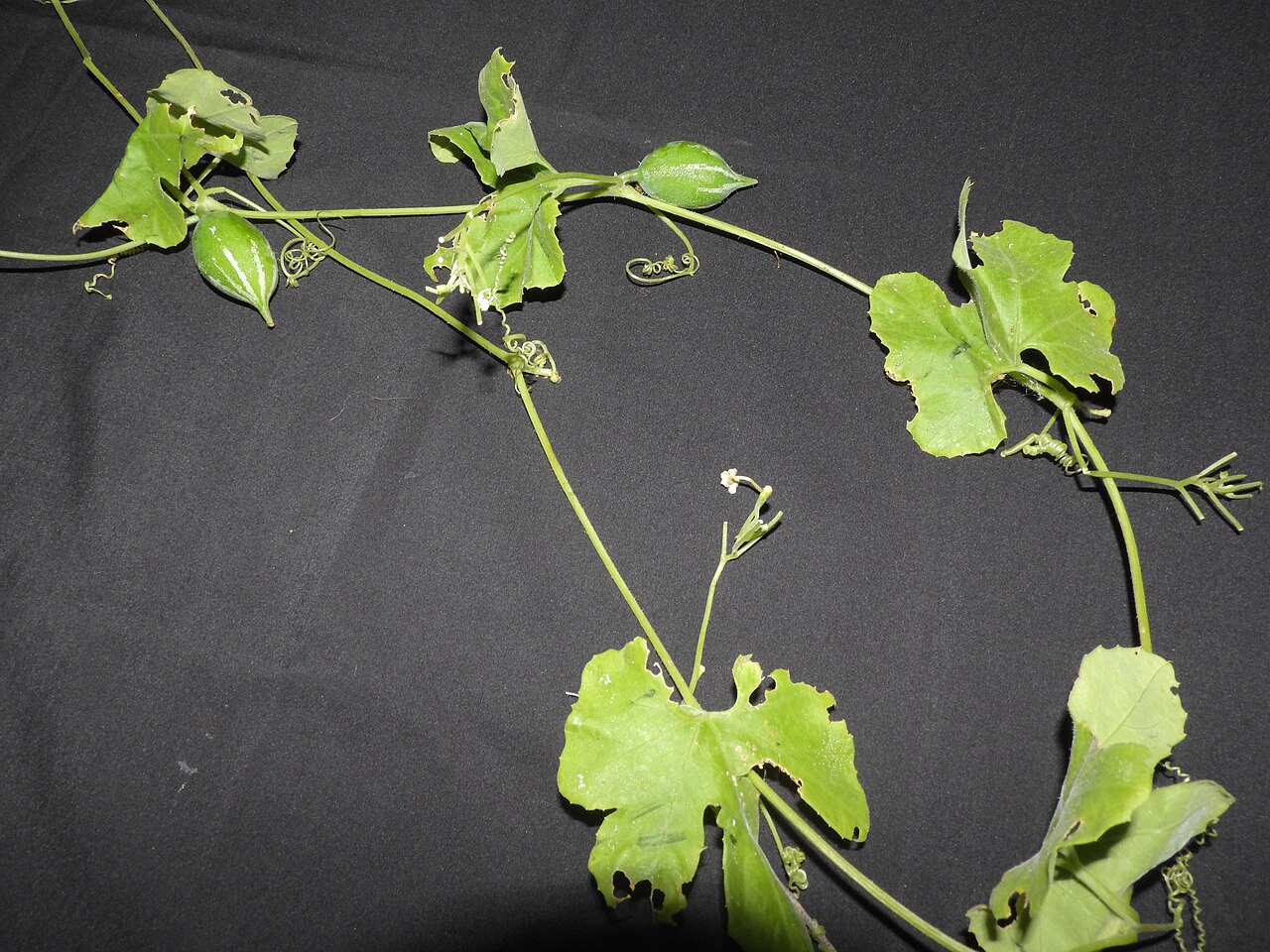
Photos show the species, snake gourd (Trichosanthes cucumerina), since no cultivar-specific photo is hosted for this variety yet.
Why this variety
Extra Long snake gourd is the type sold as chichinda in seed catalogues: straight, tender, silver-green fruit that can grow 150-200 cm long — five to six feet of vegetable hanging off one vine. It is the same species as every other snake gourd, selected for length, and it is grown the same way: trellised high, picked young, cooked like zucchini.
Length here is not a gimmick. A single Extra Long fruit feeds a family meal, and the vine keeps producing through a long, hot season. The trick is the trellis: fruit must hang down to grow straight, and growers traditionally tie a small weight to the tip of a young fruit to straighten it — low-tech, effective, and oddly satisfying.
Florida translation: a long, hot, humid season is exactly what Extra Long wants. Give it a strong horizontal trellis about 5 feet high and room to run, and it will reward you all summer.
How to grow
Soak seed overnight, sow in warm soil after frost, or start in trays and transplant when seedlings have at least two true leaves and temperatures stay above 68°F. Plant 2-3 seeds per hill, hills about 3 feet apart, on a strong horizontal trellis — fruit must hang to grow straight. Flowers are white, frilly, and fragrant, opening late in the day for moth pollination.
Water & feeding
Water regularly, especially during flowering and fruit development, and mulch well. Feed with compost at planting and side-dress during fruiting; avoid high-nitrogen fertiliser, which encourages vines over fruit. Irrigate in dry spells — a snake gourd vine that dries out while fruit is sizing gives you twisted, woody fruit.
Common problems
- Cold soil: wait for warm soil — seedlings stall below 68°F.
- Poor fruit set: flowers open at night for moth pollinators — hand-pollinate in screened gardens in the evening.
- Fruit flies and rodents on overripe fruit: pick young and promptly.
- Powdery mildew in humid weather: space for airflow and water at the base.
Harvest
Pick immature fruit while still tender — well before it reaches its full length if you want the best texture — and use within 10-14 days, stored cool and humid. A fruit left to mature turns orange-red and woody; it is spectacular to look at and no longer dinner.
Browse all plant & pest guides
Saving seeds
Extra Long snake gourd’s hybrid status isn’t pinned down — sources conflict, with one Extra Long chichinda listing calling it a hybrid and general snake gourd listings calling the type open-pollinated, so buy fresh seed to be safe. The full method is in the Saving seeds section of the Snake Gourd guide.