
🐍 Snake Gourd
What it looks like
How to grow
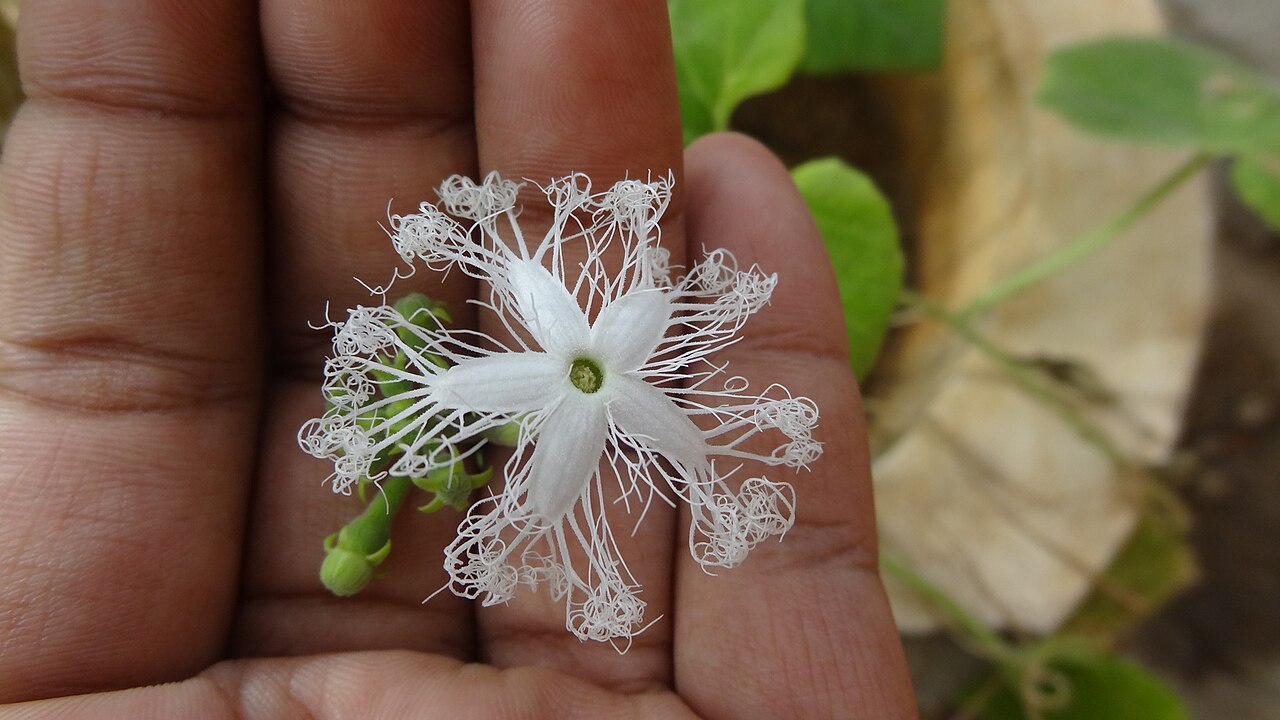
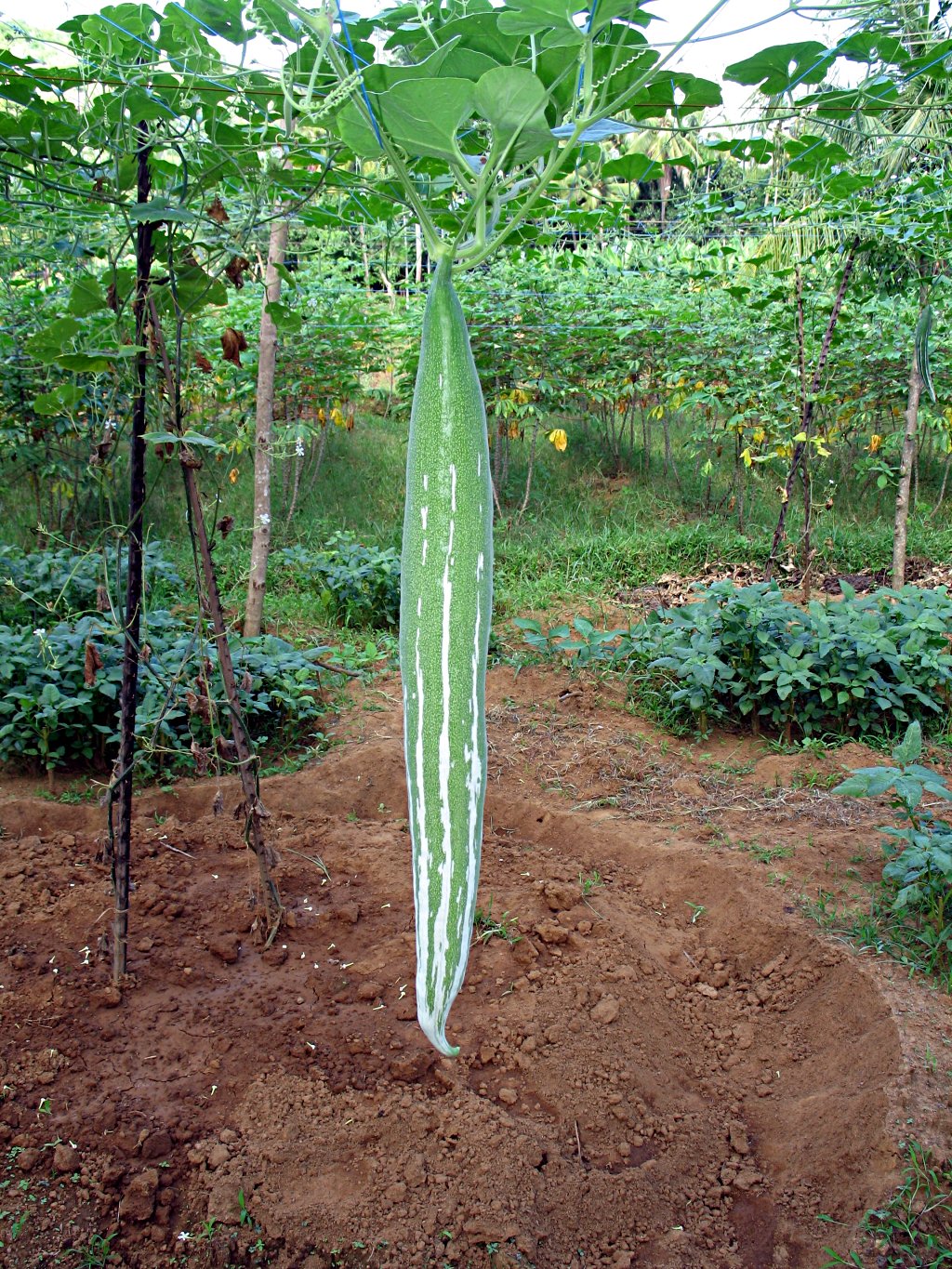
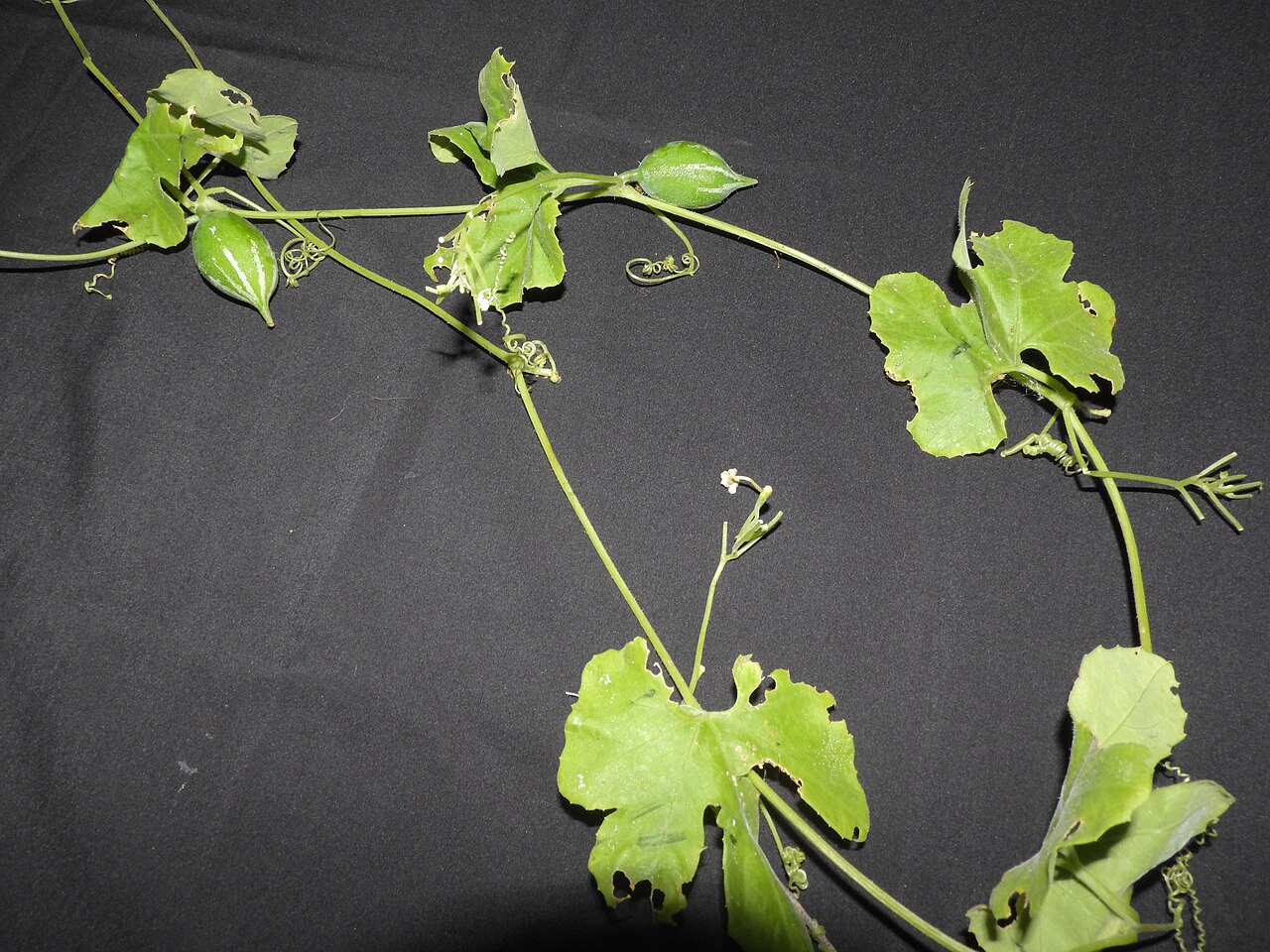
Snake gourd, also called serpent gourd, padwal, or pudalangai, is a tropical cucurbit grown for long, slender immature fruits cooked like zucchini. Soak seed overnight, then sow in warm soil after frost, or start in trays and transplant when seedlings have at least two true leaves and temperatures stay above 68°F. Plant 2–3 seeds per hill in rows about 5 feet apart, with hills about 3 feet apart, on a strong horizontal trellis about 5 feet high — fruits must hang down to grow straight, and growers sometimes tie small weights to fruit tips to straighten them. Snake gourd grows best at 86–95°F in humid lowland conditions, so it is a southern and warm-climate crop; northern gardeners need an early indoor start and a hot summer. Flowers are white, frilly, and fragrant, opening late in the day and at night for moth pollination — in screened greenhouses, hand-pollinate.
Water & feeding
Water regularly, especially during flowering and fruit development, and mulch well. Feed with compost or manure at planting and side-dress during fruiting; avoid high-nitrogen fertilizer, which encourages vines over fruit. Irrigate in dry spells.
Common problems
- Cold soil — wait for warm soil; seedlings stall below 68°F.
- Poor fruit set — moth pollination at night; hand-pollinate if needed.
- Fruit flies and rodents on overripe fruit — pick young and promptly.
- Powdery mildew in humid weather — space for airflow and water at the base.
Harvest
Pick immature fruits 12–20 days after fruit set, when 12–24 inches long and still tender — first harvest is usually 2–3 months after sowing. Cook like zucchini in curries, stir-fries, and soups; mature fruits turn orange-red and are used differently in some cuisines, but for most gardeners the young fruit is the crop. Snake gourd does not keep well after harvest — use within 10–14 days, stored cool and humid.
Browse all plant & pest guides
Saving seeds
Snake gourd is a warm-season cucurbit, and its seed playbook is the warm-season playbook: heat, moisture, and no chill at all. Soak the seed overnight in warm water, then sow in warm soil — 75 to 85°F — about an inch deep. Germination usually comes in one to two weeks. Start it indoors in pots if your season is short, or direct-sow once the soil is truly warm; cold soil rots the seed before it sprouts.
Let one fruit ripen fully on the vine — it turns orange-red and dries out — and that is your seed fruit. Do not save from a green eating fruit; the seed inside is not mature. Scoop the seed out, rinse off the pulp, and dry it thoroughly before storing. Snake gourd seed keeps two to three years in a cool, dry jar.
Cross-pollination is the usual cucurbit story: snake gourd crosses with other Trichosanthes, so grow only one type for seed, or hand-pollinate and bag the flower. Save from the best fruit — the longest, the straightest, the most vigorous vine — and sow more than you need, since germination is good but not total.
In Florida, snake gourd loves the heat and humidity and grows like a weed all summer on a strong trellis. Give it room and a sturdy support, pick the eating fruits young, and let just one or two go fully ripe for seed — a single fruit holds more seed than a gardener needs for years.
Varieties
Every named variety of Snake Gourd with its own growing guide:
- Buag Ngu Snake Gourd — The early Thai snake gourd — prolific, pest-resistant, and ready in about 55 days from transplant.
- Tropical Long Snake Gourd — The giant tropical snake gourd — fruit that can reach five feet, soft luffa-like flesh, and a vine that means it.
- Extra Long Snake Gourd — The showpiece snake gourd — straight, tender fruit that can reach 150-200 cm, a vegetable that needs a measuring tape, not a ruler.
- Konkan Sweta Snake Gourd — The whitish Konkan snake gourd — 90-100 cm fruit with green stripes, bred on India’s west coast for humid, rainy-season gardens.
- Short Snake Gourd — The compact snake gourd — short, tender, 6-8 inch fruit in 50-70 days, bred for small gardens and containers.