
🤍 Flore Pleno Meadowsweet
What it looks like
Why this variety
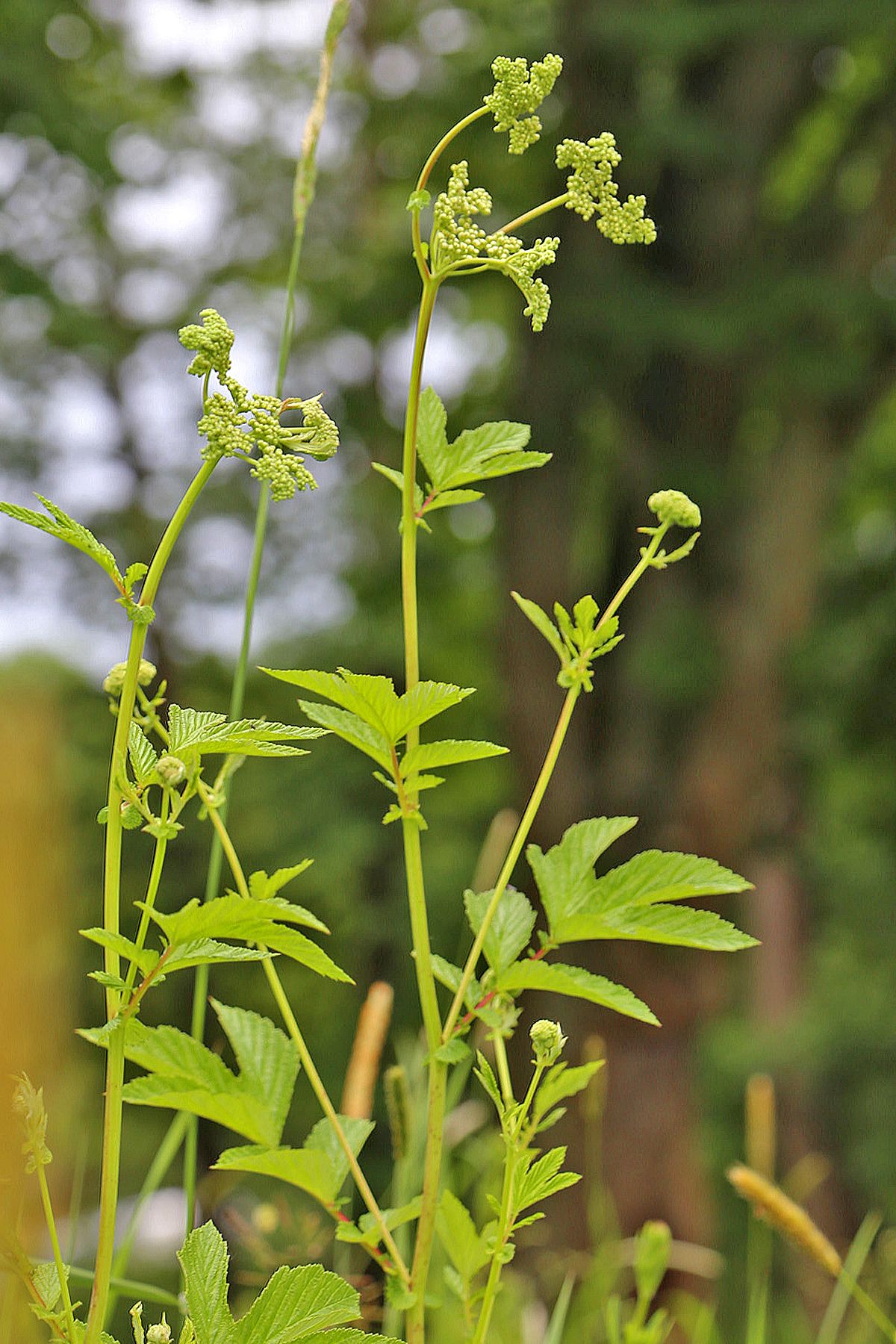
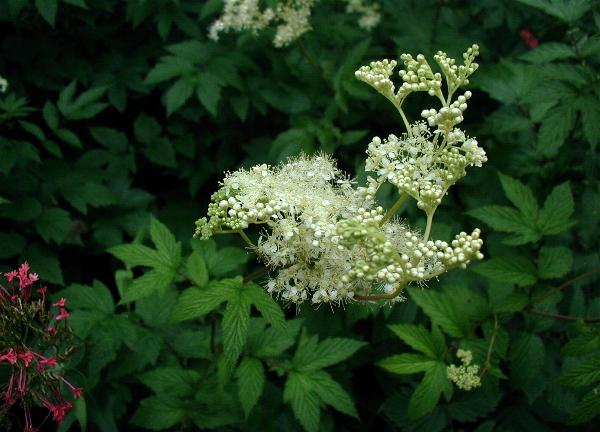
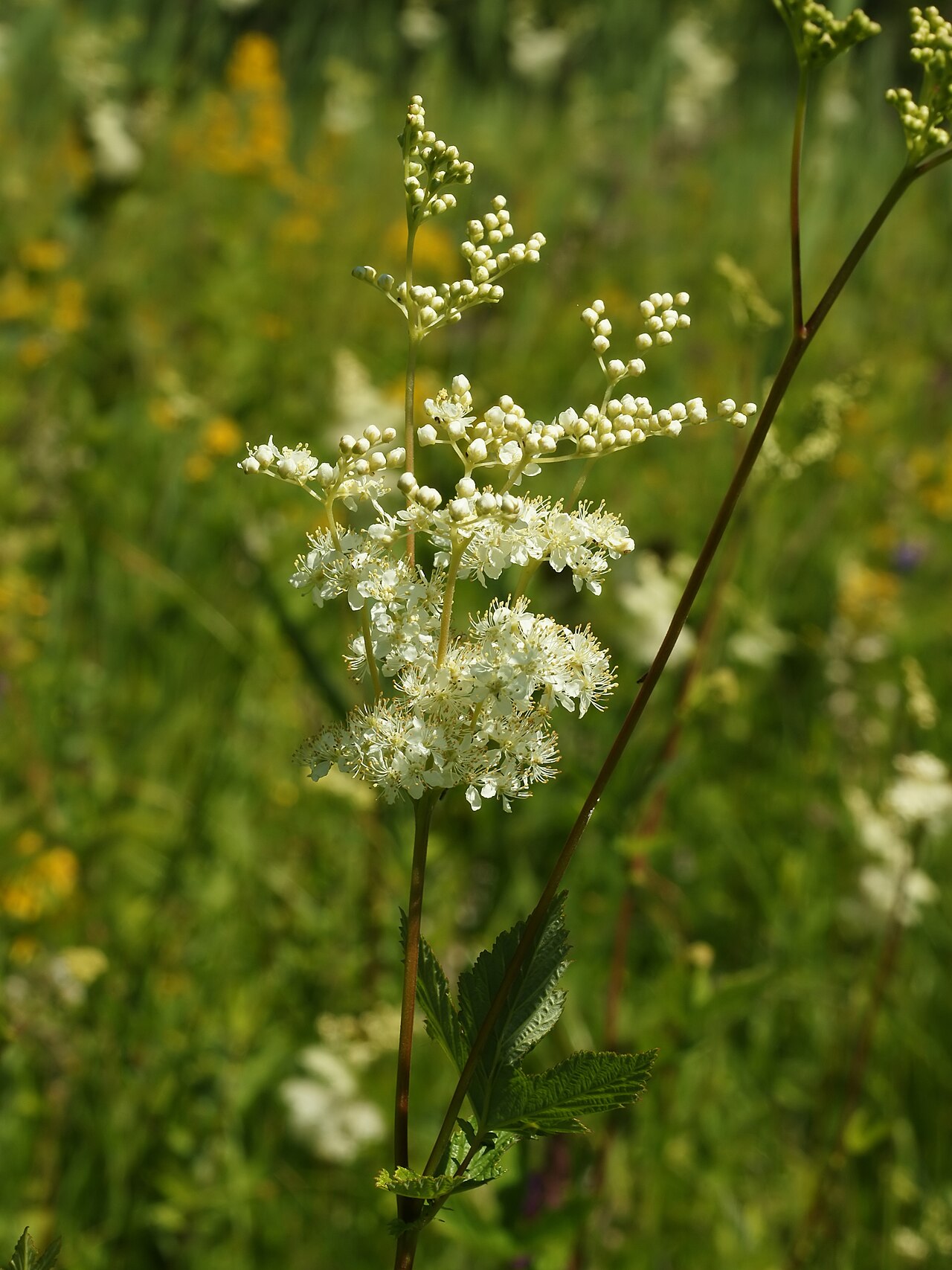
Flore Pleno is meadowsweet’s double-flowered form, and it changes the flower completely: instead of the species’ airy, single creamy plumes, it carries dense, double, cream-colored flower heads — soft pompons on tall stems — above the same deeply veined, fern-like foliage. In a damp border it reads as a more formal, more florist-like meadowsweet, and it cuts beautifully for arrangements where single plumes would shatter.
It is also sterile, which is a practical blessing: Flore Pleno sets no seed, so it never self-sows the way the species does, and it multiplies only by division. For a rain-garden edge or a damp bed where volunteers would be a nuisance, sterility turns meadowsweet from a colonizer into a well-behaved clump. The trade is honest: double flowers offer pollinators less than single plumes do, so plant a single meadowsweet nearby if pollinators are the priority, and Flore Pleno where the vase is.
How to grow
Buy plants or divisions — sterile plants make no seed, so seed sold as Flore Pleno is not Flore Pleno. Plant in fall or spring in damp, moisture-retentive soil enriched with compost, in full sun to part shade, spacing 12–18 inches apart. In Florida, a damp, part-shade spot for a cool-season display is the realistic plan.
Water in well and mulch to hold moisture. Deadhead spent pompons to keep the clump tidy, cut back after bloom for fresh foliage, and divide in fall every few years — division is the only way to make more, so a clump that needs dividing is also a clump that gives you new plants.
Water & feeding
Water regularly and generously; meadowsweet wants damp soil at all times, and Flore Pleno is no exception. A dry spell crisps foliage and aborts buds, so site it where moisture is reliable — a low spot, a rain garden, or a bed on a regular watering route.
Feed lightly with compost or castings in spring. Moist, moderately rich soil suits it; heavy fertilizer cannot compensate for dry soil, so water first and feed second.
Common problems
- Drought — the defining meadowsweet problem. Without damp soil, Flore Pleno fails fast; site selection is the prevention.
- Powdery mildew in humid air — common on meadowsweet, rarely fatal; space for airflow, water at the base, and cut affected stems.
- Heat in Florida summers — a cool-season plant here; expect a summer rest and plan for fall recovery, or grow it as a cool-season annual in a pot you can keep moist.
- Mislabeling — any ‘Flore Pleno seed’ is a red flag. Buy labeled plants or divisions and check the name: Filipendula ulmaria ‘Flore Pleno’.
Harvest
Cut flower heads as pompons open fully, for fresh bouquets — they hold up better in arrangements than single plumes — and dry a few heads on a screen for everlasting displays. Foliage cuts well too, as a fern-like filler.
Deadhead after bloom, cut back for fresh foliage, and divide in fall for new plants. A sterile clump gives you flowers and divisions, never volunteers, which is a fair trade for a plant that otherwise seeds with enthusiasm.
Browse all plant & pest guides
Saving seeds
Flore Pleno is a sterile double-flowered meadowsweet — it sets no seed at all, so it multiplies only by division, every few years in fall. The Saving seeds section of the Meadowsweet guide covers seed for the species generally.