
💜 Floristan White Liatris
What it looks like
Why this variety
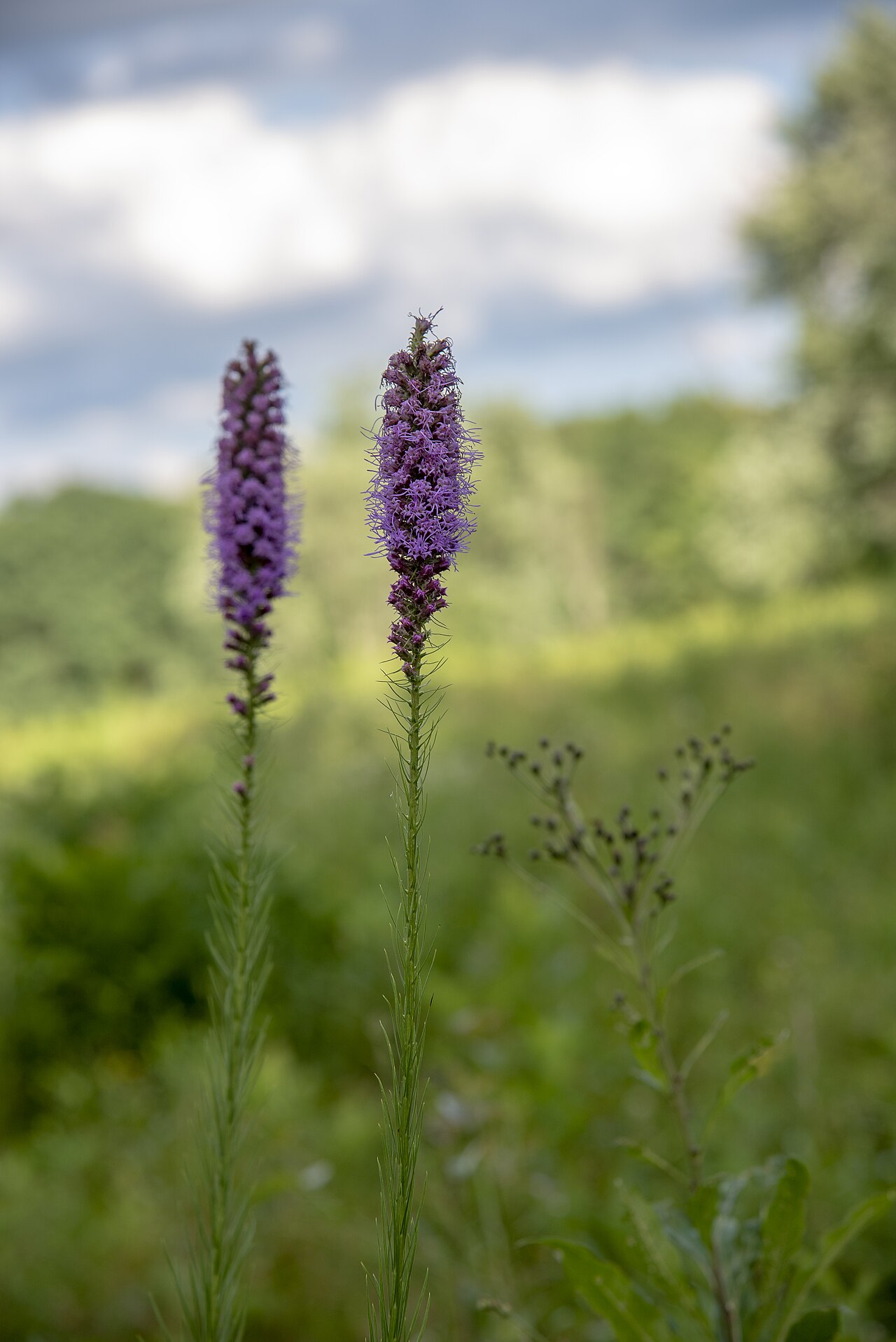
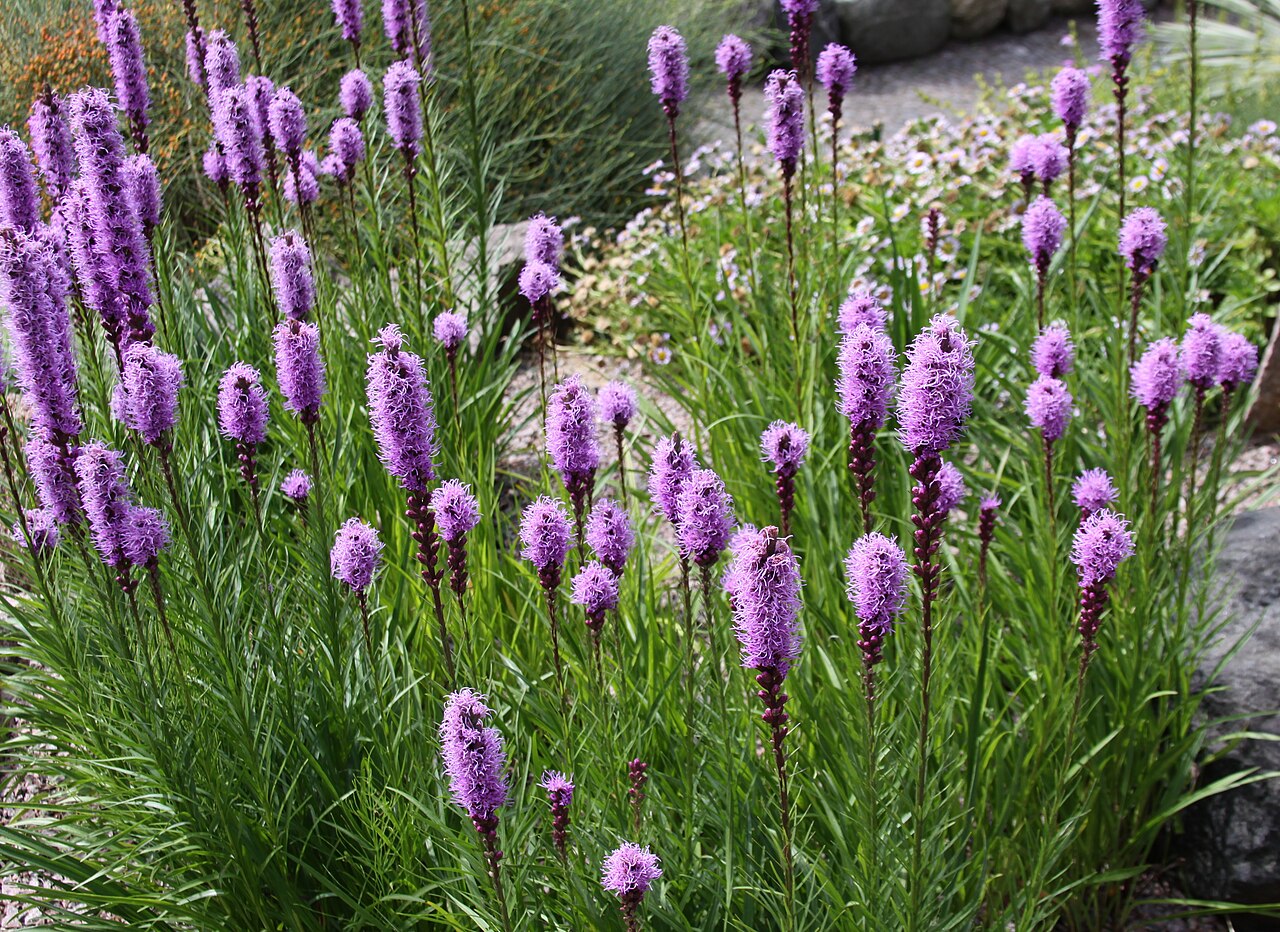
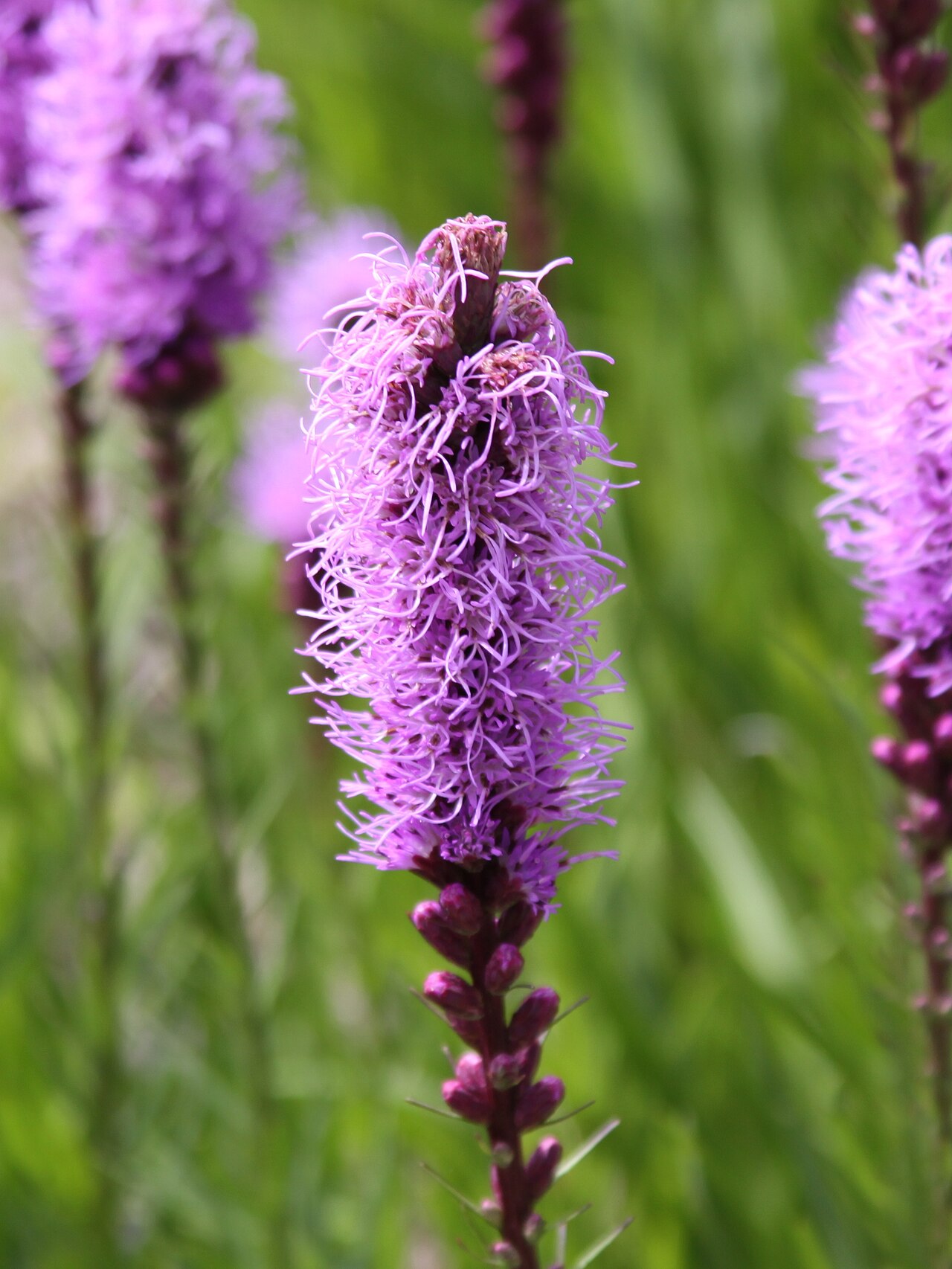
Floristan White is the blazing star for moon gardens and white borders: tall, 3- to 4-foot spikes of pure white flowers, blooming top-down like all liatris, that glow at dusk and pair beautifully with purple liatris, silver foliage, and ornamental grasses. It is a cut-flower favorite — florists grow it in rows for its long, straight, white spikes that last well in water — and in the garden it reads larger than it is, because white flowers catch the eye at distance. A drift of Floristan White in late summer looks like a field of candles.
The trade-off is height and staking: at 3 to 4 feet, Floristan White can flop in rich soil or wind, especially after rain. Give it full sun, lean to moderately rich well-drained soil, and room for air, and stake in exposed sites or plant it among grasses that hold it up. Do not overfeed it, and do not plant it in shade, where it will stretch and flop. Cut spikes for bouquets when the top third is open, and leave some spikes standing for birds, which eat the seed.
If you are new to choosing between cultivars, the Varieties Matter guide explains why the name after the plant matters as much as the plant itself. Floristan White is a perfect example: it is not just a liatris in the abstract, it is a liatris with a specific job, a specific history, and specific strengths.
Florida honesty: liatris grows statewide in Florida in sun with drainage, and Floristan White is no exception — it tolerates heat and humidity better than most tall perennials. Give it full sun and sharp drainage or a raised bed, water to establish, and it will bloom from mid-summer into fall. In wet soil it rots, so do not plant it where summer rain ponds.
How to grow
Plant corms in spring, 2 to 4 inches deep, in full sun and well-drained, even lean soil — liatris is a prairie plant that rots in rich, wet soil faster than it starves in poor soil. Work a little worm castings into the bed at planting, do not overfeed it, and plant in drifts for a haze of spikes that reads from a distance. Water to establish, then water sparingly, and leave seed heads standing for birds if you like a naturalized look.
Set plants 15-18 inches apart in soil with a pH around 6.0-7.5. Work worm castings into the bed at planting and mulch to hold moisture. A well-fed liatris plant rewards that care directly: steadier growth, better bloom, and a show that actually shows up.
Water & feeding
Water to establish, then water sparingly — liatris is drought-tolerant once established and rots in wet soil, so overwatering is the mistake to avoid. Water at the soil line, do not mulch heavily, and feed lightly: castings at planting is usually enough, because rich soil makes floppy liatris with fewer spikes.
Common problems
- Crown and corm rot in wet soil — the liatris killer in humid climates; plant in sharp drainage or raised beds and do not overwater.
- Flopping tall types — rich soil and shade cause sprawl; give it sun and lean soil, and stake in exposed sites.
- Failure to bloom in shade — liatris needs full sun; a shaded liatris gives foliage and few spikes.
- Voles and rodents eating corms in winter — plant corms in wire mesh baskets where voles are a problem.
- Short life of small corms — small, cheap corms may bloom thinly in year one; judge it in year two, when the corm has bulked up.
Harvest
Cut spikes for bouquets in mid to late summer, when the top third of the spike is open — liatris lasts well in water and its purple or white spikes suit tall, prairie-style arrangements. Do not cut heavily: the plant needs its foliage to feed next year’s corm. Leave some spikes standing for birds, which eat the seed, cut back dead stems in late winter, and divide congested corms in spring every few years.
Browse all plant & pest guides
Saving seeds
Floristan White is a seed-grown liatris cultivar, so saved seed comes true to white — with slight variation in height and bloom time, as with any seed-grown selection. The full method is in the Saving seeds section of the Liatris guide.