
💜 Liatris
What it looks like
How to grow
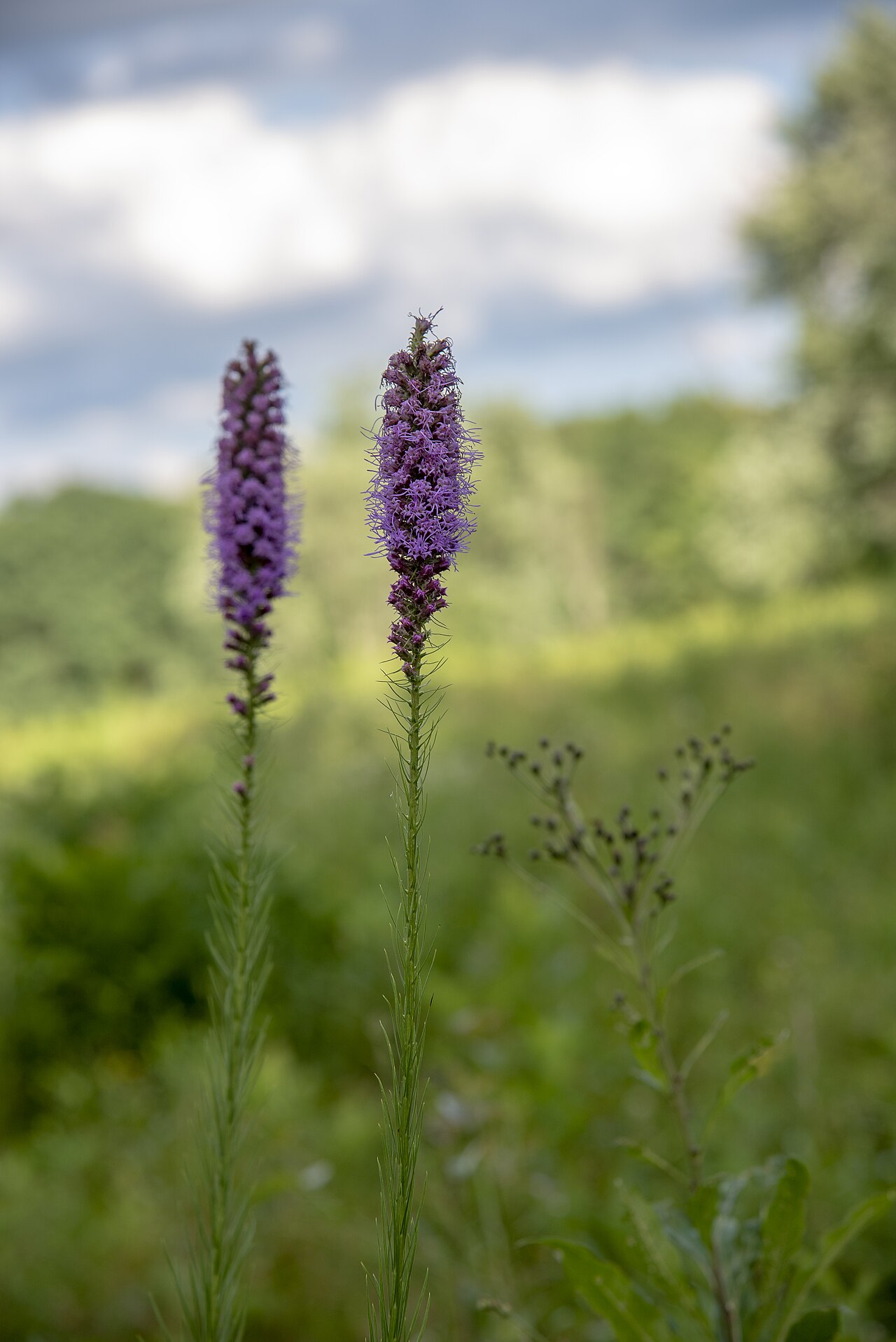
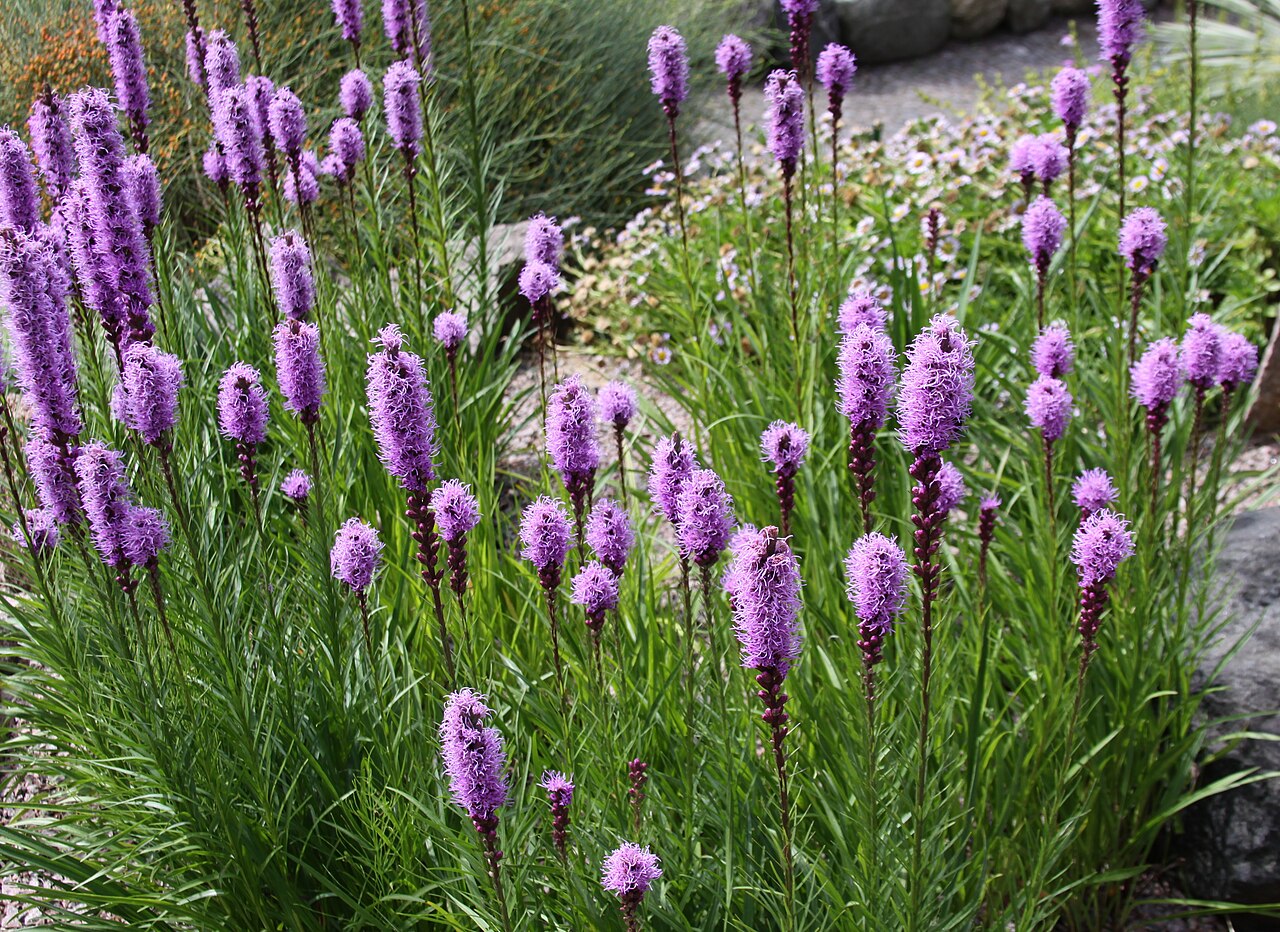
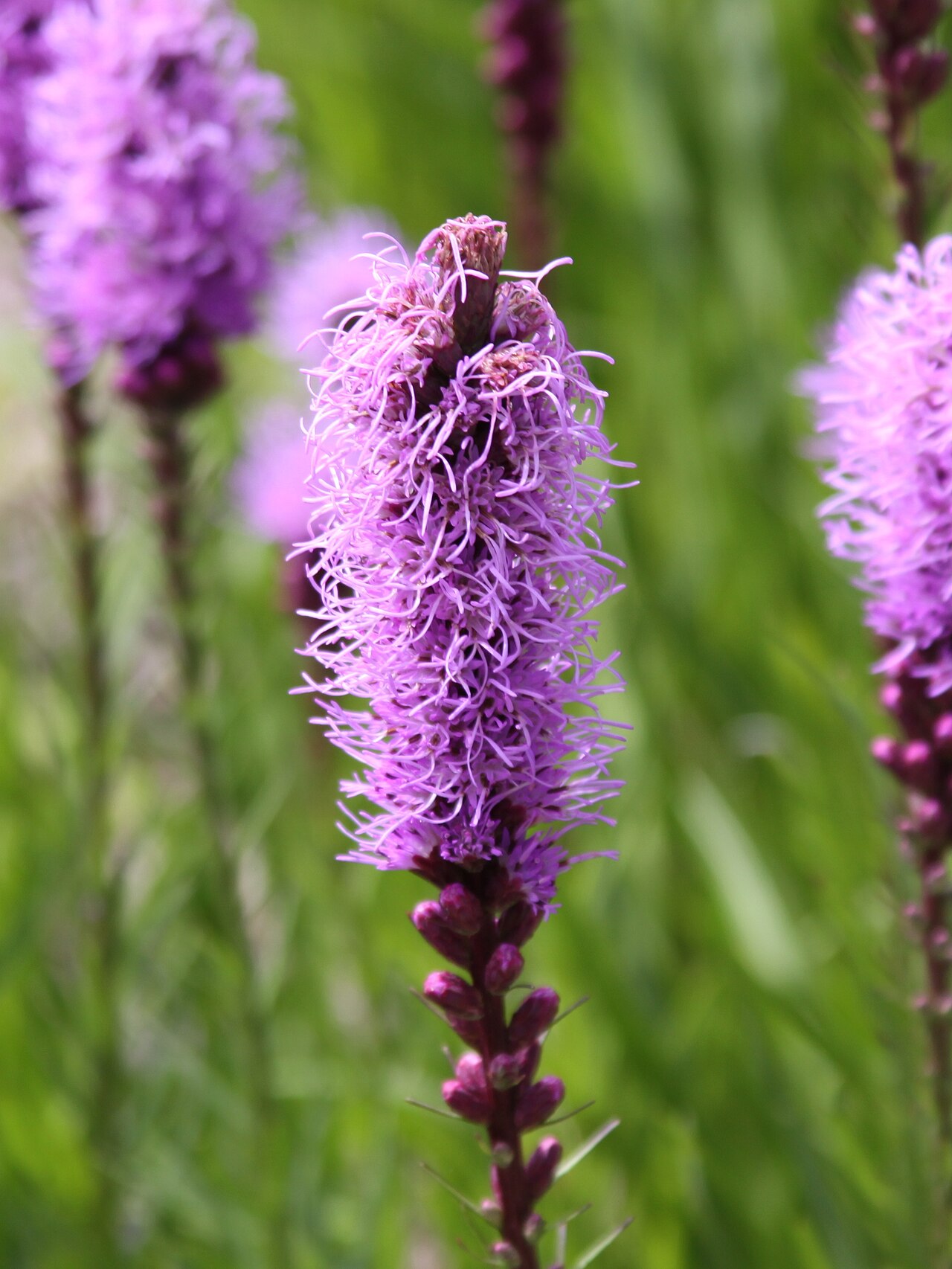
Liatris, or blazing star, sends up narrow grassy leaves and then tall spikes of fuzzy purple, pink, or white flowers — and unlike almost every other spike flower, it opens from the top down, which is a fine party trick and also makes it easy to spot. Plant corms in spring, 2–4 inches deep, in full sun and well-drained soil; liatris hates wet feet more than it hates anything else, and soggy soil rots corms fast. It is a prairie native, so lean soil suits it fine and rich, wet soil does not. Space plants a foot to a foot and a half apart for a drift effect, and plant in groups — a single spike looks lonely, a dozen look like a celebration. Butterflies, bees, and hummingbirds all work the flowers.
Water & feeding
Water regularly while establishing, then water only in dry spells; once settled, liatris is drought-tolerant and overwatering is a bigger risk than underwatering. Feed lightly if at all — compost at planting is enough, and heavy fertilizer makes soft, floppy growth.
Common problems
- Corm rot in wet soil — improve drainage or plant on a slight mound; never plant in a low spot that puddles.
- Flopping — usually a sign of too much shade, water, or fertilizer; give full sun and lean soil.
- Voles eating corms — plant in wire mesh baskets in vole country.
- Short bloom if cut too early — cut stems when the top third is open for the longest vase life.
Harvest
Cut flower spikes for bouquets when the top flowers open, and leave some spikes standing: goldfinches eat the seeds, and the dried spikes look good in winter arrangements. Leave foliage to die back naturally, and divide crowded corms in spring every few years, replanting the plumpest ones.
Browse all plant & pest guides
Saving seeds
Liatris seed saving starts with a small act of restraint: leave some spikes standing. Goldfinches eat the seeds, and the dried spikes look good in a winter border, so do not deadhead everything. Choose a few of your healthiest spikes — plants that bloomed well, stood up straight, and never flopped — and let them go fully dry and fluffy on the plant. Then snip the whole stem, slip it head-first into a paper bag, and let the seeds fall out as the head dries. The seed is small and tufted, built to ride the wind, so work indoors or on a still day unless you want to donate your harvest to the neighborhood.
Here is where the sources start disagreeing, so here is the honest version: liatris seed needs a cold, moist period to break dormancy, but exactly how long is a matter of some debate. Most guides recommend four to six weeks of cold stratification — seed mixed with damp sand or vermiculite in a bag in the refrigerator — while others say three to four weeks is enough and a few insist on six to eight weeks, with some species needing the longer end of that range. A four-to-six-week chill is the safe middle, and if you would rather skip the refrigerator entirely, sow outdoors in late fall and let winter do the stratifying for you. Either way, sow shallowly: press the seed onto the surface or cover it with no more than an eighth to a quarter inch of soil, since it germinates best with light. Keep the soil moist but not wet, at around 65–70°F, and be patient — germination takes a few weeks after stratification, with sources ranging from about 10–30 days on the quick end to 20–60 days on the slow end. Start seeds indoors six to eight weeks before the last frost, or direct-sow after frost danger has passed, and do not expect flowers the first year: seed-grown liatris usually blooms in its second year, and the wait is worth it.
One more honesty note: liatris is insect-pollinated, so if you have more than one variety flowering together, the bees will mix them. Seed saved from a named variety like ‘Floristan White’ will not reliably come true — you will get blazing stars, but not necessarily white ones. Save seed from the straight species if trueness matters to you, and keep different varieties apart if you can. For an exact copy of a favorite plant, skip the seed and divide the corms instead: lift crowded clumps in spring every few years, separate the plump corms, and replant them 2–4 inches deep. Division clones the parent exactly, and it is faster than seed by a full season.
Florida note: liatris hates wet feet more than it hates anything, and a Florida summer is a wet-feet factory. Dry your saved seed thoroughly before it goes into storage — spread it in a thin layer in a dry, airy spot out of direct sun, and jar it up only when it is fully dry, in a labeled envelope inside an airtight container, kept cool, dark, and dry. Damp seed in a Florida cupboard is moldy seed by August. And when you sow, remember drainage: plant on a slight mound or in the leanest, best-drained bed you have, because a corm that rots in July never gets to be a purple bottlebrush in August.
Varieties
Every named variety of Liatris with its own growing guide:
- Floristan White Liatris — The white blazing star: tall white spikes that glow at dusk, the moon-garden liatris.
- Kobold Liatris — The dwarf blazing star: deep purple spikes on a compact 18- to 24-inch plant, the liatris for small borders.