
🌿 Forest Flame Pieris
What it looks like
Why this variety
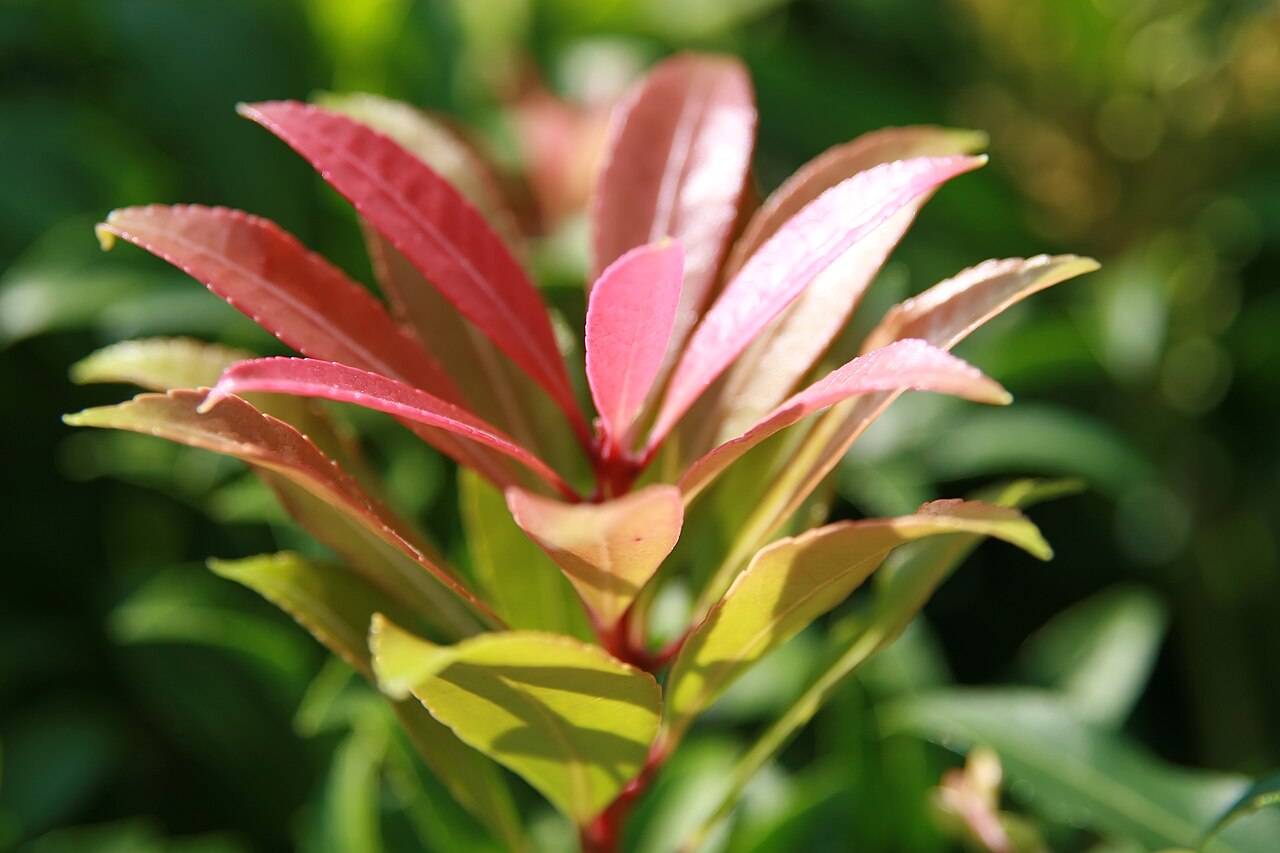
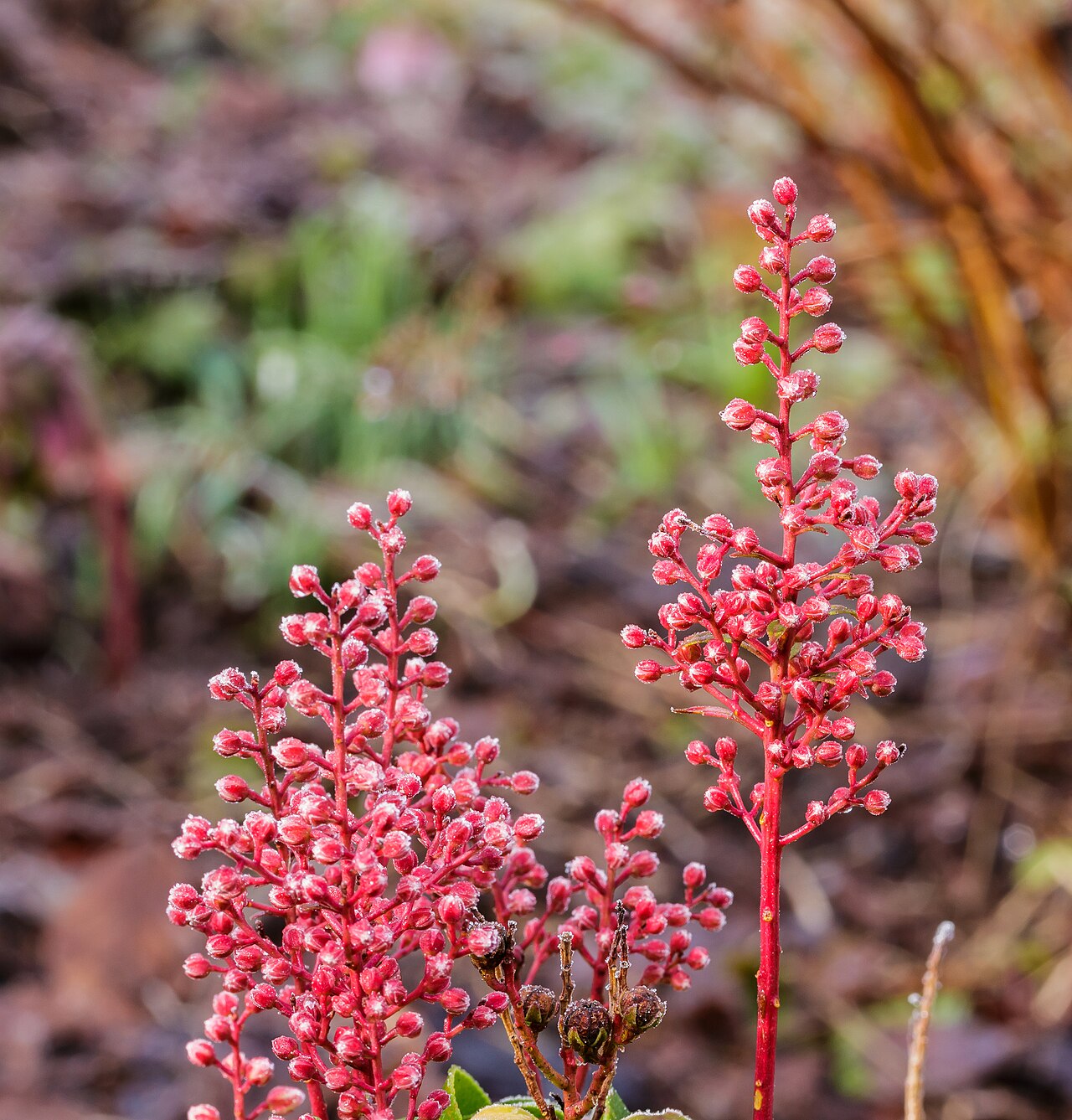
Forest Flame is Mountain Fire’s bigger, louder cousin: 6–8 feet tall, with new growth that opens scarlet-red and passes through pink and cream before settling to green, so the shrub is never just one colour. The white bell flowers arrive in late winter and spring in drooping clusters, and the foliage show runs all season — this is a pieris planted as much for leaves as for flowers, which is a rare compliment for a flowering shrub.
In Florida, the same trial framing applies, with one extra note: Forest Flame grows larger than Mountain Fire, so give it the room of a real shrub, not a foundation filler, and give it the same afternoon shade and acid, mulched soil. A Forest Flame crammed against a hot wall in alkaline soil will tell you promptly, in yellow and brown, that the site was wrong.
How to grow
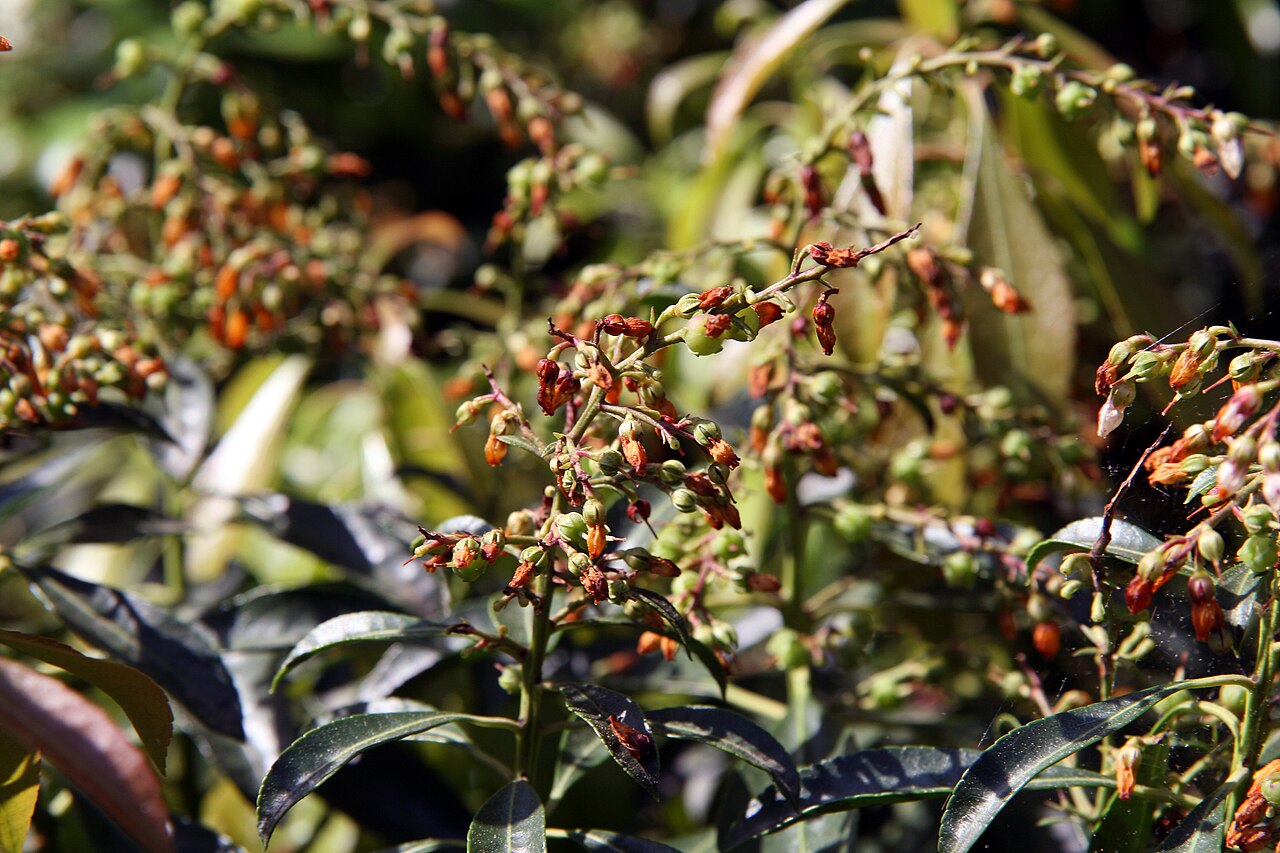
Plant in spring in part shade — morning sun and afternoon shade is the Florida formula — in rich, moist, well-drained, acidic soil, and mulch thickly with pine bark to keep roots cool and acid. Pieris is an evergreen shrub with glossy leaves, drooping clusters of white or pink bell flowers in late winter and spring, and new growth that opens bronze-red like a slow firework. It hates two Florida things: alkaline soil, which yellows it no matter how much you water, and drying out, which browns its leaf edges. Keep it away from concrete and limestone rubble, water it faithfully through the first two years, and treat anything south of north Florida as an experiment, not a promise.
Water & feeding
Water deeply and consistently; pieris is not drought-tolerant and sulks fast in a dry spring. Mulch 3–4 inches deep with pine bark or pine needles, which also help hold acidity. Feed lightly in spring with an acid-loving fertiliser. Never cultivate deeply around it — its roots are shallow and resent disturbance.
Common problems
Lace bugs are the classic pieris pest: stippled, bleached leaves in summer, worst on sun-stressed plants — shade, water and horticultural oil for severe cases. Root rot in soggy ground and chlorosis in alkaline soil are the other two complaints, and both are siting verdicts. A pieris that yellows in limey soil or scorches in full afternoon sun is telling you the site was wrong.
Harvest
No harvest — the reward is the foliage and flower show. Prune lightly after flowering to shape and to remove any frost-damaged tips in spring. In a good north-Florida year the red new growth appears in flushes through the season, so the shrub rewards a gardener who actually looks at it.
Nerdy fact: The genus name Pieris comes from Pieria, the home of the Muses in Greek myth — a fitting name for a shrub whose flowers hang like little bells waiting for a breeze to ring them, though the bees get there first.
Saving seeds
Forest Flame is a named pieris cultivar, and named cultivars are propagated by cuttings so the scarlet-red new growth holds. The Saving seeds section of the Pieris guide covers seed for the species generally.