
🔔 Pieris
What it looks like
How to grow
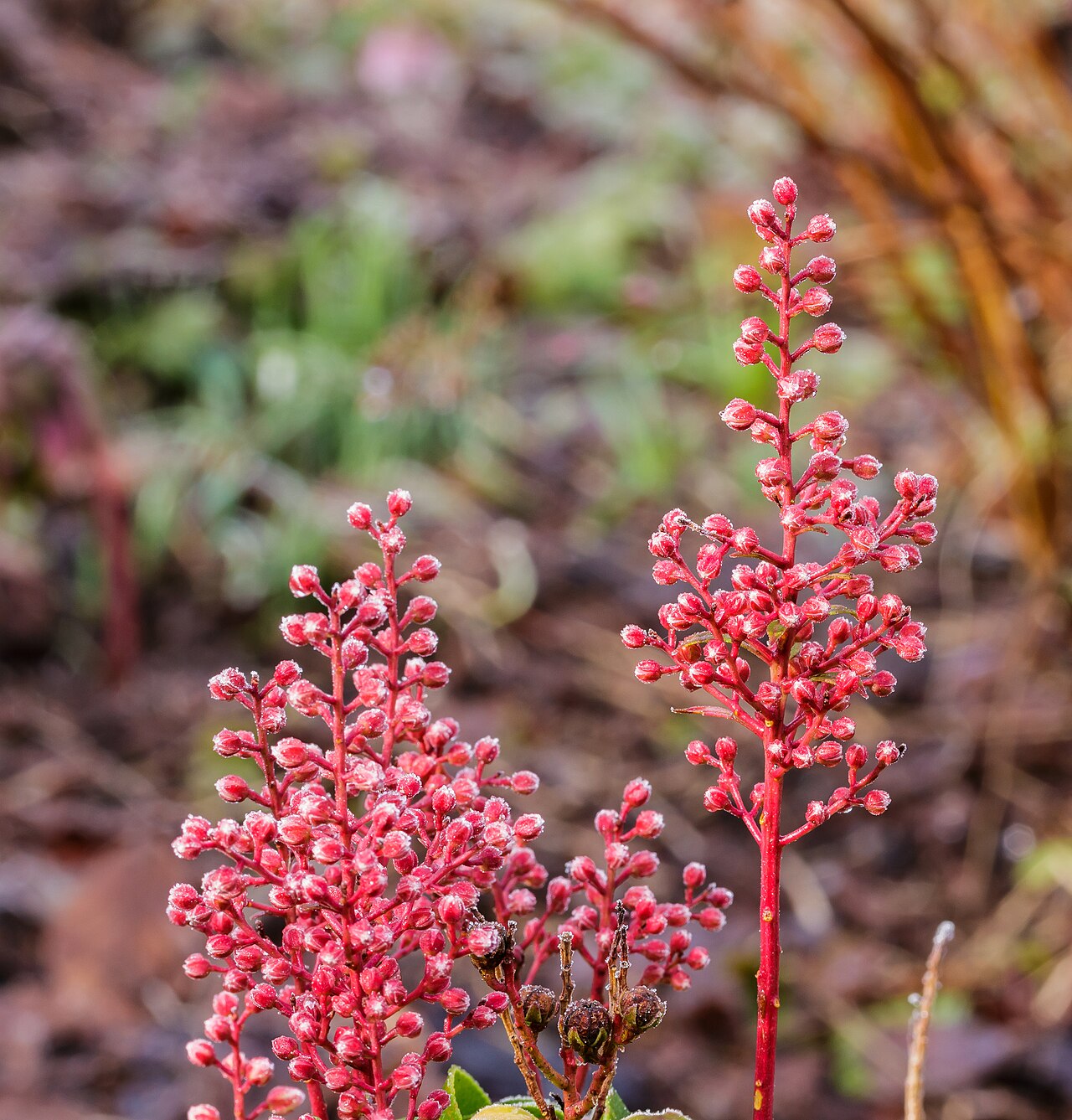
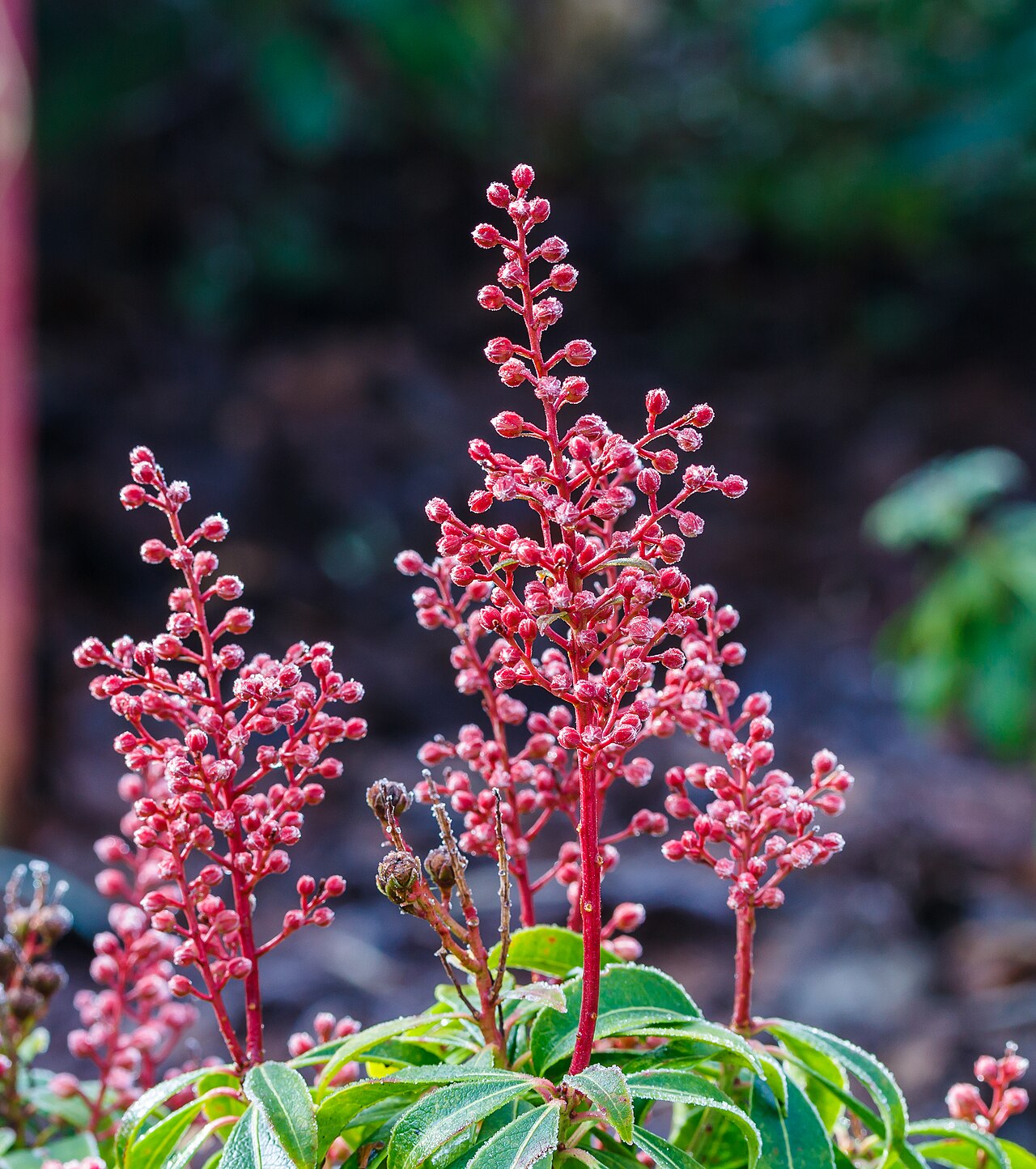
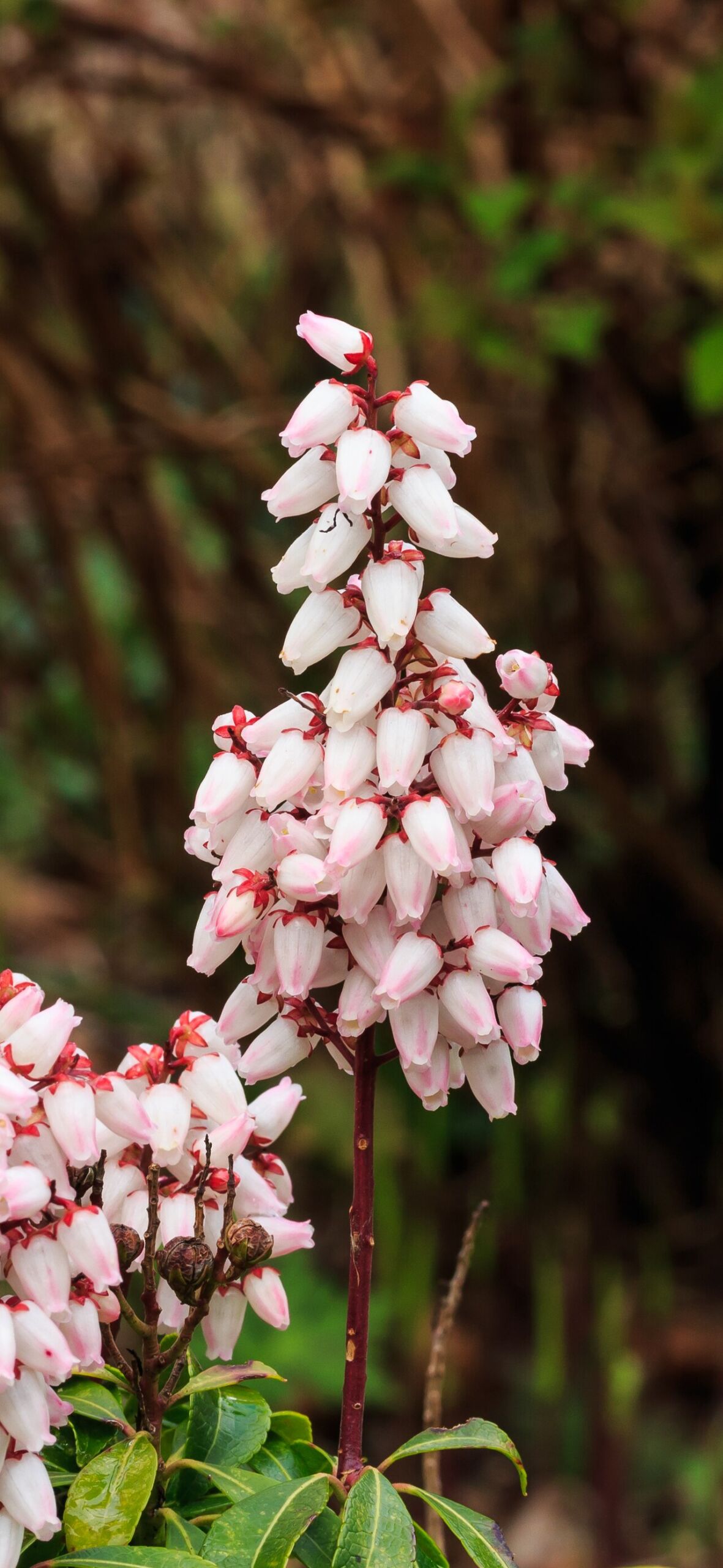
Japanese pieris is a broadleaf evergreen shrub with glossy dark green leaves, colorful bronze-red new growth, and drooping clusters of white, urn-shaped flowers in late winter to early spring — a welcome sight when little else is blooming. It grows slowly to 6-12 feet tall, though dwarf cultivars stay much smaller. Plant in spring or fall in part shade, sheltered from winter wind and hot afternoon sun, in rich, moist, well-drained acidic soil with plenty of organic matter. Pieris pairs beautifully with rhododendrons, azaleas, and other acid-lovers, and it is generally deer resistant — the plant is toxic, and deer seem to know it.
Water & feeding
Keep the soil evenly moist, about an inch of water a week in the growing season; pieris will not tolerate standing water or drought. Mulch with pine needles or shredded bark to hold moisture and acidity, keeping mulch a few inches from the stems. Feed in spring with a fertilizer formulated for acid-loving plants. In alkaline soil, leaves yellow from chlorosis — if your soil is alkaline, grow pieris in a large container with acidic potting mix instead.
Common problems
- Lacebug damage — stippled, pale leaves, worst in sun; plant in shade, keep plants vigorous, and wash foliage if needed.
- Leaf spot and dieback — prune out affected wood to healthy tissue and improve air circulation.
- Winter burn — dehydration from winter sun and wind; site in shelter and water before hard freezes.
- Yellow leaves — usually alkaline soil; test pH before assuming a nutrient deficiency.
Harvest
Do not harvest pieris for any kitchen or medicinal use: all parts are poisonous to people, pets, and livestock. The harvest is ornamental — cut a few flowering branches for indoor arrangements in late winter, and deadhead spent blooms after flowering if you want a tidier shrub.
Browse all plant & pest guides
Saving seeds
Pieris seed is very small, and its germination is not high, so save a lot of it and expect modest returns. Collect the seed in late fall from capsules that have turned brown and begun to open — the seed falls out easily, so work over a paper bag. Dry the seed fully before storing, and keep it cool and dry until sowing. Pieris is a self-seeding plant in the right conditions, and you may find tiny seedlings appearing around a mature shrub on their own; in spring those volunteers can be dug up and moved, which is often easier than raising seed in a tray.
Sow in late spring, scattering the seed thinly on the surface of a fresh, lime-free potting mix — pieris needs acidic soil, roughly pH 4.5 to 6.5, and a standard alkaline mix will stall it. Cover with only a dusting of mix, because the seed needs light to germinate, then mist it in and cover the pot with a plastic bag or dome to hold humidity. Keep it at 68 to 75°F in bright, sheltered light out of direct sun. Germination takes 2 to 4 weeks for fresh seed, though some sources say up to 12 weeks, so keep the pot moist and do not give up on it early. Seedlings are slow and delicate: pot them up when they are 2 to 3 inches high, and harden them off before they go outside.
The honest headline is that seedlings do not come true to type — named cultivars like Forest Flame or Little Heath are grown from cuttings for a reason, and a seedling will be its own plant, with its own leaf color and habit. If you want an exact copy, take semi-hardwood cuttings in late spring or summer instead. Seed is for the patient gardener who enjoys raising a shrub from dust.
One safety note: pieris seed and foliage are toxic if eaten, so wear gloves when you handle the seed and keep it away from children and pets. Store dry seed in a paper envelope in a cool, dry place; it keeps for a year or two, but fresh seed germinates best. And in Florida, pieris is a North Florida plant — it wants cool summers and acidic soil, and it struggles in the heat and limestone of the peninsula, so start seed where the plant has a real chance.
Varieties
Every named variety of Pieris with its own growing guide:
- Forest Flame Pieris — The taller pieris with the longest colour run: scarlet new growth, white bells, and foliage that keeps changing all season.
- Mountain Fire Pieris — The pieris that opens like a fire alarm: bronze-red new leaves, then white bells, on a shrub that glows in late winter.
- Valley Valentine Pieris — The pieris that blushes: deep rose-pink bells instead of white, on glossy evergreen foliage, in the coldest months.