
🌿 Mountain Fire Pieris
What it looks like
Why this variety
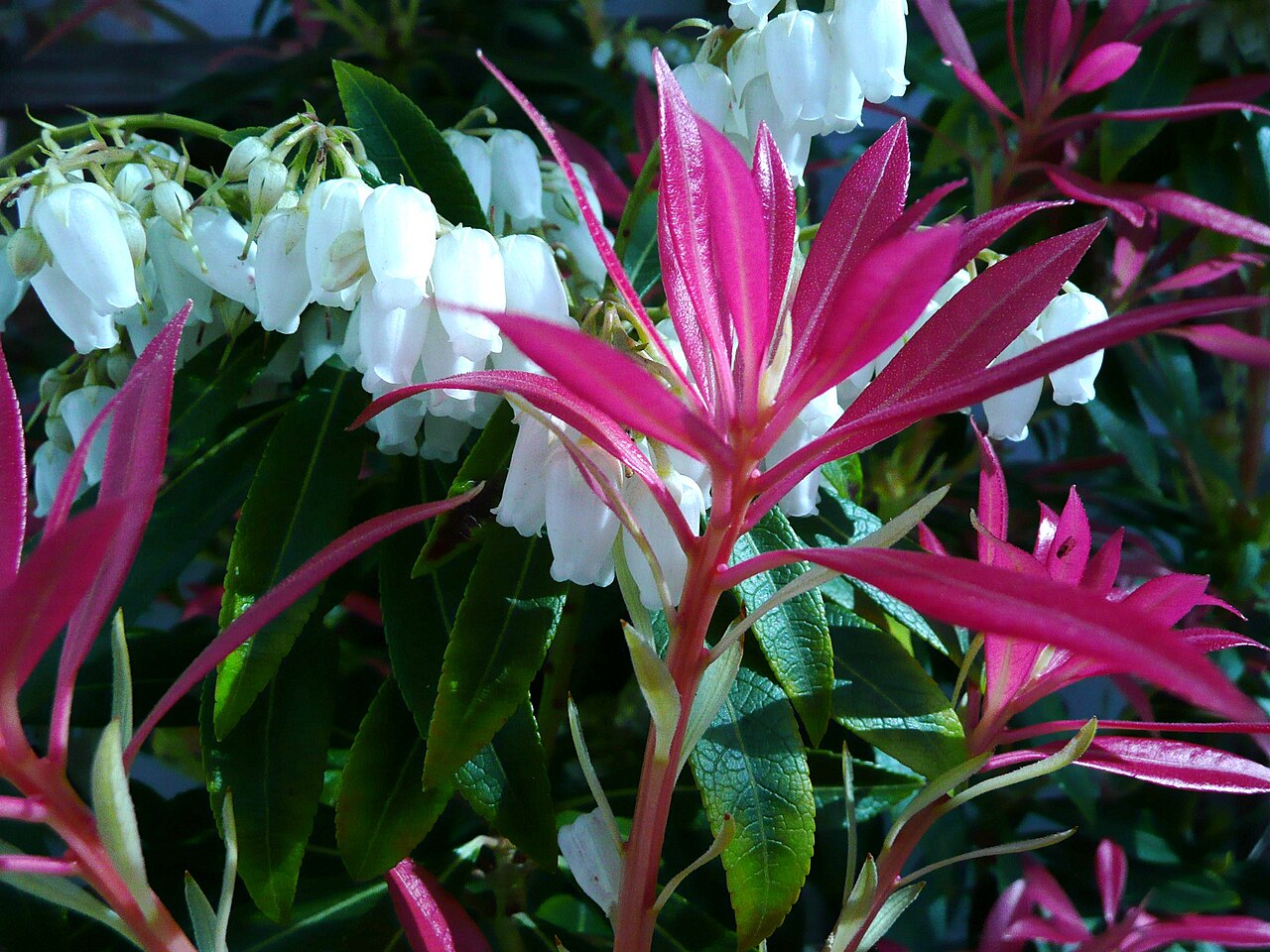
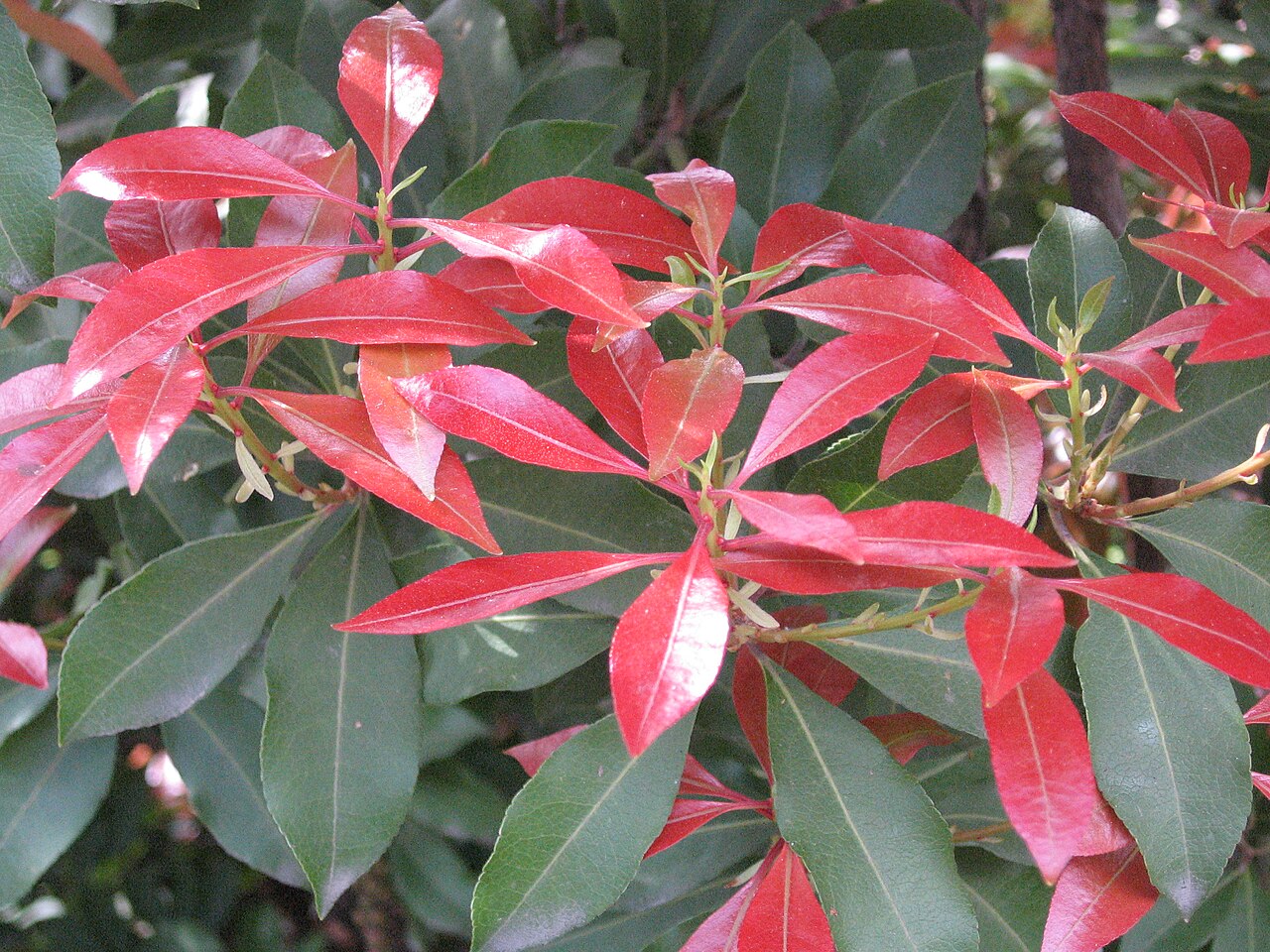
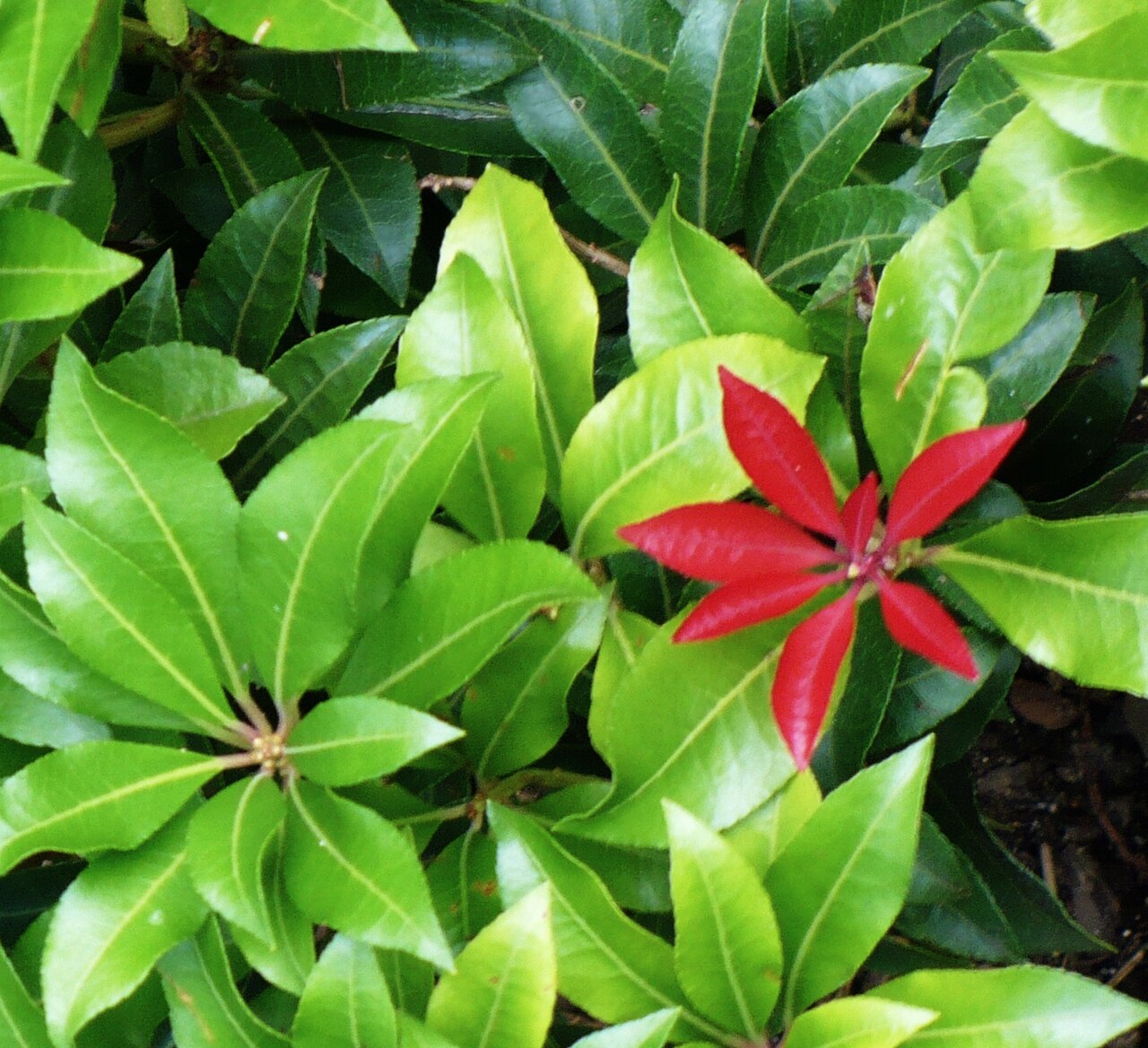
Mountain Fire is the pieris people plant for the spring show. Its new leaves emerge a brilliant bronze-red — so bright they look lit from inside — then mature to glossy dark green, and in late winter and early spring the shrub covers itself in drooping clusters of white bell flowers. It is a compact, dense shrub, 4–6 feet tall and wide, which makes it the pieris for a foundation bed or a shady corner where something needs to look good in February, not just in April.
In Florida, Mountain Fire is a north-Florida trial and it should be sold as one: it wants part shade, acid soil and cool, moist roots, and the peninsula summer is the test it may fail. Give it morning sun and afternoon shade, pine-bark mulch, and faithful water, and a good year is spectacular; a scorched, yellowing year in full sun or limey soil is a siting verdict, not a mystery.
How to grow
Plant in spring in part shade — morning sun and afternoon shade is the Florida formula — in rich, moist, well-drained, acidic soil, and mulch thickly with pine bark to keep roots cool and acid. Pieris is an evergreen shrub with glossy leaves, drooping clusters of white or pink bell flowers in late winter and spring, and new growth that opens bronze-red like a slow firework. It hates two Florida things: alkaline soil, which yellows it no matter how much you water, and drying out, which browns its leaf edges. Keep it away from concrete and limestone rubble, water it faithfully through the first two years, and treat anything south of north Florida as an experiment, not a promise.
Water & feeding
Water deeply and consistently; pieris is not drought-tolerant and sulks fast in a dry spring. Mulch 3–4 inches deep with pine bark or pine needles, which also help hold acidity. Feed lightly in spring with an acid-loving fertiliser. Never cultivate deeply around it — its roots are shallow and resent disturbance.
Common problems
Lace bugs are the classic pieris pest: stippled, bleached leaves in summer, worst on sun-stressed plants — shade, water and horticultural oil for severe cases. Root rot in soggy ground and chlorosis in alkaline soil are the other two complaints, and both are siting verdicts. A pieris that yellows in limey soil or scorches in full afternoon sun is telling you the site was wrong.
Harvest
There is no harvest here — the crop is the show. Deadhead spent flower clusters if you like tidiness, but pieris does not need it to rebloom. The real seasonal job is a light prune after flowering to shape, and a watch for lace-bug stippling in summer — shade and water prevent more damage than any spray cures.
Nerdy fact: Pieris belongs to the heath family, Ericaceae — the same family as blueberries, azaleas and rhododendrons — which is why it shares their non-negotiable demand: acid soil. Plant a heath in lime and you are not gardening, you are arguing with chemistry.
Saving seeds
Mountain Fire is the pieris people plant for the spring show. Its new leaves emerge a brilliant bronze-red — so bright they look lit from inside — then mature to glossy dark green, and in late winter and early spring the shrub covers itself in drooping clusters of white bell flowers. It is a compact, dense shrub, 4 to 6 feet tall and wide, which makes it the pieris for a foundation bed or a shady corner where something needs to look good in February, not just in April. As a named cultivar it is kept true by cuttings, not by seed — seedlings would not hold the bronze-red spring flush. Plant in spring in part shade — morning sun and afternoon shade is the Florida formula — in rich, moist, well-drained, acidic soil, and mulch thickly with pine bark. The full method is in the Saving seeds section of the Pieris guide.