
👑 Fritillaria
What it looks like
How to grow
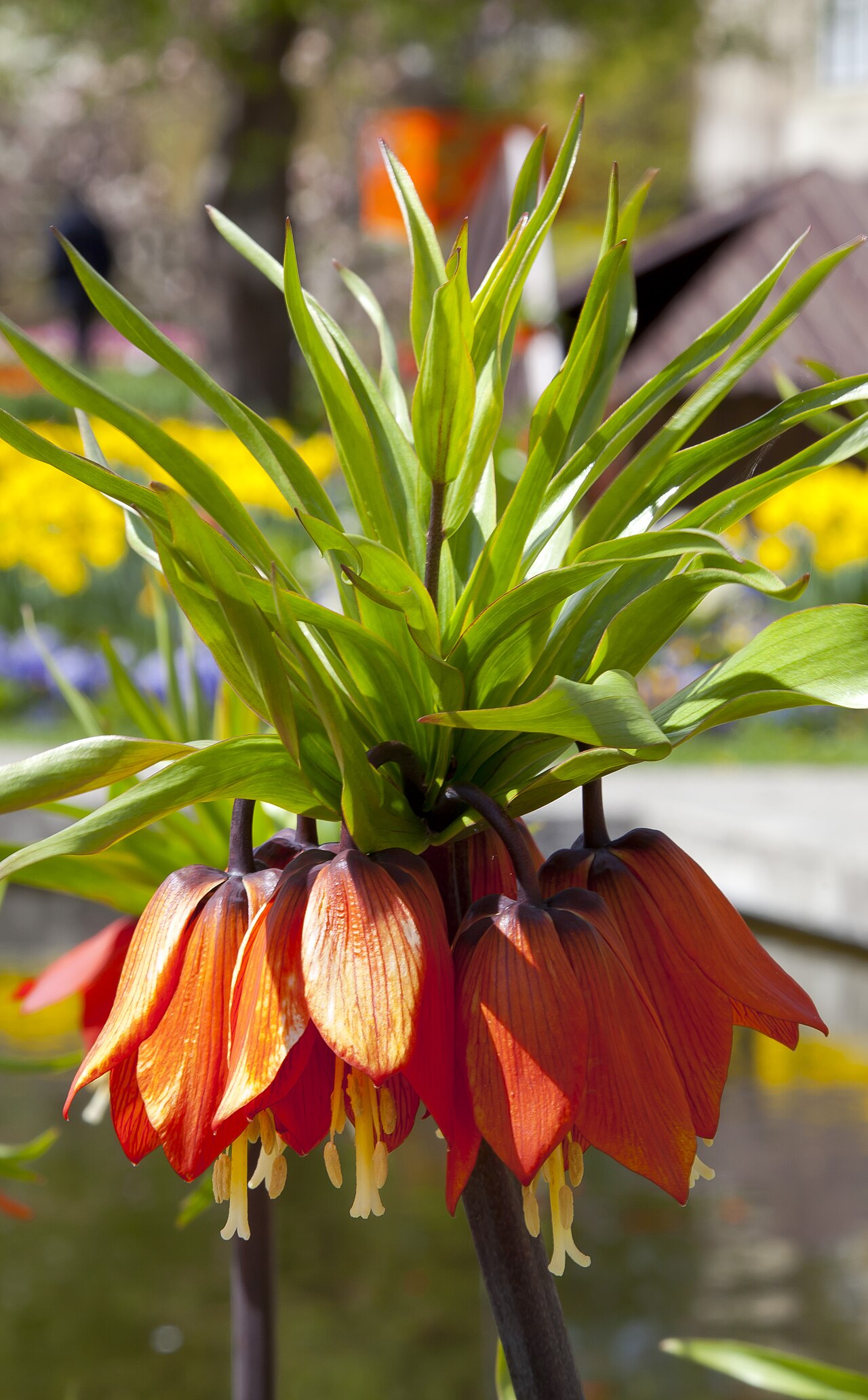
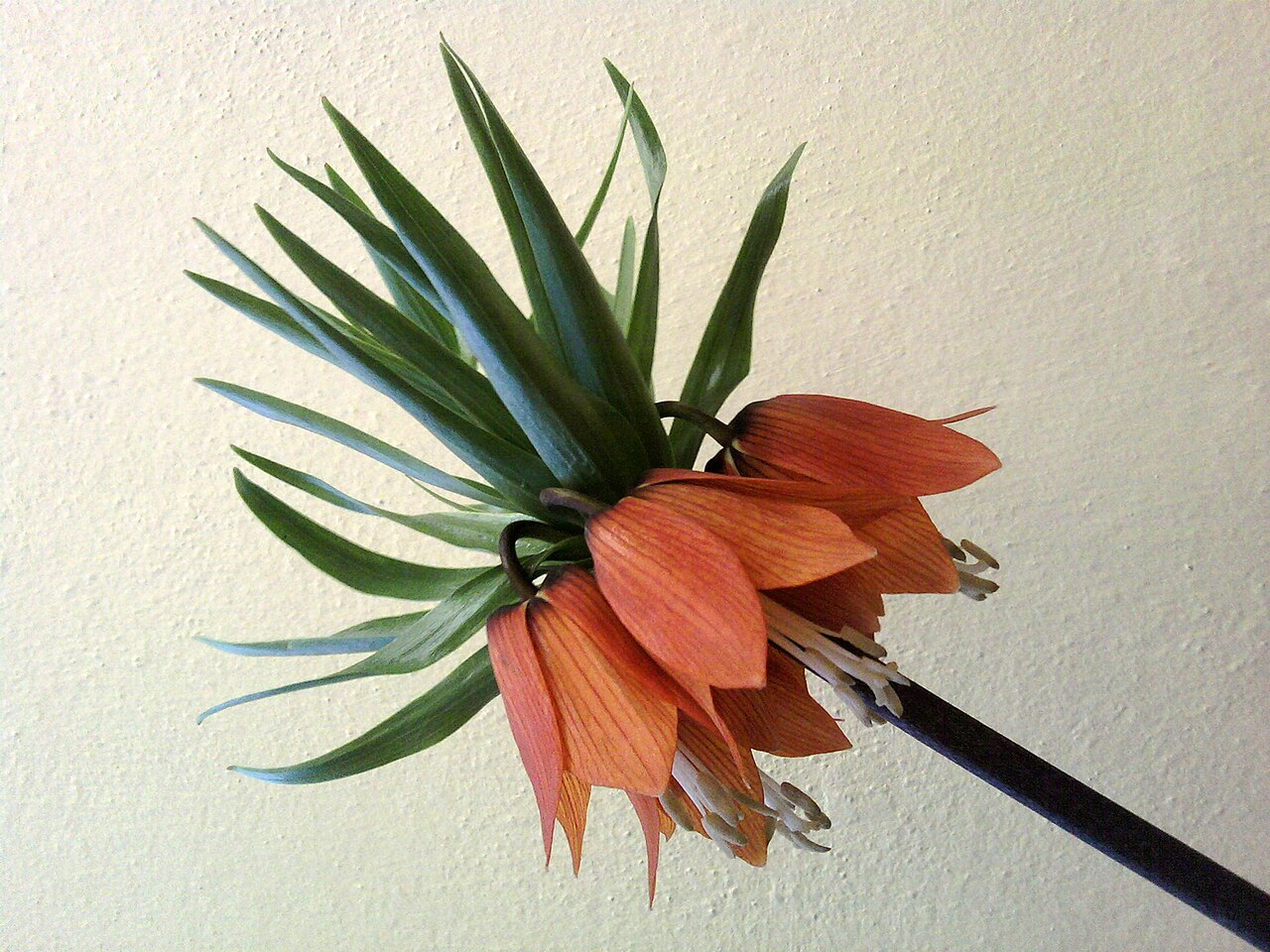
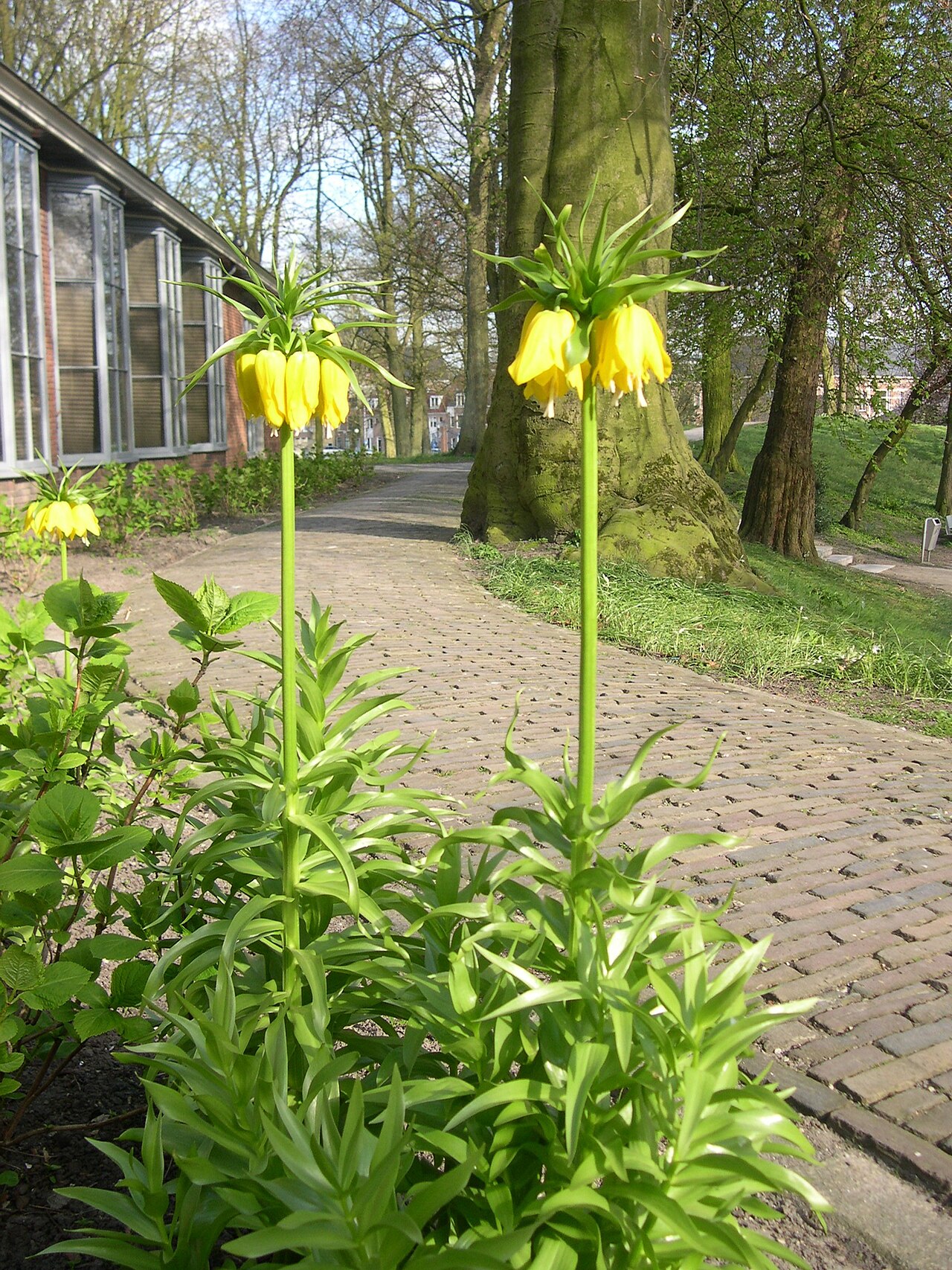
Crown imperial fritillaria is a statement bulb: 3–4 feet tall, topped with a ring of pendulous orange, yellow, or red bells beneath a tuft of leaves like a punk haircut. Plant the large, fragile bulbs in fall, about 6 inches deep to the base of the bulb and 9–12 inches apart, in fertile, well-drained soil in sun or light shade — and plant them on their sides, which keeps water from collecting in the hollow stem scar and rotting the bulb. Leave bulbs undisturbed once planted; they dislike moving and reward patience with bigger displays. Note the fragrance: musky, foxy, faintly garlicky — deer and rodents hate it, which is a feature, though you may want to site it a step back from the patio. The smaller checkered snake’s head fritillary (F. meleagris) shares the same culture at a smaller scale and is worth growing alongside.
Water & feeding
Water in after planting and keep soil evenly moist through spring growth, then let it dry somewhat as foliage dies back in early summer. Fritillaria are heavy feeders for bulbs: compost or leaf mold in fall, or a dusting of bulb fertilizer in early spring, keeps them vigorous. Do not cut green foliage — let it yellow fully so the bulb recharges.
Common problems
- Bulb rot — the main killer; plant on the side, drain well, never let bulbs sit in water.
- No flowers — bulbs planted too shallow, foliage cut too early, or bulbs too young; wait a year and leave leaves alone.
- Leaf spot, rust, mosaic virus — remove affected foliage, give air flow, buy healthy bulbs.
- Strong smell — site away from seating if it bothers you; it is the deer repellent working.
Notes
Leave foliage until fully yellow, then it can be cut. Divide only every few years in fall after foliage has withered, and handle bulbs gently — they bruise easily. Wear gloves when handling bulbs and stems: they contain irritating compounds. In warm southern gardens (zone 8 and warmer in the South), crown imperials often need pre-chilling or perform poorly; gardeners there do better with F. meleagris or other spring bulbs.
Browse all plant & pest guides
Saving seeds
This is a genus-level method, stated as such, because Fritillaria is a big genus, from the checkered snake’s head to the towering crown imperial, and the fine print varies by species while the broad pattern holds. The first decision is not about seed at all: it is seed versus bulb. Bulbs are the faithful route. A mature fritillary bulb makes offsets, little daughter bulbs around the mother, and those offsets, lifted and replanted when the foliage has died back, are clones, genetically identical to the parent, flowering sooner than any seedling. Seed is the adventurous route: it shuffles the genes, it takes several years to reach flowering size, and it rewards patience rather than urgency. If you want more of one exact named form, divide the bulb. If you want to try your hand at raising fritillaries from scratch, or you have a species plant whose seed you want to share, read on, and wear gloves, because fritillary bulbs and stems contain irritating compounds.
Collect seed when the capsules begin to split, usually in early to midsummer depending on species, and catch them before they spill. Fritillary seeds are typically flat, thin, and winged, light enough to blow away, so cut the stalk into a paper bag on a calm day rather than chasing seed across the garden. The seed usually needs little cleaning beyond shaking it free of capsule debris, and fresh seed sown promptly gives the best results. Sow in autumn in a well-drained seed mix, barely covered, in pots you can leave outdoors through winter, because the classic fritillary requirement is a period of cold, moist stratification to break dormancy. As a genus pattern, roughly three months of cold, moist chilling is usual: sow outdoors in autumn and let winter do it, or chill pots in a refrigerator if winters are too mild.
Storage follows the usual cool, dry rule for orthodox seed, but with a fritillary caveat: sow fresh if you can. Seed held over should be kept cool and dry, ideally refrigerated, and sown the following autumn. Germination is erratic and spread out, sometimes over months, and seedlings are small and slow, needing a couple of seasons in their pots before the young bulbs are large enough to handle and plant out. Leave the pots undisturbed except for watering, let the foliage die back naturally each year so the bulb can recharge, and expect flowering-size bulbs only after several seasons. That timeline surprises people who are used to annuals, but it is normal for this genus, and it is why nurseries sell bulbs, not seed, to gardeners who want flowers next spring.
Two cautions close the section. First, do not wild-collect fritillary seed or bulbs. Several fritillaries are rare or protected in their home ranges, and a garden plant bought from a reputable bulb supplier is both legal and far more likely to thrive. Second, the Florida note: most fritillaries need a real winter chill, and warm southern gardens are not their natural home. In zone 8 and warmer in the South, crown imperials often need pre-chilling or perform poorly, and gardeners there generally do better with snake’s head fritillary and other spring bulbs suited to milder winters. If you are saving fritillary seed in Florida, the refrigerator stratification route is not a refinement, it is the plan, and even then, choose species that have a chance in your climate rather than fighting the weather for a mountain bulb. Seed saved from a plant that is already happy in your garden is worth far more than seed from a plant that is merely surviving.
Varieties
Every named variety of Fritillaria with its own growing guide:
- Lutea Fritillaria — The yellow crown imperial: tall stems of soft yellow bells under the same green crown, the gentler crown imperial for light shade.
- Rubra Maxima Fritillaria — The red crown imperial: huge, brick-red bells ringed under a green crown, the boldest fritillaria and the one deer walk past.