
🍇 Grape Hyacinth
What it looks like
How to grow
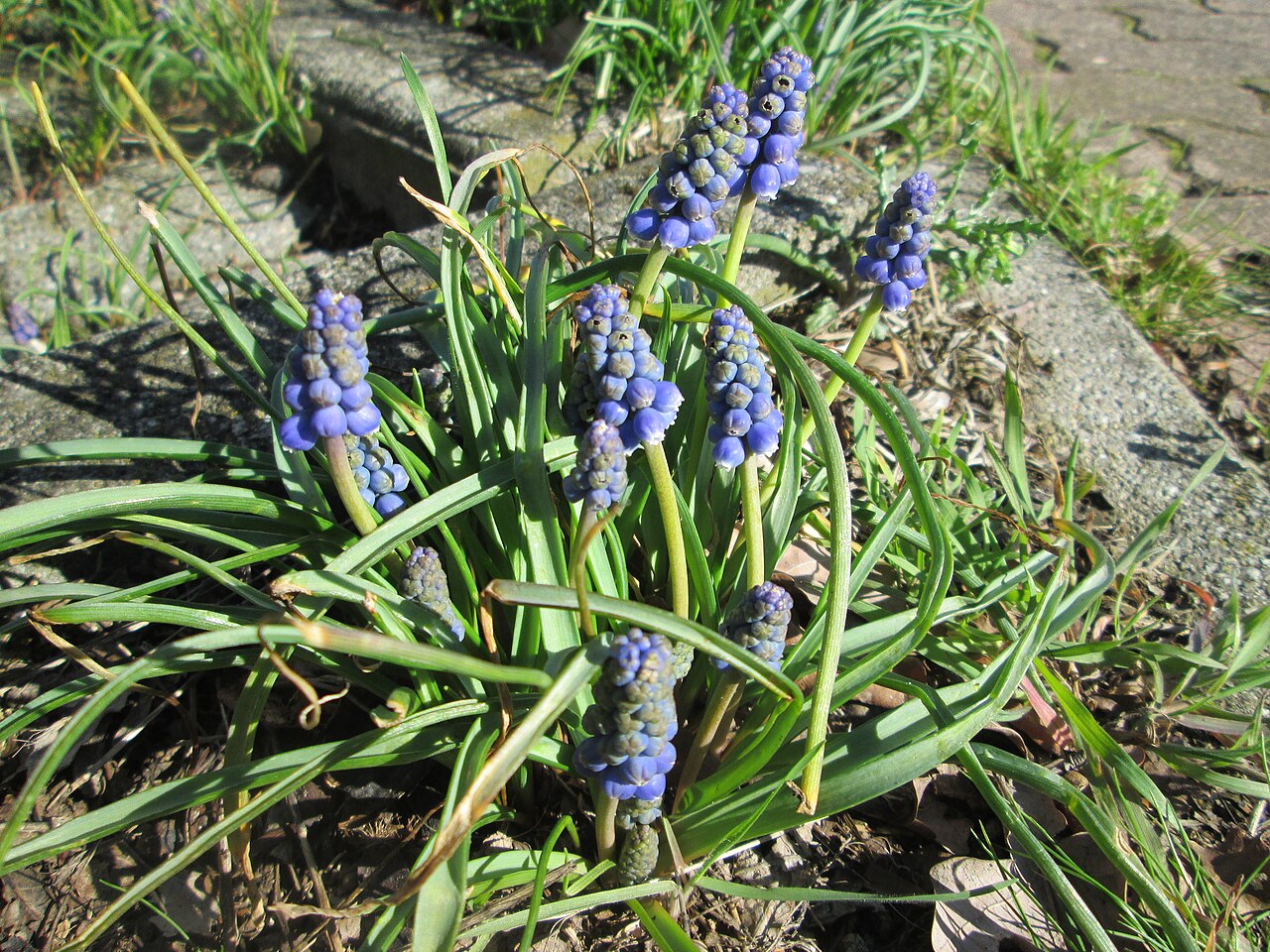
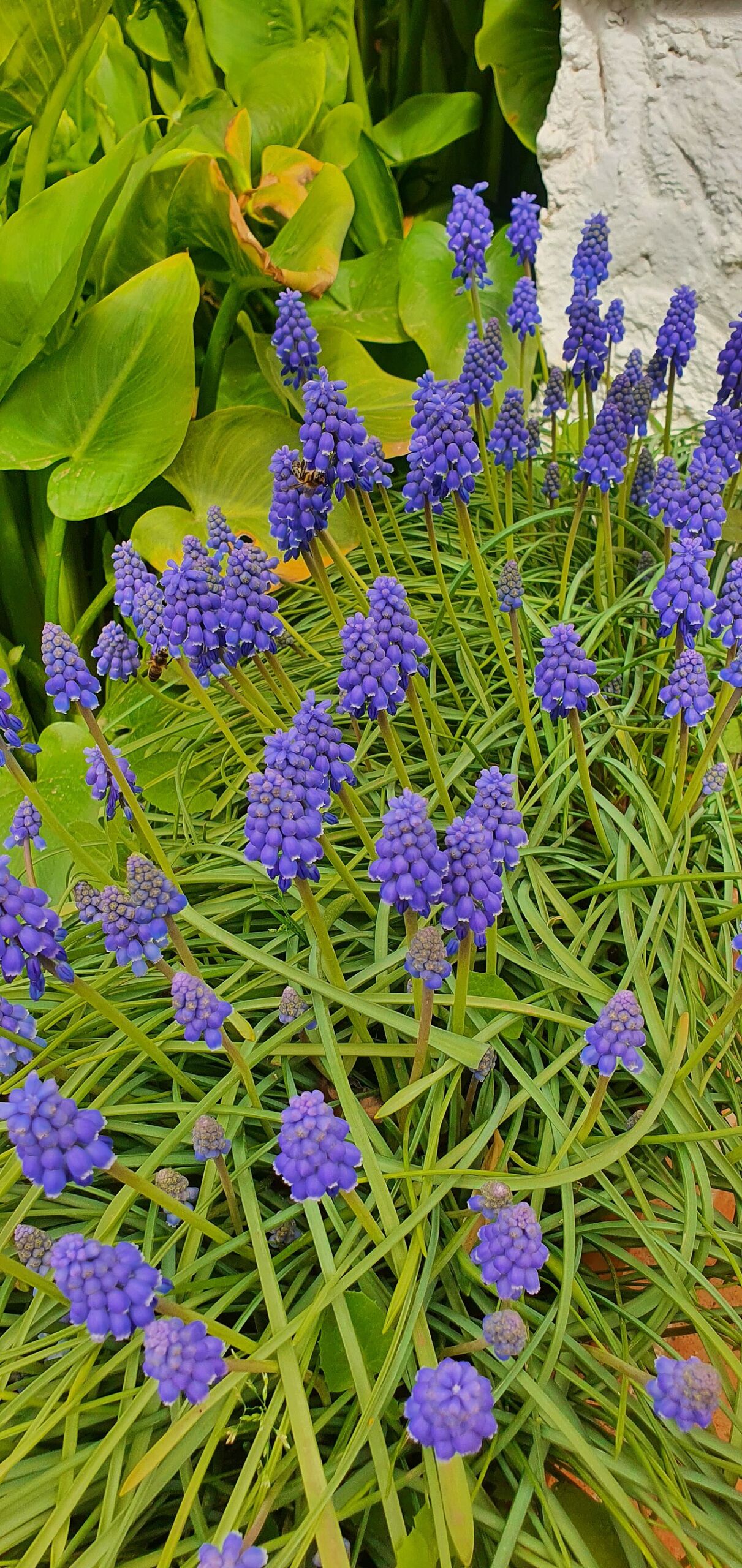
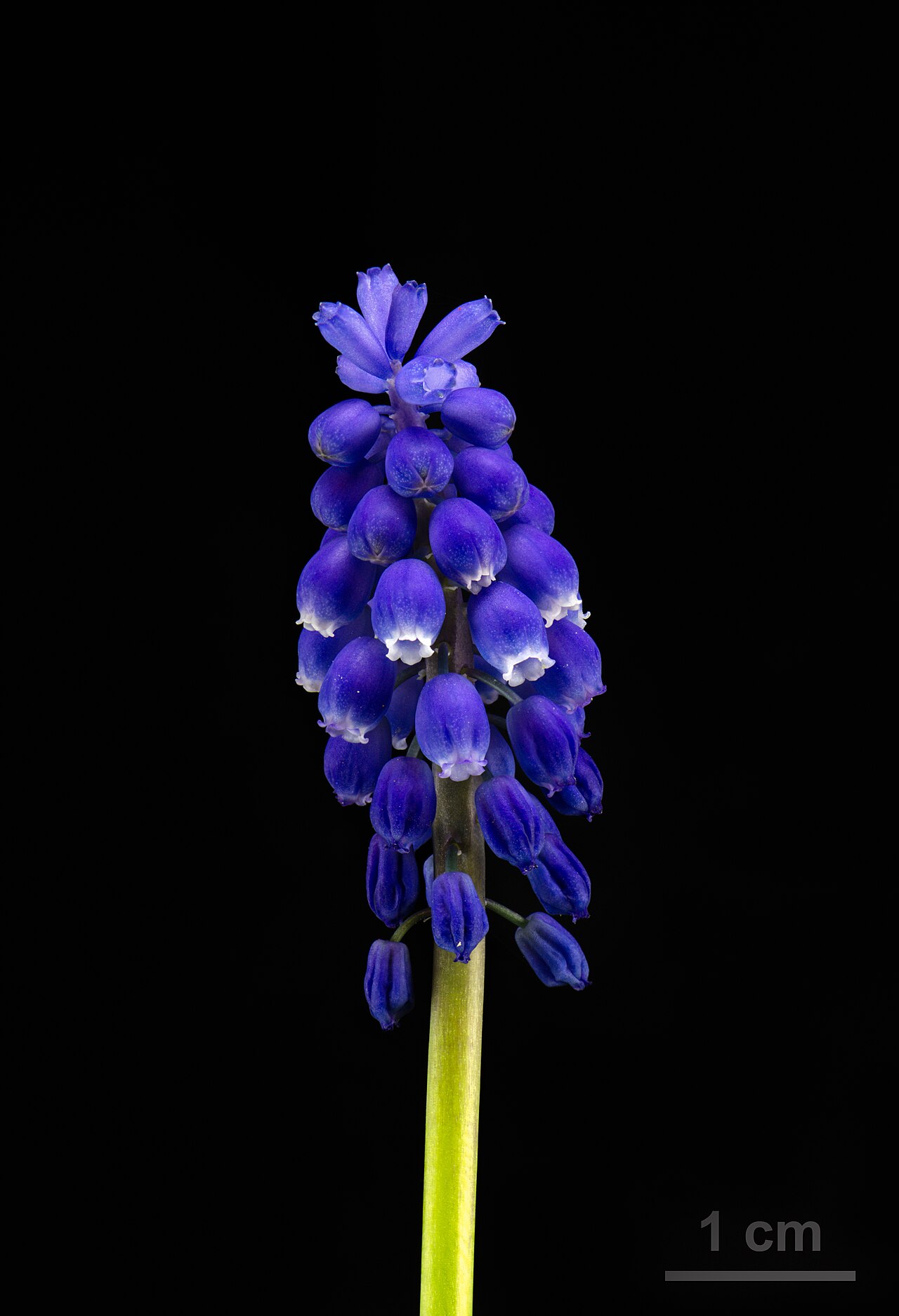
Grape hyacinth packs a lot of spring into a small plant: 6–8 inches tall, with dense spikes of tiny bell flowers — usually true blue, also white, pink, or two-toned — that really do look like miniature grape clusters and smell faintly sweet. Plant bulbs in fall, about 3 inches deep and 2–3 inches apart, in average, well-drained soil in full sun to part shade. They are famously unfussy: sun, shade, amended soil, unamended soil, they cope. Plant generously — ten bulbs per square foot is a good rule — because their charm is in drifts, edging paths, underplanting tulips and daffodils, and filling pots. In warm zones (7b and warmer in the South), pre-chill bulbs before planting for reliable bloom.
Water & feeding
Water deeply after planting, then leave alone until spring; after that, average water is plenty and they tolerate dry spells. They need almost no fertilizer — a light slow-release feed at planting in poor soil is the most they will ever ask for. Do not be alarmed by grass-like foliage appearing in fall; that is normal, and it reminds you where they are.
Common problems
- Bulb rot in wet soil — drainage matters, even for an easy bulb.
- Spreading beyond its spot — grape hyacinth naturalizes eagerly by offsets and seed; deadhead or edge it if you want it contained.
- Foliage cut too early — leave leaves until yellow so bulbs recharge.
- No bloom in warm zones — pre-chill bulbs 8–10 weeks before fall planting.
Notes
Leave foliage in place after bloom until it yellows, and leave bulbs in the ground to clump and reseed — divide only when a spot gets overcrowded, in fall. For forcing indoors, pot bulbs in late fall, chill in a cool dark place (around 40°F) for 15–17 weeks, then bring into light for winter flowers. Deer and rodents leave them alone.
Propagation
Grape hyacinth is a plant that propagates itself with such enthusiasm that the gardener’s job is less “how do I make more?” and more “how do I keep up?” Muscari multiplies two ways at once: underground, by bulb offsets, little daughter bulbs that cluster around the parent, and above ground, by self-seeding, since the dried flower spikes drop seed that sprouts the following spring. Both routes work. Only one of them copies your variety exactly. If you want more of the exact grape hyacinth you planted, offsets are the faithful route. If you want a drift, a surprise, or a science project, seed will happily oblige, on its own slower schedule.
Offsets come first, because they are fast, easy, and true. Lift a congested clump when dormant, in late summer or early fall, or in very early spring before growth starts, digging a few inches outside the clump so you do not slice the bulbs. Shake or crumble the soil away and gently pull the cluster apart: you will find bulbs of all sizes, and the big, healthy ones are your keepers. Replant them promptly, flat side down, about two to three times their own height deep and an inch or two apart, in well-drained soil. Medium bulbs may need an extra year or two before they flower, and the tiniest ones up to three years, which is still faster and surer than seed, and every one of them is genetically identical to the parent. Do not leave lifted bulbs sitting around in a hot shed; small bulbs dehydrate quickly, so replant the same day, or hold them only briefly in a cool, dry, airy spot in a mesh bag.
Seed is the slow road, and it has its own charm if you go in with the right expectations. After bloom, let some spikes stand instead of deadheading, and watch for small seed pods that ripen and dry over summer. Collect the pods before they split and scatter, shake out the small, dark seeds, and give them the winter they are waiting for: either sow them outdoors in autumn in pots of gritty compost and let natural cold do the work, or, indoors, scatter them on a damp paper towel in a loosely sealed bag and refrigerate for up to about three months of cold, moist stratification, moving sprouted seeds to trays of sterile mix. Seedlings appear as fine, grass-like threads the following spring. Grow them on in pots for a couple of years before planting out, and expect at least three to four years before a seed-started plant flowers. Named cultivars grown from seed may also vary from the parent, so if the exact shade matters, offsets, not seed, are your answer.
One caution belongs up front in Florida and everywhere else this plant is happy: grape hyacinth spreads, and spread is the point until it is not. A drift left to self-seed and multiply by offsets will thicken year after year, which is glorious along a path and a nuisance in a small, formal bed. Plant it where spreading is welcome, deadhead spikes you do not want seeding, and never toss surplus bulbs or seed heads into the compost heap or a wild corner, since both can start a new colony where you least want one. Stored dry seed, if you keep any, wants the usual cool, dark, airtight treatment with desiccant in humid climates, but the honest truth is that grape hyacinth rarely needs a seed jar at all: lift a clump, pull it apart, replant, and you have next spring’s drift, identical to this spring’s, with change to spare.
Browse all plant & pest guides
Varieties
Every named variety of Grape Hyacinth with its own growing guide:
- Album Grape Hyacinth — The white grape: pure white, grape-like bells on tidy spikes, the grape hyacinth that glows in shade and against dark mulch.
- Blue Magic Grape Hyacinth — The deep blue grape: dense spikes of deep blue, grape-like bells with a sweet scent, the grape hyacinth for drifts and pots.
- Valerie Finnis Grape Hyacinth — The pale blue grape: soft sky-blue spikes, paler than any other grape hyacinth, the one for moonlight borders and pale spring schemes.