
🥝 Hardy Kiwi
What it looks like

How to grow
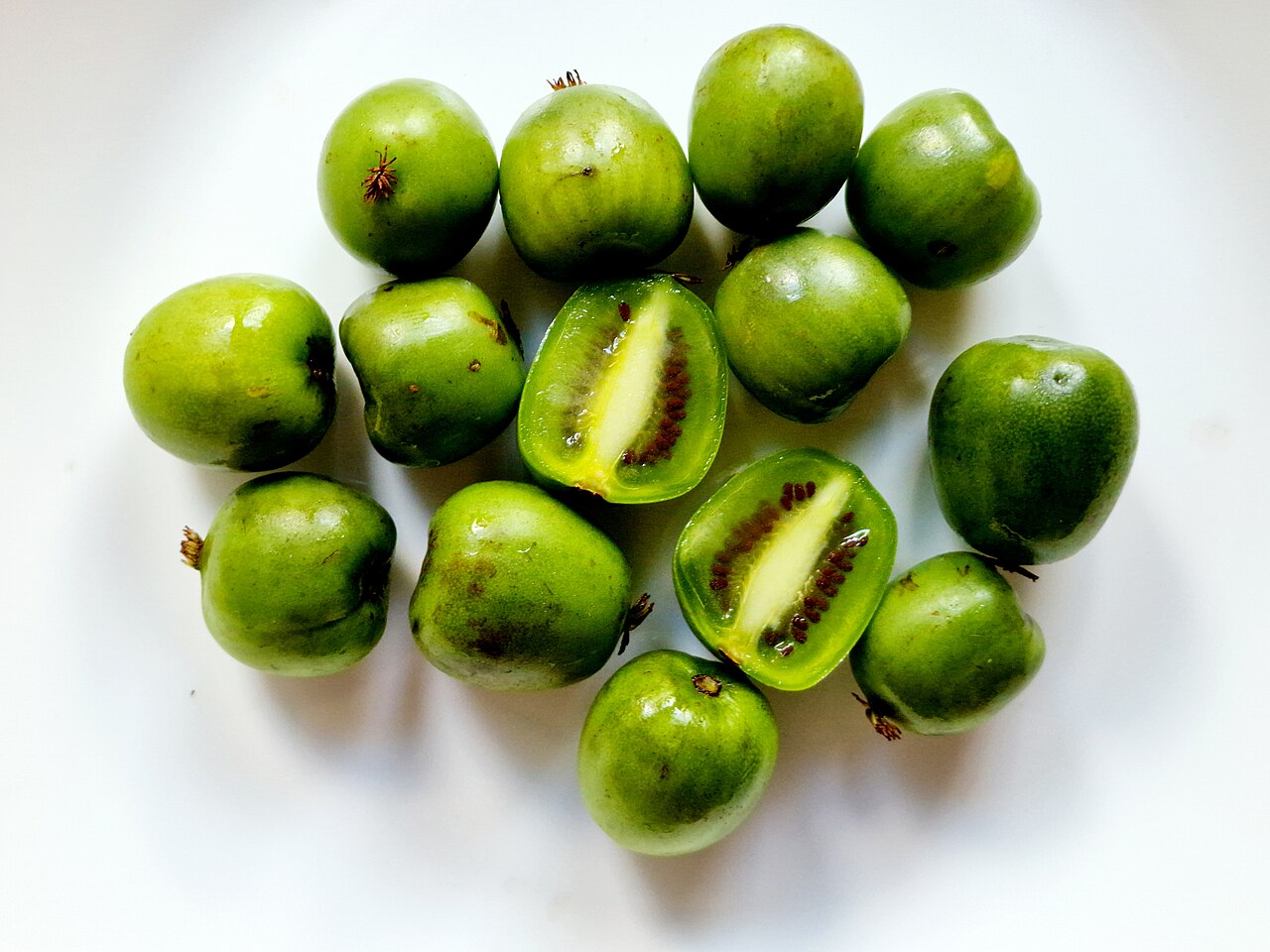
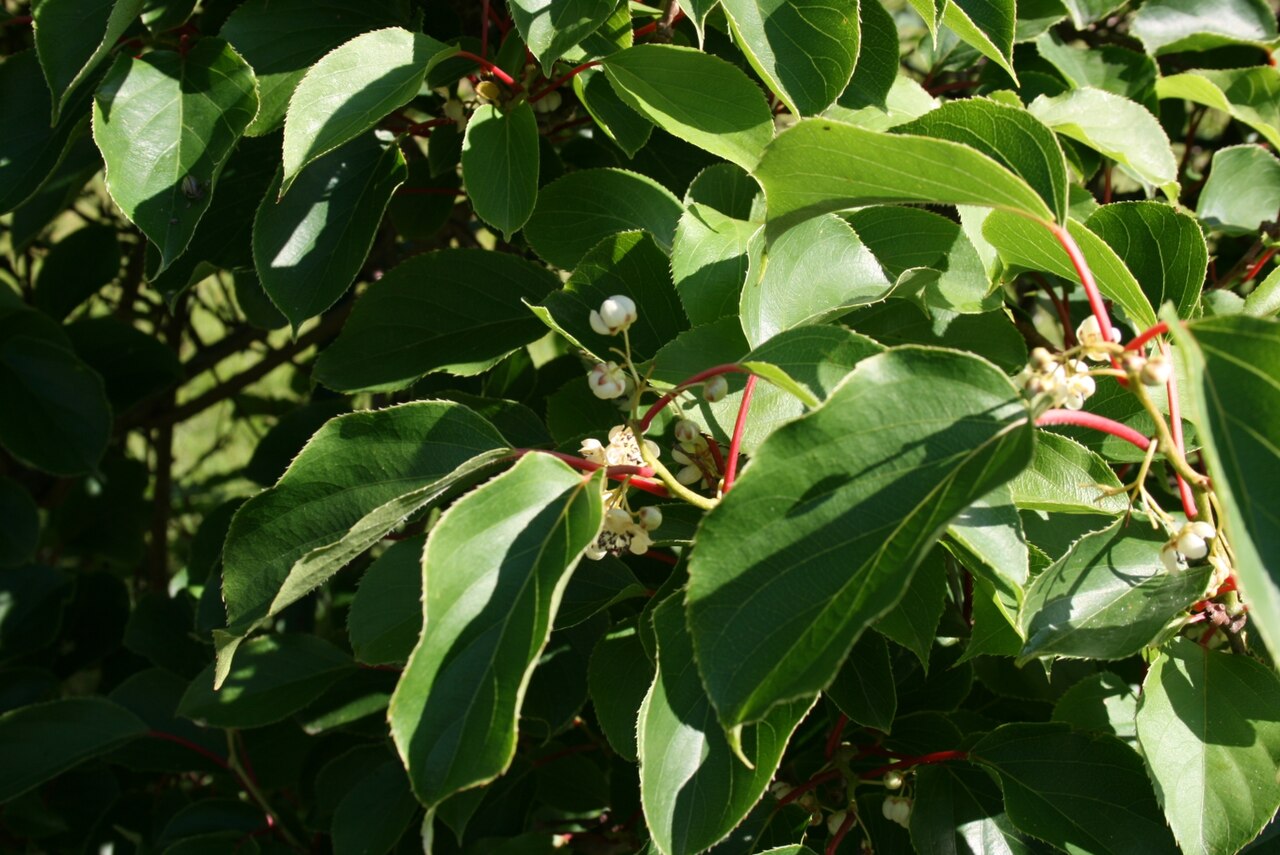
Hardy kiwi is the cold-climate answer to everyone who assumed kiwis were a warm-zone luxury: these vines shrug off winters that would kill fuzzy kiwi outright, and the fruit is a smooth-skinned, grape-sized berry you pop whole, skin and all. Like its fuzzy cousin, it is usually dioecious — plant one male for every six to eight females, and match bloom times. ‘Anna’ and ‘Issai’ are common females; note that ‘Issai’ is often sold as self-fertile, but even it fruits far better with a male nearby. The vine is vigorous to the point of pushy, so give it a pergola, a stout fence, or a T-bar trellis built like it means it, and prune every winter, cutting back to a permanent framework and leaving fruiting laterals.
Water & feeding
Steady moisture, especially while fruit is sizing; shallow roots dry out fast in summer heat. Mulch thickly and water deeply rather than sprinkling. A spring feeding and a midsummer side-dress are plenty — overfeeding produces jungle, not fruit.
Common problems
- Late spring frost nipping tender new growth — vines regrow, but that year’s crop may be lost
- No male pollinizer, or a male blooming out of sync — the most common reason for a flower-covered vine with no fruit
- Vine vigor escaping its trellis and eating the nearest shrub, fence, or small shed
- Birds and raccoons discovering the ripe berries before you do
Harvest
Pick when the berries give slightly and taste sweet — unlike fuzzy kiwi, hardy kiwis ripen on the vine. Taste-test a few before stripping the vine, since ripeness varies by cluster. Eat fresh within days, or freeze whole for smoothies.
Browse all plant & pest guides
Saving seeds
Hardy kiwi seed saving starts with a confession: this is the scenic route, not the shortcut. If you want another Anna or another Issai, take cuttings, because seedlings do not grow true to a named cultivar. A seedling from a named variety is a brand-new vine with its own fruit size, flavour, and vigour, and it may be better, worse, or gloriously weird. What seed does give you is cheap vines in quantity, genetic diversity, and a fine excuse to run a small breeding experiment on your trellis.
First, the sex problem, because hardy kiwi (Actinidia arguta) is dioecious: male flowers and female flowers grow on separate vines, and only the females fruit. A male vine is still essential, usually one male for every five or six females, and it must flower at the same time as the females nearby. Seed-grown vines keep their sex a secret until they first flower, typically after a few years, so sow generously and plan to thin once you can tell the boys from the girls. The exception is a self-fertile cultivar such as Issai, which fruits without a separate male, but its seedlings still will not reliably repeat Issai itself.
Collect fruit when it is fully ripe and soft, the point at which you would happily eat it skin and all. Mash the berries in a bowl of water and stir: the pulp floats and the tiny dark seeds sink, so you can pour off the pulp, rinse, and repeat until the seeds run clean. Spread them in a thin layer on paper to dry briefly, then move on to stratification rather than leaving them in a warm drawer for months. Hardy kiwi seed needs a cold, moist winter before it will wake up, so mix the clean seed with damp sand or vermiculite, seal it in a bag or small container, and refrigerate it for roughly two to three months; sources disagree on the exact length, with some recommending longer, so treat two months as a minimum and three as a sensible target, checking now and then that the mix stays damp but not soggy or mouldy.
After chilling, sow shallowly on moist seed-starting mix, barely covered, in a warm, bright spot, and keep the mix evenly moist. Germination is usually measured in weeks rather than days, and it is uneven, which is normal for a wild-origin vine rather than a sign you failed. Grow seedlings on in pots through their first winter in a sheltered spot, harden them off before planting out, and do not expect fruit in a hurry: seed-grown vines take several years to flower and fruit, so this is a project for a gardener who enjoys the long game. If several hardy kiwi types are flowering together, bees will happily cross them, so accept that your seedlings are a mixed family, or save seed only when one type is in flower if you want to keep the parentage tidier. In Florida, be honest with yourself before starting: hardy kiwi wants a real winter chill and struggles in warm winters, so this section is most useful for northern gardeners, and any seed you do store should be dried thoroughly first and kept in an airtight container with a desiccant in a cool, dark place, because Florida humidity turns a paper envelope into a mould farm.
Varieties
Every named variety of Hardy Kiwi with its own growing guide:
- Anna Hardy Kiwi — The sweetest hardy kiwi: large, aromatic, pineapple-scented fruit on a vigorous vine, the hardy kiwi connoisseurs plant.
- Issai Hardy Kiwi — The self-fertile hardy kiwi: smooth-skinned, grape-sized kiwis on a vine that needs no pollinator, the hardy kiwi for small gardens.