
🌰 Hazelnut
What it looks like
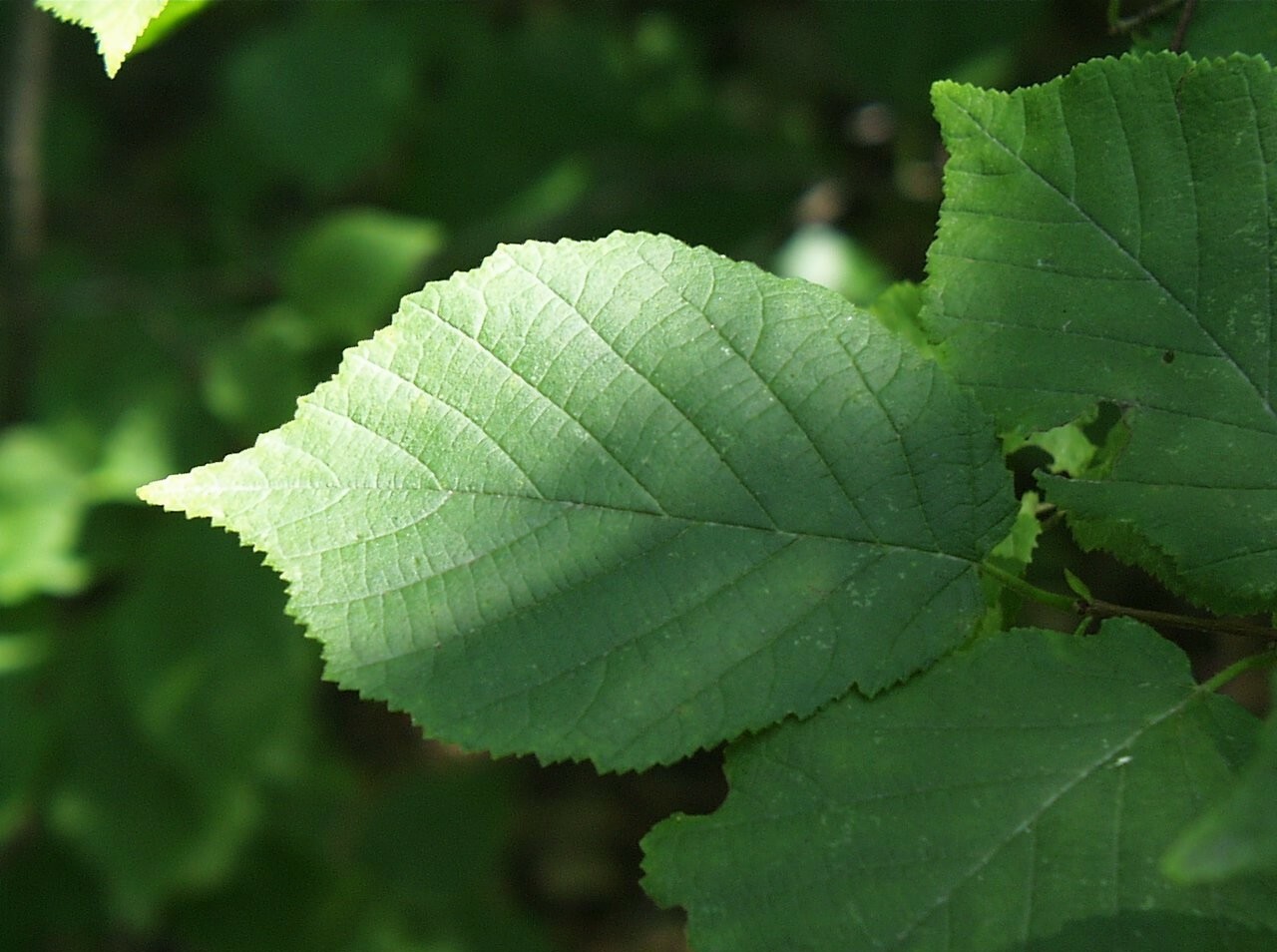
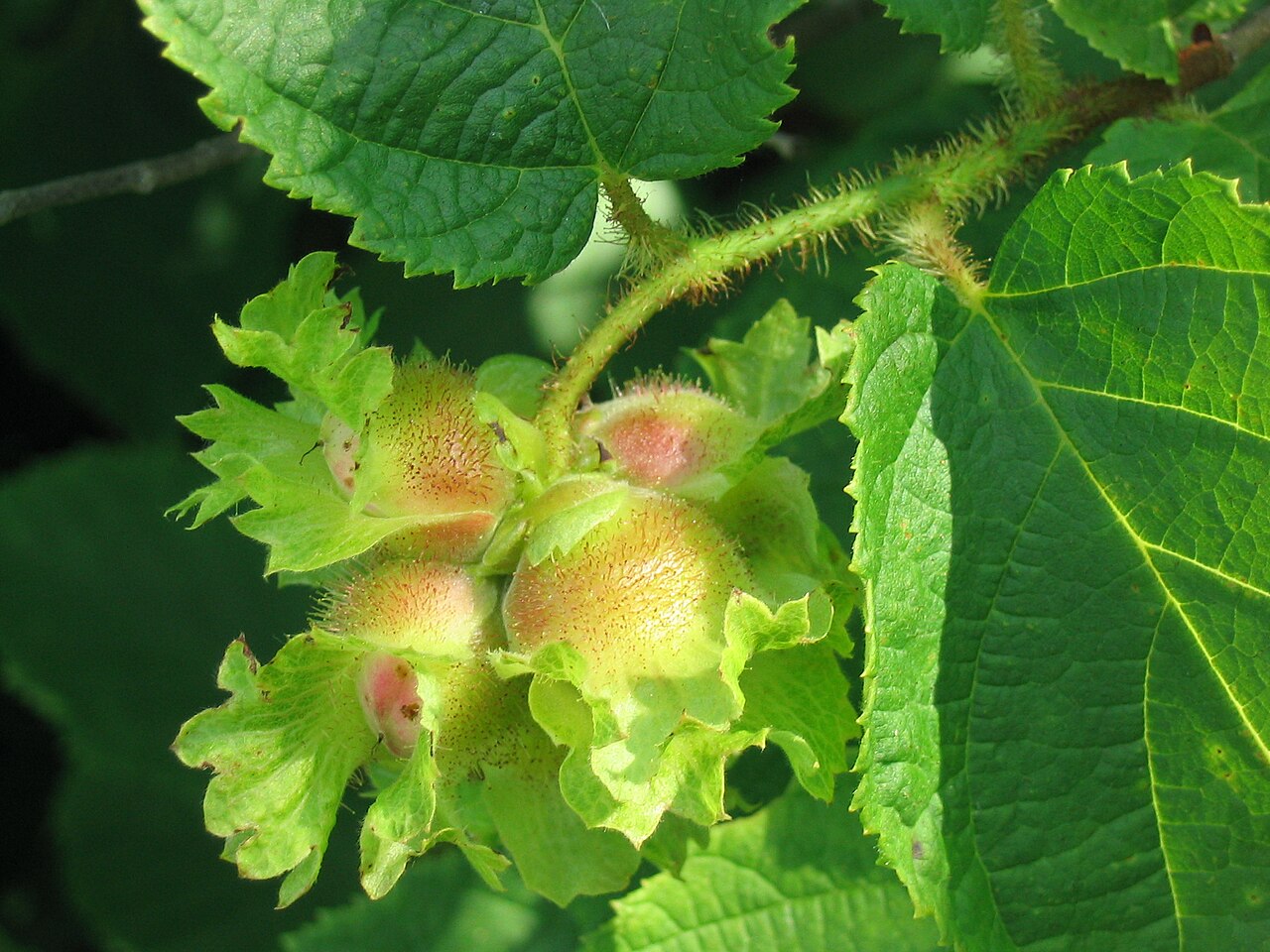
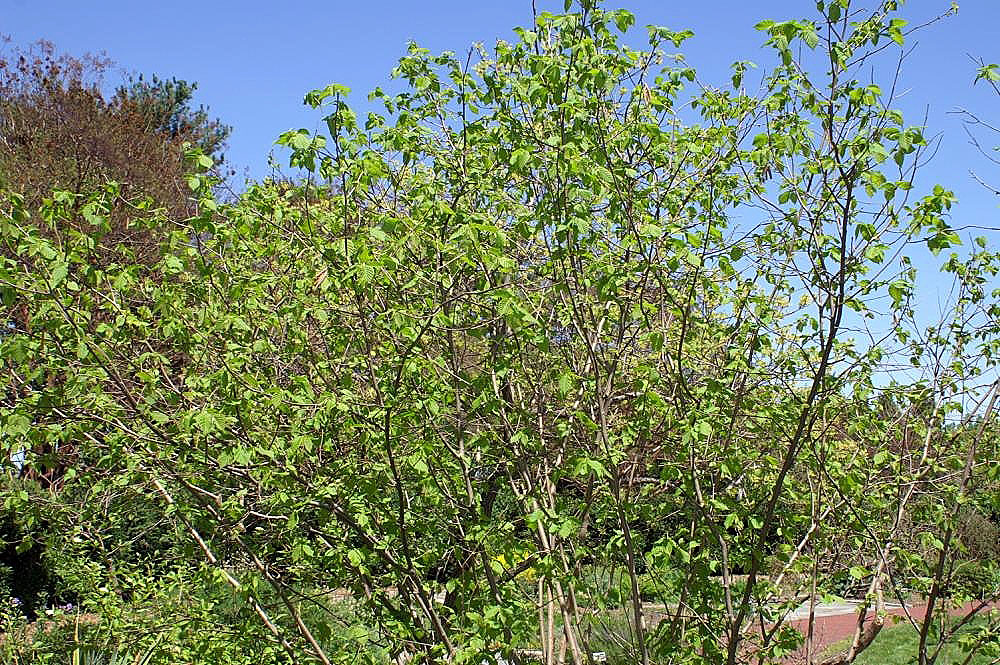
How to grow
Hazelnuts come in two main forms for home growers. American hazelnut (Corylus americana) is a native multi-stemmed shrub, 8–16 feet tall, with small but flavorful nuts and excellent wildlife value. European hazelnut or filbert (Corylus avellana) is the larger-nut commercial type, 12–20 feet tall, with named cultivars for orchards. Both are monoecious — male catkins and tiny red female flowers on the same plant — but largely self-incompatible, so you must plant at least two compatible varieties for cross-pollination by wind. One hazelnut alone is an ornamental; two are a crop.
Plant in fall or early spring in average, well-drained soil. Hazels sucker freely and form thickets if left alone; remove root suckers promptly if you want a tidy shrub, or let a hedge go wild for wildlife. Prune in late winter to remove dead wood and keep the center open.
USDA zones
American hazelnut is hardy in zones 4–9; European hazelnut in zones 4–8. Both need a winter chilling period (roughly 800–1,200 hours below 45°F for many types) and crop best with cool, moist summers. In Florida, hazelnuts are a long shot: heat, humidity, and insufficient chill argue against them outside a cool north-Florida experiment, so this guide is written for temperate gardeners.
Water & feeding
Water regularly while establishing and during nut fill; hazels dislike waterlogged soil but crop poorly in drought. Mulch to hold moisture and top-dress with compost or worm castings in spring. Avoid over-rich soil and heavy nitrogen — too much fertility gives leafy growth at the expense of flowers and nuts.
Common problems
- Eastern filbert blight — the serious disease of European hazels in the East, causing cankers and dieback. Choose resistant cultivars such as ‘Jefferson’ and its pollinators, and prune out cankers well below visible damage.
- Blank nuts — often a pollination failure. Check that you have two compatible varieties blooming together, not two of the same clone.
- Squirrels — the eternal hazelnut tax. Harvest as soon as husks loosen, or net the shrubs, or accept sharing.
Harvest
Nuts mature in late summer to early fall. Harvest when husks begin to turn yellow-brown and nuts loosen — you can even pick slightly early and finish ripening indoors to beat the squirrels. Husk, dry thoroughly in a warm, airy spot, and store in shells in a cool, dry place. Roast at moderate oven heat until fragrant for eating, baking, or grinding into flour.
Saving seeds
Hazelnut seed saving begins with the single most important fact about a hazel nut, and it is a fact that ruins many well-meaning envelope collections: a hazel nut is a recalcitrant seed, meaning it cannot survive being dried out and stored on a shelf like a bean. Dry it thoroughly and you do not preserve it, you kill it. The embryo inside needs to stay moist, and the whole game is getting the nut from the bush into moist, cold conditions promptly, before it desiccates. Sources disagree on how much slack you have, and that disagreement is worth stating: one nursery source reports that a few dry weeks after harvest cost little viability, while other growers insist that any prolonged dry storage desiccates the nut and the embryo dies. The safe reading of both is the same: do not test the limit. Treat a hazel nut as a living thing that needs planting or stratifying within days to weeks, not as a pantry item.
Collect nuts in late summer to early autumn, when the husks start to turn yellow-brown and the nuts loosen in them, and beat the squirrels by picking slightly early if you must. Husk them, then run the float test: drop the nuts in water, keep the sinkers, and discard the floaters, which are usually empty or unfilled. Do not crack the shells for sowing; the shell is the nut’s own packaging. Mix the sinkers with damp sand or vermiculite, seal them in a bag or container, and refrigerate them for a cold, moist stratification of roughly two to three months, checking now and then for mould and removing any nut that goes soft. Some growers stratify longer, up to three or four months, so if nothing has sprouted at three months, give it more cold rather than declaring failure. The easiest alternative is to sow fresh nuts outdoors in autumn, about an inch deep, and let winter do the chilling, but protect the bed with wire mesh, because every squirrel, mouse, and jay in the county will treat an unprotected hazel bed as a buffet.
Sow stratified nuts an inch deep in deep pots or a nursery bed in spring, on their sides, and keep the soil moist but not waterlogged. Seedlings will not grow true to a named cultivar, so a nut from a prized variety gives you a new hazel with its own nut size, shell thickness, and yield, and if you want an exact copy, you need layering or grafting. Hazels also need cross-pollination for a good nut crop, with wind carrying pollen between compatible plants in late winter, so a lone seedling may flower beautifully and crop poorly. In Florida, two cautions apply: hazels want a real winter chill and generally struggle in warm, low-chill gardens, and any stratified nuts held in a humid Florida home need regular mould checks, because damp plus warm is exactly how a bag of good nuts turns into a bag of compost.