
🌰 European Hazelnut
What it looks like
Quick facts
- Sun: Full sun to part shade
- Soil: Well-drained, fertile loam; mildly acidic to neutral (around pH 6.0–7.5)
- Spacing: 12–15 feet apart for a hedge or orchard row; it wants elbow room
- Mature size: Typically 12–20 feet tall and 8–15 feet wide as a multi-stemmed shrub; can be trained as a small tree
- Zones: USDA zones 4–8 (some listings stretch to 9)
- Florida: North Florida trial only — heat and low chill make it a gamble further south; see the honest Florida note below
What it is
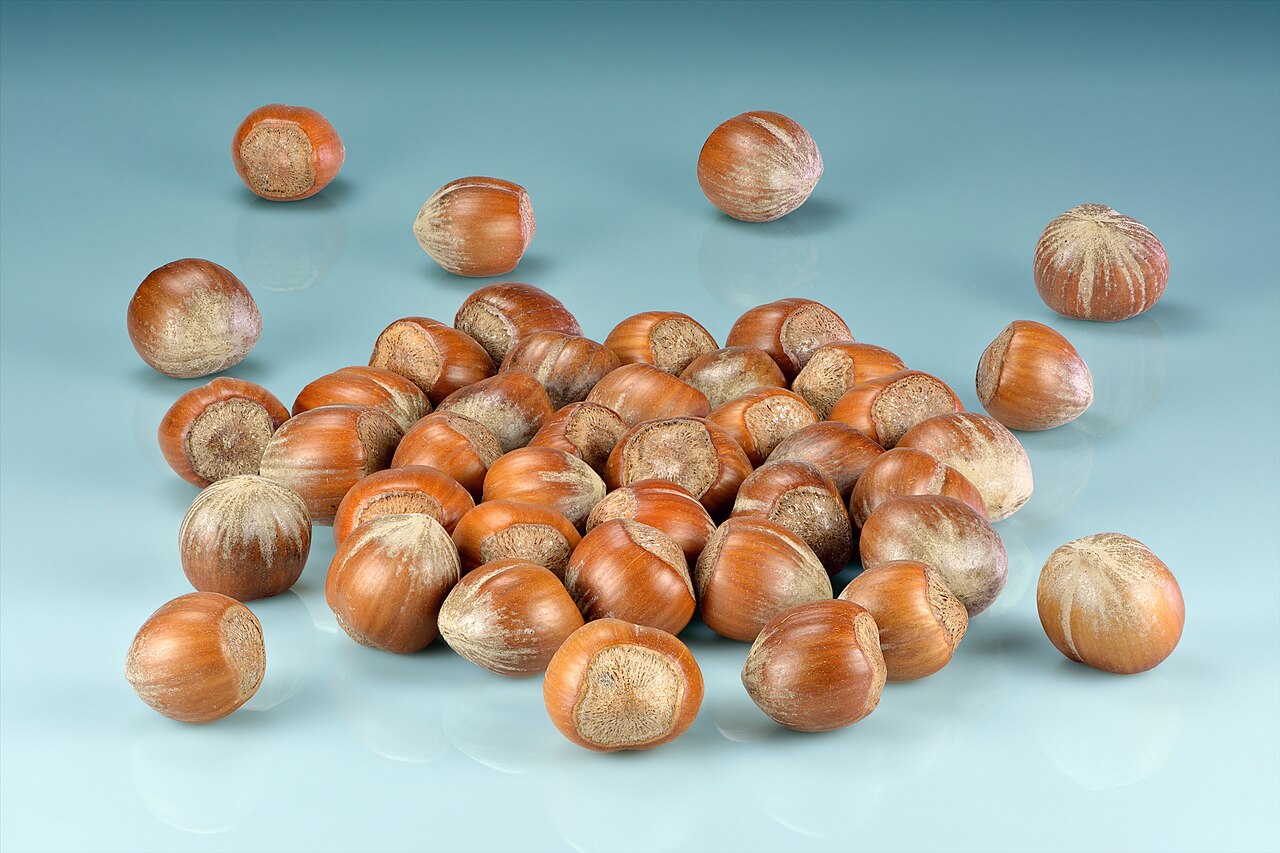
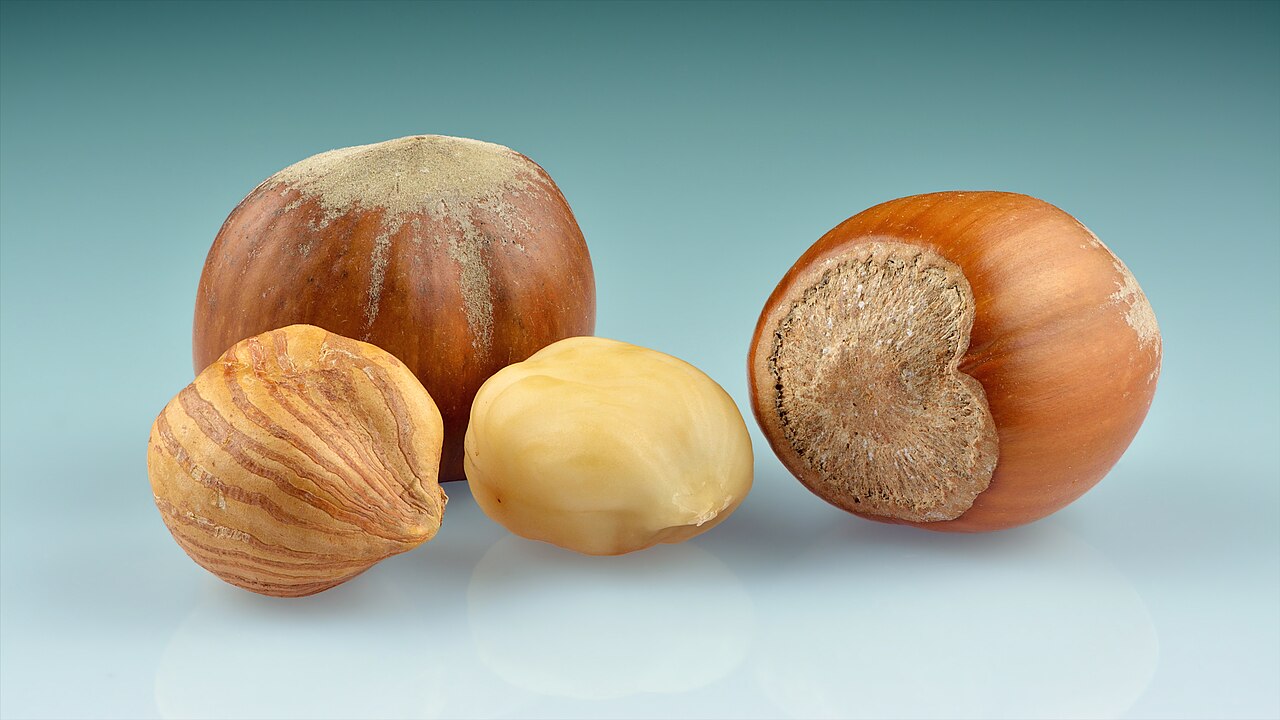
European hazelnut is the hazel behind most of the world’s hazelnut crop, and the name game around it is worth sorting out before you plant. Corylus avellana is also sold as common hazel, common filbert, and European filbert. In the United States, “filbert” usually means this European species, while “hazelnut” gets used for the whole genus — same nut family, different passports. The nuts hide inside a leafy husk like a little green bonnet, and they ripen in late summer into early autumn.
Left to itself, this is a multi-stemmed, arching shrub that forms a dense thicket from the base, which is why it has spent centuries doing double duty as a hedgerow plant in Europe. Prune it to a few main stems and it behaves more like a small tree. Either way, it is a long-lived, tough customer in a temperate climate: cold-hardy, wind-tolerant, happy in a range of soils as long as they drain, and generous with wildlife — squirrels will absolutely consider your crop their crop.
One important family note: this is the European cousin of the native shrub in our American Hazelnut profile (Corylus americana). The American species is the native plant; the European one is the commercial nut producer. They look like relatives because they are, but they are not interchangeable in the garden.
How to grow
Plant in late autumn or early spring, while the plant is dormant, in a spot with full sun to light shade and soil that drains after rain. Dig a hole wider than the root ball, settle the plant at the same depth it grew in the nursery, water it in deeply, and mulch — but keep the mulch off the stems, because a mulch volcano against bark is an invitation to rot. In a dry first year, water regularly; an established hazel is reasonably drought-tolerant, but nuts fill out better with steady moisture through summer.
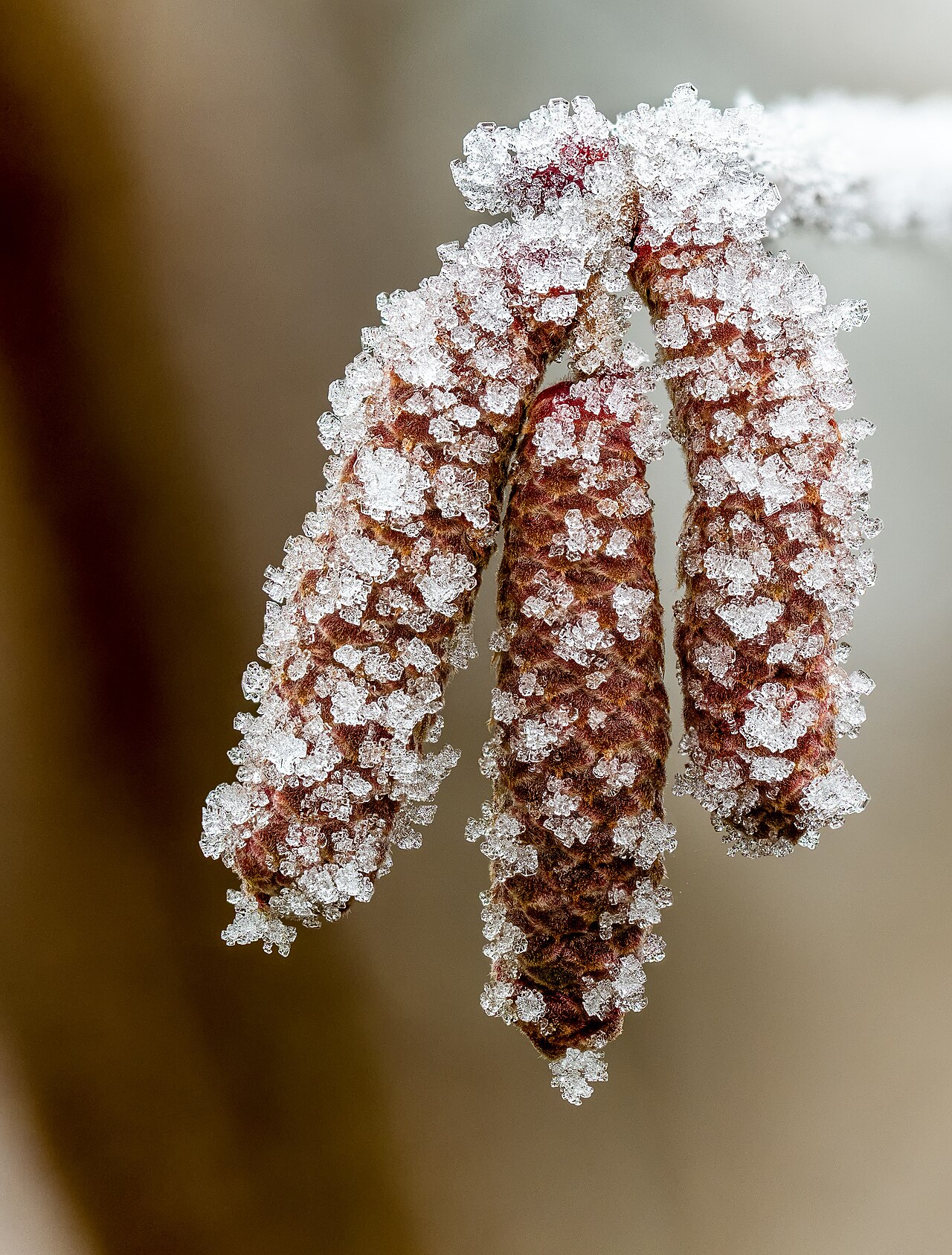
Here is the part people skip and then regret: you need at least two compatible plants for a real nut harvest. Hazels are wind-pollinated and largely self-incompatible, so a lone shrub will flower beautifully and then produce a disappointingly empty husk collection. Plant two different selections (or a species plant plus a compatible pollinizer) within about 50 feet of each other, and let the winter wind do the matchmaking. The catkins — those dangling yellow tassels — appear in late winter, well before the leaves, which is one of the earliest signs of spring in a cold-climate garden.
Prune in late winter. Remove suckers from the base if you want a tree form, or thin older stems to keep a shrub open and productive. Hazels respond well to coppicing — cutting stems back hard to renew them — which is why old European hedgerows could be cut and cut again for generations and just come back shrugging.
Water & feeding
Water deeply during establishment and through dry spells in the nut-filling months; shallow, frequent sprinkles grow shallow roots and small nuts. A spring feed of compost or a balanced, slow-release fertilizer is plenty — hazels in rich soil need little pampering, and excess nitrogen mostly buys you leafy growth at the expense of nuts. A soil test beats a guess: hazels prefer slightly acidic to neutral soil, and they sulk in waterlogged ground far more than they sulk in lean ground.
Common problems
The headline disease is eastern filbert blight, a fungus that attacks young shoots first and can girdle and kill branches and whole plants over time. It is the reason commercial hazelnut production failed in the eastern United States for decades, and it is the single biggest reason to think twice about this species outside its happy range. Resistant selections exist in the trade; if you plant this species, choosing blight-resistant stock is not optional garnish, it is the plan. Squirrels, jays, and assorted nut thieves are the other problem, and the honest fix is to pick nuts slightly early — when the husks start to loosen — and finish ripening them indoors, out of beak and paw reach.
Harvest
Harvest in late summer to early autumn, when the nuts drop or twist free easily from their husks and the kernels inside are plump rather than shrivelled. Dry them in a single layer in a warm, airy spot for a couple of weeks before shelling or storing; properly dried hazelnuts keep for months in a cool, dry place. Fresh hazelnuts taste nothing like the stale ones from a holiday candy bowl — sweet, buttery, and worth the squirrel negotiations.
The honest Florida note
Florida is not hazelnut country, and this guide will not pretend otherwise. European hazelnut needs a real winter chill — roughly 800 to 1,200 chill hours by some nursery listings — plus cool summers, and it carries eastern filbert blight risk in the east. That combination puts it firmly in north Florida trial territory at best, in the coolest microclimates, with blight-resistant stock, and with no promise of a reliable harvest further south. If you live in the peninsula and want a hazel, start with the native American hazelnut in the profile linked above and treat the European species as an experiment, not an orchard plan.
Nerdy fact: word ‘hazel’ is old — and the nuts have been gathered since prehistoric times. Archaeologists have found hazelnut shells in Stone Age campsites across Europe, which makes this one of humanity’s oldest snack foods, eaten for thousands of years before anyone planted an orchard on purpose.
Where it fits in the Living Root guides
This plant is also covered in our survey guide to the wider group — see Hazelnut: Growing Guide for how it compares with its relatives. Browse all the plant guides in the Plant Guides index.
Saving seeds
Start with the squirrel negotiations, because they are the real harvest calendar. European hazelnut seed is the nut itself, and the moment to collect it is late summer into early autumn, when the leafy husks start to brown and the nuts twist free easily or drop on their own. Gather daily if you can, because every squirrel in the county is running the same schedule and they do not share. Pick plump, undamaged nuts, and skip any with pinprick holes, which usually mean a weevil got there first.
The float test is your first sort. Drop the husked nuts in a bucket of water and keep the sinkers; floaters are usually hollow or insect-damaged and belong in the compost, not the seed tray. Here is where hazel gets delightfully contrary: sources disagree about how dry these seeds can go. They were long treated as seeds that must never dry out, and one modern forestry reference now calls the genus orthodox in storage, while still recommending moist storage to keep deep dormancy from setting in. The practical middle path is to not dry-store hazel seed like beans in an envelope. Stratify promptly instead, and treat any nut you hold over as a short-term guest in a breathable bag in a cool place, never a deep, warm pile.
Stratification is non-negotiable, because a hazel embryo sleeps like it means it. Mix the sound nuts with damp sand or vermiculite, seal them in a bag or box with a little air, and refrigerate them cold and moist. Sources agree on a range of roughly two to six months of cold, with three months proving effective in trials and some traditional guidance running five to six months, so plan on three to four months and check monthly for mold, drying out, or early sprouting. A few weeks of warm, moist conditions before the cold spell is reported to help fresh seed. When roots start to poke from the shells, the seed is awake and ready.
Sow each nut about two inches deep in a deep pot, because hazel sends down a strong primary root early and resents being cramped, and keep the pots cool and sheltered. Germination is gloriously irregular, stretching over weeks and sometimes into a second spring, so never tip out a pot that looks empty. Grow seedlings on for two or three years before planting out, and settle in for the long game: seed-grown hazels typically take several years, often six to eight, before they bear a real crop. And the honesty clause that matters most: named varieties do not come true from seed. A nut from a prized cultivar grows into a brand-new hazel, genetically shuffled, which might be wonderful and will not be its parent. If you want a named variety, buy a grafted or layered plant. Seed is for wild-type hazels, hedgerow experiments, rootstocks, and the gamble of raising something nobody has tasted before. Most hazels also set far better with a genetically different hazel nearby for wind pollination, so a lone seedling is a wildlife shrub first and a nut crop second.
The Florida note is a cold splash of water, and it belongs here rather than in the fine print. European hazel needs real winter chill that Florida simply does not deliver, so this section is mostly a gift to northern readers and to Florida gardeners with friends up north. Dry any seed you handle thoroughly before it goes anywhere near a jar in Florida humidity, store it airtight with desiccant in the fridge.
Varieties
Every named variety of European Hazelnut with its own growing guide:
- Jefferson European Hazelnut — The blight-proof successor: large, well-filled nuts on a vigorous, upright shrub — the modern standard that replaced Barcelona.
- Barcelona European Hazelnut — The old standard: big, rich, heavy-bearing nuts on a vigorous 15–18 foot shrub — still beloved, but blight-vulnerable.
- Ennis European Hazelnut — The big-nut showpiece: extra-large, striped, rich-flavored nuts on a moderately vigorous, heavy-bearing tree.