
🍈 Ilama
What it looks like
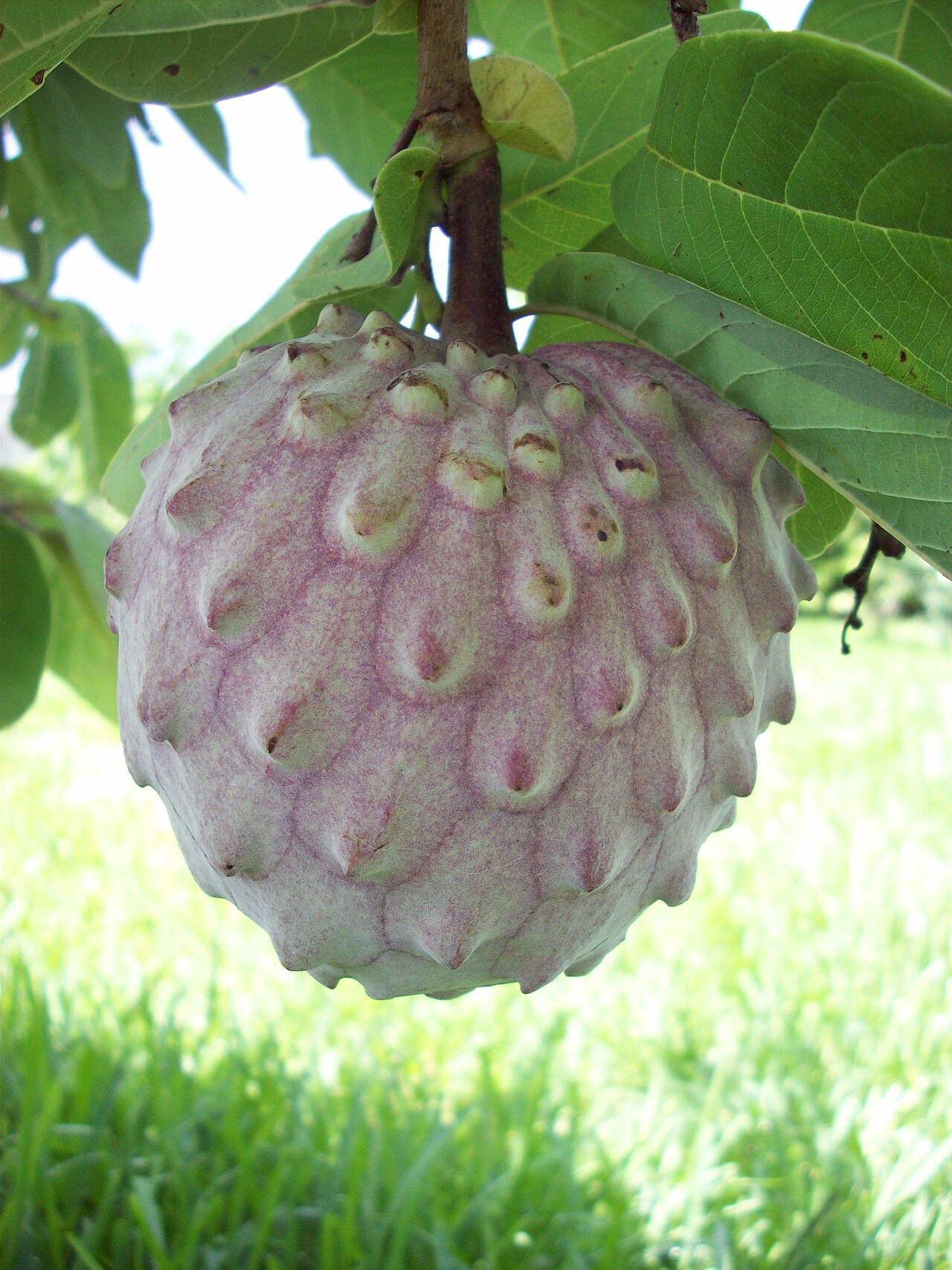
How to grow
Ilama is a lesser-known annona from Mexico and Central America, bearing large fruit with sweet, creamy flesh that fans describe as raspberry-like — a flavor distinct from sugar apple, cherimoya, and atemoya, though all are cousins. Grow it in full sun in fertile, well-drained soil in zones 10-11, in warm, protected south Florida or Hawaii gardens; it is frost-tender and slower to bear than atemoya, so patience is part of the price. Buy a grafted tree of a known selection, such as a red-fleshed type, for earlier and more reliable fruit. Hand-pollination improves set. Prune to keep it at picking height and mulch to hold moisture. Like other annonas, its seeds are not eaten — scoop flesh away from them.
Water & feeding
Water deeply and regularly while fruit swells; ilama wants consistent moisture but not waterlogging. Mulch to hold moisture. Feed several times a year with a balanced fertilizer or compost.
Common problems
- Slow to bear — seedlings take years; grafted trees are worth the price.
- Frost — no tolerance; warm sites only.
- Poor pollination — hand-pollinate for reliable set.
- Fruit flies — pick promptly and clean up fallen fruit.
Harvest
Pick when fruit softens and the skin colors and cracks slightly; it ripens quickly off the tree. Scoop flesh away from seeds and eat fresh — ilama is at its best unadorned, chilled, and eaten with a spoon. Use promptly; it softens fast.
Browse all plant & pest guides
Saving seeds
Ilama seed comes with a plot twist that is worth knowing before you do anything else: fresh seed is often the worst seed. Ilama (Annona macroprophyllata, also sold as Annona diversifolia) has a deep, morphophysiological dormancy, and one storage study found freshly harvested seed germinated at only about a quarter, while seed stored for around six months germinated at roughly two-thirds, with viability holding near its peak for about six months before declining. In other words, patience is not just a virtue here — it is the pretreatment. Do not throw away a batch that sulks in its first months; it may simply not be ready yet.
Collect seed from fully ripe fruit — fruit left to ripen on the tree will split, which is your signal, though market fruit is usually picked just before that point and allowed to finish off the tree. Scoop out the large, dark, hard-coated seeds, wash off all the pulp, and dry them. Unlike truly recalcitrant tropical seed, ilama seed tolerates dry storage reasonably well for months: keep it in a paper bag (not plastic) in a cool, dry place, and it should hold for roughly half a year or more, with germination fading after that. In Florida humidity, cool and dry means a fridge or a climate-controlled room with a desiccant packet, not a garage shelf in August.
Before sowing, give the hard coat some help. The classic Annona treatment is a pour of nearly boiling water over the seed, followed by a 12–24 hour soak in warm water; by the end of the soak, swollen seeds are ready, and any that have not swollen can be carefully nicked with a knife or sandpaper (without damaging the embryo) and soaked again. Some growers also use gibberellic acid to break dormancy, but that is optional equipment, not a requirement — time plus scarification gets most batches there. Sow shallow, no deeper than about an inch, in individual pots of well-drained mix at warm temperatures, roughly 70°F and up, and keep the mix moist but never waterlogged.
Then wait, and keep waiting. Germination can take weeks to several months, and stored seed can develop a secondary dormancy that makes it germinate poorly if it is held too long, so sow within that first half-year window rather than hoarding it. Seed usually breeds true to type, which is good news, but seedlings take their time: fruit commonly arrives around 7–8 years from seed, versus 3–4 years for a grafted tree. If you have a named variety you love, grafting is the faithful route; seed is for species plants, rootstocks, and patient experimenters. Label every pot with the variety and the sowing date, because in month four of waiting you will not remember which pot is which.
Varieties
Every named variety of Ilama with its own growing guide:
- Genova Red Ilama — The rare raspberry-cream annona with a name: a named ilama selection for patient South Florida growers.