
🌺 Ixora
What it looks like
How to grow
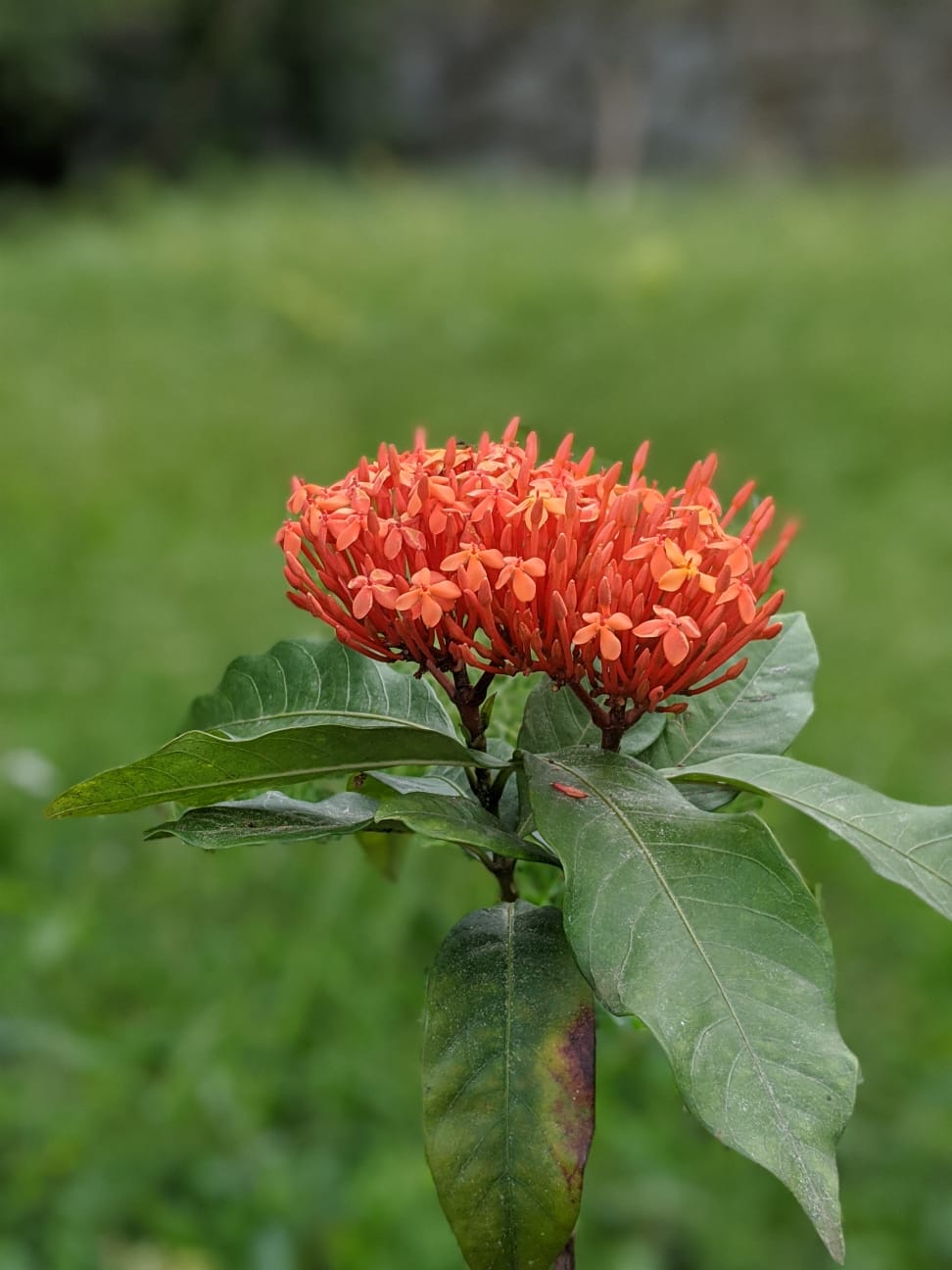
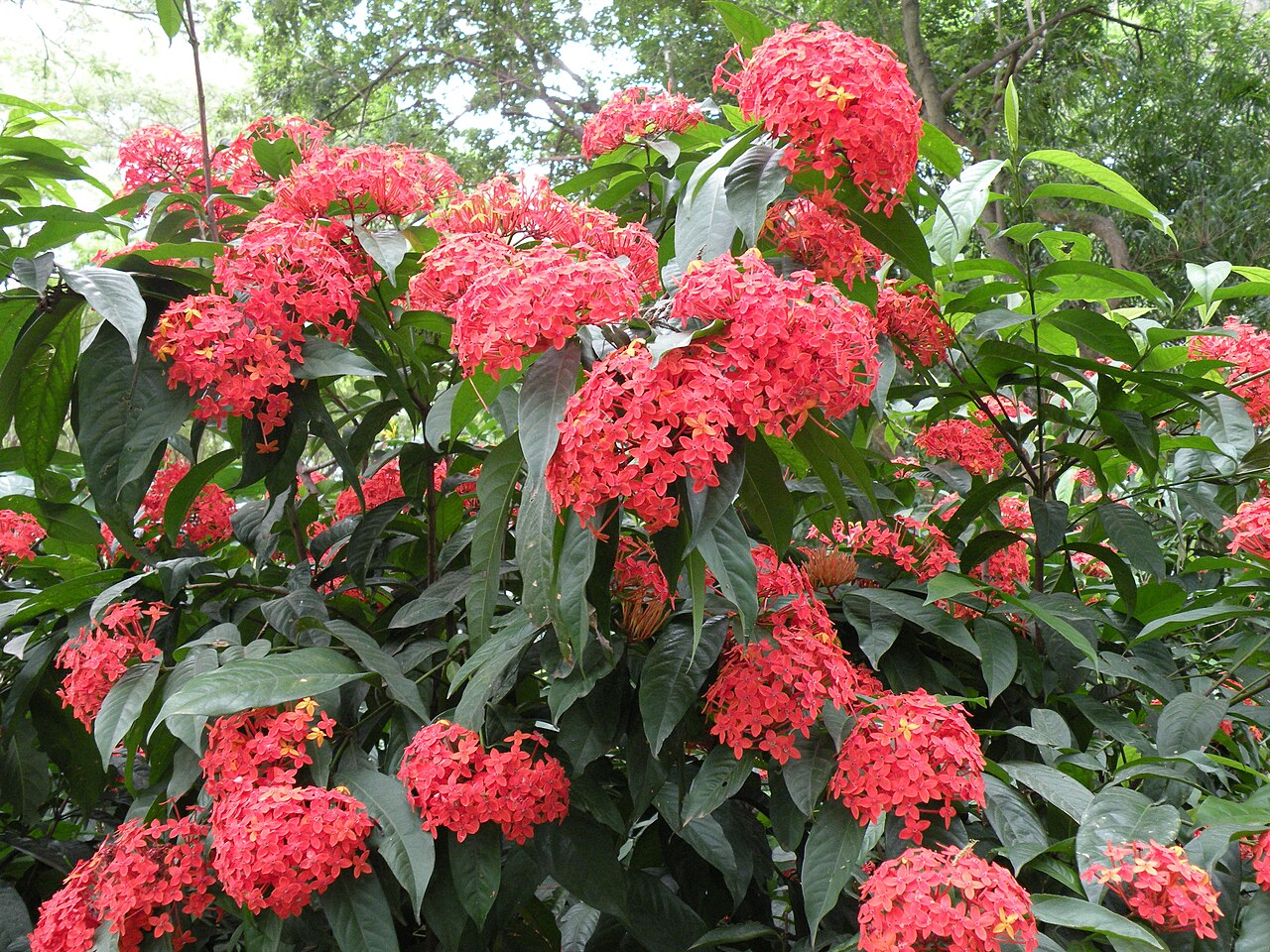
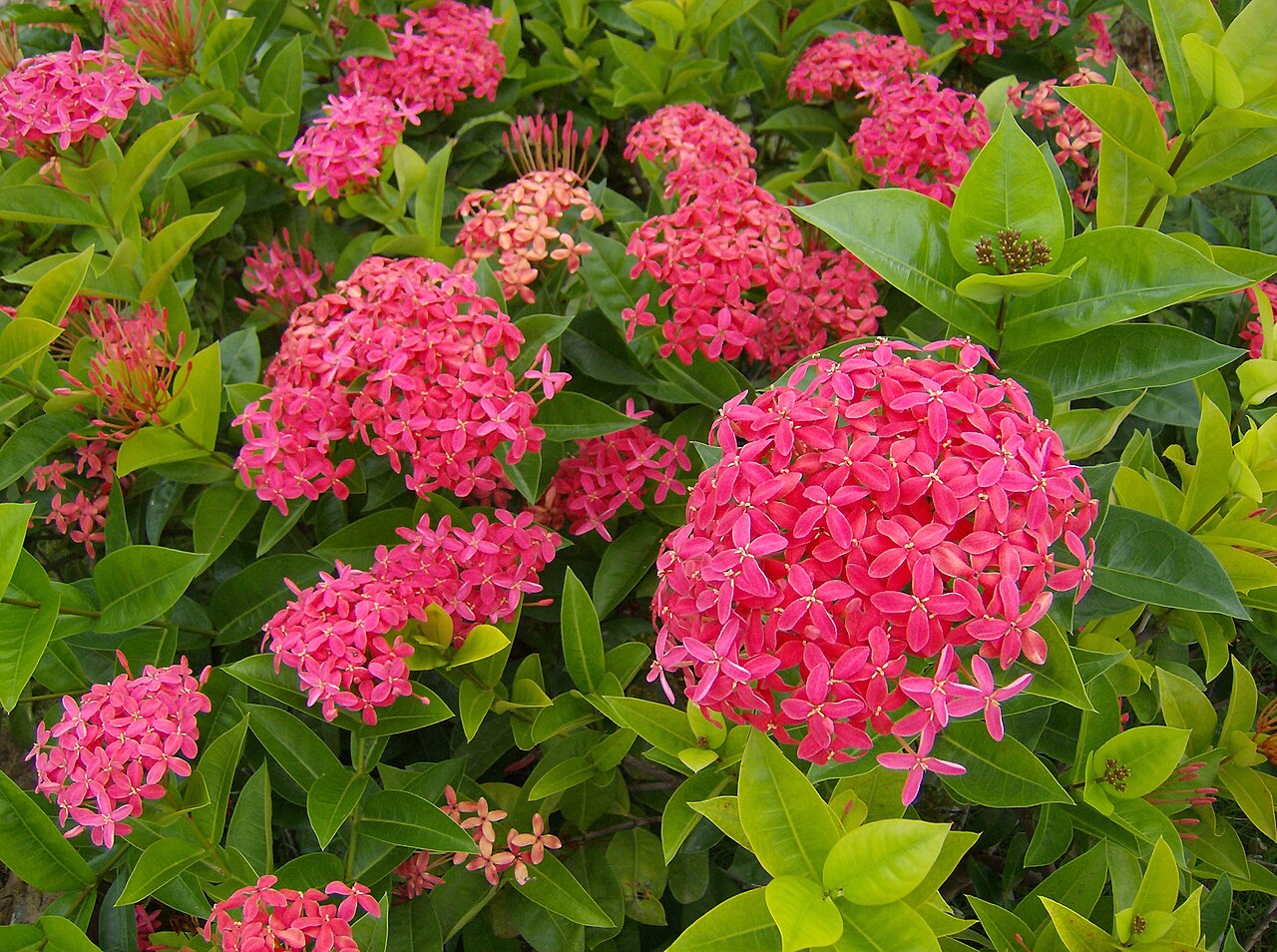
Ixora is an evergreen tropical shrub, 10–15 feet tall in the ground (dwarf cultivars stay much smaller), with glossy leaves and dense round clusters of red, orange, yellow, pink, or white flowers that bloom nearly year-round in warm climates. Plant in spring in full sun or partial shade in moist, well-drained, acidic soil enriched with organic matter; it is a classic Florida hedge and foundation shrub, but it is cold-tender — outside zones 9b–11, grow dwarf types in containers and move them indoors before frost. Soil pH is the whole game: in alkaline soil, especially near concrete sidewalks and foundations, ixora turns yellow with iron chlorosis and stops flowering well. Test your soil, amend with sulfur or acid-forming fertilizer if needed, and mulch with pine bark or pine needles to help hold acidity.
Water & feeding
Keep soil consistently moist but never soggy; ixora has moderate drought tolerance once established but flowers best with steady water. Feed regularly through the growing season with a micronutrient fertilizer that includes iron and manganese — chlorosis treatment with chelated iron corrects yellowing temporarily, but fixing soil pH is the lasting cure. Prune lightly after a bloom flush to shape and encourage reblooming.
Common problems
- Yellow leaves with green veins — iron chlorosis from alkaline soil; test pH, apply chelated iron, and acidify soil gradually.
- Nematodes, aphids, scale, and spider mites — ixora is pest-sensitive; treat scale and aphids with horticultural oil and keep plants vigorous.
- No flowers — too little sun, too little water, or alkaline soil; fix light and pH before blaming the plant.
- Cold damage — even a light freeze can injure it; cover container plants or move them inside at the first freeze warning.
Notes
Propagate by cuttings — seed is not the usual route for garden cultivars. Ixora is not known to be invasive, and its year-round flower clusters make it one of the best butterfly and hummingbird shrubs for warm-climate gardens that can meet its acid-soil demands.
Browse all plant & pest guides
Propagation
The honest headline: if you want another ixora exactly like the one you have, take a cutting. Seed works, but it is slow, patchy, and — like most things in the garden — it does not promise you the same flower color twice. Named cultivars do not come true from seed, so the pink or orange you fell for is only guaranteed by cloning the parent.
Cuttings are the easy route. In spring or early summer, snip a semi-hardwood stem 4–6 inches long from a healthy, non-flowering shoot. Strip the lower leaves, dip the cut end in rooting hormone, and set it in a moist, well-draining mix — equal parts peat and coarse sand or perlite works. Tent the pot in a plastic bag or a propagating case to hold the humidity, keep it in bright filtered light at 70–80°F, and wait. Roots usually show in 4–6 weeks (give it up to 8–10 before you declare defeat); uncover gradually over a couple of weeks so the new plant acclimates, then pot it up. Young cuttings often bloom surprisingly fast — sometimes the same season.
Seed is the patient gardener’s route. The dark purple berries that follow the flowers sometimes hold viable seed: clean the pulp off, soak the seed overnight, and sow it barely covered in warm seed-starting mix. Germination takes several weeks and is never guaranteed — some batches give you one or two seedlings after months of waiting. Keep the tray warm, bright, and moist, and do not bury the seed deep. If you are saving seed in Florida, remember the humidity rule that governs everything here: dry the seed thoroughly before it goes into a closed container, or you will be farming mold instead of ixora.
Varieties
Every named variety of Ixora with its own growing guide:
- Nora Grant Ixora — The pink ixora that blooms nearly year-round in warm gardens: soft pink clusters on glossy leaves, if you give it acid soil.
- Maui Red Ixora — The compact red ixora: flame-red clusters nearly year-round, on a smaller shrub that fits a foundation bed or a pot.