
🌿 Japanese Holly
What it looks like
Quick facts
- Sun: Full sun to part shade
- Soil: Moist, well-drained, slightly acidic soil; tolerates sand and clay if drainage is good
- Spacing: 3–5 feet apart for a hedge, wider for a specimen
- Mature size: Species plants reach 5–10 feet tall and wide; named forms range from under 2 feet to 20 feet
- Zones: USDA zones 5–8
- Florida: North Florida only, and even there it is a heat-and-humidity trial — see the honest Florida note below
What it is
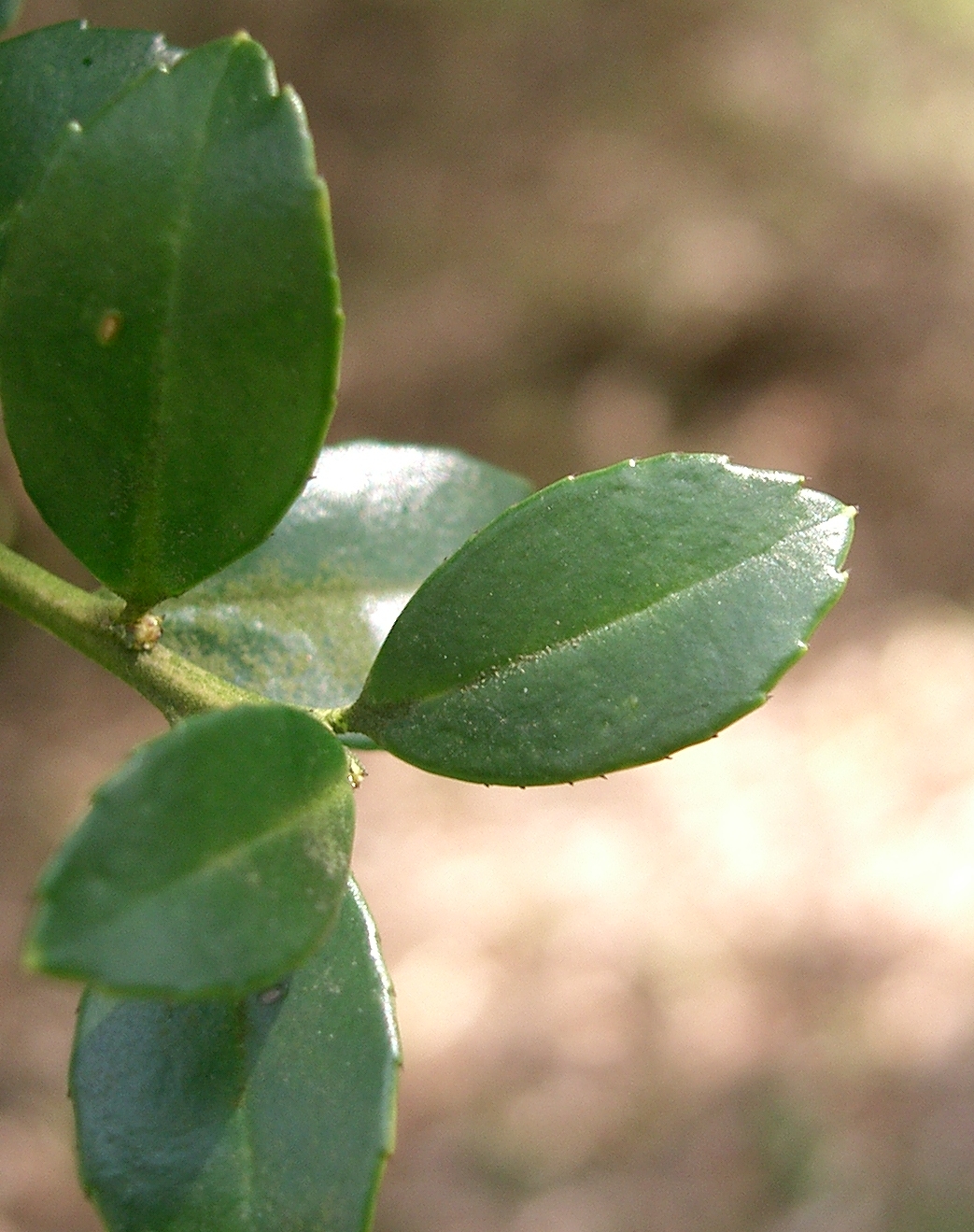
Japanese holly is the evergreen shrub people plant when they want the look of boxwood without the boxwood drama. Ilex crenata carries small, glossy, dark green leaves with tiny, shallow, rounded teeth along the edges — crenata literally means “with shallow rounded teeth” — and from a few steps away it reads as boxwood’s twin. Up close, the difference is in the details: holly leaves are arranged alternately along the stem, boxwood leaves sit opposite, and Japanese holly grows at a pace that will not make you feel personally attacked by your shears.
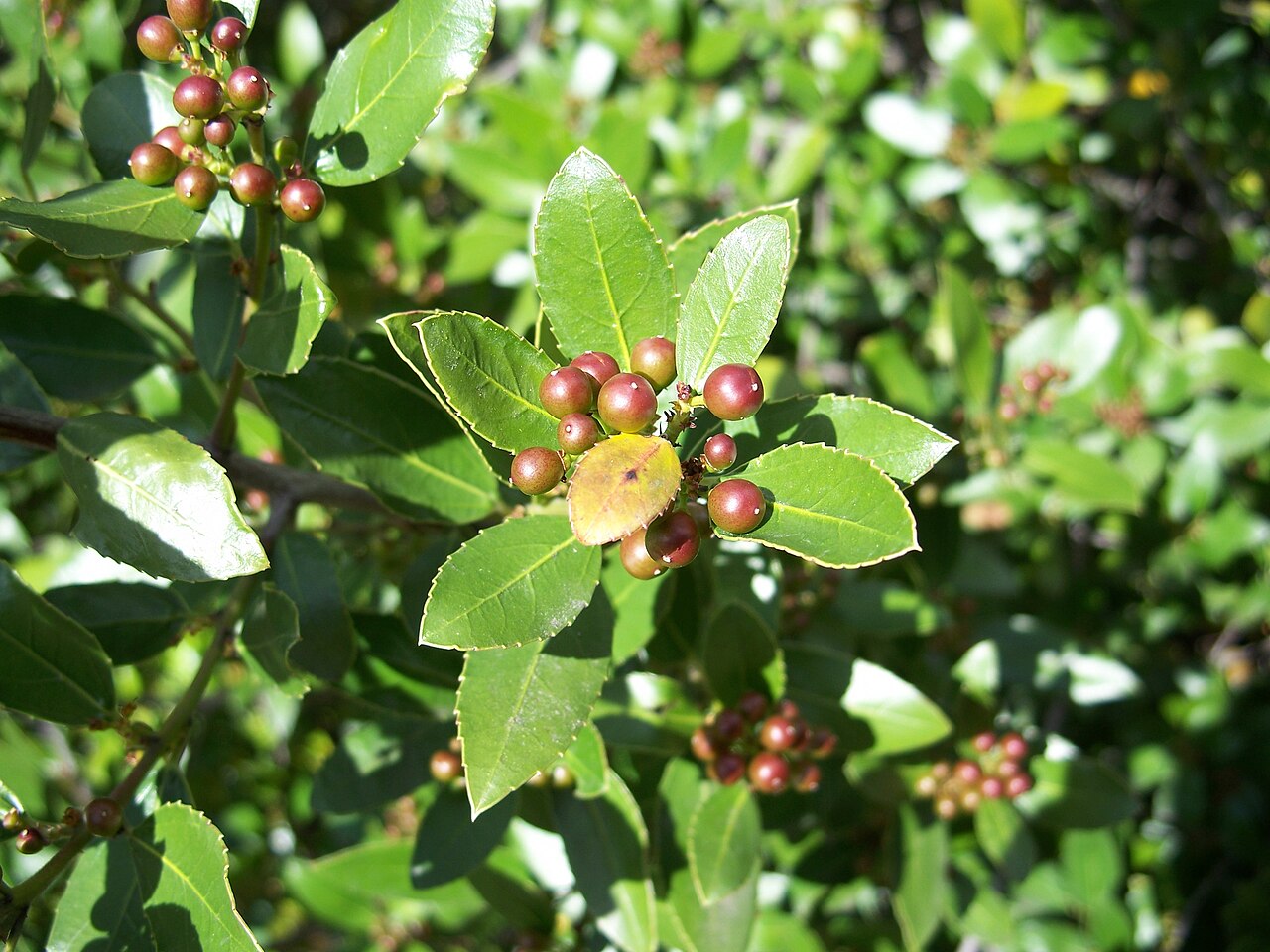
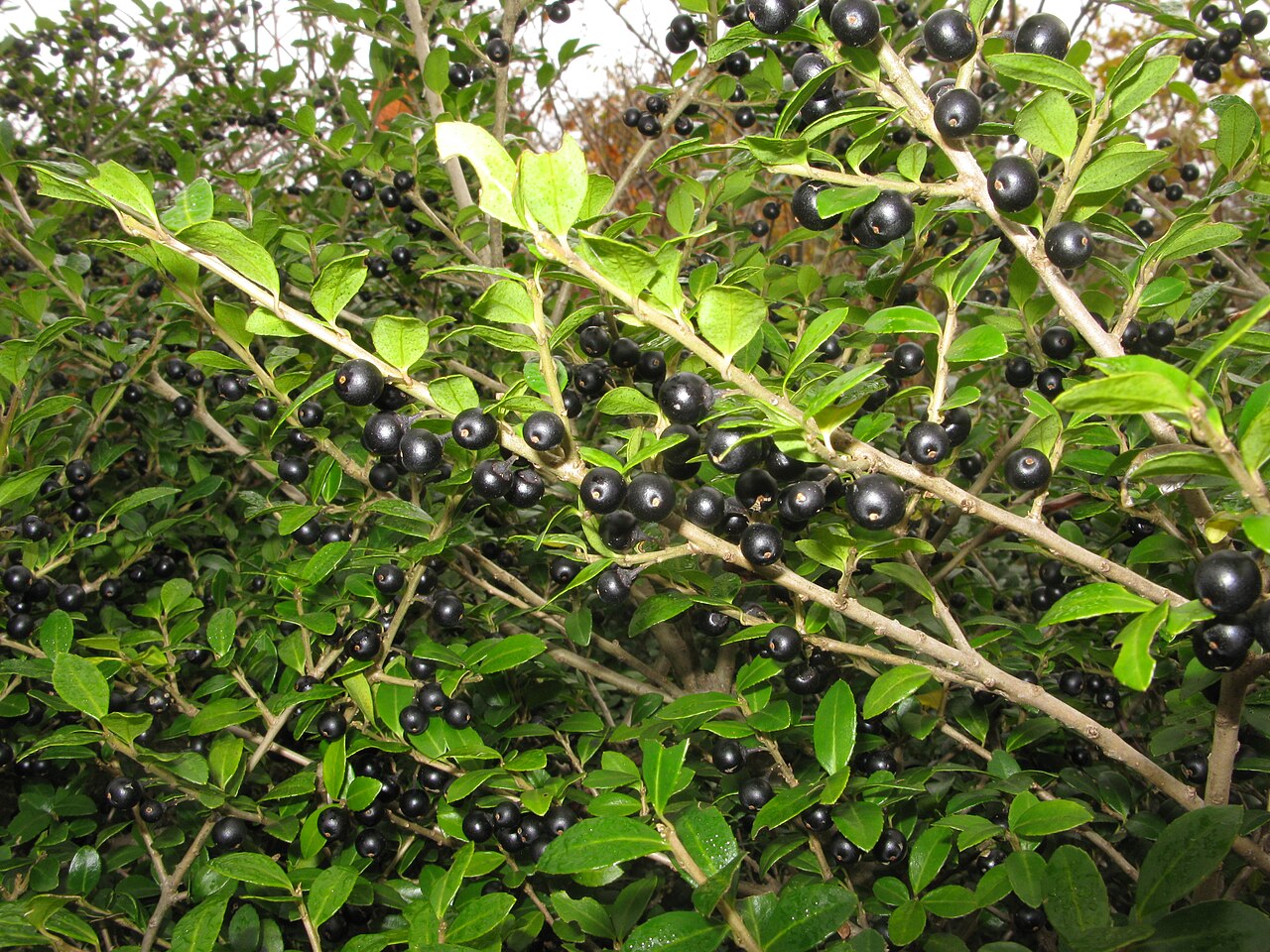
It is a slow-growing, dense, rounded shrub in its natural form, native to Japan and nearby parts of East Asia, where it grows in woods and moist lowlands. Garden forms have been selected for nearly every job: dwarfs that edge a path, upright columns that punctuate a corner, and big rounded shrubs that make a proper hedge. Female plants produce small black berries in autumn if a male plant is nearby for pollination — the berries are ornamental, not for snacking, since holly berries are toxic to people. Keep that in mind if small hands roam the garden.
How to grow
Plant in spring or autumn in a spot with full sun to part shade and soil that holds moisture but drains. Japanese holly likes slightly acidic soil and consistent moisture; it tolerates a range of soil types, from sand to clay, but it dislikes alkaline soil (leaves yellow) and it dislikes drying out completely. Water deeply while it establishes, mulch to hold moisture, and give it a year or two to settle — slow growers look unimpressive at first and then quietly become the most reliable shrub in the bed.
Pruning is refreshingly undemanding. Light shaping can happen through the growing season, and heavier pruning is best in late winter before new growth starts. It tolerates heavy pruning and shearing well, which is why it is a topiary staple, but a hand-pruned, slightly natural shape looks better and stays healthier than a plant sheared into a stressed green box every month. Feed lightly in spring with a slow-release fertilizer formulated for acid-loving plants if growth is pale or slow; in decent soil, compost mulch often does the job.
Water & feeding
Consistent moisture is the whole game. Japanese holly is not a desert plant: dry spells cause leaf drop and thinning, and a newly planted shrub that dries out may never recover its density. Once established it has some drought tolerance, but “tolerates” is doing a lot of work there — regular water in dry weather keeps it dense and green. Avoid wet feet, though: soggy soil invites root rot, which is a much faster killer than a dry week.
Common problems
Watch for holly leaf miner, scale insects, and aphids, plus occasional leaf blight in wet, crowded plantings. Good air circulation, correct spacing, and not over-shearing into a dense, airless shell prevent most of it. Yellow leaves usually mean alkaline soil or poor drainage, not a mysterious curse — check soil pH and drainage before reaching for fertilizer. Deer generally leave it alone, which is a genuine selling point in deer country.
Seasonal interest
This is a four-season shrub, and that is the point. It holds its glossy green leaves through winter, carries inconspicuous spring flowers that bees visit, and — on female plants with a male nearby — finishes the year with black berries against dark foliage. It will not give you a fireworks display of flowers, and it does not need to: its job is to look tidy and alive in February, when half the garden is asleep.
The honest Florida note
Japanese holly’s hardiness range stops at zone 8, and extension references specifically warn it may not thrive in the heat and humidity of zones 8 and 9. That makes it a north Florida plant at best — the coolest, shadiest, most moisture-reliable corner of a north Florida garden, with acidic, well-drained soil and afternoon shade — and not a statewide recommendation. Central and south Florida gardeners who want this look should choose a genuinely heat-adapted evergreen instead and enjoy Japanese holly as a reference plant, not a purchase.
Nerdy fact: nese holly’s tiny leaves are a case of convergent gardening: it is not related to boxwood at all — it is a true holly, in the Aquifoliaceae family, cousin to the spiky Christmas hollies. Two unrelated plant families arrived at the same small, glossy, hedge-friendly leaf because gardeners kept selecting for it. Evolution did not plan the resemblance; pruning shears did.
Where it fits in the Living Root guides
This plant is also covered in our survey guide to the wider group — see Holly: Growing Guide for how it compares with its relatives. Browse all the plant guides in the Plant Guides index.
Saving seeds
First, the fact that decides everything else: Japanese holly is dioecious, which is the polite botanical way of saying the boys and the girls live on separate plants. Only female plants make berries, and only females growing near a male plant make berries with viable seed inside them. If your holly has never fruited, it may be a male, or it may be a lonely female with no pollen source in range. Before you plan a seed harvest, check in late spring whether your plant carries the small white flowers, and whether there is a male holly — any male Ilex crenata — flowering within bee distance. No male, no seed. It really is that simple.
Collect berries when they are fully ripe and black, usually in fall, and pick from a healthy female plant whose berries look plump rather than shriveled. The pulp has to come off before the seed goes into storage, because pulp left on invites mold — and in Florida humidity, mold is not a risk, it is a guarantee. Crush the berries gently in water, rub the pulp away, and rinse until the water runs clear. The seeds inside are small and hard, and a single berry usually holds a few of them.
Dry the cleaned seed thoroughly, then decide which road you are taking. The easy road is to sow fresh seed outdoors in fall, in pots of moist, well-drained mix, and let the seasons do the work for you. The fridge road is for stored seed, and it takes patience: holly seed has a double dormancy, meaning it wants a warm spell followed by a cold spell before it wakes up. Sources disagree on the exact lengths, so here is the honest range — several weeks of warmth, then roughly two to three months of cold-moist stratification in the fridge, in damp vermiculite or a damp paper towel inside a sealed bag. Check the bag now and then; the medium should stay moist, never soggy.
Then comes the part that tests your patience: germination is slow and uneven, and it commonly takes until the second spring after sowing. Do not throw the pot away when nothing happens in the first few months — the seed is probably still working, not dead. Keep the mix moist but never waterlogged, in bright shade, and prick seedlings out into individual pots once they are big enough to handle. Grow them on under cover for their first winter before planting out.
Store any seed you are not sowing right away in a labeled envelope or an airtight jar with a desiccant packet, cool and dark, and use it within a year or two for the best results. In Florida, the desiccant is doing real work, not decorative work — seed stored damp in our humidity will mold in the jar.
And the honesty note that belongs in every holly seed conversation: seed grows the species, not the cultivar. If you love a named form — a ‘Helleri’ with its tight mound, a ‘Sky Pencil’ with its columnar habit — seed will not give you another one. Named hollies are grown from cuttings, which is the only way to keep the exact shape and habit. Save seed for species plants, rootstocks, and experiments. Take cuttings when the plant has to match its parent.
Varieties
Every named variety of Japanese Holly with its own growing guide:
- Sky Pencil Japanese Holly — The exclamation point: a pencil-thin column of glossy evergreen, 6–10 feet tall and only 2–3 feet wide.
- Helleri Japanese Holly — The low mound: a dwarf, dense, deer-resistant mound of tiny glossy leaves, barely 3 feet tall.
- Steeds Japanese Holly — The hedge-maker: a dark, glossy, upright pyramid — the male form that anchors hedges and screens.
- Convexa Japanese Holly — The cupped-leaf mound: dense, rounded, and instantly recognizable by leaves that cup downward.