
🌿 Sky Pencil Japanese Holly
What it looks like
Why this variety
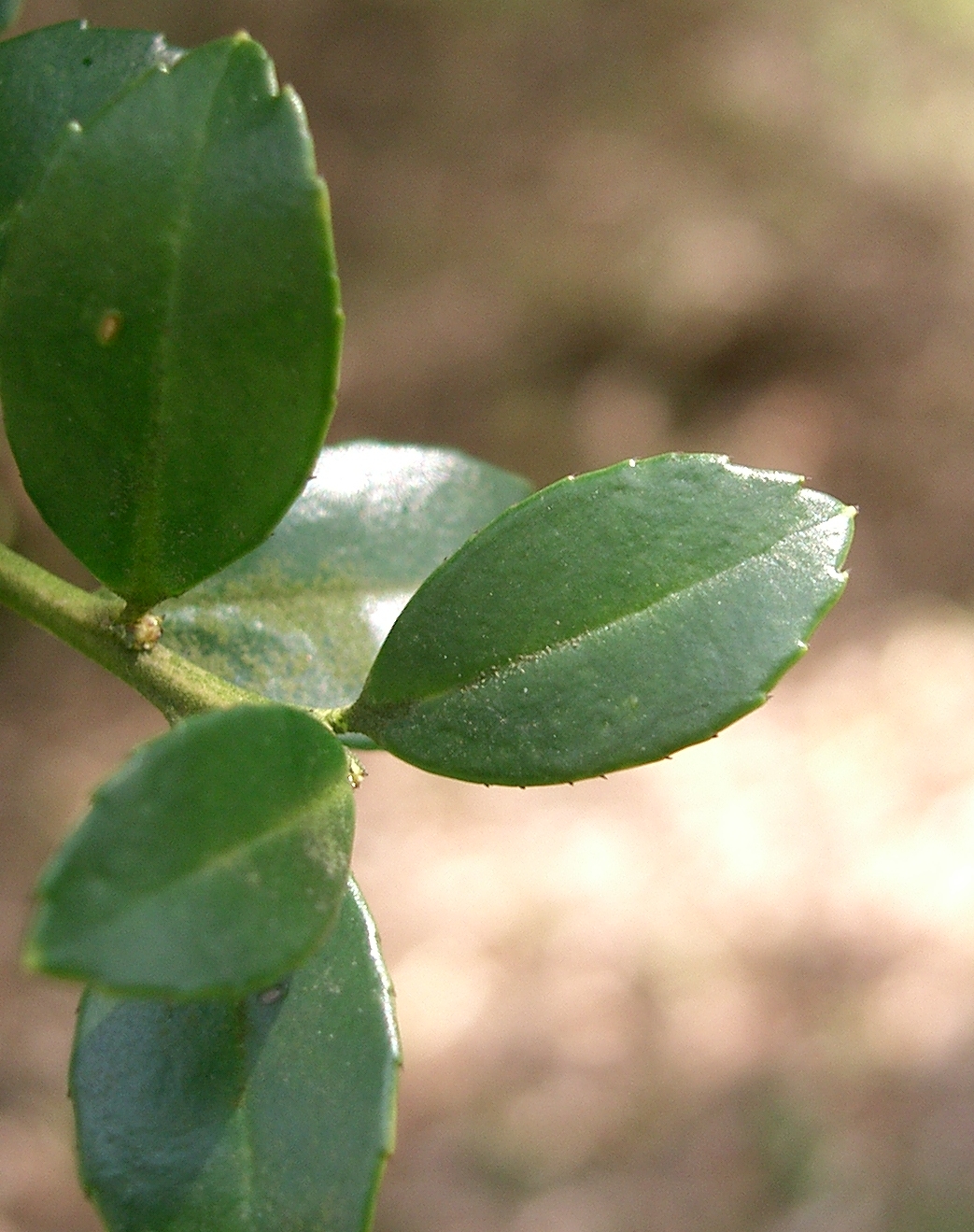
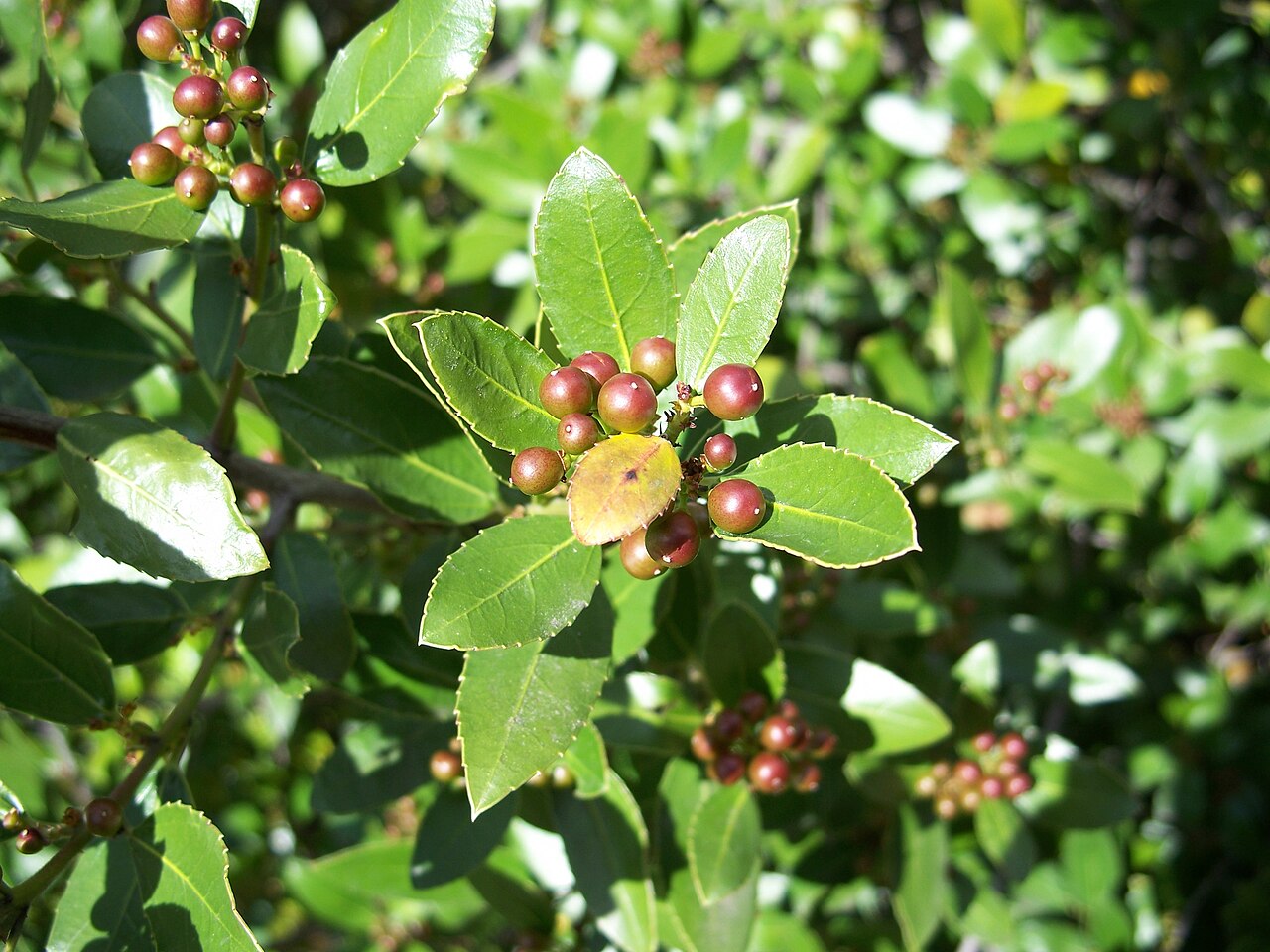
Sky Pencil is Japanese holly stretched straight up: a stiffly columnar, pencil-thin evergreen that grows 6–10 feet tall while staying only 2–3 feet wide, which makes it the answer to the eternal small-garden question of where to put a vertical accent without surrendering the whole bed. It is a female form found in Japan and introduced through the U.S. National Arboretum, with the same small, glossy, dark green leaves as the species, arranged in a column so narrow it reads as punctuation in the landscape — plant three in a row and you have exclamation points; plant one by a doorway and you have an exclamation point with a job.
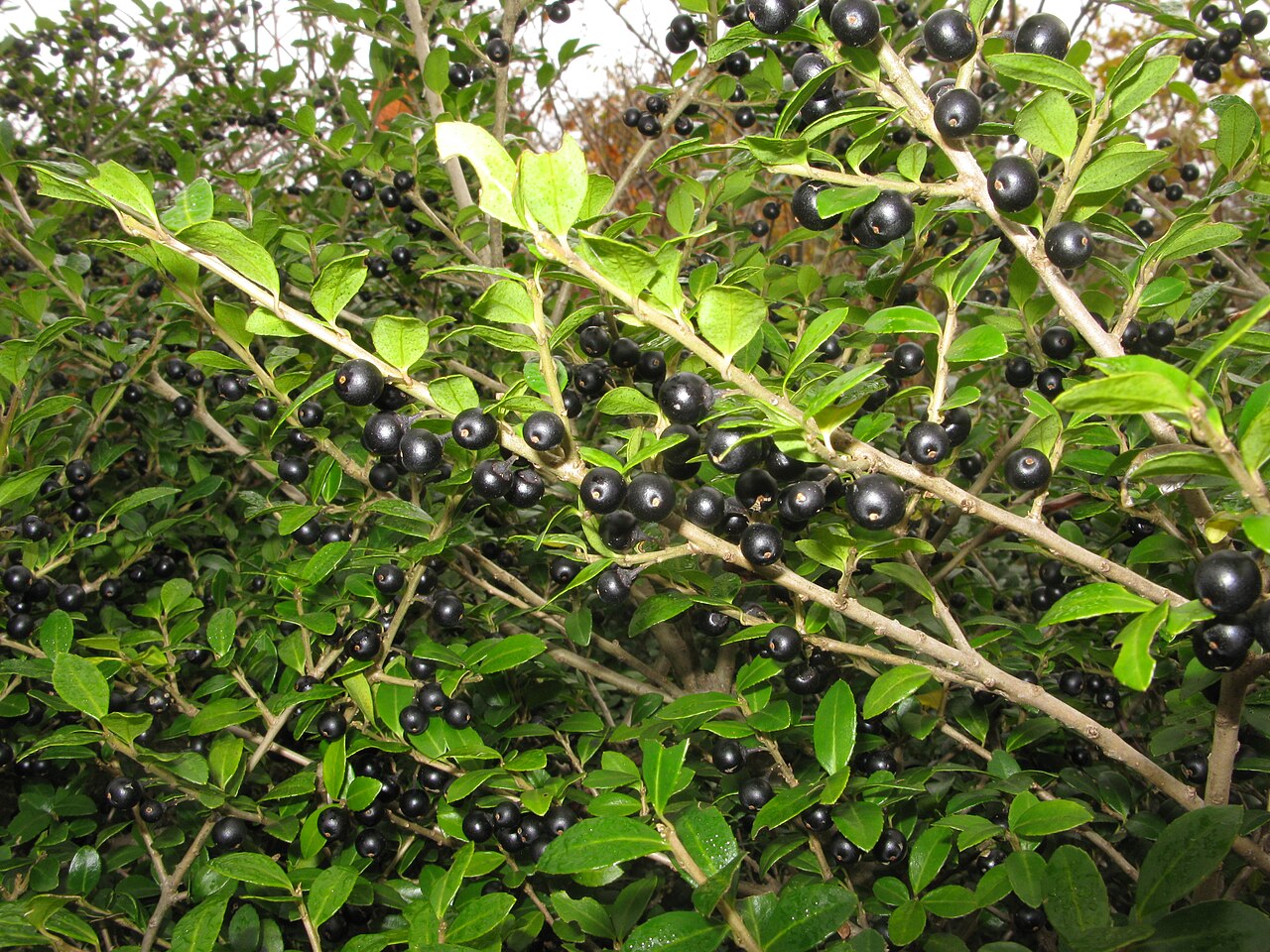
It is also salt tolerant, which matters if your garden sits anywhere near a road that gets salted or a coast that breathes salt air, and it holds its columnar shape without pruning, unlike many upright shrubs that need constant shearing to stay narrow. The catch is snow and weight: heavy snow can bend or splay the narrow branches, so northern gardeners give it a shake after a snowfall or tie the column loosely in winter. And because it is female, it needs a male Japanese holly nearby to set its small black berries — without a male, you get the column but no fruit.
One name to keep out of this family: ‘Nellie R. Stevens’ is not a Japanese holly at all, despite turning up in holly lists everywhere. It is Ilex × attenuata, a hybrid of Chinese holly and English holly, growing 15–25 feet tall — a fine plant, but a different species, and it does not belong in a Japanese holly lineup. Sky Pencil, by contrast, is crenata through and through. If you are new to choosing between cultivars, the Varieties Matter guide explains why the name after the plant matters as much as the plant itself.
Florida honesty: Japanese holly is a North Florida plant, and even there it is a heat-and-humidity trial. It wants the coolest, most sheltered corner you can offer, with afternoon shade and soil that never stays soggy in a summer downpour. Further south, expect a short, unhappy life, and plant something that actually likes it hot instead.
How to grow
Plant Sky Pencil in full sun to part shade in moist, well-drained, slightly acidic soil, and give it the drainage Japanese hollies insist on — wet feet in a summer downpour is the fastest way to lose one. Space plants 2–3 feet apart for a tight screen, or give a specimen room to be admired from all sides. Work worm castings into the planting hole, mulch to hold moisture, and water well through the first year; Japanese holly is slow-growing, so patience is part of the program.
Pruning is refreshingly optional: Sky Pencil holds its column on its own, so prune only to remove dead or damaged wood, to correct a branch that leans out of line, or to shake off snow damage. If you do shear, do it in late winter or early spring before new growth, and never shear into bare wood expecting it to regrow — Japanese holly resprouts poorly from old, leafless stems.
Water & feeding
Water to establish, then keep soil evenly moist — Japanese holly sulks in drought and drowns in standing water, so the goal is steady moisture with good drainage, not a swamp and not a desert. Mulch with an organic mulch to hold moisture and keep roots cool, and water at the soil line during dry spells, especially in the first two years. Feed lightly: castings at planting and a light spring feed for acid-loving shrubs is plenty; heavy fertilizer pushes soft growth that winter cold then punishes.
Common problems
- Snow load bending the column — shake heavy snow off promptly, or tie the column loosely before winter in snowy climates.
- No berries without a male — Sky Pencil is female; plant a male Japanese holly nearby if you want fruit.
- Wet soil and root rot — the number-one killer; plant high, improve drainage, and never let it sit in standing water.
- Spider mites in hot, dry weather — stippled, dull leaves mean mites; blast with water and improve moisture.
- Winter burn in exposed sites — cold wind scorches evergreen leaves; shelter from prevailing winter wind where you can.
Pruning & best use
Use Sky Pencil where nothing else fits: flanking a doorway, punctuating a corner, screening a narrow side yard, or marching in a row as a living colonnade along a path. It is also a strong container plant for a large pot by an entrance, provided the pot drains freely and gets watered through dry spells. Because it needs no shearing to stay narrow, it is one of the lowest-maintenance vertical accents in the evergreen world — a plant that looks architectural without demanding a topiarist.
Pair it with low, mounding shrubs at its feet — Helleri, below, is the obvious companion — so the base does not look leggy, and let it do what it does best: stand up straight and stay green while everything around it has opinions about the weather.
Back to the Japanese Holly growing guide
Browse all plant & pest guides
Saving seeds
Sky Pencil is Japanese holly stretched straight up: a stiffly columnar, pencil-thin evergreen that grows 6–10 feet tall while staying only 2–3 feet wide, which makes it the answer to the eternal small-garden question of where to put a vertical accent without surrendering the whole bed. It is a female form found in Japan and introduced through the U.S. National Arboretum, with the same small, glossy, dark green leaves as the species, arranged in a column so narrow it reads as punctuation in the landscape — plant three in a row and you have exclamation points; plant one by a doorway and you have an exclamation point with a job. As a named Japanese holly it is kept true by cuttings, not by seed — plant Sky Pencil in full sun to part shade in moist, well-drained, slightly acidic soil, and give it the drainage Japanese hollies insist on: wet feet in a summer downpour is the fastest way to lose one. Space plants 2–3 feet apart for a tight screen, or give a specimen room to be admired from all sides. Pruning is refreshingly optional: Sky Pencil holds its column on its own, so prune only to remove dead or damaged wood. The full method is in the Saving seeds section of the Japanese Holly guide.