
🌳 Japanese Zelkova
What it looks like
How to grow
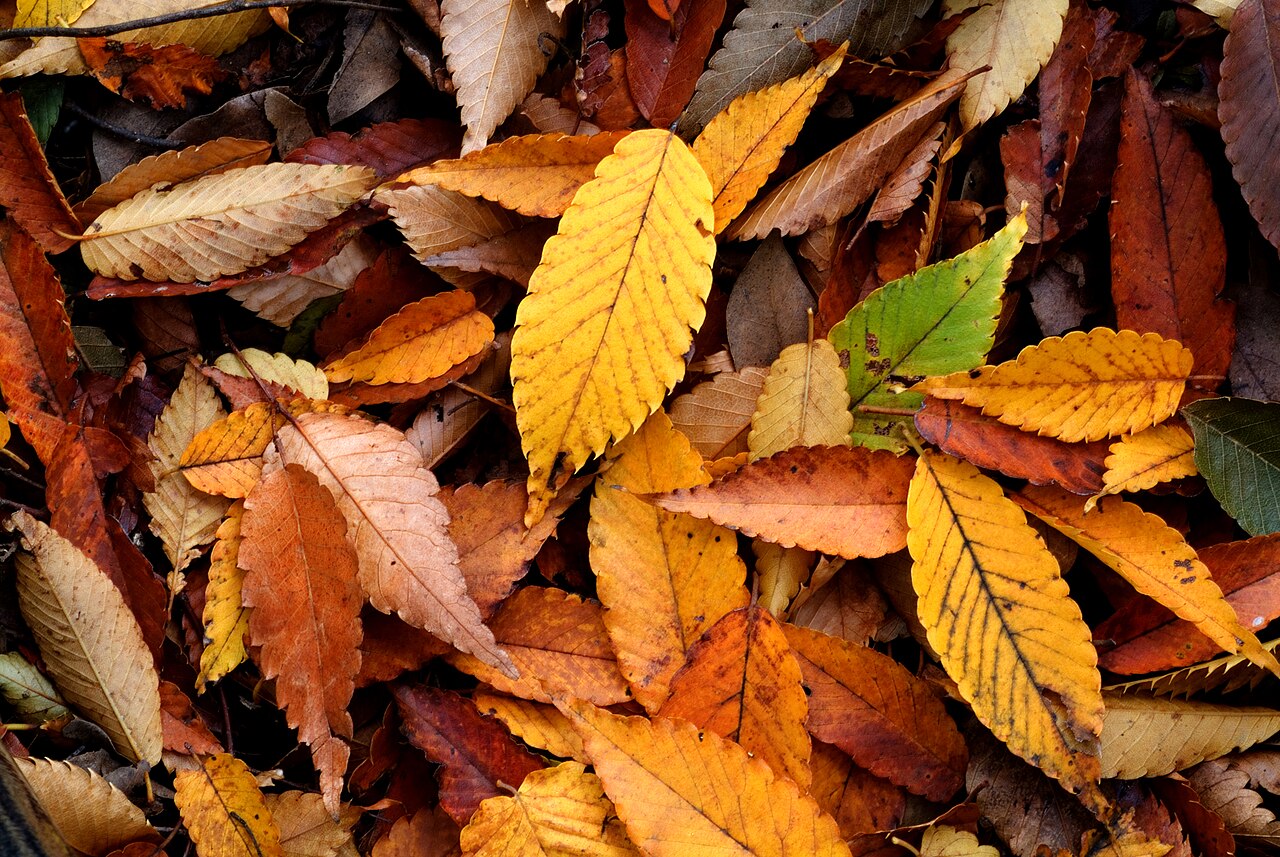
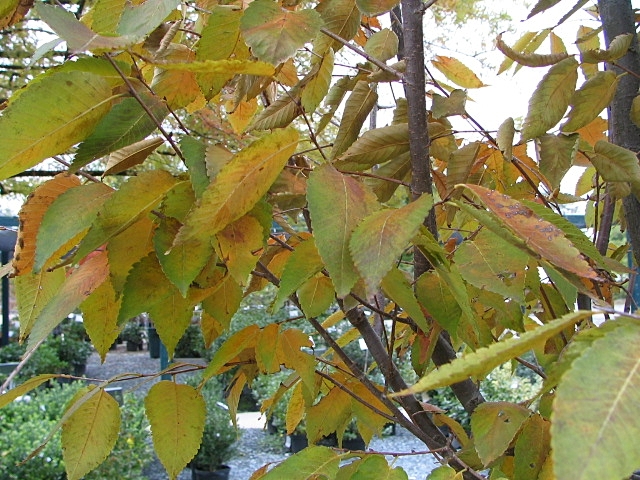
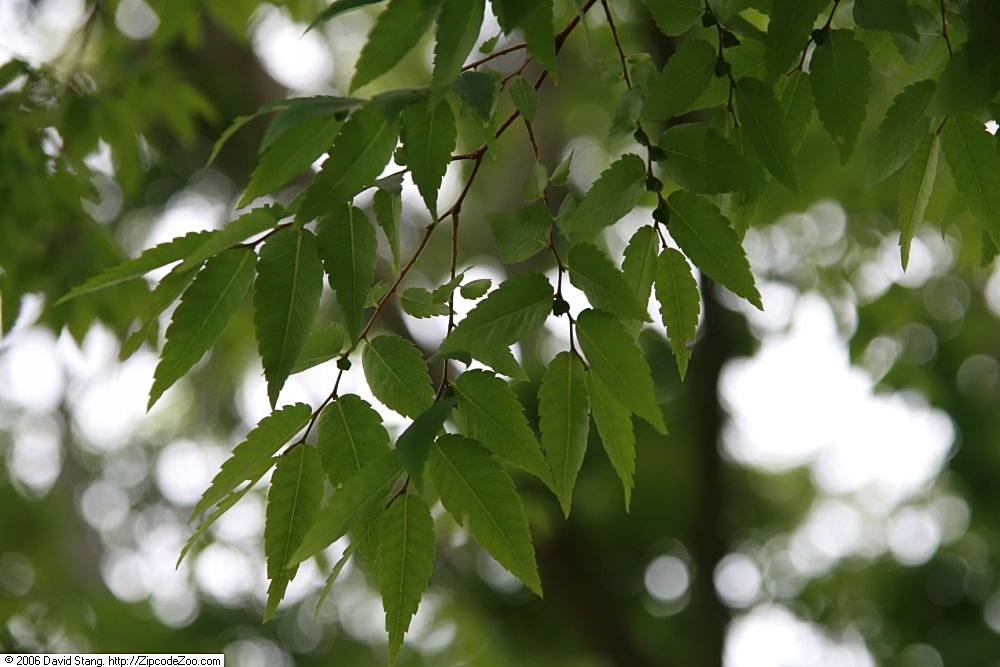
Japanese zelkova is a medium to large shade tree, 50-80 feet tall, with a distinctive vase shape, small serrated leaves and exfoliating bark that turns orange and tan with age. It is the tree many cities turned to after Dutch elm disease: it looks like an elm, grows like an elm, and resists the disease and the beetles that killed the elms. Cultivars such as Green Vase and Village Green are the usual street-tree choices, with more uniform form and better fall colour than seedlings. Plant in full sun in moist, deep, well-drained loam if you can, though it tolerates clay, drought and city pollution once established.
Water & feeding
Water deeply through the first two years, then water in prolonged drought; zelkova is drought and heat tolerant once settled but grows fastest with steady moisture. Feed lightly in spring only if growth is weak, and prune young trees every year or two to build a strong branch structure — this is the one job you must not skip, because young zelkovas cluster their limbs and develop weak, narrow crotches.
Common problems
- Weak branch attachments and included bark — prune young trees to wide-angled, well-spaced limbs before problems grow.
- Bacterial canker and elm yellows in some areas — remove affected wood and keep the tree vigorous.
- Calico scale and leafrollers — usually minor; treat only if populations build.
- Variable fall colour on seedling trees — buy a named cultivar if autumn colour matters to you.
Notes
Planted in opposing rows, zelkova’s arching branches meet overhead to form a living cathedral ceiling, which is why it is a favourite for avenues and campus walks. It is also a superb bonsai subject, which tells you how gracefully it takes to pruning.
Browse all plant & pest guides
Saving seeds
Zelkova seed is a patient gardener’s project, and the first thing to know is what it is for. Seed grows the species — a fine, vase-shaped tree in its own right — but it does not reproduce named cultivars. The forms gardeners actually buy, the upright ‘Musashino’, the vase-shaped ‘Green Vase’, the compact ‘Village Green’, are grafted or grown from cuttings in the nursery precisely because seedlings shuffle the shape. If you want another tree exactly like a named cultivar, buy a grafted one. Save seed for species trees, rootstocks, and experiments, and go into it knowing the offspring will be individuals, not photocopies.
Collect seed in fall, when the small, dry fruits have ripened on the tree. They are inconspicuous — no showy cones or pods, just small dry fruits tucked among the leaves — so watch the branches rather than the ground, and clip fruiting twigs into a paper bag before the seed drops. Let the material dry indoors for a week or so, then rub it gently to free the seed and winnow away the chaff over a sheet of white paper. The seed is small, so work indoors away from any breeze.
Dry the seed completely before it goes into storage: spread it thin on paper in a dry room until it feels papery and hard, then keep it in a labeled envelope or an airtight jar with a desiccant packet, cool and dark. In Florida humidity this step is not optional — seed stored even slightly damp will mold in a closed container. Use it within a year or two for the best results, and sow older seed more thickly.
Sow fresh seed outdoors in fall if you can, in pots of moist, well-drained mix, and let winter do the chilling — that is the simplest road, and it is the one most old-school growers still use. For stored seed, give it a cold spell in the fridge first: sources disagree on the exact length, so take the honest range of roughly two to three months of cold-moist stratification in damp vermiculite or a damp paper towel inside a sealed bag, at ordinary fridge temperature. Check the bag occasionally; the medium should stay moist, never soggy.
Sow shallow, about a quarter inch deep, in a fine, moist mix, and keep the pots in bright shade rather than direct sun. Expect germination in spring, unevenly over several weeks, and do not discard a flat early — some seed takes its time. Prick seedlings out into individual pots once they are big enough to handle, and grow them on for a season or two before planting out. A seed-grown zelkova takes years to show its mature vase shape, so this is a long game, but the payoff is a tree raised from your own yard, with a shape no nursery could have predicted. If that sounds like a delight rather than a disappointment, seed is the right project for you.
Varieties
Every named variety of Japanese Zelkova with its own growing guide:
- Green Vase Japanese Zelkova — The vase-shaped zelkova with a narrow start and a broad crown: elm-like, fast, and resistant to the disease that took the elms.