
🌿 Kaleidoscope Abelia
What it looks like
Why this variety
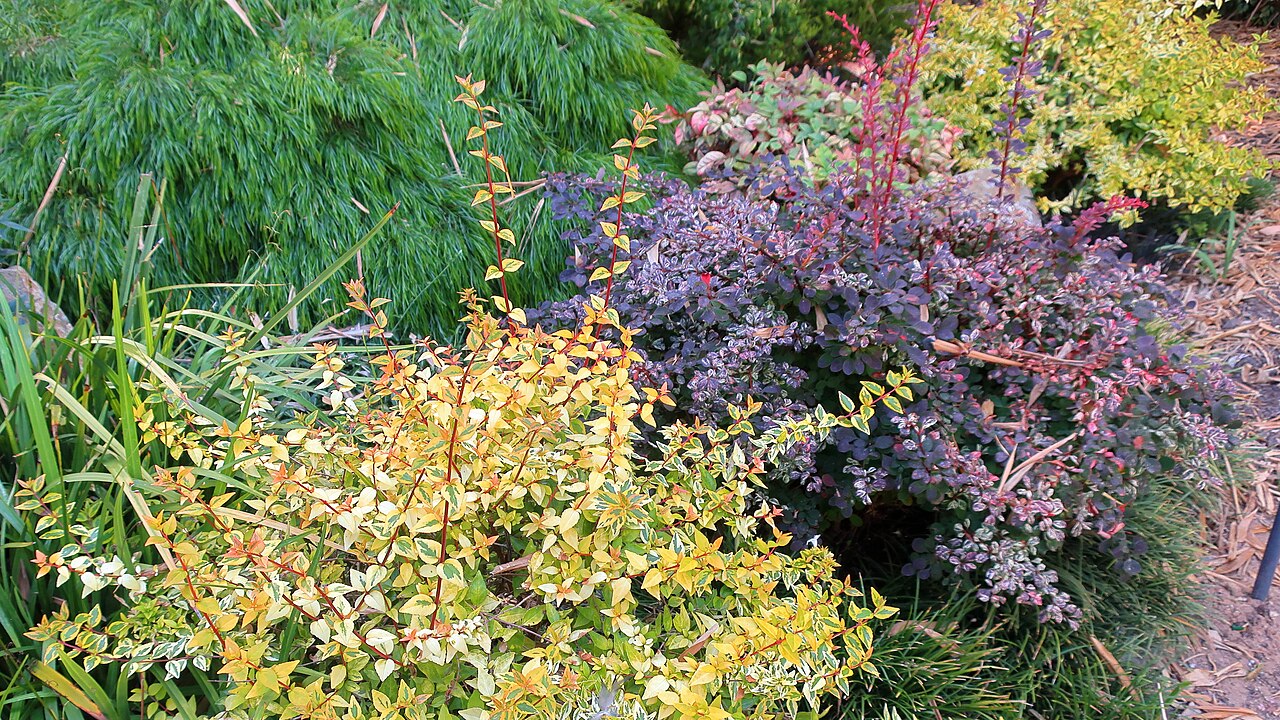
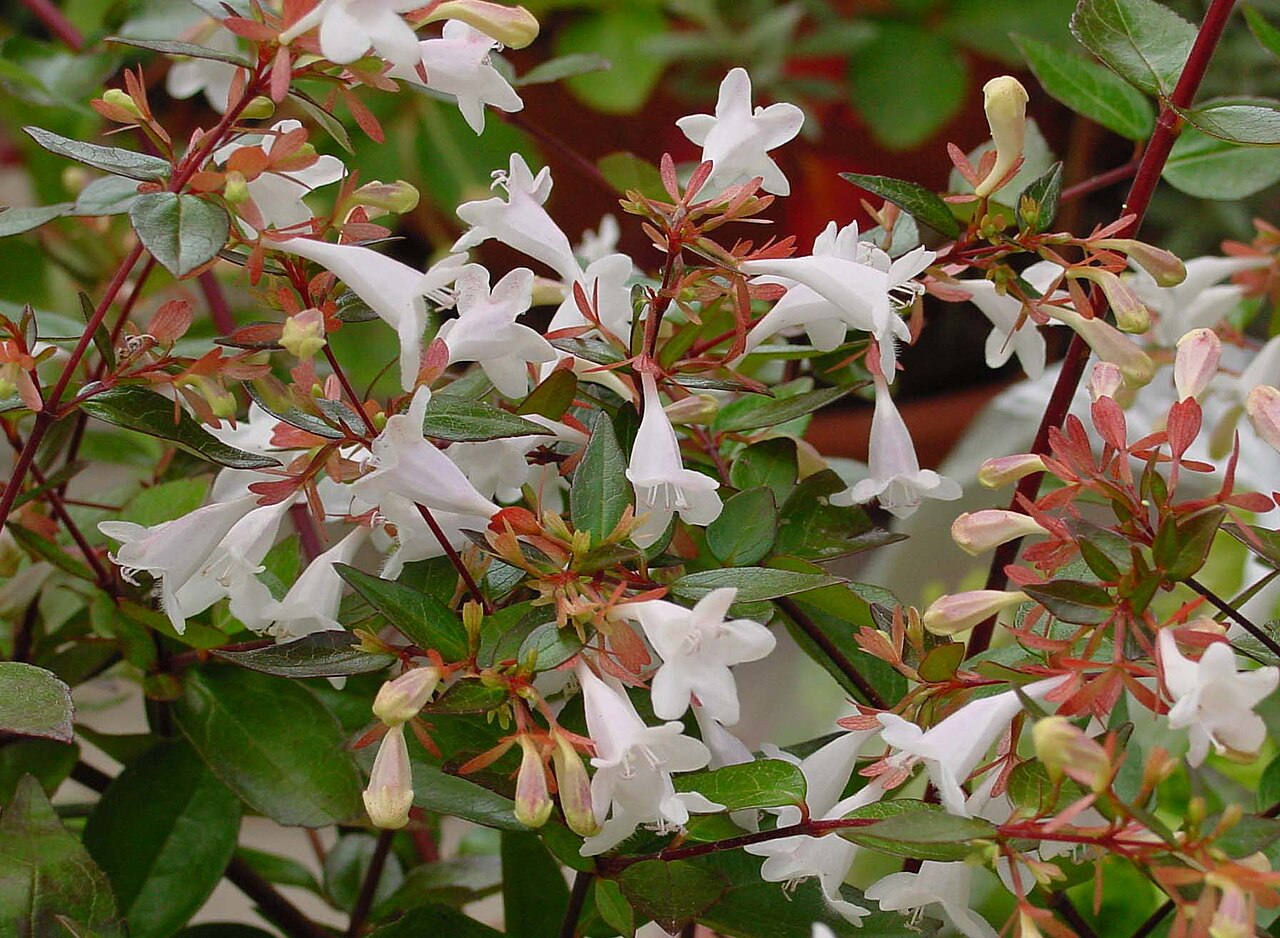
Kaleidoscope is the abelia people photograph. Its variegated foliage starts gold-and-green in spring, holds that bright, almost lit-from-within look through summer, and turns orange-red in fall — and all the while it carries the small pink-white trumpet flowers that make abelia a butterfly shrub from late spring to frost. It is a dwarf form, 2–3 feet tall and wide, which makes it the abelia for foundation beds and small gardens where the species would outgrow its welcome.
In Florida, Kaleidoscope earns its place in the north and central peninsula, in sun to light shade with afternoon shade in the hottest spots. The variegation is the point and also the warning: variegated leaves scorch faster than plain green ones in brutal afternoon sun, so give it a break in the afternoon and it will repay you with colour for three seasons.
How to grow
Plant in spring in well-drained soil in sun to light shade, at the same depth it sat in the pot. Glossy abelia flowers lightly but continuously from late spring until frost, which is a longer show than most shrubs manage, and it does it on very little fuss. Mulch 2–3 inches deep, keep the mulch off the stems, and water deeply for the first season while roots settle. In Florida, abelia appreciates soil that drains after a summer downpour rather than sitting wet, and it forgives sandy soil once established — feed lightly in spring with a balanced slow-release fertiliser rather than pushing soft growth with heavy nitrogen.
Water & feeding
Water deeply once or twice a week through the first growing season, then only in dry spells; established abelia is moderately drought-tolerant but blooms best with steady moisture. Feed once in spring; a second light feed in midsummer is plenty. Avoid shearing it into a box — abelia looks best with its arching habit intact, so prune selectively after a flush of bloom, removing dead wood and any stems that cross.
Common problems
Few serious problems. Aphids may cluster on tender tips in spring; a strong jet of water or a wait for ladybirds usually settles it. Root rot appears only in ground that stays soggy — if the site puddles, plant high on a mound or pick a drier spot. Leaf scorch in brutal afternoon sun is a siting problem, not a disease: afternoon shade fixes it.
Harvest
There is no harvest here — the crop is the show. Deadhead nothing; abelia blooms continuously without it. The real seasonal job is a light selective prune after a flush of bloom if the shape needs tidying, and a harder renewal cut in late winter every few years if an old plant gets leggy. The fall colour is the finale, so leave the plant alone through autumn and enjoy it.
Nerdy fact: Abelia’s variegation is a chimera — different cell layers in the same leaf carry different amounts of chlorophyll, which is why the gold edges, green centres and fall reds all live on one leaf at once. You are looking at a genetic patchwork, not a paint job.
Saving seeds
Kaleidoscope is the abelia people photograph, variegated foliage that starts gold-and-green in spring and turns orange-red in fall, on a dwarf form 2 to 3 feet tall, and seedlings won’t hold that variegation — plant a nursery-grown shrub in spring in well-drained soil in sun to light shade. The Propagation section of the Abelia guide covers propagation for the species.