
🌼 Kerria
What it looks like
How to grow
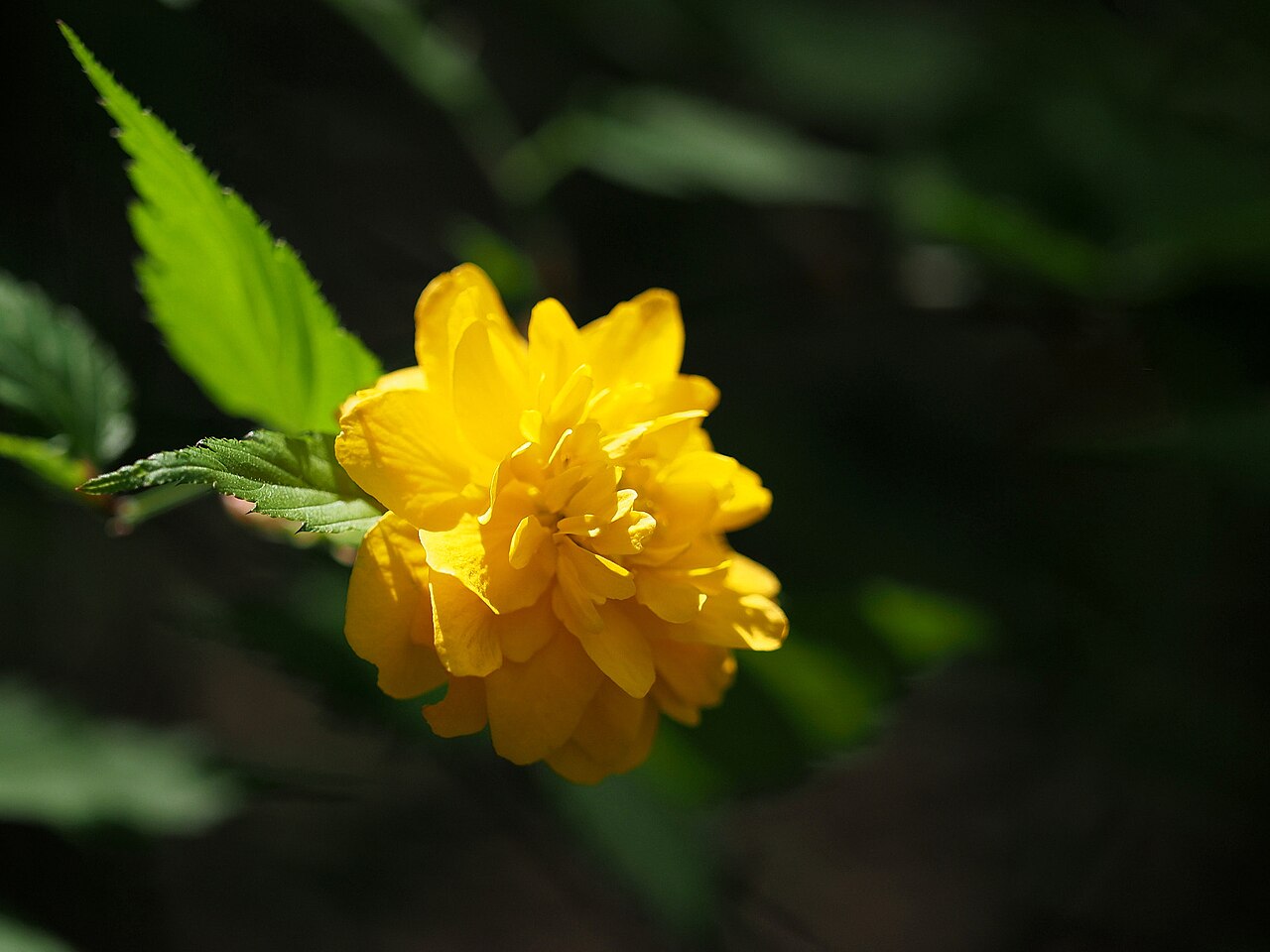
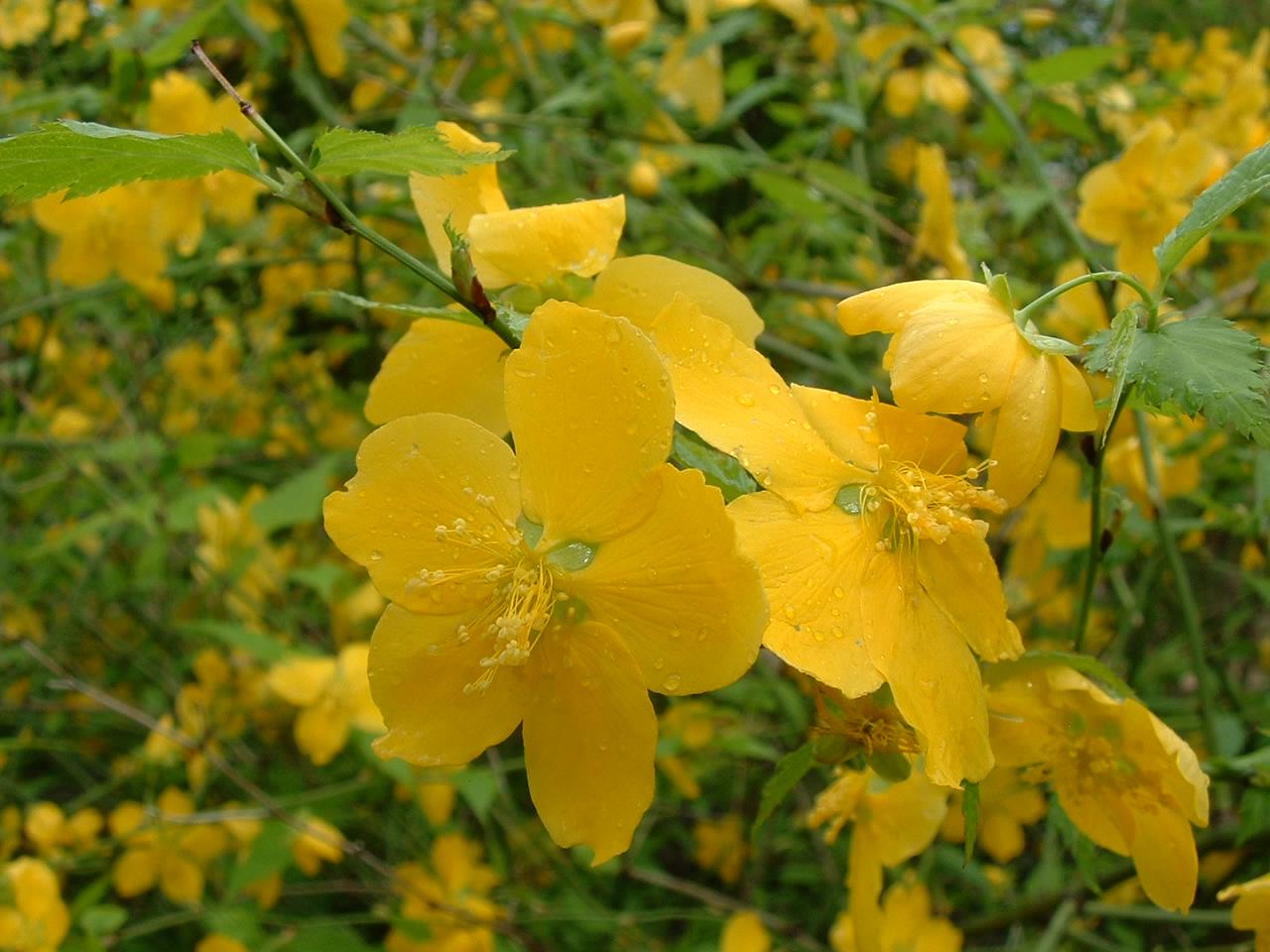
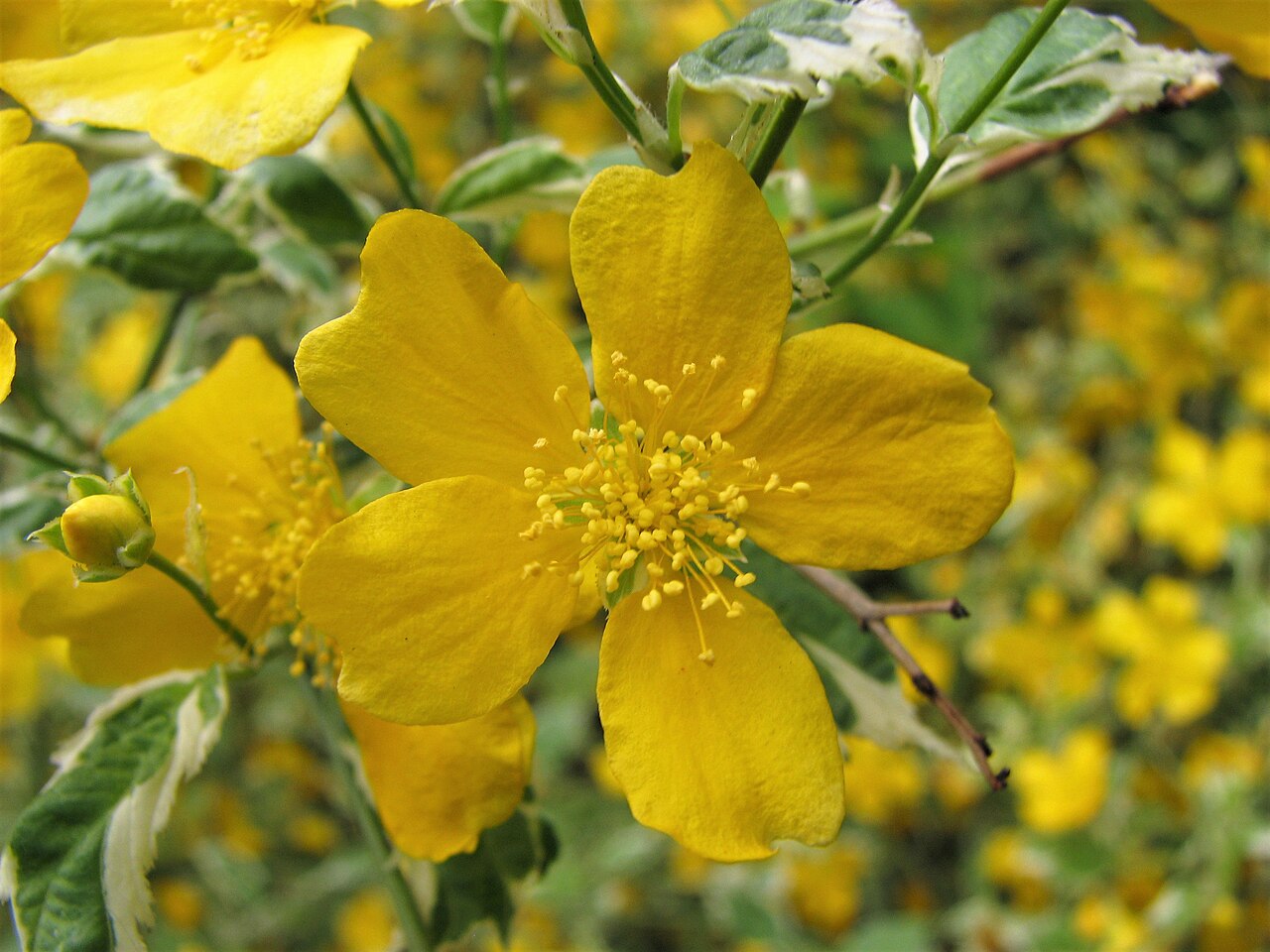
Kerria, also called Japanese rose or Easter rose, is a graceful deciduous shrub with thin, arching, bright green stems and cheerful yellow flowers that look like small roses in spring. It matures around 5 feet tall and 6 feet wide, and it is one of the few shrubs that not only tolerates shade but flowers in it — a genuine gift for difficult north-side beds and woodland edges. Plant in spring in rich, moist, well-drained soil, and give it room to show off its fountain shape. The double-flowered form looks like little yellow pom-poms; the single-flowered form is simpler and beloved by early pollinators.
Water & feeding
Water regularly for the first year and keep the soil evenly moist; established kerria tolerates some drought but looks best with steady moisture and a compost mulch. Feed sparingly — a spring dressing of compost is enough, and heavy fertilizer makes it straggly. Prune right after flowering: cut out flowered shoots and thin old stems at the base, and every few years cut an overgrown plant right down to a few inches to renew it.
Common problems
- Suckering beyond its space — pull or cut unwanted suckers at the base; in a woodland setting, let it colonize and form a thicket.
- Leggy, top-heavy growth — prune hard after flowering; kerria tolerates heavy pruning cheerfully.
- Leaf and twig blight or canker — prune out affected stems to healthy wood and improve air circulation.
- Faded flowers in hot sun — in warm climates, part shade keeps the yellow brighter for longer.
Harvest
No harvest is needed, though the green winter stems are lovely cut for indoor arrangements. If you want more plants, dig up suckers in autumn or take greenwood cuttings in summer — kerria practically propagates itself if you let it.
Browse all plant & pest guides
Propagation
Kerria is not a seed plant in any practical sense, so this is a propagation note instead of a seed-saving section. The shrub rarely sets fruit at all outside its native range — one respected reference notes that its author had never witnessed fruit set, and in Japan, where it comes from, it is popularly known as a plant that bears no fruit. The popular double-flowered form, ‘Pleniflora’, is effectively sterile and would not come true from seed even if it set any. The single-flowered species form can produce a few small nutlets, but viability is low and germination is unreliable, so seed is a curiosity, not a method.
Fortunately, kerria is one of the easiest shrubs to multiply vegetatively, and every vegetative method keeps the cultivar exactly — doubles stay double, variegated forms stay variegated. The simplest route is the suckers: kerria throws up rooted shoots around its perimeter, and you can dig one up with roots attached in the dormant season and replant it directly, or pot up smaller pieces and grow them on until they are rooting well. Softwood cuttings are the second route: take four- to six-inch tip cuttings in late spring to early summer, when the new growth is firming up, and root them in moist mix in light shade — a dab of rooting hormone helps them develop a better root system, and they usually root within a few weeks. Hardwood cuttings taken in the dormant season work too, just more slowly. Layering is the lazy third option: bend a low flexible branch down, cover part of it with soil, hold it in place with a stone, and sever it from the parent once it has rooted.
Take cuttings from healthy, vigorous stems, label them by cultivar, and pot them on once roots are established — softwood cuttings rooted in summer are usually ready to plant out by the following spring. Because kerria suckers freely, site it where a little roaming is welcome, and be ready to dig out the extras: what is a free plant in one corner of the garden is a weed in another.
A Florida note: kerria is a temperate shrub, happiest in zones 4 to 9, and in Florida it is a north-Florida plant at best. Heat and humidity stress it, so give it afternoon shade, steady moisture, and soil that drains but does not dry to dust, and do not expect the vigor it shows in cooler climates. If you are in central or south Florida, treat it as a container experiment in a sheltered spot rather than a permanent shrub — and propagate it while it is happy, because a cutting in a pot is a much easier thing to protect from a heatwave than a shrub in the ground.
Varieties
Every named variety of Kerria with its own growing guide:
- Pleniflora Kerria — The double-flowered kerria: yellow pom-pom blooms like small roses in spring, on bright green stems that shine all winter.