
🌼 Pleniflora Kerria
What it looks like
Why this variety
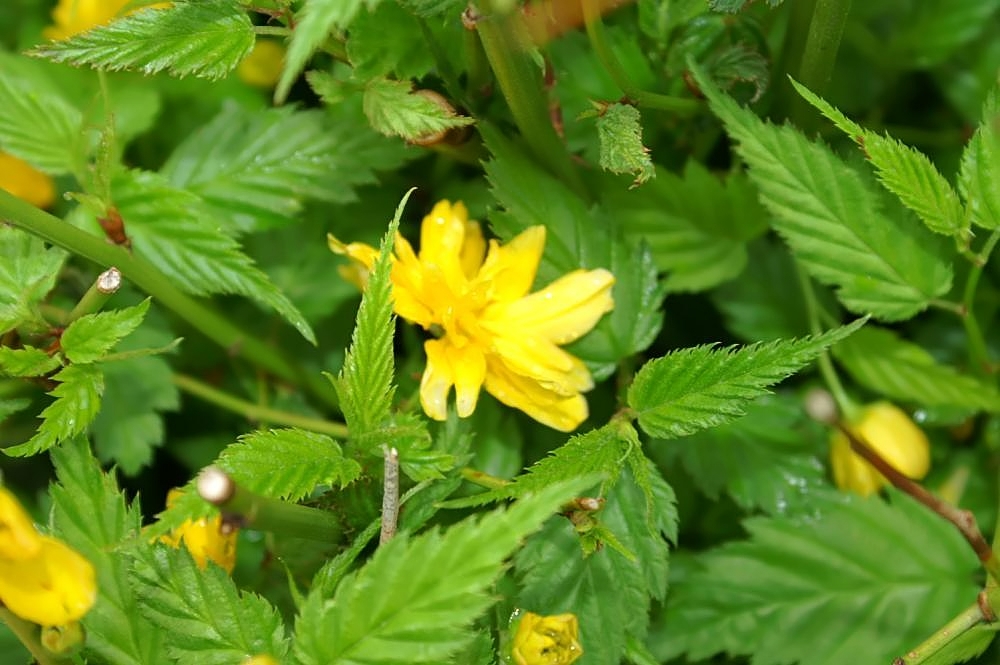
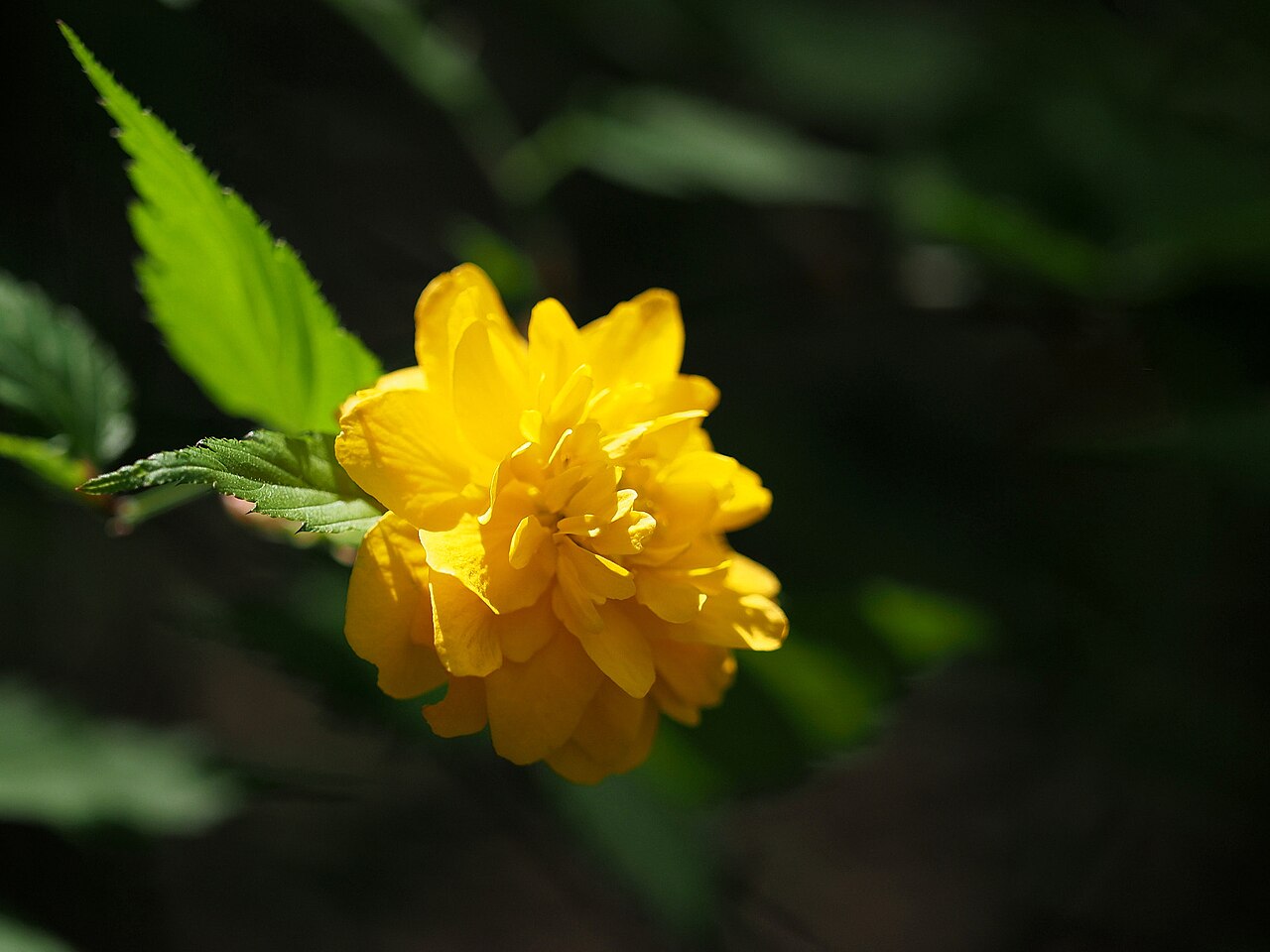
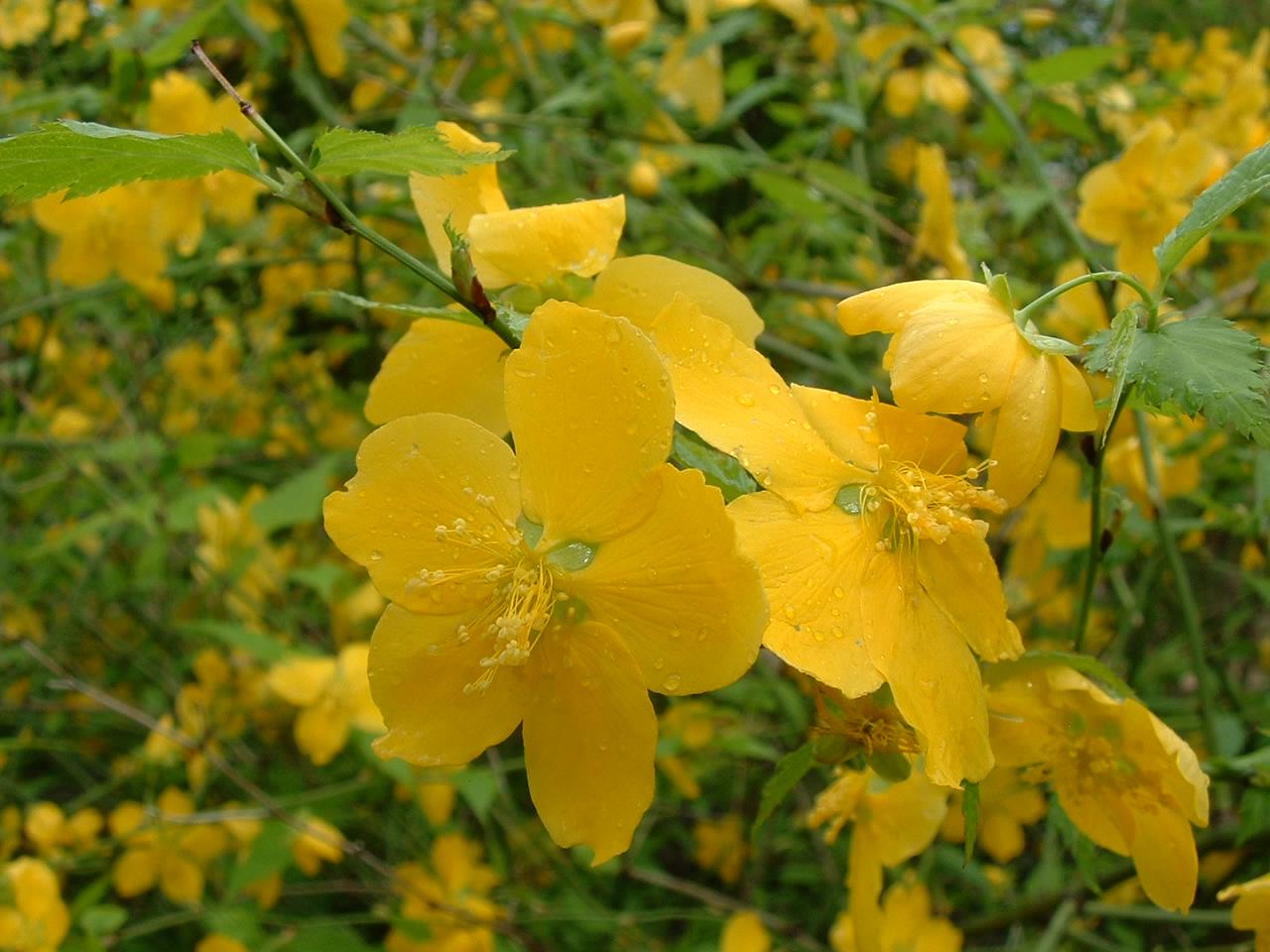
Pleniflora is kerria with the flowers doubled: instead of the species’ single yellow blooms, it carries pom-pom-like double flowers that really do look like small yellow roses, in spring, on the same thin, arching, bright green stems that make kerria interesting all winter. It grows a little larger than the species, 5–8 feet tall, and it is the kerria for gardeners who want the spring party to be a little more extravagant — more petals, more presence, same easy shade tolerance.
In Florida, Pleniflora suits the north and central peninsula, in part shade with afternoon shade, in well-drained soil. The double flowers are showier but set no seed to speak of, which is fine — kerria’s real spread is by suckers, and a gentle colony is welcome where there is room for it.
How to grow
Kerria, also called Japanese rose or Easter rose, is a graceful deciduous shrub with thin, arching, bright green stems and cheerful yellow flowers that look like small roses in spring. It matures around 5 feet tall and 6 feet wide, and it is one of the few shrubs that looks good in winter too, when the bare green stems carry the garden. Plant in spring or fall in part shade — afternoon shade in Florida — in well-drained soil, and give it room to arch: kerria sheared into a ball loses the fountain shape that justifies it. It spreads slowly by suckers, so site it where a gentle colony is welcome, not where it will invade a path.
Water & feeding
Water deeply through the first season, then in dry spells; established kerria is moderately drought-tolerant but blooms best with steady spring moisture. Mulch to hold moisture. Feed lightly in spring. Prune after flowering, removing a third of the oldest stems at ground level to keep the fountain fresh.
Common problems
Few serious problems. Twig blight may appear in wet years — prune out affected stems and improve air circulation. Kerria’s real management job is its suckering habit: pull suckers where you do not want them, and enjoy them where you do. Leaf scorch in full Florida sun is a siting problem; afternoon shade fixes it.
Harvest
The harvest is spring pom-poms and winter green stems. Prune after flowering, removing a third of the oldest stems at ground level to keep the fountain fresh — kerria blooms on old wood, so a winter prune costs you the spring show. The green stems are the winter reward, so leave them alone through the cold months.
Nerdy fact: Kerria’s double flowers are a mutation in which stamens turned into petals — the plant traded fertility for frills, which is why Pleniflora sets little seed and why gardeners propagate it from cuttings and suckers instead.
Saving seeds
Pleniflora is kerria with the flowers doubled: instead of the species’ single yellow blooms, it carries pom-pom-like double flowers that really do look like small yellow roses, in spring, on the same thin, arching, bright green stems that make kerria interesting all winter. It grows a little larger than the species, 5 to 8 feet tall, and it is the kerria for gardeners who want the spring party to be a little more extravagant — more petals, more presence, same easy shade tolerance. As a double-flowered kerria it is kept true by suckers and division, not by seed: the double flowers set no seed to speak of, which is fine — kerria’s real spread is by suckers, and a gentle colony is welcome where there is room for it. Plant in spring or fall in part shade — afternoon shade in Florida — in well-drained soil, and give it room to arch. The full method is in the Propagation section of the Kerria guide.