
🟤 Lang Jujube
What it looks like
Why this variety
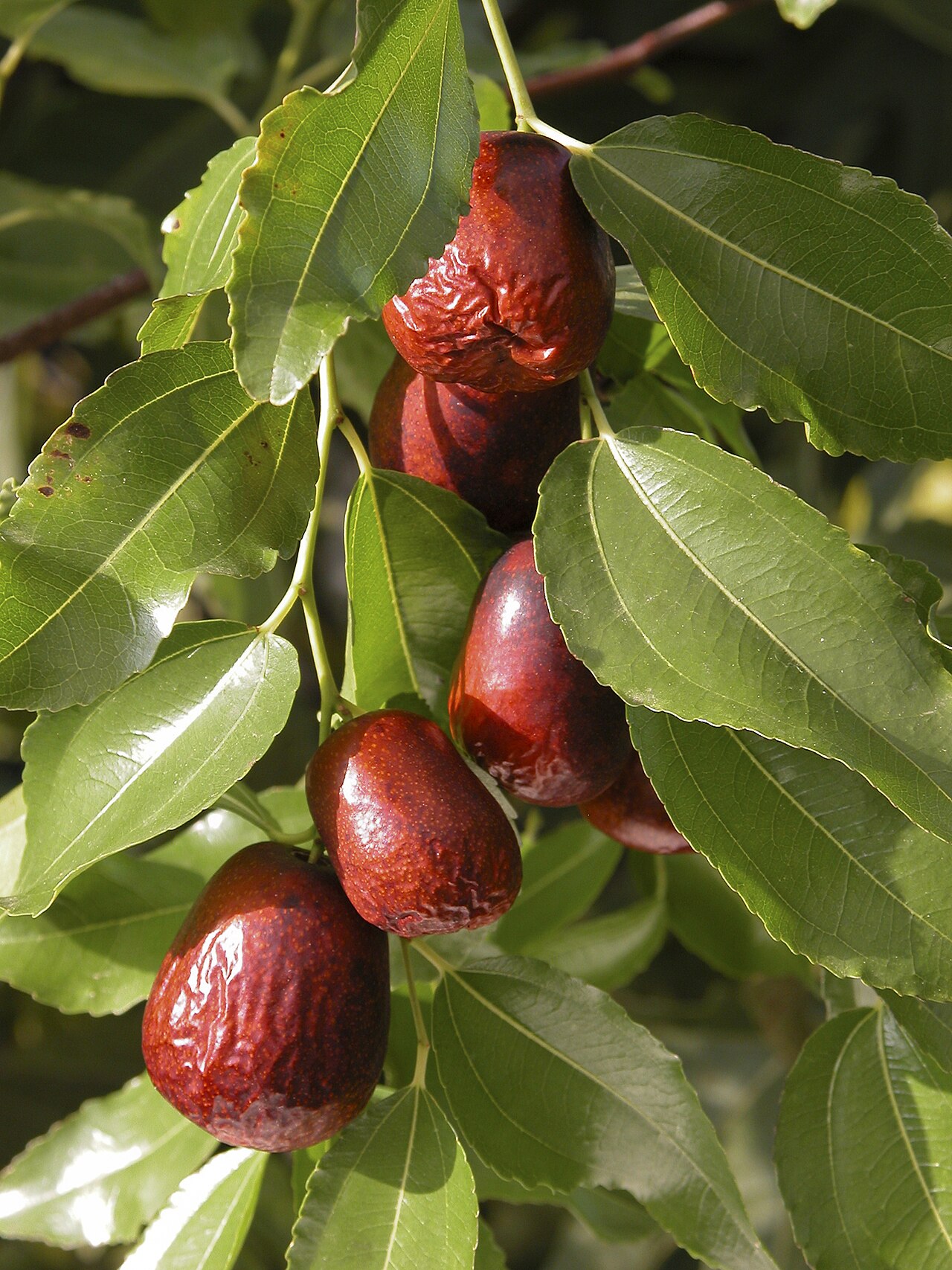
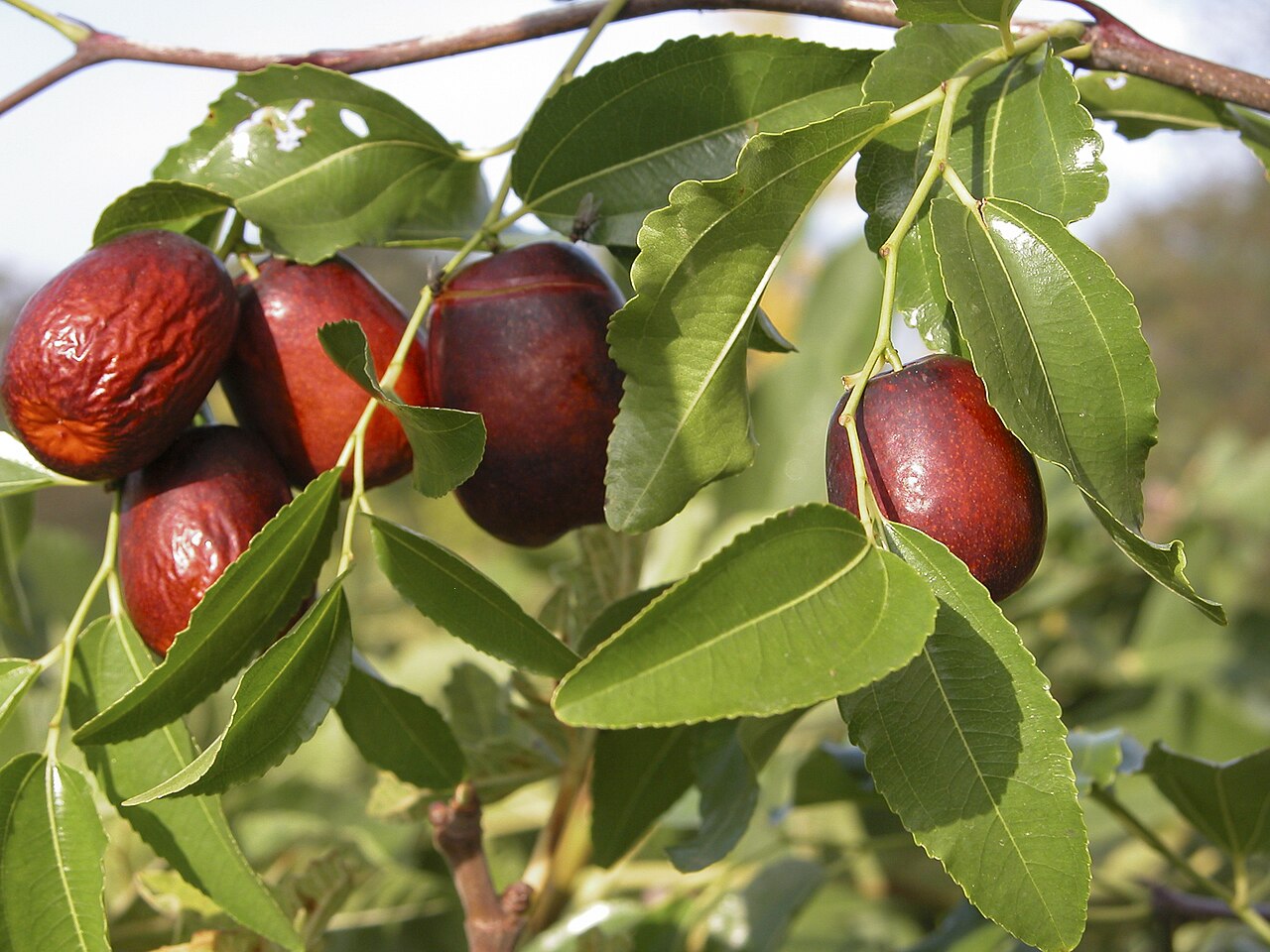
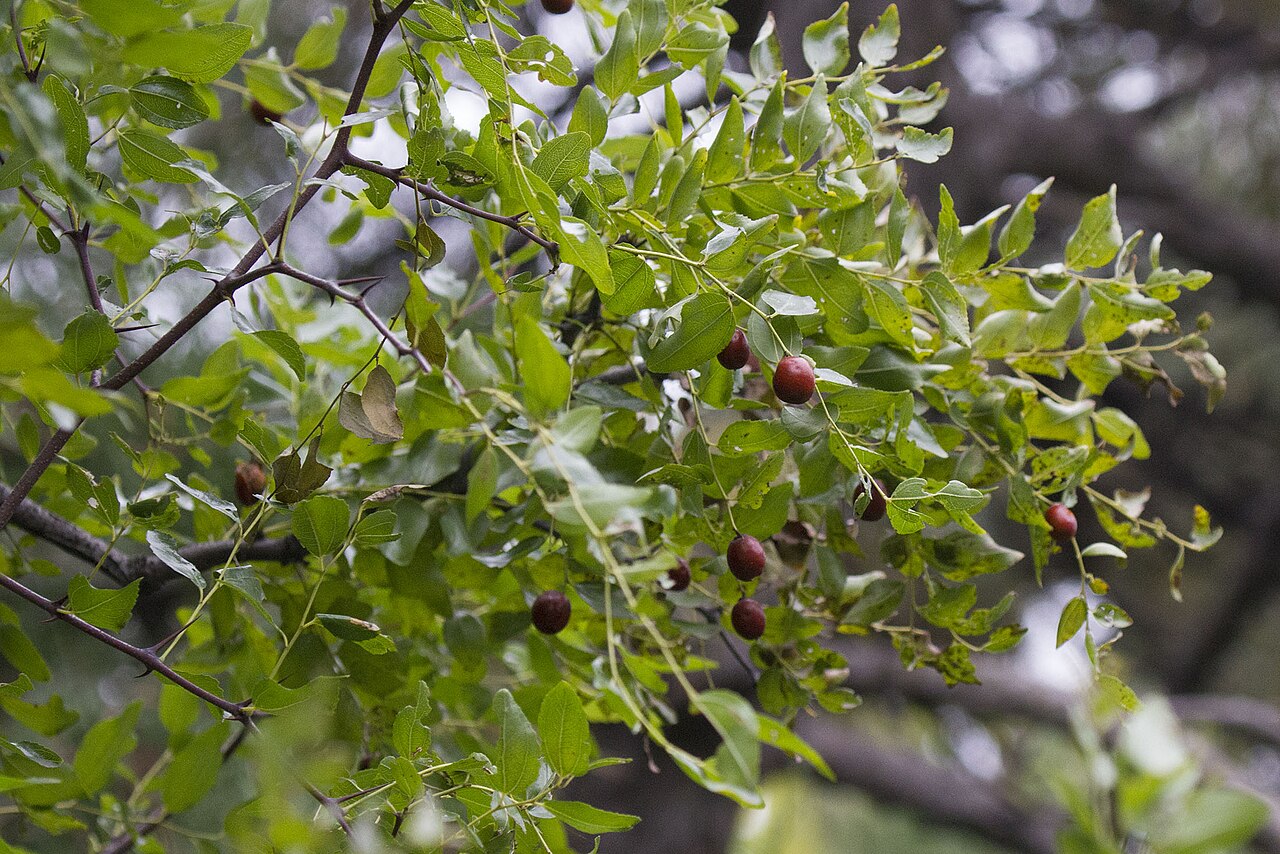
Lang is Li’s traditional partner and its complement: where Li is round and crisp for fresh eating, Lang is pear-shaped, slightly smaller, and best known as a drying variety. Left on the tree or dried after picking, Lang wrinkles into a sweet, chewy date with a rich flavor that some growers prefer to Li’s for dried use. Fresh, it is still good — crisp and sweet — just not quite Li’s equal as a fresh apple substitute.
Planting Lang with Li is the classic jujube pairing for a reason beyond variety: cross-pollination improves both trees’ set, and you get a fresh-eating variety and a drying variety from two trees. Lang is also notably productive and, like Li, tolerant of heat, drought, and alkaline soil. If Li is the jujube you eat in August, Lang is the jujube you snack on in January.
Pear-shaped fruit, excellent dried; good fresh. The classic pollination partner for Li — plant the pair for the best crops from both.
How to grow
Grow as for Li: sun, drainage, restrained watering, reachable pruning. If you plan to dry fruit, pick at the wrinkled stage and finish drying in a dehydrator or dry indoor air rather than trusting a humid Florida autumn to do the job.
Plant in full sun in well-drained soil and give the shrub its mature spread from day one. Jujube-type shrubs tolerate heat, drought, and alkaline soil once established, but young plants still need regular water until their roots find their feet. Prune lightly for an open, reachable canopy — thorny or zigzag branches make ladder harvests an adventure best avoided.
Florida framing, stated plainly: Lang shares Li’s North Florida trial status and its cautions — heat-loving, but unproven in Florida’s humid summers. Its drying habit is a particular question in humidity: fruit that dries beautifully on the tree in a dry climate may mold in a wet one, so harvest promptly and dry indoors if you trial it in Florida. North Florida, full sun, drainage, and several seasons of judgment.
Water & feeding
Water young shrubs deeply through establishment, then water consistently but not excessively — drought tolerance describes an established plant, not a transplant. Mulch to hold moisture and suppress weeds, and top-dress with worm castings in spring. Overwatering causes more trouble than dry spells for heat-loving shrubs.
Common problems
- Fruit rot in humid weather — fruit that dries on the tree in dry climates may mold in wet ones. Harvest promptly and finish drying indoors where humidity is high.
- Birds — small, sweet fruit is bird food by design. Net before ripening if you want a share.
- Thorns and suckering — wear gloves, prune after fruiting, and remove suckers that stray beyond the shrub’s allotted space.
- Pests are usually minor compared with stone fruit, but watch for borers and scale on stressed plants; healthy, unstressed shrubs resist most of it.
Harvest
Pick when fruit colors fully and tastes sweet — for drying types, leave fruit until it wrinkles on the tree in dry climates, or pick at full color and finish drying indoors in humid ones. Use fresh fruit within days, or dry, freeze, or cook the surplus promptly.
Browse all plant & pest guides
Saving seeds
Lang is Li’s traditional partner and its complement, where Li is round and crisp for fresh eating, Lang is pear-shaped, slightly smaller, and best known as a drying variety, and it is planted as a tree — plant in full sun in well-drained soil and give the shrub its mature spread from day one, and plant the pair with Li, since cross-pollination improves both trees’ set. The Saving seeds section of the Jujube guide covers seed for the species generally.