
🌸 Lungwort
What it looks like
How to grow
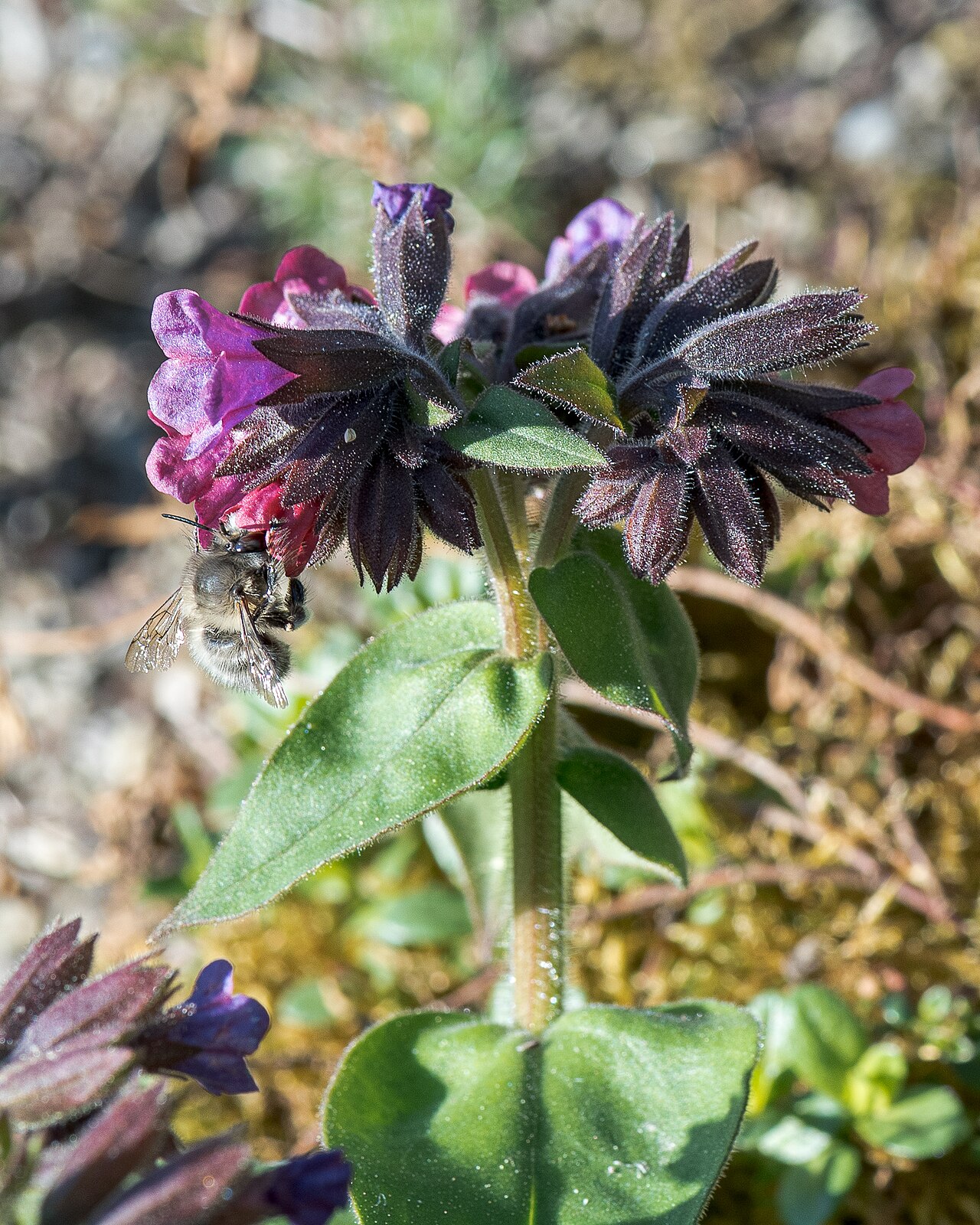
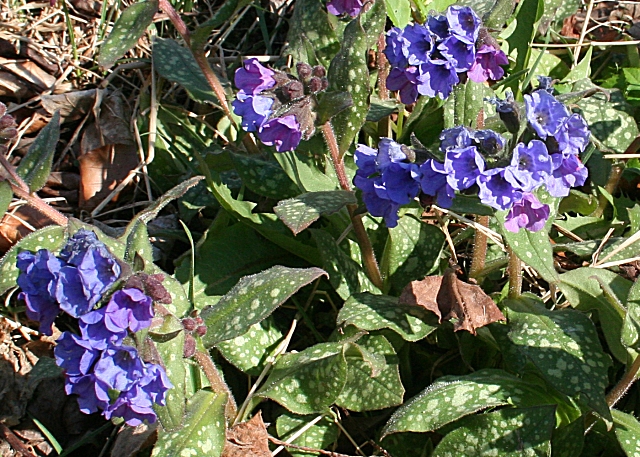
Lungwort is an early-spring shade perennial, 9–18 inches tall, with hairy, often silver-spotted leaves and clusters of funnel-shaped flowers that open pink and age to blue — both colors often on the same plant at once, which is not a mistake but the show. It blooms when the shade garden most needs color, alongside snowdrops and hellebores, and its spotted foliage carries interest all season. Plant in spring or fall in part to full shade in rich, moist, well-drained soil; lungwort wilts and mildews in dry soil and hot sun, so give it the cool, moist corner. Space 12–18 inches apart and mulch with leaf mold.
Water & feeding
Keep soil consistently moist — lungwort is a moisture-lover and dry soil is its main enemy. Water in dry spells and mulch to hold moisture. Feed with compost in spring; heavy fertilizer is unnecessary and can encourage mildew-prone soft growth.
Common problems
- Powdery mildew — usually after dry stress; water consistently, give air flow, cut back affected leaves.
- Wilting in dry soil or sun — move to shade, mulch, water deeply.
- Slug damage — use traps or barriers in slug country.
- Tattered summer foliage — cut back after bloom and fresh leaves will follow.
Notes
Cut back foliage after flowering if it looks tired, and fresh spotted leaves will regrow for summer. Divide clumps in fall or early spring every few years. Lungwort self-seeds gently; seedlings may vary. Historically used in folk medicine for lungs (the spotted leaves were thought to resemble lungs) — grow it for the garden, not the medicine cabinet.
Browse all plant & pest guides
Propagation
Lungwort is a division plant first and a seed plant second, and the order matters. The named cultivars with spotted silver leaves and flowers that change from pink to blue — the whole reason most people grow it — do not come true from seed. Pulmonaria crosses freely, and seedlings vary in leaf spotting, flower color, and habit. A seedling might be lovely. It will not be the cultivar you planted.
Division is the reliable route, and it is simple. In early spring, just as new growth appears, or in autumn after flowering, lift a clump with a fork and split it into sections, each with roots and a growing point. Replant immediately in humus-rich, moist soil in part shade, water it in well, and keep it damp until it settles. A divided clump establishes fast and flowers the next spring, looking exactly like its parent, because it is its parent.
Seed is the route for species plants and for the experiment-minded. Collect the small nutlets as they ripen in summer and sow them fresh, barely covered, in a shady seed tray. Germination is uneven and slow, sometimes taking months, and the seedlings will be their own invention. That is a fine project if you enjoy surprises and have the patience for them. It is a poor project if you want more of a particular cultivar.
Self-seeding happens around an established clump, and the volunteers are worth a look before you weed them out. A volunteer with interesting spotting is a new plant that nobody else has, and lungwort breeders have found their best plants exactly that way. Just do not be surprised when the volunteer is plain green and pink-flowered. That is the species reasserting itself, and it is still a perfectly good plant.
Florida honesty: lungwort is a cool-climate shade plant, and it struggles in Florida heat and humidity. In North Florida it can work in deep shade with steady moisture; in Central and South Florida it is a short-lived experiment at best. Division in spring, into the coolest, shadiest, dampest corner you have, is its best chance.
Varieties
Every named variety of Lungwort with its own growing guide:
- Mrs Moon Lungwort — The spotted lungwort: pink buds opening blue over silver-spotted leaves, the classic pulmonaria.
- Sissinghurst White Lungwort — The white lungwort: pure white spring flowers over silver-spotted leaves, the shade moonlight.