
🌸 Major Wheeler Coral Honeysuckle
What it looks like
Why this variety
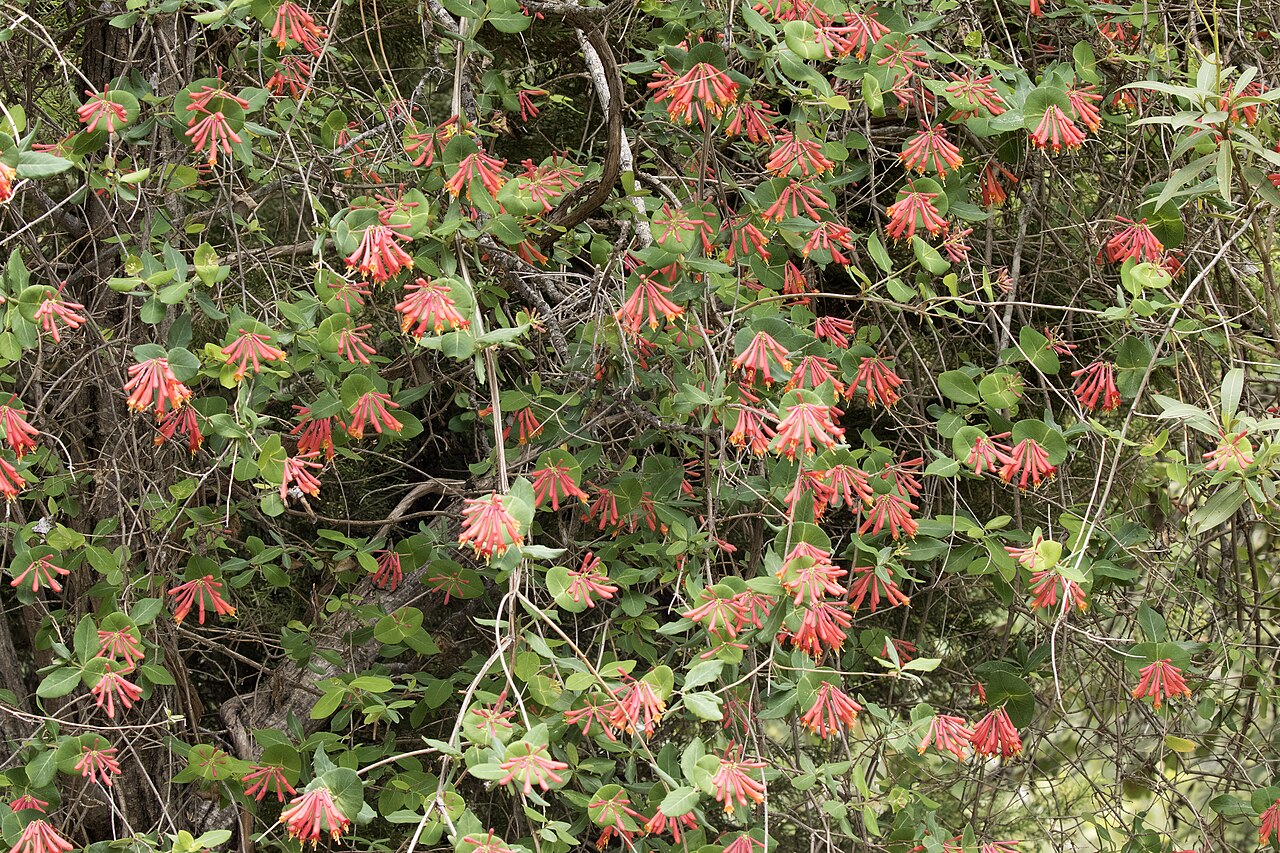
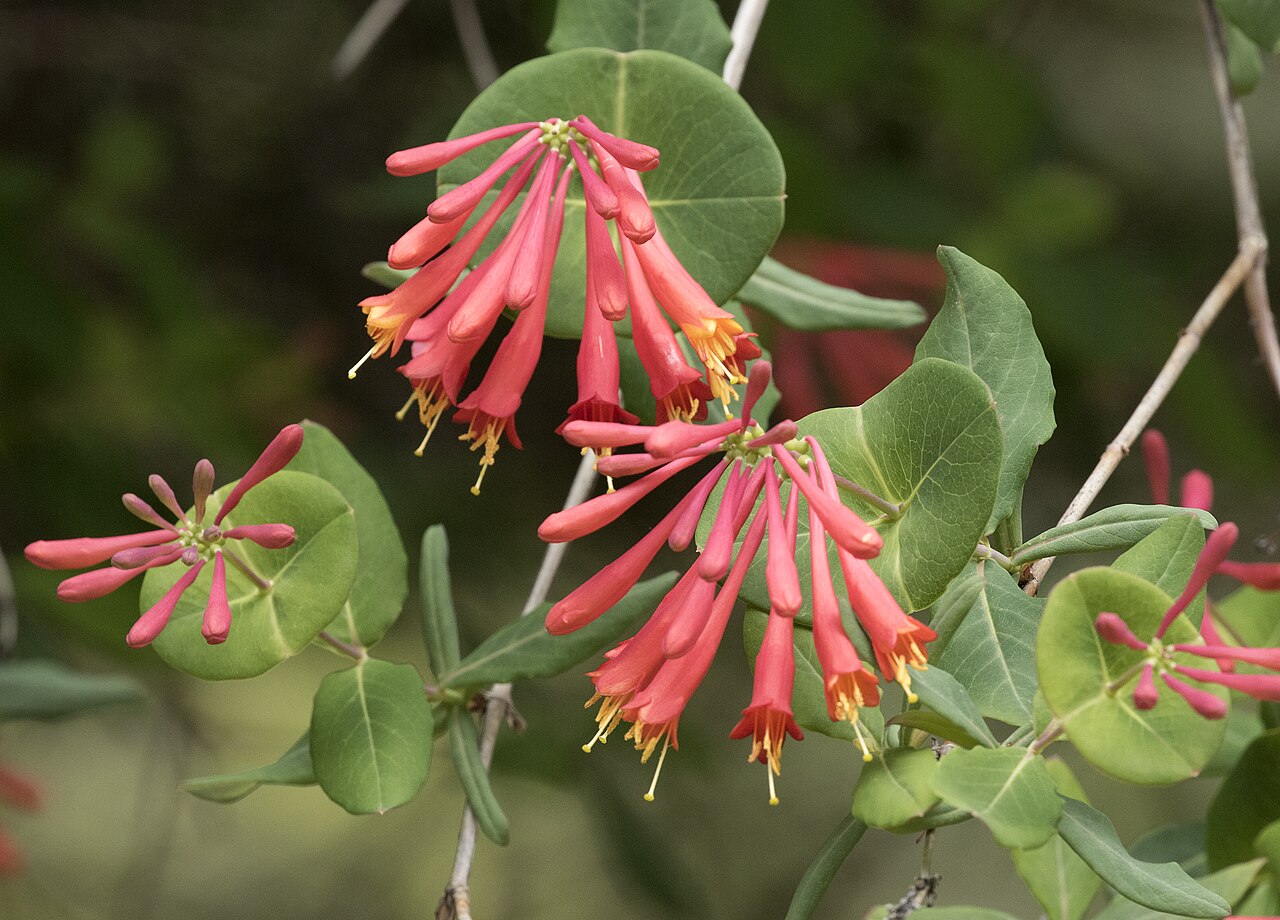
Major Wheeler is the coral honeysuckle that every other coral honeysuckle is compared to, and the comparison is usually kind to Major Wheeler: a selection of Lonicera sempervirens prized for scarlet, trumpet-shaped flowers produced prolifically and repeatedly from late spring through summer and into fall, on a vigorous twining vine that climbs 10 to 15 feet. University extension sources recommend it as the reblooming form, and the nursery trade calls it the best of the deep-red selections — a vine that does not give you one spring flush and then sulk, but keeps flowering as long as the weather holds and the hummingbirds keep visiting. If you plant one coral honeysuckle, plant this one first and add a yellow form later for contrast.
Major Wheeler is a hummingbird plant in the truest sense: the long, tubular, scarlet flowers are shaped for hummingbird bills, and hummingbirds will guard a blooming Major Wheeler like a territory, chasing off rivals and visiting dozens of times a day. Use it on a fence, trellis, arbor, or mailbox post, or let it sprawl as a ground cover on a slope — it twines, it does not cling, so it needs a support to wrap around, not a flat wall to stick to. It is native and non-invasive, unlike Japanese honeysuckle, which means you can plant it without worrying that it will escape into a natural area and smother trees. In Florida it is semi-evergreen to deciduous depending on winter cold, and it flowers heaviest when it gets full sun and room to climb.
How to grow
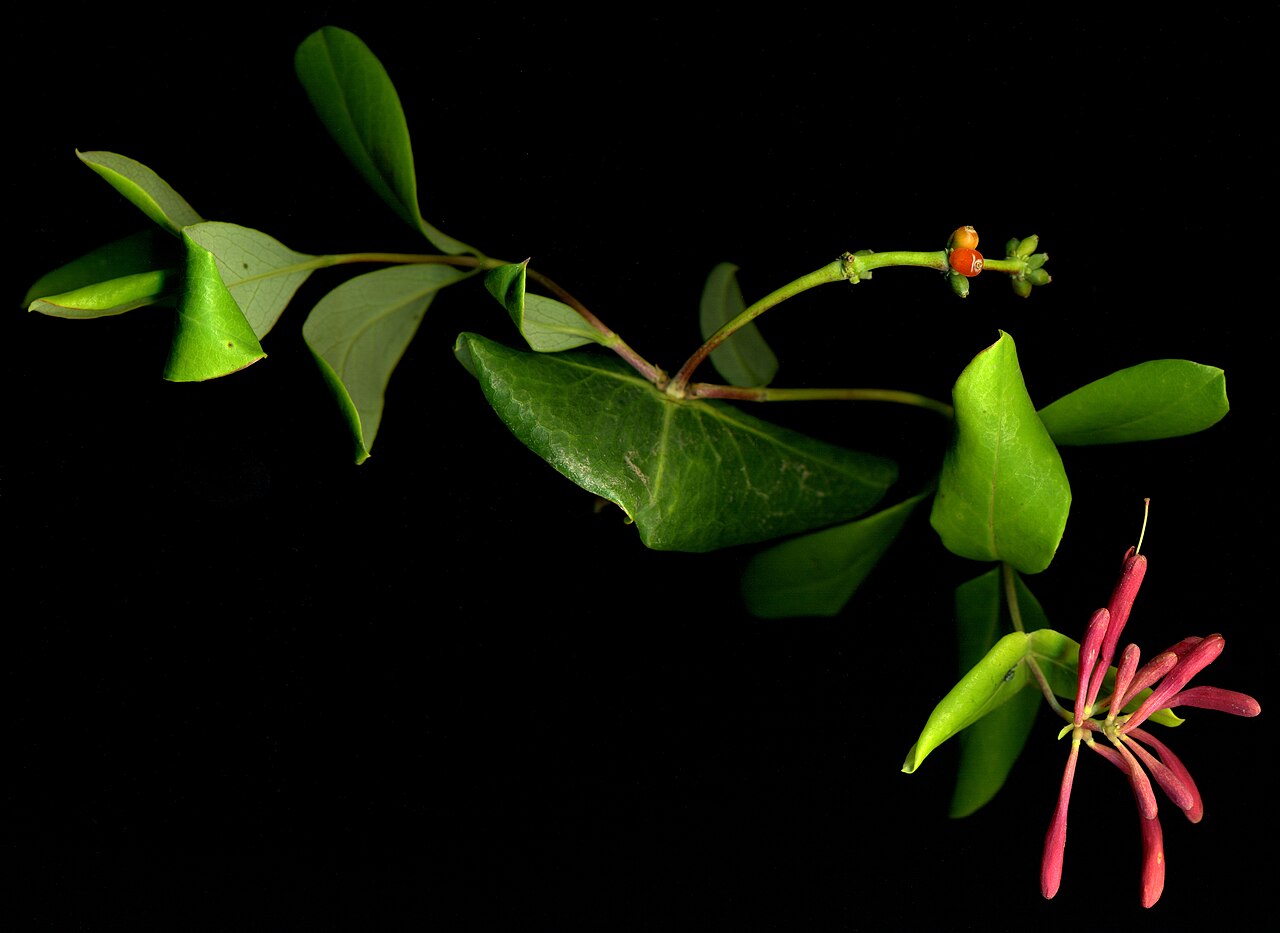
Coral honeysuckle, also called trumpet honeysuckle, is a twining woody vine native to the eastern United States, reaching south into the central Florida peninsula and west to Texas. It is the native honeysuckle to plant instead of Japanese honeysuckle, which is invasive: coral honeysuckle climbs politely, blooms in clusters of long trumpet flowers that hummingbirds defend like tiny territories, and follows with red berries that songbirds eat. The wild flower is coral-red; the cultivars below include the famous red rebloomers and the older yellow selections, all selections of the same native species, not hybrids with the invasive cousin. In Florida it is semi-evergreen to deciduous depending on winter cold, and it flowers heaviest in spring with repeat bloom through summer and fall when it is happy. Give it sun, something to climb — a fence, trellis, arbor, or mailbox post — and air around its leaves, and it will cover that support faster than you expect.
Plant in fall or spring in full sun to part shade, in average, well-drained soil. Set the plant at the base of its support, backfill with native soil and worm castings, mulch the root zone, and space plants 3 to 5 feet apart along a fence or trellis. Guide young stems onto the support and tie loosely if needed; once it starts twining, it climbs on its own. Water deeply the first year; established vines tolerate drought but bloom best with steady moisture. Prune in late winter, removing dead wood and thinning crowded stems to keep air moving — Major Wheeler blooms on new wood, so late-winter pruning encourages the flowering growth, not the reverse.
Water & feeding
Coral honeysuckle is not a thirsty vine: average garden water, deep watering for the first year, and drought tolerance once established are the whole story. In sand, mulch the root zone to keep it cool — the old rule is heads in the sun, feet in the shade — and water at soil level during dry spells to keep bloom coming. Work worm castings into the planting hole and top-dress in spring; it is a light feeder, and overfeeding makes leafy growth at the expense of flowers. Good air circulation matters more than extra fertilizer in humid Florida, where crowded, still air invites mildew.
Common problems
Aphids on new growth are the main pest, especially in spring; a water blast usually handles them, and ladybugs follow aphids the way hummingbirds follow this vine. Powdery mildew and leaf spot appear in humid, crowded plantings — space for air, water at soil level, and prune for circulation. Deer browse young vines occasionally. The bigger management issue is vigor: a happy Major Wheeler outgrows a small trellis in a season or two, so build the support for the mature vine, not the gallon pot, and be ready to prune it back each late winter to keep it in bounds.
Harvest
The harvest is flowers for hummingbirds and berries for songbirds, not for you — leave the red berries for birds, and cut a few flowering stems for a vase if you must, knowing the vine replaces them fast. Prune in late winter: remove dead wood, cut back overly long stems to a healthy bud, and thin the interior so air moves and mildew stays away. Deadhead spent clusters lightly through the season if you want to push rebloom, but do not deadhead everything — the berries that follow are part of the vine’s wildlife value, and a vine stripped of berries is a bird feeder emptied on purpose.
Nerdy fact: Coral honeysuckle’s flowers are red and tubular because hummingbirds, not bees, are their target audience: bees see red poorly, hummingbirds see it brilliantly, and the long tube keeps the nectar for the long bill that can reach it. Major Wheeler is, in effect, a hummingbird feeder that never needs refilling.
Saving seeds
Major Wheeler is the coral honeysuckle that every other coral honeysuckle is compared to: a selection of Lonicera sempervirens prized for scarlet, trumpet-shaped flowers produced prolifically and repeatedly from late spring through summer and into fall, on a vigorous twining vine that climbs 10 to 15 feet. As a named selection it is kept true by cuttings, not by seed — seedlings would not hold the reblooming scarlet flowers. Plant in sun to part shade against a sturdy trellis or fence, and give it room to climb. The Saving seeds section of the Coral Honeysuckle guide covers seed for the species generally.