
🥬 Malabar Spinach
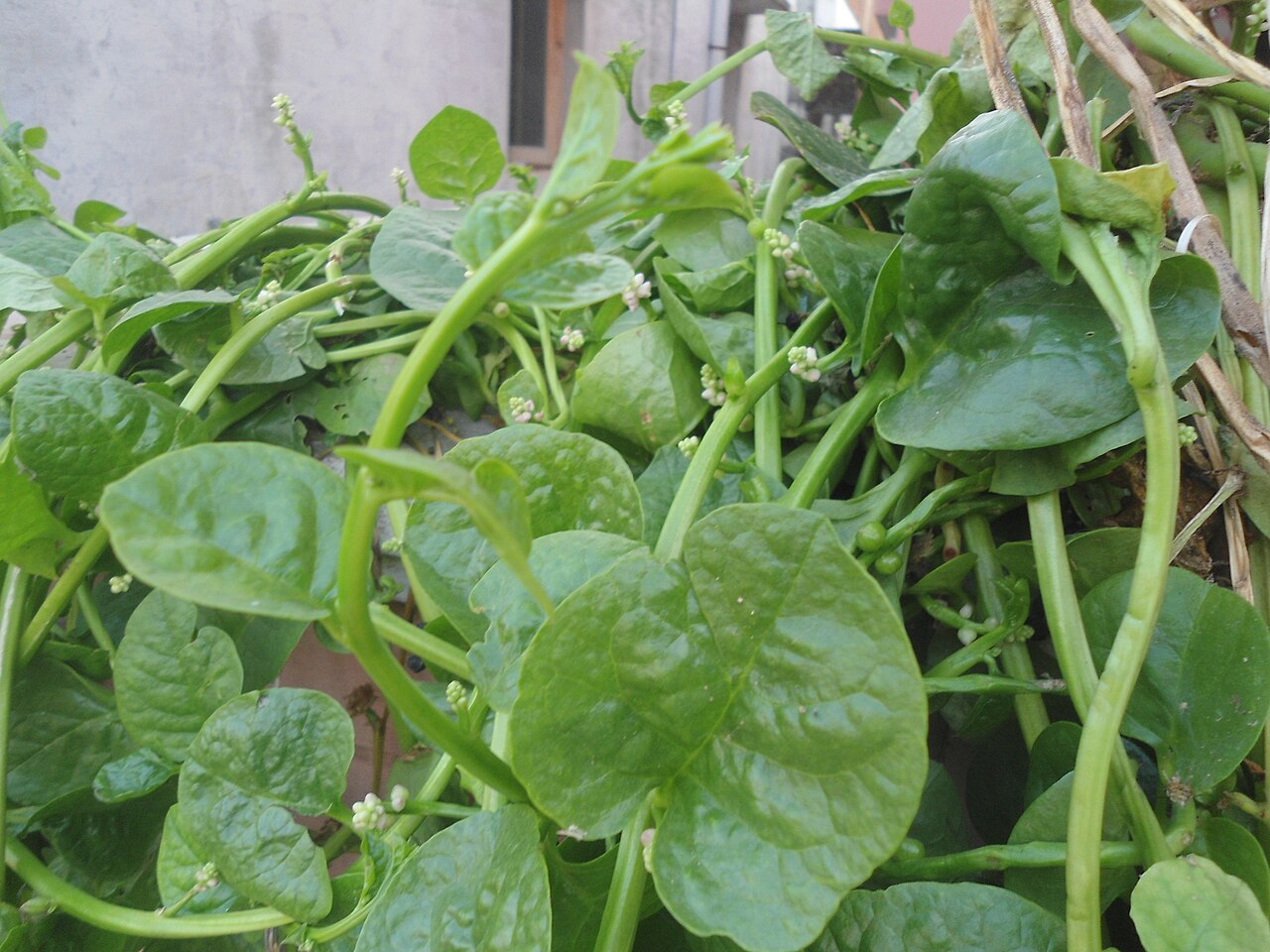
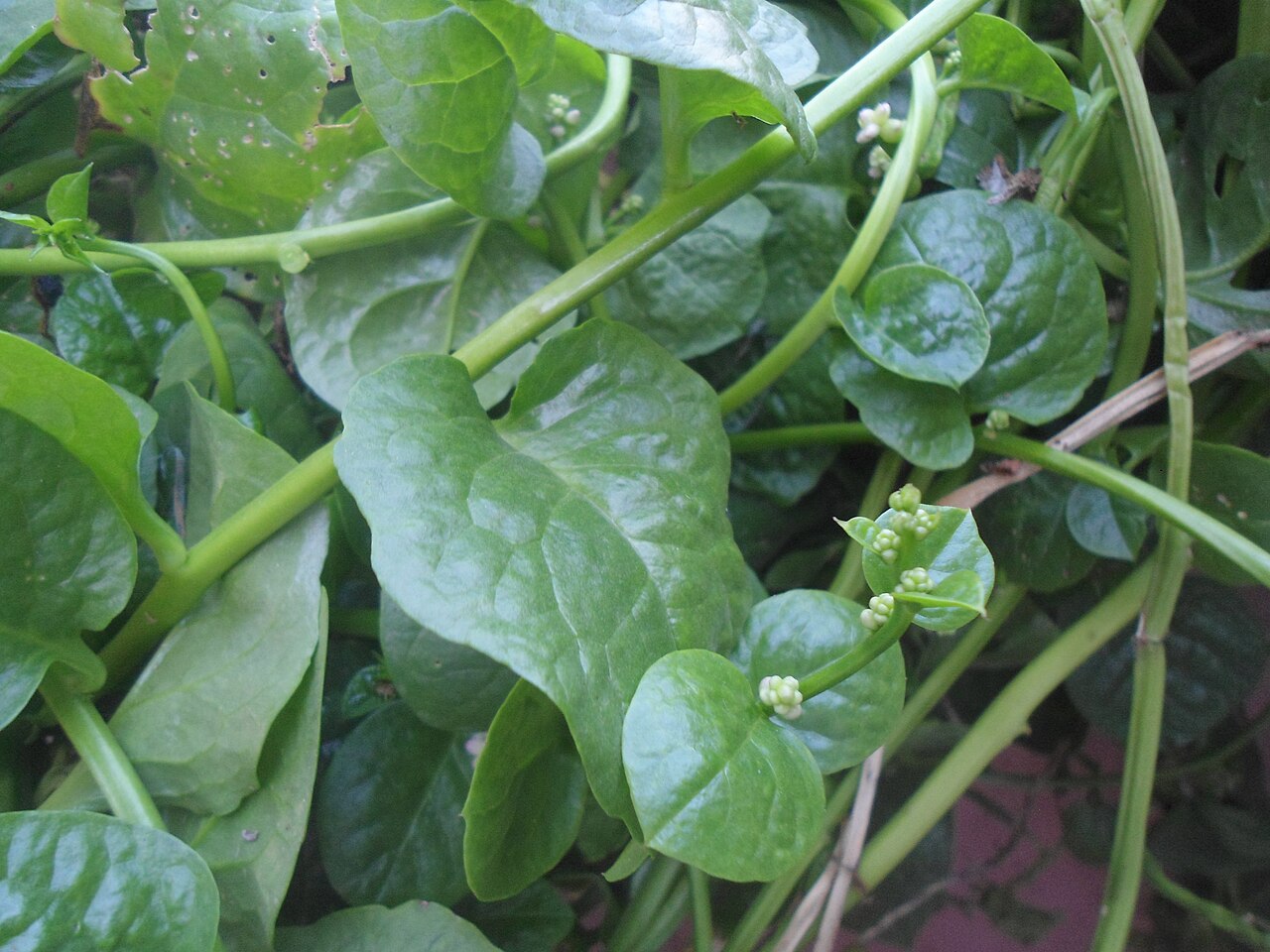
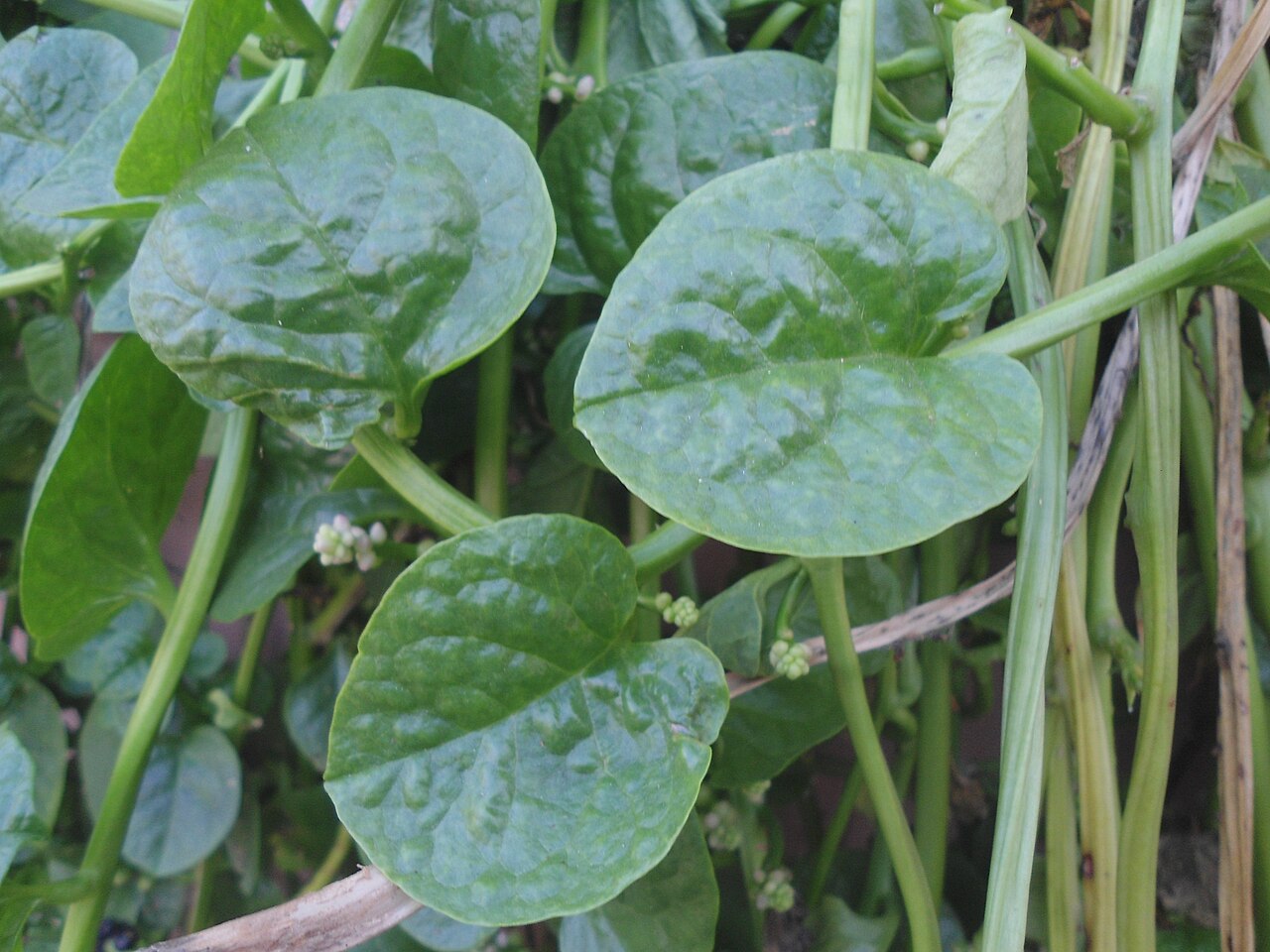
What it looks like
How to grow
Malabar spinach is the answer to the summer-greens problem: when spinach bolts at the first hot week, Malabar spinach is just getting started. It is a tropical vine, not a spinach relative at all — the leaves are thick, succulent, and mildly mucilaginous (a polite word for slightly slimy when cooked), which makes them superb in soups and stir-fries and an acquired texture raw.
Start indoors 6 weeks before last frost or direct-sow when soil is warm (65°F+); seed germinates slowly and unevenly, so nicking or soaking seed overnight helps. Trellis it — a fence, a teepee, or a balcony rail — or let it sprawl as a ground cover; either way, it grows fast once heat arrives and produces until frost.
Picking is the care: harvest shoot tips and young leaves regularly, and the vine branches and produces more. Neglected vines get woody and produce berries (edible but staining, and a self-seeding nuisance in warm zones), so pick often and pinch tips.
Water & feeding
About 1–1.5 inches a week, kept even — Malabar spinach loves moisture and heat together, and drought makes leaves tough. Work worm castings into the bed at planting and side-dress monthly; castings carry a low burn risk and support the vine’s all-season production. Mulch to hold moisture, especially in containers, where Malabar spinach also grows well.
Common problems
- Slow germination: old seed or cool soil — soak seed overnight, use fresh seed, and wait for warm soil.
- Slugs on young leaves: traps and clean mulch; vigorous vines usually outgrow damage.
- Self-seeding in warm zones: pick berries before they drop, or accept volunteers as next year’s crop.
- Frost kill: Malabar spinach dies at the first frost — harvest heavily before it arrives.
Harvest
Pick shoot tips and young leaves continuously once vines are established — the tips are the most tender part. Use fresh in salads sparingly (the texture divides opinions raw), or cook in soups, curries, and stir-fries, where the slight mucilage thickens beautifully, like okra’s. Red-stemmed types (Basella rubra) add ornamental value and the same flavor.
Browse all plant & pest guides
Saving seeds
Malabar spinach saves its own seed with enthusiasm, and the harvest is easy to spot. The vine flowers in late summer, and the flowers turn into dark purple-black berries in fall. Each berry holds a single seed. Wait until the berries are fully dark and soft, then pick them by the handful, crush them gently in a bowl of water, and rinse the pulp away. The seed sinks and the pulp floats, which makes cleaning simple. Dry the seed on a tray for a week before jarring it.
There is no stratification, no scarification, no fuss. Sow the seed after the soil has warmed in spring, barely covered, in rich moist soil with something to climb on. Germination is quick in warm soil and poor in cool soil, which is the plant telling you when it wants to grow. Soaking the seed overnight speeds things along, but it is not required.
Self-seeding is vigorous in Florida. A vine left to ripen will sow itself everywhere next spring, often in places you did not intend, and the volunteers transplant easily while they are small. Deadhead the flowers if you do not want a colony, or let a few berries ripen and enjoy the free vines.
Crossing is a small matter. Basella alba, the green-stemmed kind, and Basella rubra, the red-stemmed kind, cross with each other, so if you grow both and save seed, expect a mix of green and red stems in the next generation. Grow one if you want seed that stays itself. The two are the same species by most accounts, which is why they cross so freely.
Stored dry, the seed keeps well for a few years. Florida humidity is the enemy of stored seed, so dry it thoroughly before jarring it, add a silica gel packet, and keep the jar cool and dark. And remember what the plant is: a heat-proof tropical vine that produces greens all summer while real spinach gives up. The seed you save is next summer’s salad.
Varieties
Every named variety of Malabar Spinach with its own growing guide:
- Green Malabar Malabar Spinach — The green-stemmed Malabar spinach — vigorous, mild, and the classic summer spinach substitute.
- Red Malabar Malabar Spinach — The red-stemmed Malabar spinach — magenta stems, glossy leaves, and an edible ornamental.