Tassels of red, gold, or green that hang like ropes — the annual that looks like a chandelier.
Sun
Full sun
Time to establishment
Grown as an annual in all zones; tassels summer to frost
Spacing
12–24 inches apart
Soil pH
Varies by variety; average, well-drained soil
Zones
Grown as an annual in all zones
What it looks like
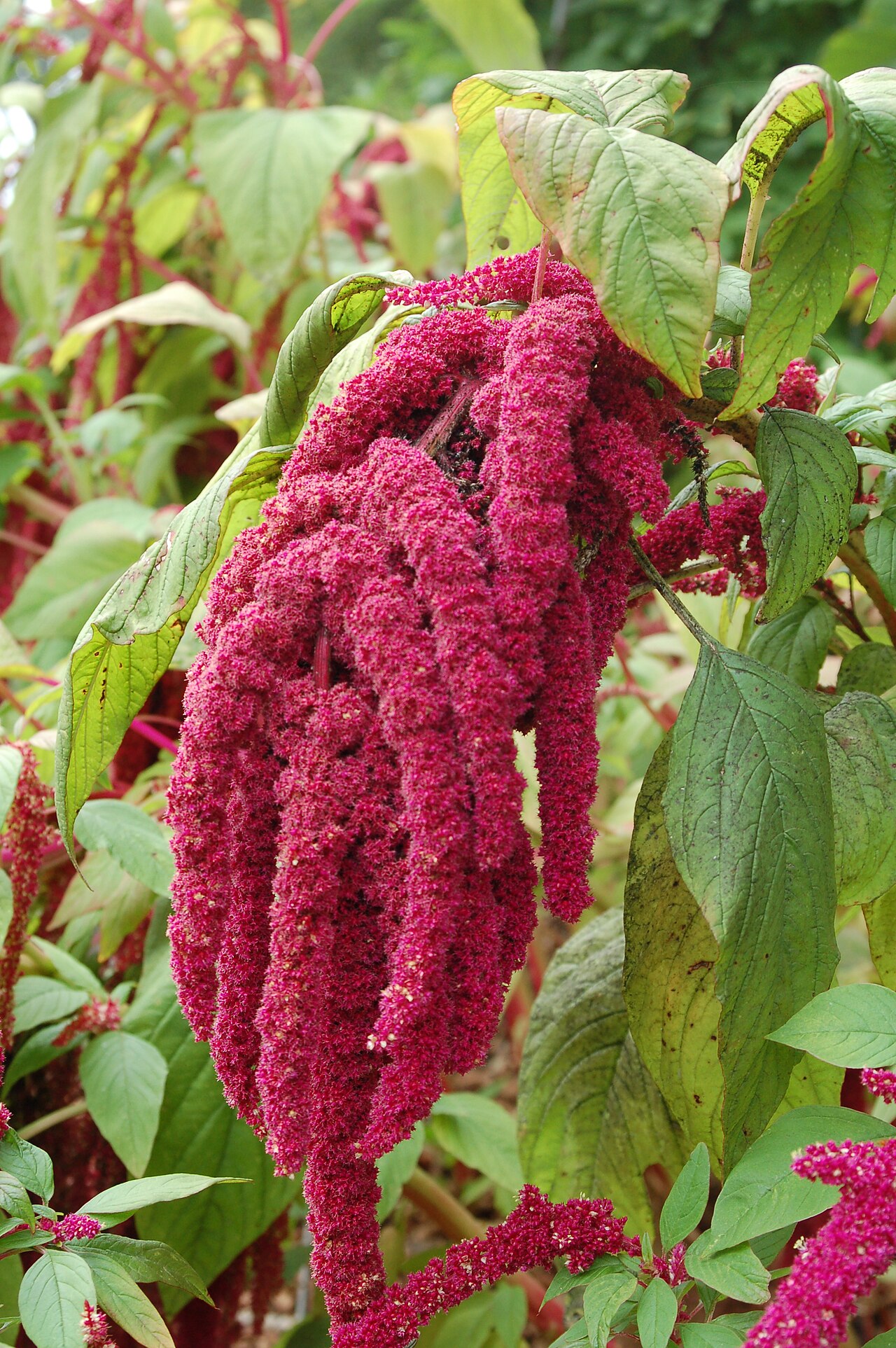
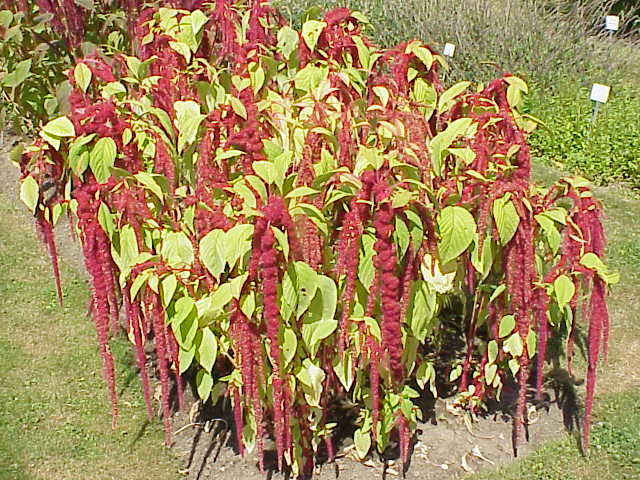
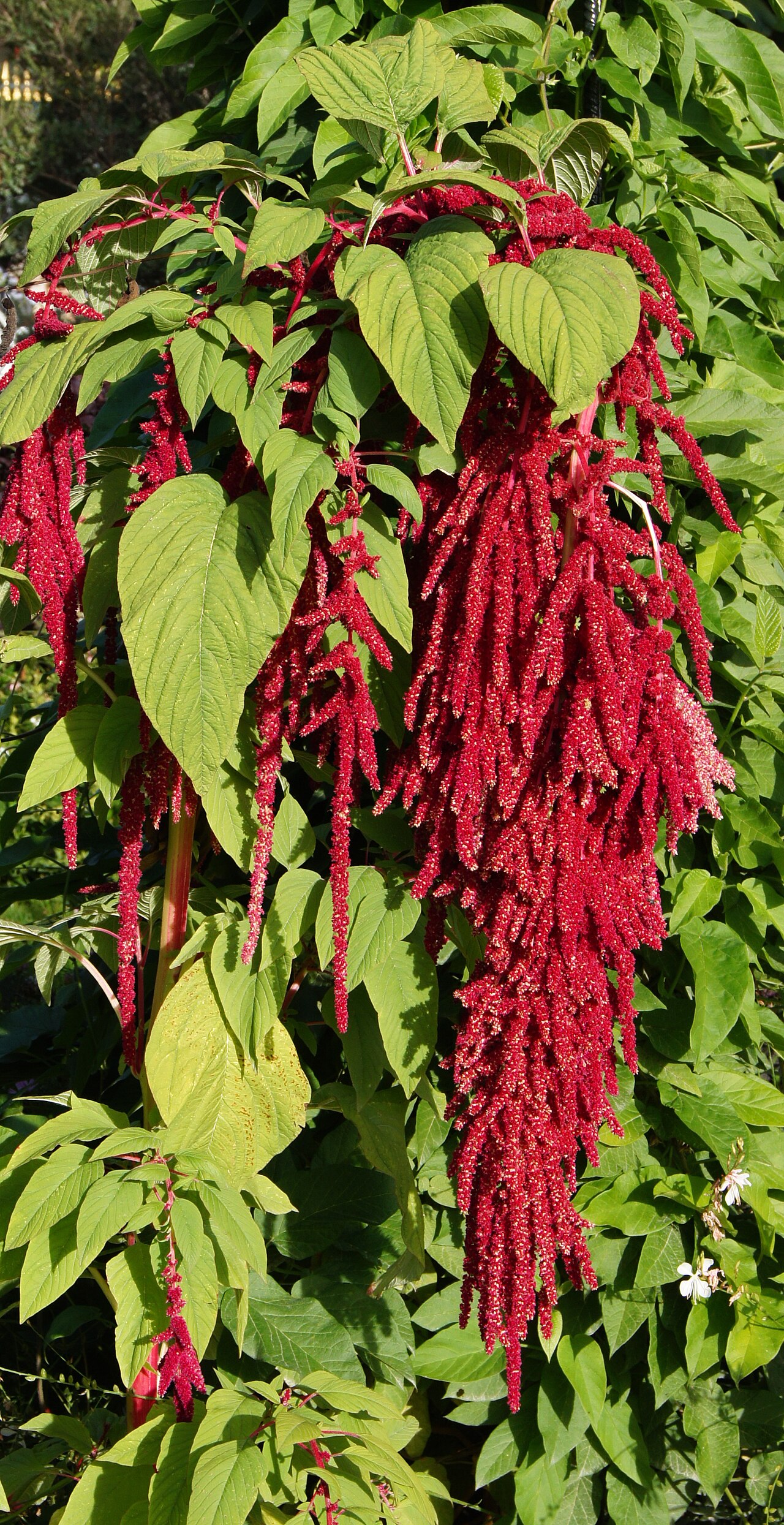
A thick cluster of magenta-red drooping tassels. Photo: Tubifex, CC BY-SA 3.0.The whole plant: bushy, with long red tassels hanging. Photo: Kurt Stüber, CC BY-SA 3.0.Tall stems, deep-red tassels, big green leaves. Photo: Jebulon, public domain.
How to grow
Ornamental amaranth covers several showy annuals grown for their tassels: love-lies-bleeding (A. caudatus) with long, rope-like red tassels that hang 2 feet or more; Joseph’s coat (A. tricolor) with brilliantly colored foliage in red, gold, and green; and upright plume types with feathery flower heads. Plants grow 2–5 feet tall depending on type, in full sun and average, well-drained soil, spacing 12–24 inches apart. Sow seed indoors 4–6 weeks before last frost or direct-sow after frost — amaranth loves heat and grows fast once warm weather arrives. It is drought-tolerant once established, a superb cut and dried flower, and a dramatic back-of-border plant. Note: grain amaranths are the same genus grown for seed, and the seeds are edible — but ornamental types are grown here for looks, and this guide does not cover grain production.
Water & feeding
Water regularly until established, then water in dry spells; amaranth tolerates heat and drought but grows lushest with steady moisture. Feed lightly — compost at planting is enough; heavy nitrogen makes leafy growth at the expense of tassels.
Common problems
Self-seeding — amaranth seeds freely; deadhead or thin volunteers if they spread.
Tassels breaking in wind — stake tall types in exposed spots.
Flea beetles — small holes in leaves; usually cosmetic, plants outgrow it.
Short plants in cool weather — amaranth needs heat; do not plant out too early.
Harvest
Cut tassels for fresh bouquets when fully colored, or for drying when tassels are firm — hang upside down in a dry place and they hold color well. Leave some plants to self-seed for next year if you want volunteers. Joseph’s coat is grown for foliage, so cut stems for arrangements any time the color is at its peak.
Nerdy fact: Amaranth’s name comes from Greek amarantos, ‘unfading’ — because its flowers keep their color long after cutting. It was named for exactly what gardeners still love about it.
Ornamental amaranth is one of the easiest seeds in the garden to save, and one of the most generous — a single tassel can hold thousands of tiny seeds, and a single plant can fill a jar. Let the tassels ripen fully on the plant: they turn from bright red or gold to dry and papery, and the seed shakes loose at a touch. Snip the dry tassels into a paper bag on a dry day, crush them gently, and winnow out the chaff. The seed is tiny, round, and dark, and a little goes a very long way.
The one rule that matters is light. Amaranth seed needs light to germinate, so sow it on the surface of a moist seed-starting mix and press it in gently, but do not bury it. It needs warmth too — sow after the last frost, when the soil is warm, and expect sprouts within a week or two. In Florida, amaranth is a warm-season annual, so sow in spring and enjoy it through summer and into fall.
Crossing is the one thing to think about. Amaranths cross readily with each other, and different varieties will mix if they flower together, so seed saved from a mixed planting will give you surprises — which, for ornamental amaranth, is often a delight rather than a problem. If you want a specific variety to stay true, grow one variety for seed, or bag a few flower heads and hand-pollinate them.
Amaranth self-seeds freely, so a plant you grew once will often volunteer the next year without any help from you. Deadhead the tassels you do not want to keep, or you will have amaranth everywhere. Save seed from your tallest, most colorful plants, dry it thoroughly before jarring it — Florida humidity is the enemy of stored seed — and keep it in a cool, dark jar with a silica gel packet. And a fun fact worth knowing: the seed is also an edible grain, the same amaranth that has fed people for thousands of years.
Varieties
Every named variety of ornamental amaranth with its own growing guide: