
🌾 Pawnee Big Bluestem
What it looks like
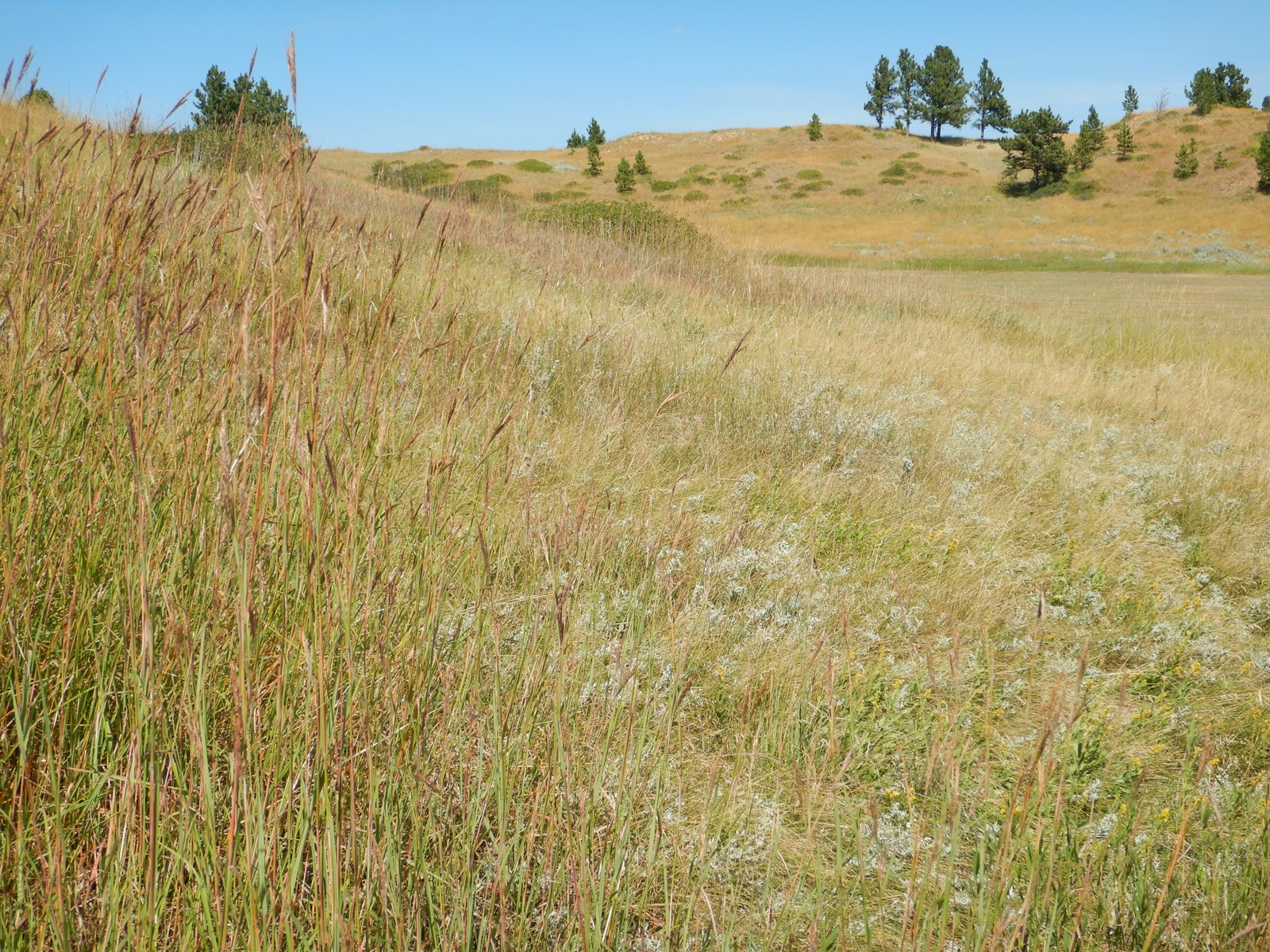
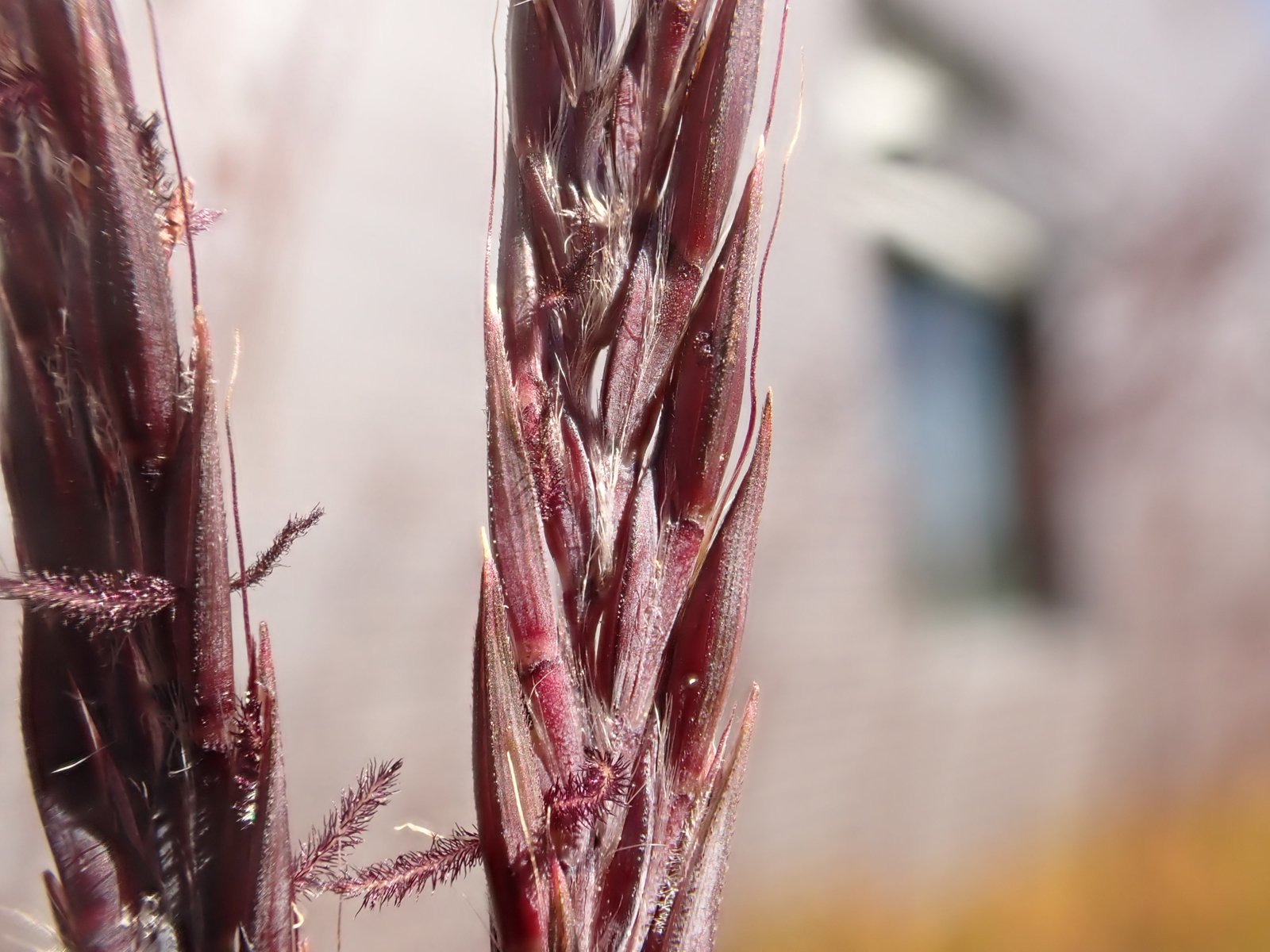
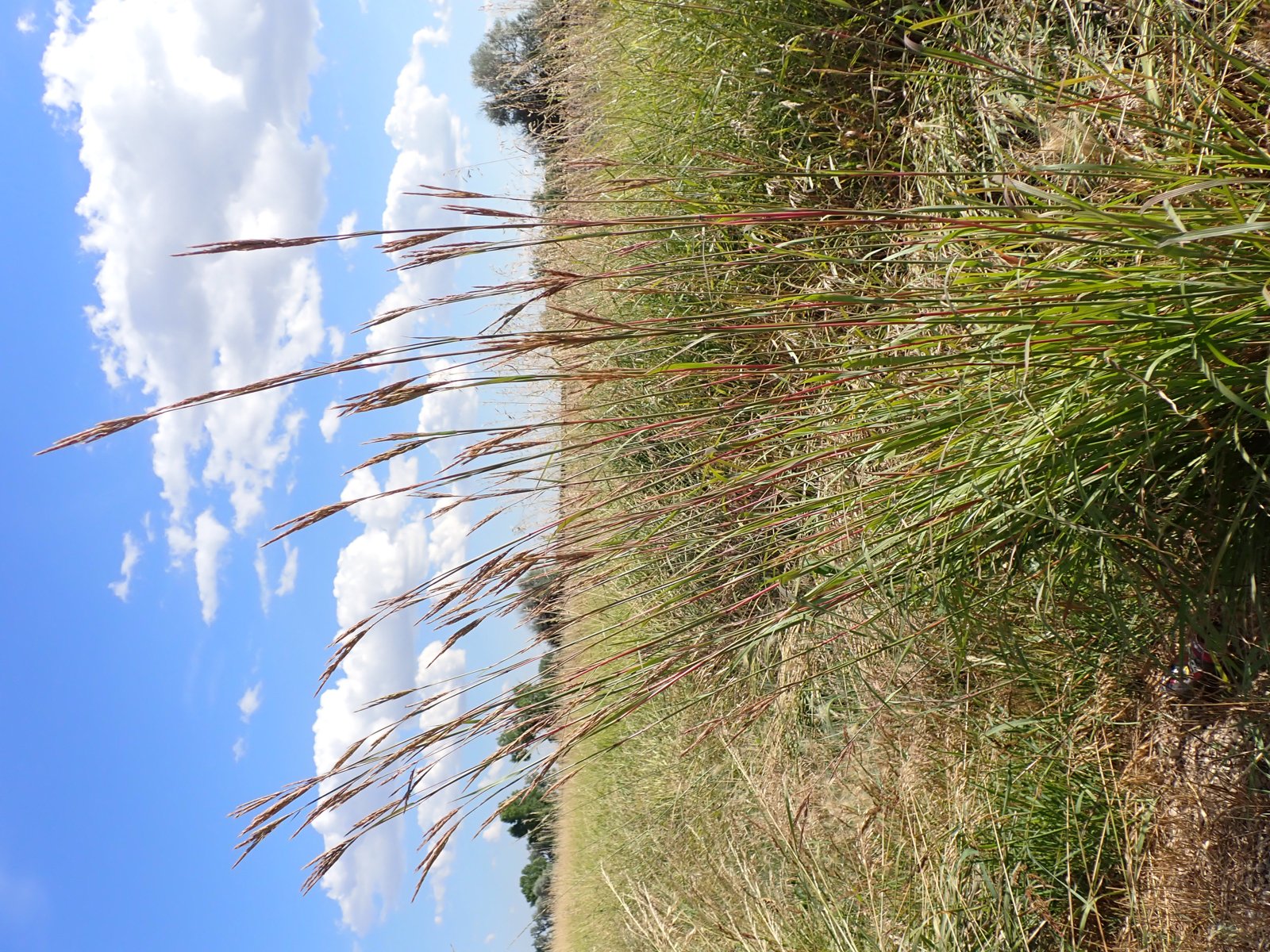
Pawnee is the refined one of the big bluestem family: an upright, warm-season perennial bunchgrass standing about 3 to 6 feet tall, with the bluish-purple stems typical of the genus and blue-green foliage that turns a warm, light red in fall — color that, by the accounts that made this selection popular, persists into winter instead of collapsing at the first frost. Its flower heads are the classic big bluestem turkey foot, purplish-red racemes in groups of three or six, nodding above the foliage in late summer.
Why this variety
Why pick Pawnee over the straight species? Refinement is the honest answer. The wild species is variable — 4 to 8 feet depending on soil and moisture, sometimes gloriously tall, sometimes gloriously all over the place. Pawnee tightens that range into a more garden-predictable 3 to 6 feet, keeps the blue-purple stem color that gives the species its name, and delivers fall color you can actually plan a border around. It is the cultivar for gardeners who want prairie authenticity without the prairie’s habit of improvising.
Its root system is the other reason to take Pawnee seriously. The species is famous for roots reported past 10 feet deep, and Pawnee’s entry in the species guide carries that same deep-root reputation. That is not garden trivia: it is why this grass holds soil against wind and water, why it shrugs off drought once established, and why it comes back after a hard winter cut as if nothing happened. You are not planting a decoration. You are planting an anchor with a paint job.
Florida translation, stated honestly: big bluestem is a prairie grass that wants a real winter rest, and this cultivar is no exception. In North Florida it is a plausible garden trial in full sun and lean, well-drained soil; in the warmer peninsula it sits outside its comfort zone, and a warm-season grass that never gets cold will not color up or perform the way it does on the prairie. Do not buy it expecting a guaranteed Florida show — buy it as a North Florida experiment, give it sun and restraint, and let it prove itself. Heat and humidity also mean one extra Florida rule: never plant it in a soggy, richly fed bed, or the tall stems will flop at the first summer storm.
How to grow
Plant in full sun in spring, after the last frost, and give it room to become a clump rather than a tuft. Big bluestem is a warm-season grass, so cold soil is its enemy at planting time: wait until the soil is genuinely warm, set transplants at the same depth they grew in their pots, and water them in well. From seed, sow shallow — a quarter to a half inch deep — once soil temperatures reach 65 to 70 degrees Fahrenheit, and do not expect a lawn-grass sprint.
Manage your expectations for year one, because this grass plays the long game. The first season it mostly builds roots — roots that will eventually run 6 to 10 feet deep, with reports past 10 feet — while the top growth looks almost embarrassingly modest. Year two it creeps, year three it leaps, and after that it stays for decades with almost no help from you. The old prairie saying fits: first year it sleeps, second year it creeps, third year it leaps over your head.
Once established, maintenance is almost nothing, and that is the point. Leave the tawny stems standing through winter for birds, seed eaters, and overwintering insects, then cut the whole clump to the ground in late winter before new shoots appear. That single annual cut is the garden equivalent of the prairie fires this grass evolved with, and it clears the way for a clean spring flush without any permits or drama.
Water & feeding
Water regularly during establishment and then largely stop worrying. Once those deep roots are down, big bluestem drinks from depths a sprinkler cannot reach, and it is genuinely drought-tolerant. Supplemental water in a severe drought is welcome, but a regular irrigation schedule is not required — and in a garden bed it can be a liability, because wet, rich conditions grow tall, soft stems that topple.
Do not fertilize it like a lawn, and do not apologize for lean soil. Big bluestem evolved on soils nobody fertilized, and added nitrogen makes it taller, softer, and more likely to flop — the opposite of what you want from an architectural grass. A light dressing of compost at planting is plenty. After that, let the grass feed itself from the soil it has spent millennia learning to use, and let the late-winter cut return the old stems’ nutrients to the surface.
Common problems
Flopping: The classic complaint, and almost always a sign of too much water, too much fertilizer, too much shade, or too rich a soil. Pawnee is on the shorter, more refined end of big bluestem, which helps, but pamper it in a rich, wet bed and it will still lie down. Give it full sun and lean soil and it stands up.
Slow establishment: Year one looks unimpressive and year two only moderately better. This is normal, not failure — the plant is building roots first and height later, and by year three it will make up for lost time with interest.
Self-seeding: Big bluestem seeds itself where it is happy, and volunteers appear in beds and paths. In a prairie planting this is a feature; in a tidy border, deadhead before seed ripens or pull volunteers while small.
Shade intolerance: In partial shade it grows thinner, flowers less, and flops more. If the spot gets less than six hours of direct sun, plant something else — this grass will tell you, politely at first and then by falling over, that it wants the sun.
Do not confuse it with little bluestem: Little bluestem (Schizachyrium scoparium) is a different, shorter grass in a different genus. Check the Latin on the label: Andropogon gerardii is the big one. Both are wonderful; they are not interchangeable.
Harvest
Pawnee’s harvest depends on what you are growing it for, and for most gardeners the answer is: the cut, and the color. As an ornamental, leave it standing through winter — the persistent fall color and the seed heads feed birds and shelter insects — then cut stems to the ground in late winter before new growth. As forage or hay it shares the species’ history as a desirable native forage, high in protein, but it cannot tolerate overgrazing, so graze or cut rotationally and leave enough leaf to rebuild the roots.
As a seed crop, harvest when the turkey-foot heads turn brown and the seed strips easily, and dry it promptly. One honest warning, true of every named cultivar: seed saved from your own plants will not reliably grow true to Pawnee. Named selections are kept true by division, not by seed, so if you want more Pawnee, divide a clump in spring — do not sow its seed and expect a clone.
Browse all plant & pest guides
Saving seeds
Why pick Pawnee over the straight species? Refinement is the honest answer. The wild species is variable — 4 to 8 feet depending on soil and moisture, sometimes gloriously tall, sometimes gloriously all over the place. Pawnee tightens that range into a more garden-predictable 3 to 6 feet, keeps the blue-purple stem color that gives the species its name, and delivers fall color you can actually plan a border around. As a seed-propagated cultivar it comes true from seed: sow shallow — a quarter to a half inch deep — once soil temperatures reach 65 to 70 degrees Fahrenheit, and do not expect a lawn-grass sprint. Manage your expectations for year one, because this grass plays the long game — the first season it mostly builds roots, while the top growth looks almost embarrassed. The full method is in the Saving seeds section of the Big Bluestem guide.