
🌺 Perfect Storm Hardy Hibiscus
What it looks like
Why this variety
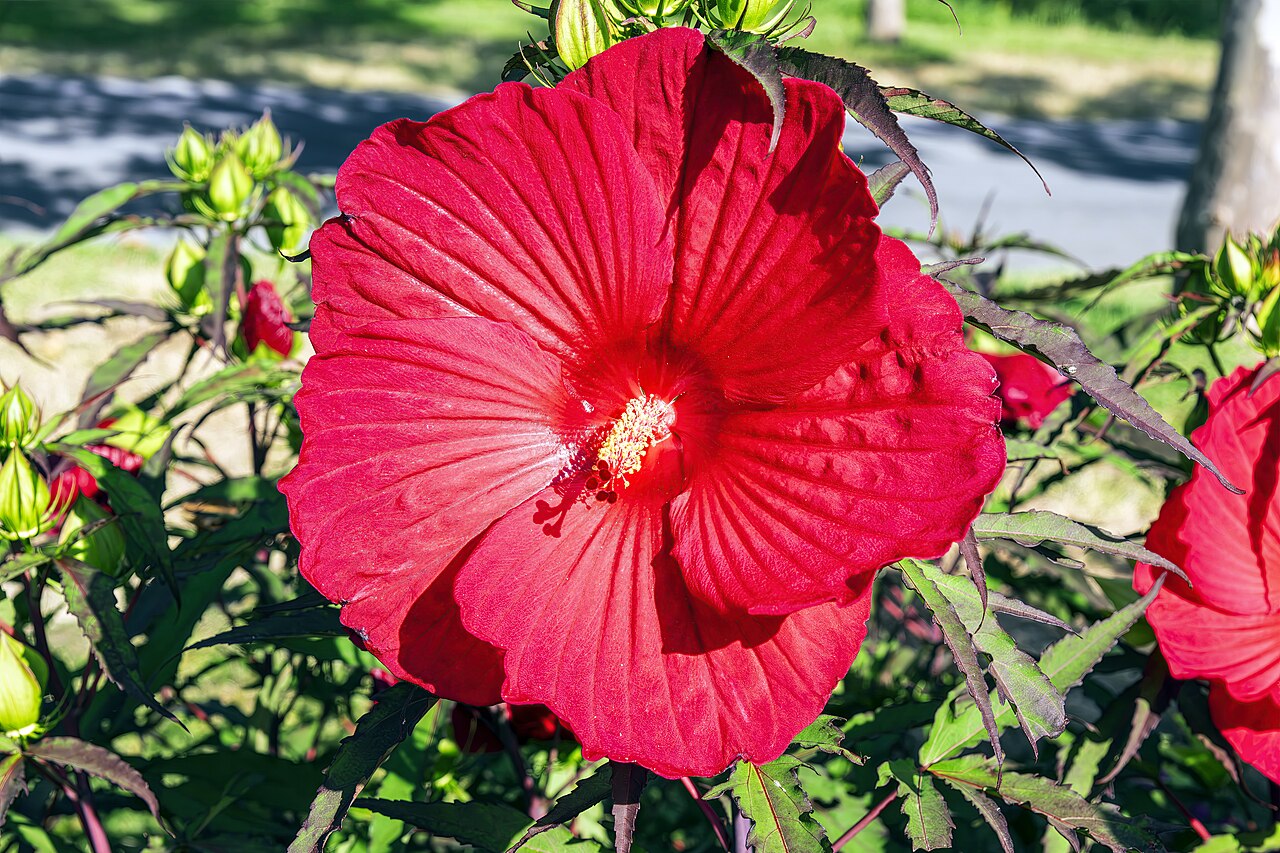
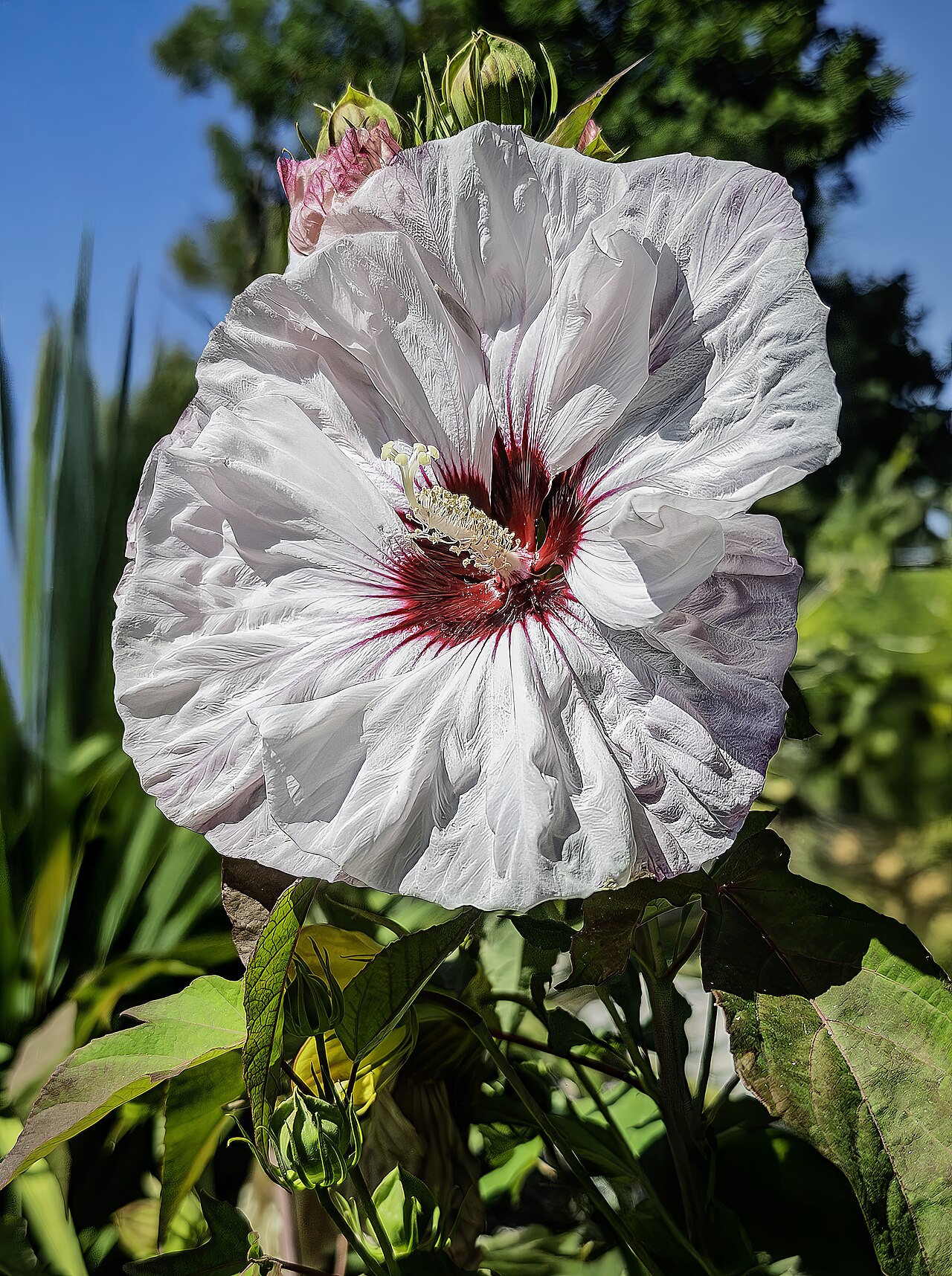
Perfect Storm is the hardy hibiscus for gardeners who want the dinner plate and the drama: large 7–8 inch flowers, white to light pink with a deep red eye that radiates along the veins, set against dark, near-black maroon foliage that looks striking even before a single bud opens. It is compact for a hardy hibiscus — about 3 feet tall and 4–5 feet wide — and it flowers up and down the stems all summer, not just at the tips.
Hardy hibiscus is a completely different plant from tropical hibiscus: it dies to the ground every winter and regrows from the roots, emerging late — sometimes not until June — so mark its spot and do not dig it up in May thinking it died. In Florida it wants sun and moisture and tolerates wet soil better than most perennials, even suiting rain gardens. The species guide for hardy hibiscus covers the shared basics; this is the dark-foliage compact one.
How to grow
Plant in spring in full sun and moist, well-drained soil worked with castings, spacing 4–5 feet apart. Mulch to hold moisture, especially in hot climates, and mark the spot: late emergence is the most common ‘problem’ with hardy hibiscus, and it is gardener panic, not plant failure. Cut dead stems to the ground in late winter before new growth emerges.
Water & feeding
Water consistently — hardy hibiscus is thirsty and blooms best with steady moisture; do not let it dry to wilting point. Mulch to hold soil moisture, feed lightly in spring with castings and a balanced organic feed, and give it the wettest sunny spot you have rather than the driest.
Common problems
- Late emergence — mark the spot; it is not dead until June says so.
- Japanese beetles chewing flowers and foliage in outbreak years — handpick or tolerate; the plant outgrows most damage.
- Aphids and sawfly larvae on foliage — blast with water, encourage predators.
- Drought stress — wilting and fewer blooms; steady water is the fix.
Harvest
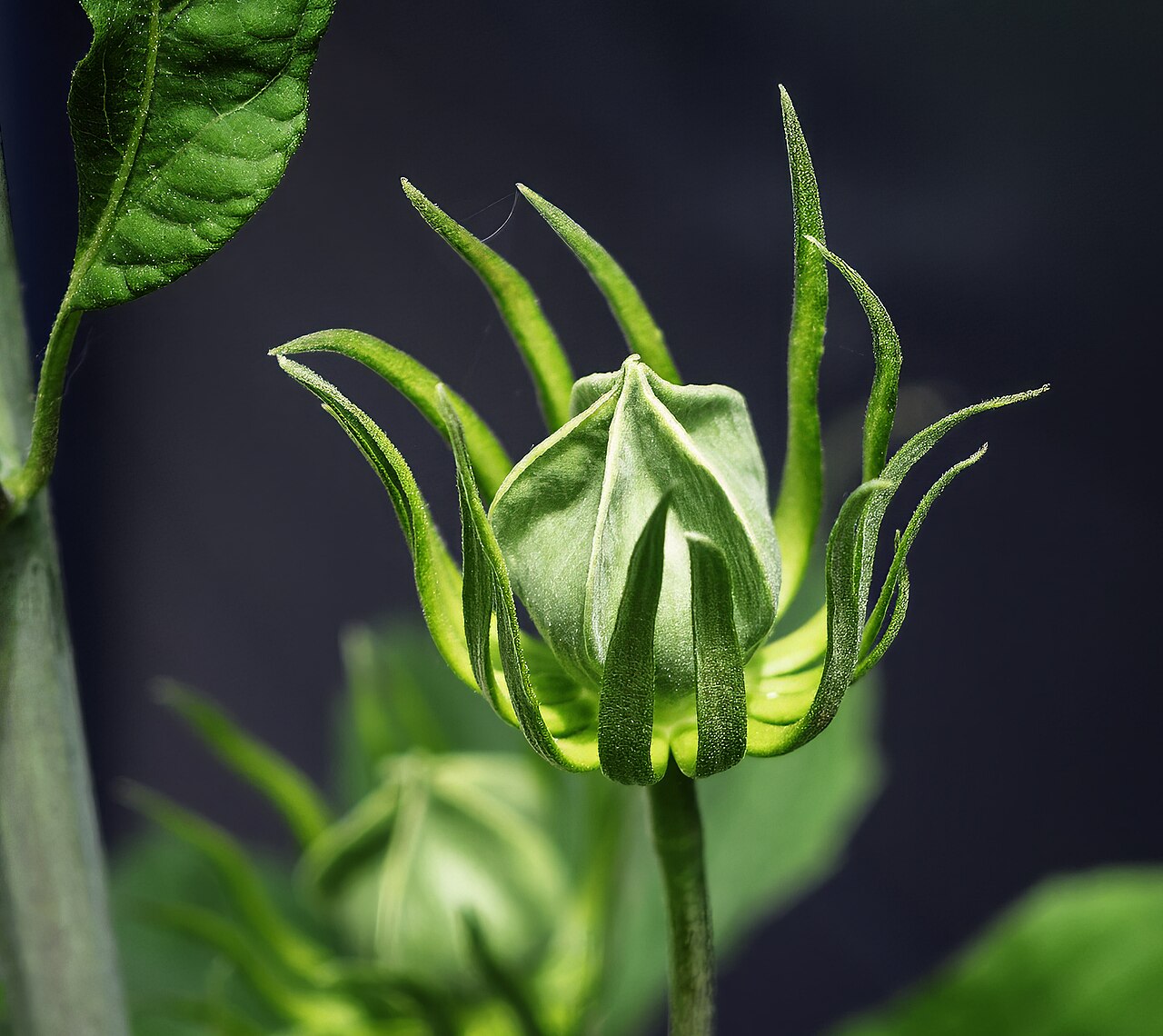
Deadhead for continued bloom, or leave seed pods for winter interest — both are legitimate, and the pods are handsome in their own architectural way. Cut stems for a vase in the morning; each bloom lasts a day, but the plant opens new ones daily for weeks. Cut dead stems to the ground in late winter to make room for the spring surge.
Browse all plant & pest guides
Saving seeds
Perfect Storm is the hardy hibiscus for gardeners who want the dinner plate and the drama: large 7 to 8 inch flowers, white to light pink with a deep red eye that radiates along the veins, set against dark, near-black maroon foliage that looks striking even before a single bud opens. It is compact for a hardy hibiscus — about 3 feet tall and 4 to 5 feet wide — and it flowers up and down the stems all summer, not just at the tips. As a named hardy hibiscus cultivar it is kept true by division and cuttings, not by seed — seedlings would not hold the dark foliage or the compact habit. Plant in spring in full sun and moist, well-drained soil worked with castings, spacing 4 to 5 feet apart, and mark the spot: late emergence is the most common ‘problem’ with hardy hibiscus, and it is gardener panic, not plant failure. The full method is in the Saving seeds section of the Hardy Hibiscus guide.