
🌺 Hardy Hibiscus
What it looks like
How to grow
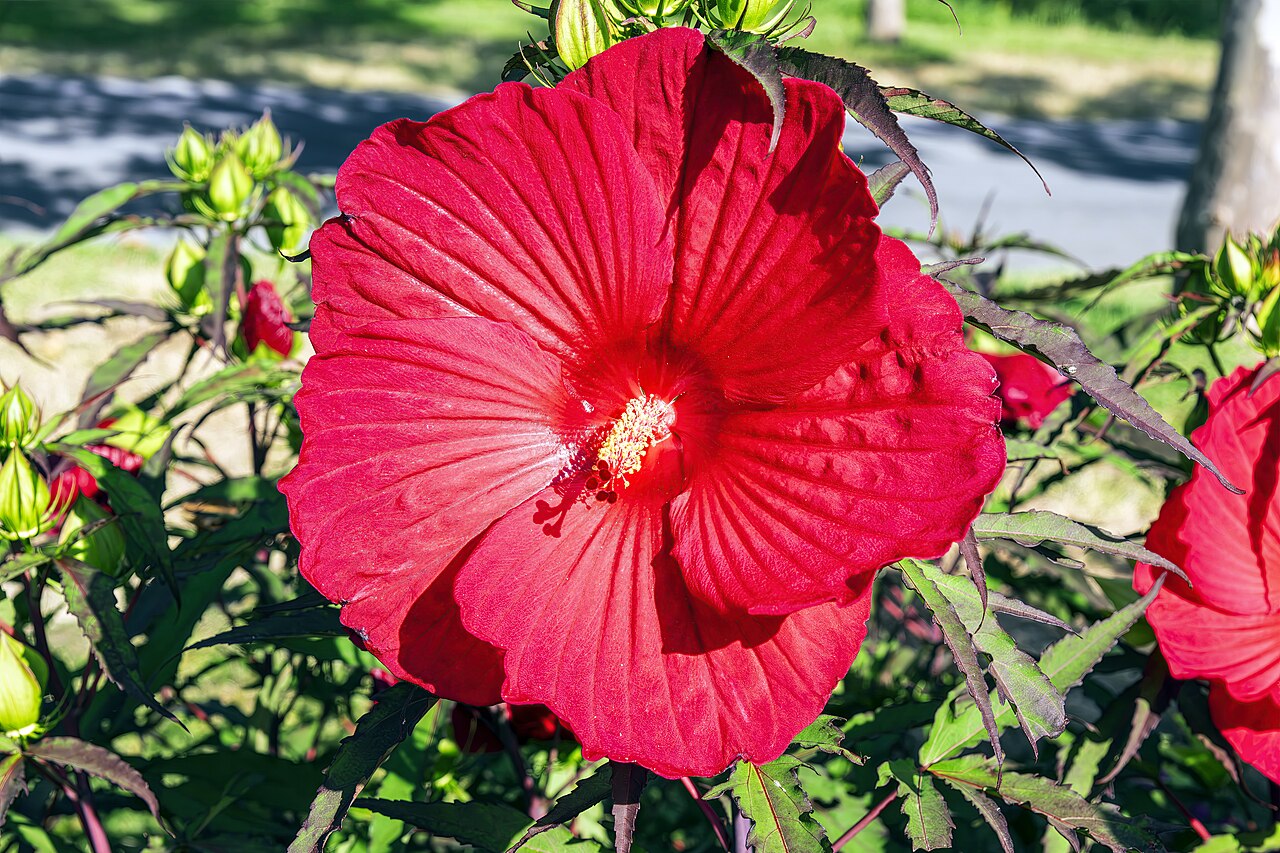
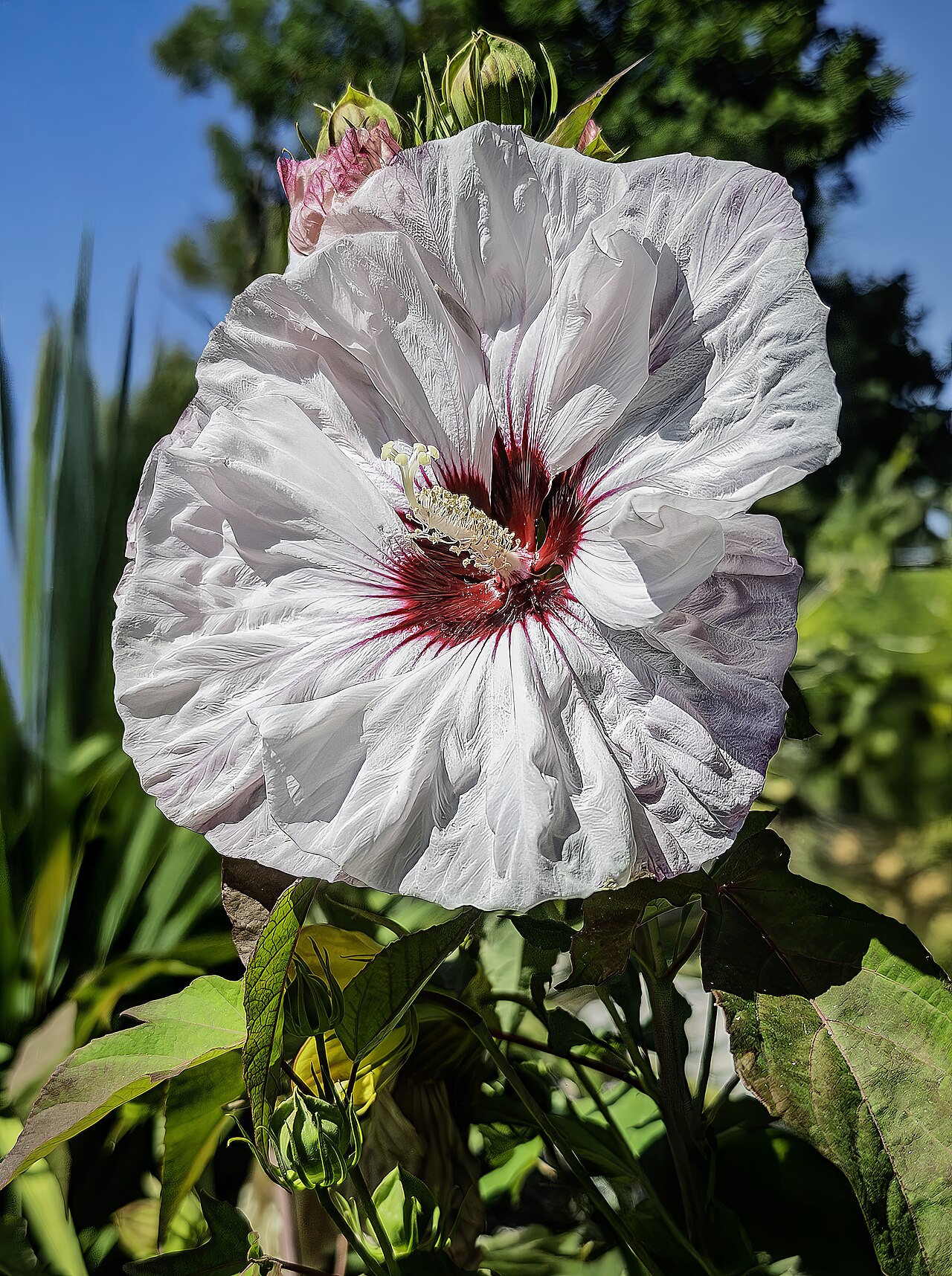
Plant in spring in full sun and moist, well-drained soil — hardy hibiscus is a completely different plant from tropical hibiscus (which is covered in its own guide): it is a cold-hardy perennial that dies to the ground each winter and regrows from the roots, producing flowers 8–12 inches across in white, pink, and red from midsummer to fall. It emerges late — sometimes not until June — so mark its spot and don’t dig it up in May thinking it died. Give it sun and moisture; it tolerates wet soil better than most perennials and even suits rain gardens.
Water & feeding
Water consistently — hardy hibiscus is thirsty and blooms best with steady moisture. Mulch to hold soil moisture, especially in hot climates.
Common problems
- Late emergence — the most common ‘problem’ is gardener panic in May
- Japanese beetles chewing flowers and foliage in outbreak years
- Aphids and sawfly larvae on foliage
Harvest
Deadhead for continued bloom, or leave seed pods for winter interest. Cut dead stems to the ground in late winter or early spring before new growth emerges.
Browse all plant & pest guides
Saving seeds
Start with the sentence that saves the most disappointment: a named hardy hibiscus cultivar, grown from its own seed, will almost certainly not look like its parent. Hardy hibiscus (Hibiscus moscheutos and its hybrids) is a great seed plant and a terrible photocopier. A ‘Lord Baltimore’ seedling is not Lord Baltimore, and seed sold under a famous cultivar name deserves suspicion. The exception is a seed strain bred to be grown from seed, such as the Luna series, where inbred parent lines make seed-grown plants reasonably uniform; even there, seed saved from garden plants, open-pollinated by whatever bee happened by, will segregate and wander. For an exact copy, cuttings and division are the faithful routes, described below; seed is the adventure route.
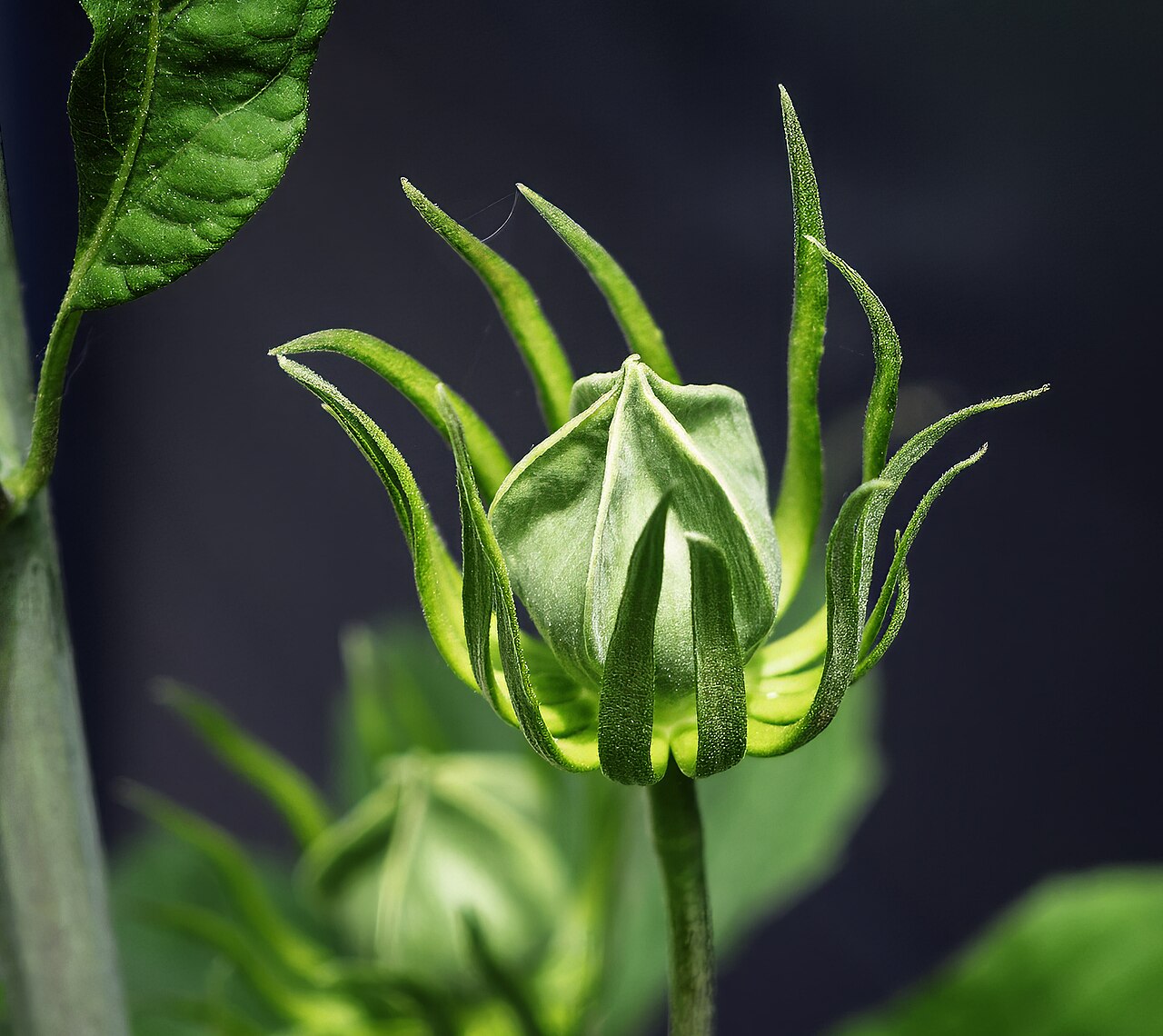
Collect in late summer into fall, when pods have ripened and turned brown, roughly four to five weeks after bloom. A ripe pod is dry and papery and splits to show dark brown, kidney-shaped seeds; an unripe pod is green and fleshy. Let pods dry a few more days indoors if soft, then crack them open and keep only plump, dark seeds, discarding any shriveled, moldy, or holed. The holes matter: hibiscus seed weevils lay eggs in developing seed, and the larvae eat the inside out, so a seed with a neat round hole is an empty apartment, not a plant. Label the lot with the parent’s name plus the honest word “seedling,” as in “Lord Baltimore seedling,” so future-you does not mistake an experiment for a cultivar.
For storage, dry cleaned seed thoroughly, keep it in a small airtight jar with a desiccant packet in a cool, dark place, and plan to sow it the following spring. Cool, dry storage keeps hibiscus seed going beyond one season, but germination fades with age, so sow older seed more thickly. In Florida humidity, the drying step is not optional: seed jarred even slightly damp will mold. To sow, nick each hard coat lightly, then soak overnight in warm water; many growers report sprouts within days after nicking and soaking, with no cold treatment at all. Other growers cold-stratify or winter-sow instead, and both camps report success, so try nick-and-soak on half your seed and a winter sowing on the other half, and let your garden vote. Sow barely covered in a warm, moist, well-drained mix, and pot seedlings on once they have a few true leaves. Seedlings usually take a season or two to reach full dinner-plate bloom.
For a faithful copy, take softwood to semi-hardwood stem cuttings in early summer, strip the lower leaves, dip in rooting hormone if you use it, and root them in a moist, well-drained mix kept humid and warm; division is also possible but harder than it sounds, because hardy hibiscus roots dive deep. One Florida note: hardy hibiscus needs a winter dormancy chill, which is why it is strong through much of the state but reluctant in the warmest south Florida gardens, and a plant that never properly rests sets a poorer seed crop. Save seed for surprise, take cuttings for certainty, and enjoy the fact that a seedling that is not its parent may still be the best hibiscus in your garden.
Varieties
Every named variety of Hardy Hibiscus with its own growing guide:
- Lady Baltimore Hardy Hibiscus — The pink dinner plate: huge, pale pink flowers with a red eye, the softer sister of Lord Baltimore and just as big.
- Lord Baltimore Hardy Hibiscus — The red dinner plate: huge, scarlet-red flowers up to 10 inches across on a 4- to 5-foot plant, the hardy hibiscus that stops traffic.
- Luna Red Hardy Hibiscus — The compact red: huge red flowers on a compact 2- to 3-foot plant, the hardy hibiscus for pots and small beds.
- Perfect Storm Hardy Hibiscus — The storm with the silver lining: huge white-pink blooms with a red eye over near-black foliage, on a compact plant.
- Luna White Hardy Hibiscus — The white dinner plate: huge white blooms on a compact shrub, the hardy hibiscus for smaller beds.
- Luna Pink Swirl Hardy Hibiscus — The pink swirl: white petals brushed and swirled with pink, on the same compact, dinner-plate Luna frame.
- Berry Awesome Hardy Hibiscus — The lavender-pink giant: 8-inch blooms with a dark red eye on a 4-foot shrub, a Proven Winners Summerific star.