
🐍 Pondoh Salak
What it looks like
Why this variety
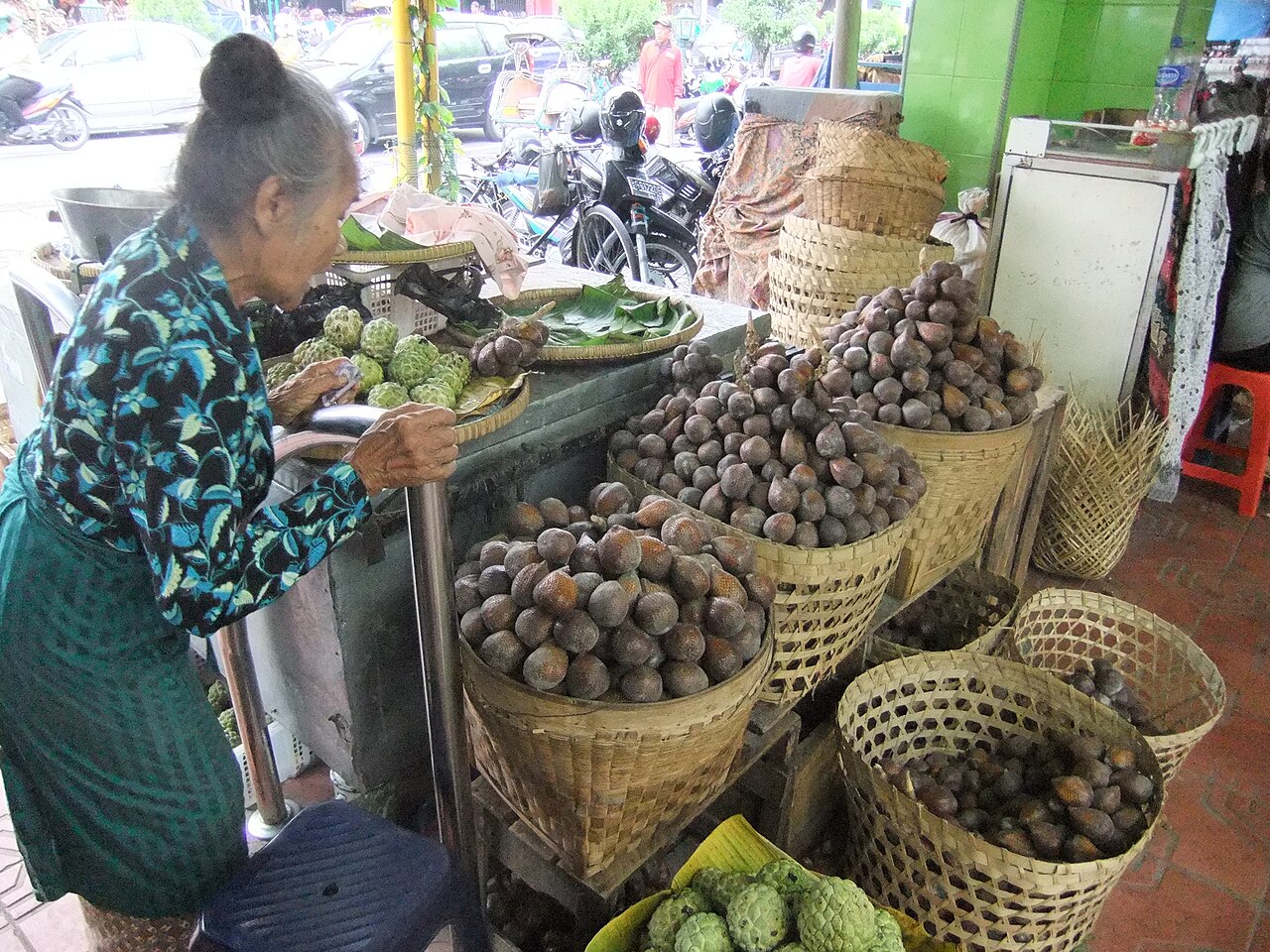
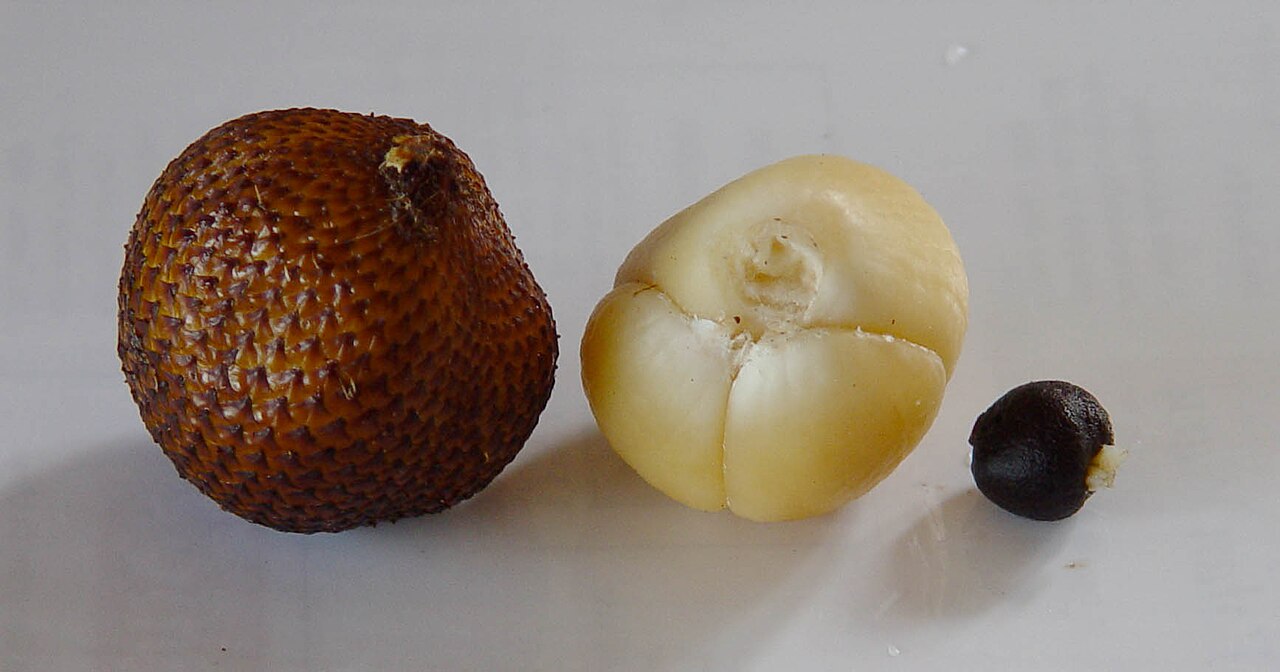
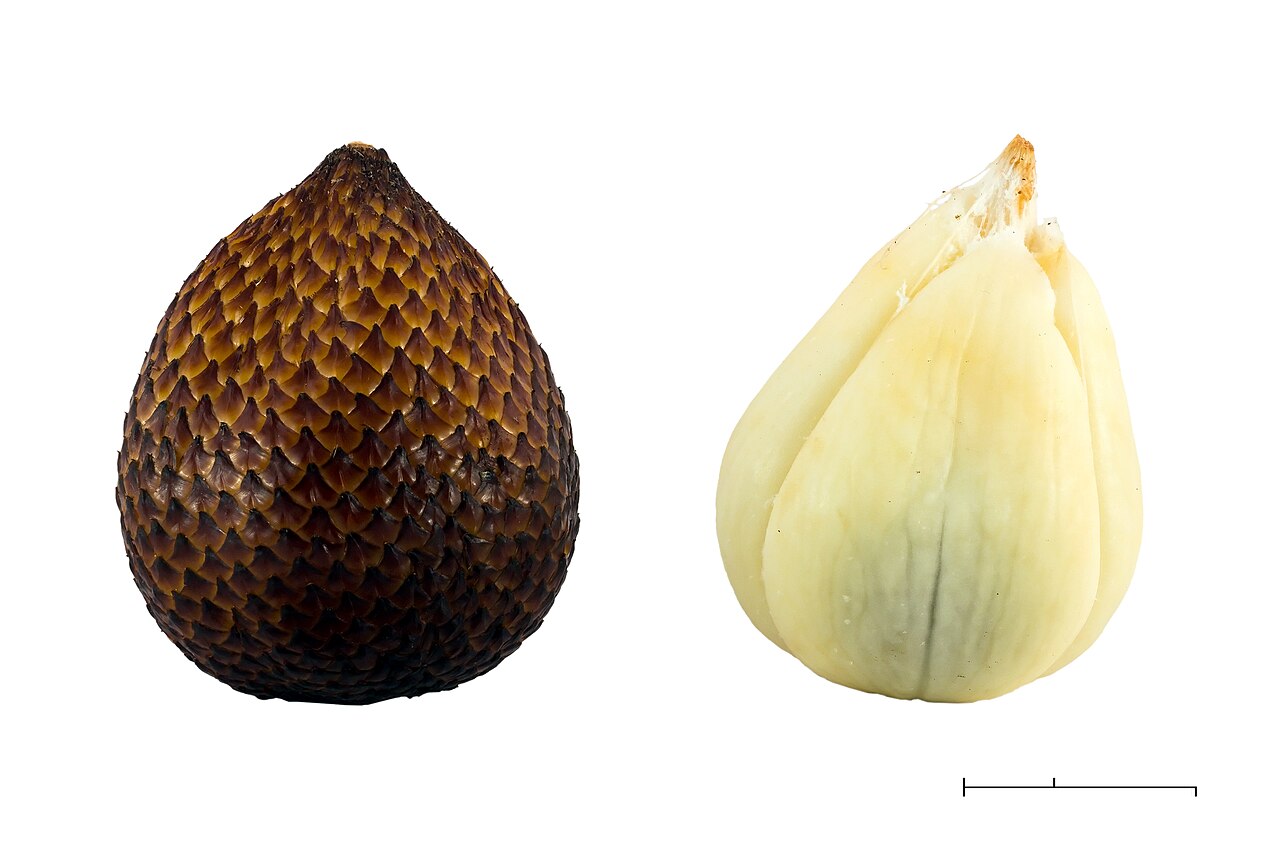
Pondoh is the salak most of the world meets first: the Yogyakarta cultivar from Java, the most commercially cultivated salak in Indonesia, with sweet, fragrant flesh that is dry and crumbly rather than wet, and almost no astringency even before it is fully ripe — a trait that made it famous, because most salak types pucker if picked early. Its fruit is fig-sized, scaly-skinned, and borne in clusters at the base of a spiny palm, and its superior forms — Pondoh Super, Pondoh Hitam, and Pondoh Gading — are selections within the Pondoh family, which tells you how much Indonesians value it. If you want salak as a sweet, eat-out-of-hand fruit rather than a sour curiosity, Pondoh is the cultivar to plant.
The trade-off is tropicality and spines, both absolute: Pondoh is a zone 10 to 11 palm with zero frost tolerance, it is dioecious so fruit needs a male nearby or hand-pollination, and every leaf stalk is armed with spines that demand thick gloves. Give it warmth, humidity, rich moist soil, and room for a clump, and it will fruit in a few years from a nursery palm. In Florida, that means South Florida ground or a very large container everywhere else — and everywhere, the harvest rule is gloves on, eyes protected, and a friend to hold the cluster while you cut it.
If you are new to choosing between cultivars, the Varieties Matter guide explains why the name after the plant matters as much as the plant itself. Pondoh is a perfect example: it is not just a salak in the abstract, it is a salak with a specific job, a specific history, and specific strengths.
Florida honesty: salak is a South Florida fruit, full stop — it needs frost-free warmth and humidity, and it will not survive a North or Central Florida freeze in the ground. In South Florida, plant Pondoh in rich, moist, well-drained soil with afternoon shade in the hottest spots, water steadily, and plan for pollination. Elsewhere in Florida, grow it only as a large container palm brought under cover before cold weather, and treat fruit as a bonus, not a promise. Pondoh is a tropical palm, and Florida’s tropics start at the frost line.
How to grow
Plant a nursery palm in spring, in full sun to part shade and rich, moist, well-drained soil — salak is a spiny, clustering palm from Indonesia that wants warmth, humidity, and steady moisture, and it has no frost tolerance at all. Work worm castings and compost into a wide planting hole, space for a clump that can reach 15 feet or more across, mulch thickly, and wear thick gloves, because every part of a salak palm is armed with spines. Plant more than one palm and keep male and female plants, because salak is dioecious and fruit needs a male nearby, or hand-pollinate.
Set plants 15-20 feet apart, clump-forming in soil with a pH around 5.5-6.5. Work worm castings into the bed at planting and mulch to hold moisture. A well-fed salak plant rewards that care directly: steadier growth, better bloom, and a show that actually shows up.
Water & feeding
Water deeply and regularly — salak wants consistently moist soil, never soggy and never dry, and it drops fruit in drought. Water at the soil line, mulch thickly to hold moisture, and feed regularly: castings and compost plus a balanced palm feed through the growing season. In a container, use a large pot with drainage and water when the top inch dries; in the ground, do not let a young palm dry out, because a salak that dries out stops growing and does not resume quickly.
Common problems
- Frost — kills to the ground; salak is a tropical palm for frost-free ground or a large container brought under cover, and nowhere else in Florida.
- Spines — every leaf stalk and trunk is armed; wear thick gloves and eye protection when pruning or harvesting, and site palms away from paths.
- No fruit without pollination — salak is dioecious; plant a male with females, or hand-pollinate female flowers when they open.
- Fruit drop in drought — water steadily through fruit development, and do not let a fruiting palm dry out.
- Root rot in waterlogged soil — salak wants moisture, not standing water; do not plant where rain ponds, and use a raised bed in heavy soil.
Harvest
Pick fruit when the scaly skin turns reddish-brown and the fruit feels firm and smells fragrant — salak fruit grows in clusters at the base of the palm, about the size of a fig, and it does not ripen well off the plant, so wait for full color. Peel by pinching the pointed tip and pulling the scaly skin away like a snakeskin, and eat the crisp, sweet-tart flesh fresh, discarding the large seed. Eat promptly, because peeled salak dries out fast, and share the harvest — a mature clump in a good year fruits heavily, and the spines make every harvest an adventure worth gloves.
Browse all plant & pest guides
Saving seeds
Pondoh is the salak most of the world meets first: the Yogyakarta cultivar from Java, the most commercially cultivated salak in Indonesia, with sweet, fragrant flesh that is dry and crumbly rather than wet, and almost no astringency even before it is fully ripe — a trait that made it famous, because most salak types pucker if picked early. As a named salak cultivar it is kept true by suckers, not by seed — seedlings would not hold the sweet, low-astringency flesh. Plant a nursery palm in spring, in full sun to part shade and rich, moist, well-drained soil, space for a clump that can reach 15 feet or more across, and plant more than one palm and keep male and female plants, because salak is dioecious and fruit needs a male nearby, or hand-pollinate. The full method is in the Saving seeds section of the Salak guide.