
🌿 Pride of Rochester Fuzzy Deutzia
What it looks like
Why this variety
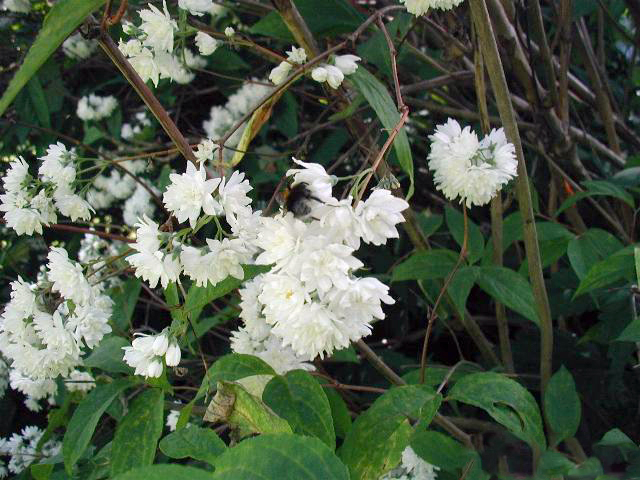
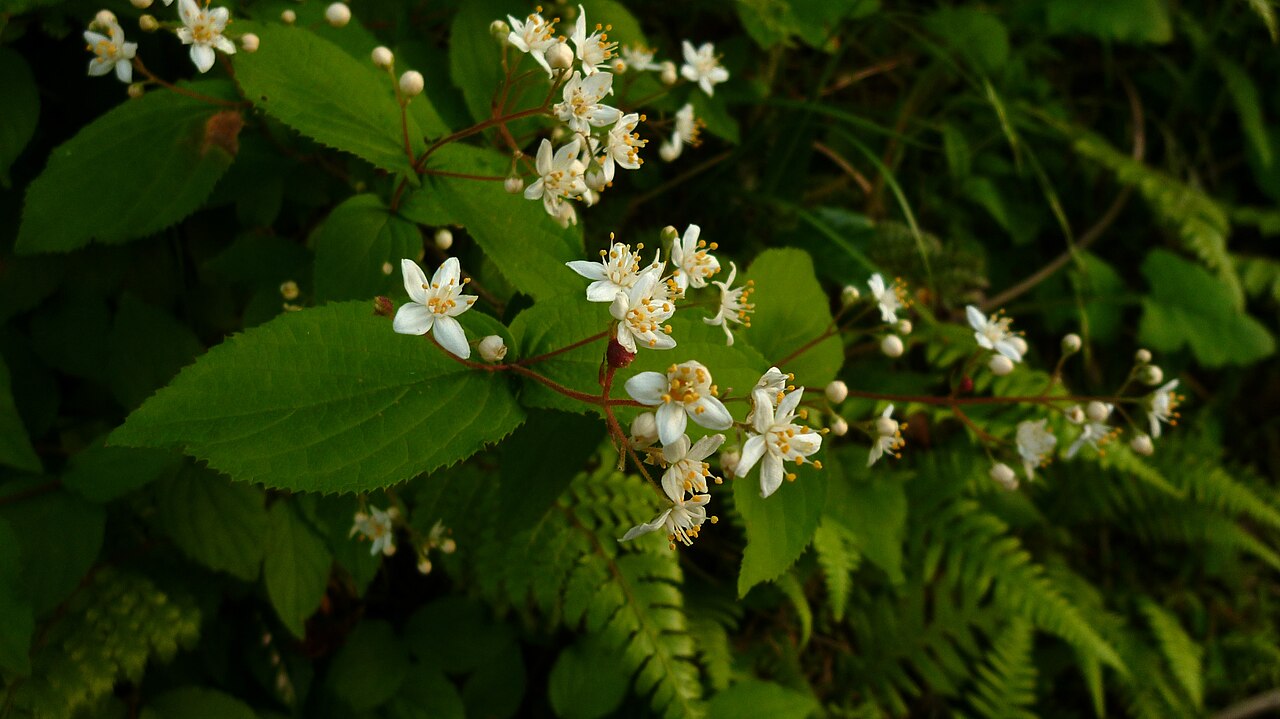
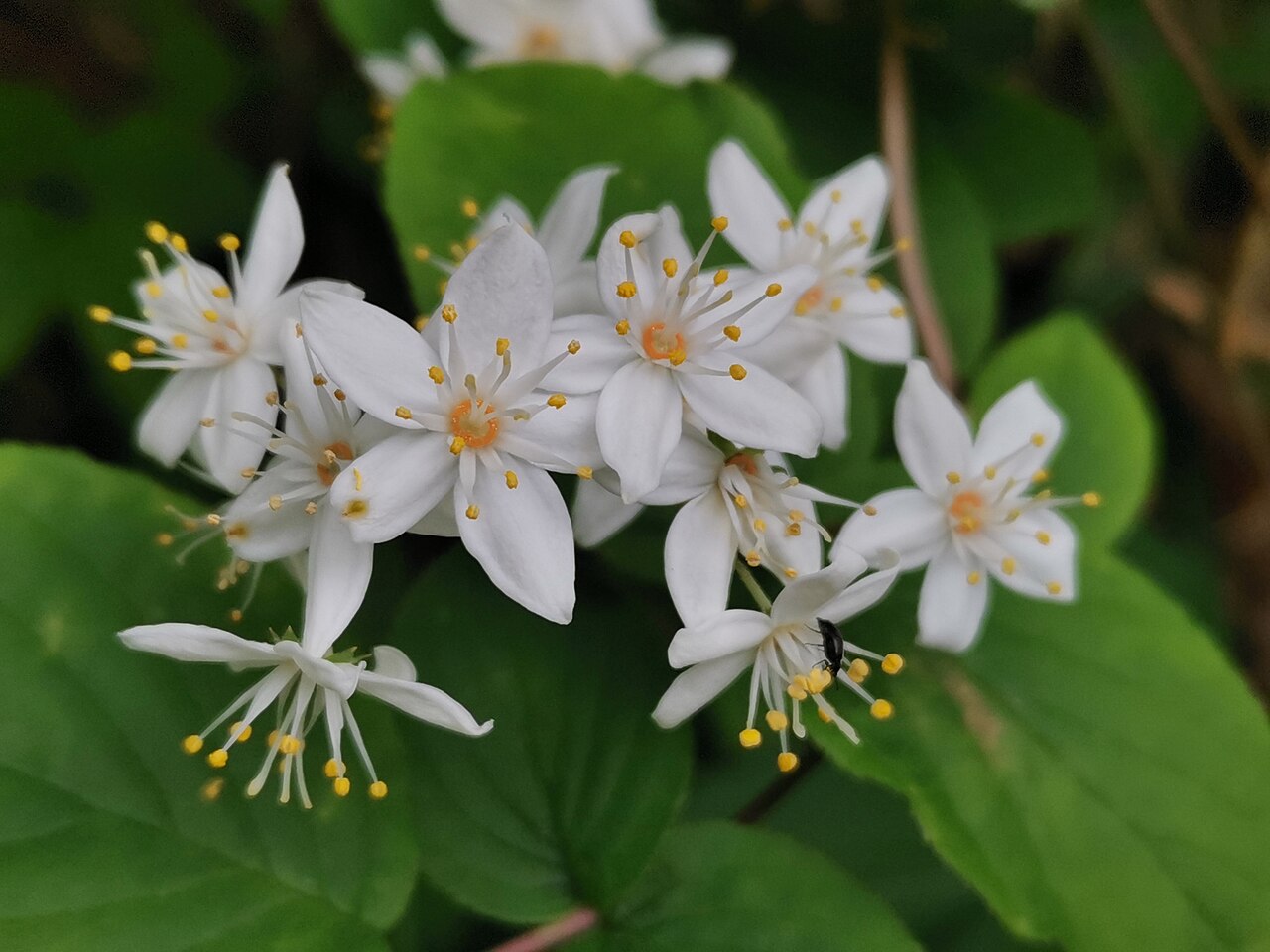
Pride of Rochester is the fuzzy deutzia with a story: a double-flowered selection raised by American nurserymen and already in cultivation by 1881, it has outlasted most of its contemporaries because it does two things unusually well. Its flowers are double and pale — white flushed with pink, paler than Plena’s rosy tinge — and it is more scented than the straight species, which is a rare claim for a deutzia and a good reason to plant it near a path where the scent can be noticed.
It is also a plant with a taxonomic footnote worth knowing: some references list Pride of Rochester under Deutzia crenata rather than Deutzia scabra, because the two species are close and nursery material has been mixed for over a century. Gardeners should not lose sleep over this — the plant sold as Pride of Rochester is the same tall, arching, double-flowered shrub either way — but it explains why labels vary. Buy the plant for its flowers and scent, not for the fine print on the tag.
If you are new to choosing between cultivars, the Varieties Matter guide explains why the name after the plant matters as much as the plant itself.
Florida honesty: Pride of Rochester is a zones 5–8 shrub, so north Florida only, with afternoon shade and steady moisture in summer heat. It is a large shrub, so give it room and air circulation in humid summers. Central and south Florida are too hot for a reliable plant; in north Florida, at the back of a border, it can be a fragrant spring showpiece.
How to grow
Plant in full sun to part shade in any good, well-drained garden soil, with compost worked in. Allow 6–10 feet of space — this is a big, arching shrub, not a foundation plant. Water during establishment and in dry spells. Prune just after flowering, since deutzia blooms on year-old wood; remove oldest stems at the base every few years to renew the plant and control size. Deadhead spent clusters if self-seeding is a concern.
Water & feeding
Water during establishment and dry spells; established plants are fairly self-sufficient but bloom better with steady moisture. Mulch to hold moisture. Feed lightly in spring with compost. Good drainage is essential — waterlogged soil is the one condition fuzzy deutzia will not forgive.
Common problems
- Size — a large shrub; small gardens should pick Pink Minor or a slender deutzia instead.
- Self-seeding — deadhead if volunteers are unwanted; never plant near natural areas.
- Pruning at the wrong time — winter pruning removes the spring show.
- Label variation — may be listed under a related species name; buy for flowers and habit, not the tag’s fine print.
- Brief bloom — spectacular for weeks, then green; plan summer companions.
Pruning & garden use
Use Pride of Rochester at the back of a large border, as a fragrant screen, or near a path where its scent can be appreciated. It pairs well with roses, lilacs, and other fragrant spring shrubs. Cut stems for the house while in bloom — the scent carries indoors. Prune right after flowering, renewing oldest stems every few years, and give it the room its arching habit wants. It is the fuzzy deutzia for gardeners who want size, scent, and a story — a 19th-century American selection still earning its place.
Back to the Fuzzy Deutzia guide
Browse all plant & pest guides
Saving seeds
Pride of Rochester is the fuzzy deutzia with a story: a double-flowered selection raised by American nurserymen and already in cultivation by 1881, it has outlasted most of its contemporaries because it does two things unusually well. Its flowers are double and pale — white flushed with pink, paler than Plena’s rosy tinge — and it is more scented than the straight species, which is a rare claim for a deutzia and a good reason to plant it near a path where the scent can be noticed. As a named double deutzia it is kept true by cuttings, not by seed — seedlings would not hold the double, pale, scented flowers. Plant in full sun to part shade in any good, well-drained garden soil, with compost worked in, and allow 6 to 10 feet of space — this is a big, arching shrub, not a foundation plant. The full method is in the Saving seeds section of the Fuzzy Deutzia guide.