
🌿 Fuzzy Deutzia
Deutzia scabra
Fuzzy deutzia is the big, old-fashioned, slightly unruly member of the family — the one that takes up the whole back of the border, arches its stems overhead, and then explodes into thousands of small white star flowers in late spring like it has been saving up all year. Which, to be fair, it has. It is a cottage-garden classic that fell out of fashion when gardens got smaller, and it is worth a second look if you have the room.
Quick facts
- Sun: Full sun to part shade; blooms well even in moderate shade
- Soil: Any good, well-drained garden soil; tolerates a range of conditions
- Size: Roughly 6–10 feet tall and 4–8 feet wide (cultivars are often smaller, around 3–4 feet)
- Life cycle: Deciduous shrub
- Bloom: Late spring to early summer, white star-shaped flowers, sometimes flushed pink
- Zones: USDA zones 5–8
What it is
Fuzzy deutzia (Deutzia scabra) is a large deciduous shrub in the Hydrangeaceae family, native to Japan and China. The name scabra means rough, and it refers to the leaves: coarse, opposite, serrated leaves with a sandpaper texture on the upper surface, caused by tiny star-shaped clusters of hairs you can see with a magnifier. Run a finger across a leaf and you will understand the common name instantly — it feels like the plant equivalent of a five-o’clock shadow.
The flowers are the payoff. Small, star-shaped, white — sometimes tinged pink or rosy-purple on the outside — carried in upright panicles, they appear in such numbers that a mature plant in full bloom looks dusted with snow. Some cultivars double the flowers (‘Plena’ types) for an even frothier effect, and pink-flowered selections like ‘Strawberry Fields’ trade some of the classic white for rosy buds and pink-edged stars. The bark peels attractively with age, so even the winter silhouette has something going for it.
The Florida translation
Same honest framing as its slender cousin, with one extra caution: zones 5–8 and a love of temperate summers put fuzzy deutzia outside the happy range for most of the state, and its size makes a failed experiment a large failed experiment. In the coolest northern corner it is a plausible trial in part shade with steady moisture. Elsewhere, enjoy it as a reference plant. And wherever you plant it, check local invasive-plant guidance first: fuzzy deutzia self-seeds freely, has escaped cultivation in the eastern United States, and is listed as invasive in parts of the Mid-Atlantic and Southeast. A plant that sows itself into the neighbors’ woods is not a plant to plant casually.
How to grow it (where the climate fits)
Site and space. Give it room — this is the single most important instruction. A nursery plant that looks compact and tame will not stay that way, and a fuzzy deutzia crammed against a path will spend its life being hacked back. Full sun gives the best bloom, but it flowers respectably in moderate shade, which makes it useful in the awkward half-shade spots where many flowering shrubs sulk.
Soil. Any good garden soil with decent drainage will do; it is not fussy about pH or fertility, and it tolerates a range of moisture as long as it is neither waterlogged nor bone dry. Organic matter in the soil helps, as it does for everything, by holding moisture through dry spells and feeding the microbes that keep the root zone alive.
Care. Prune just after flowering, because like all deutzias it blooms on year-old wood. Cut out the oldest stems at the base every few years to renew the plant and control its size, and deadhead or cut back spent flower clusters if self-seeding is a concern in your area. Water during establishment and dry spells; after that it is fairly self-sufficient.
Trouble spots
Self-seeding is the real management issue — deadhead before seed ripens if you do not want volunteers, and never plant it near natural areas where it can escape. Otherwise it is a tough, disease-tolerant, low-maintenance shrub whose main fault is its size and its brief bloom. Plant it at the back of a border, let it arch, give it a spring moment in the spotlight, and let summer plants take the stage after it.
For the whole clan, from the petite slender deutzia to the big bruisers, see the Deutzia guide.
What it looks like
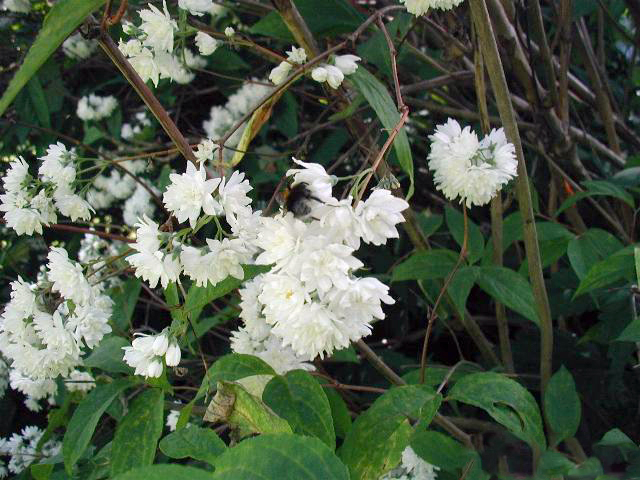
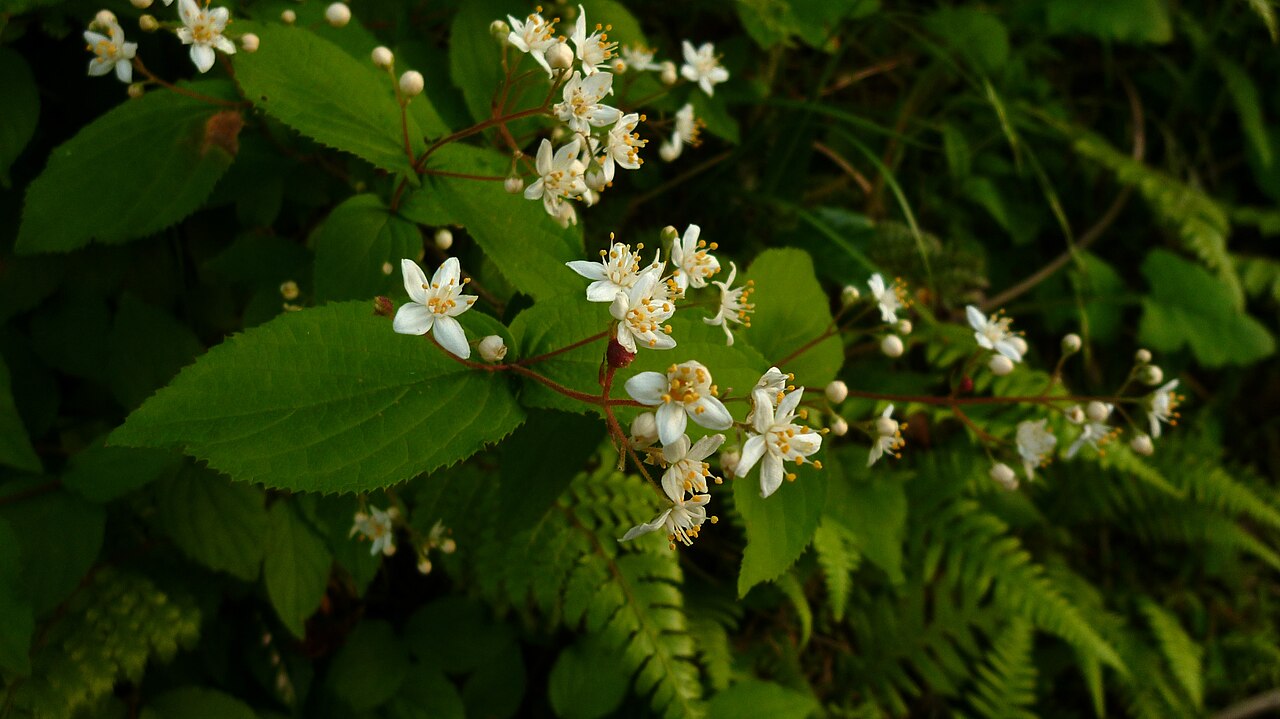
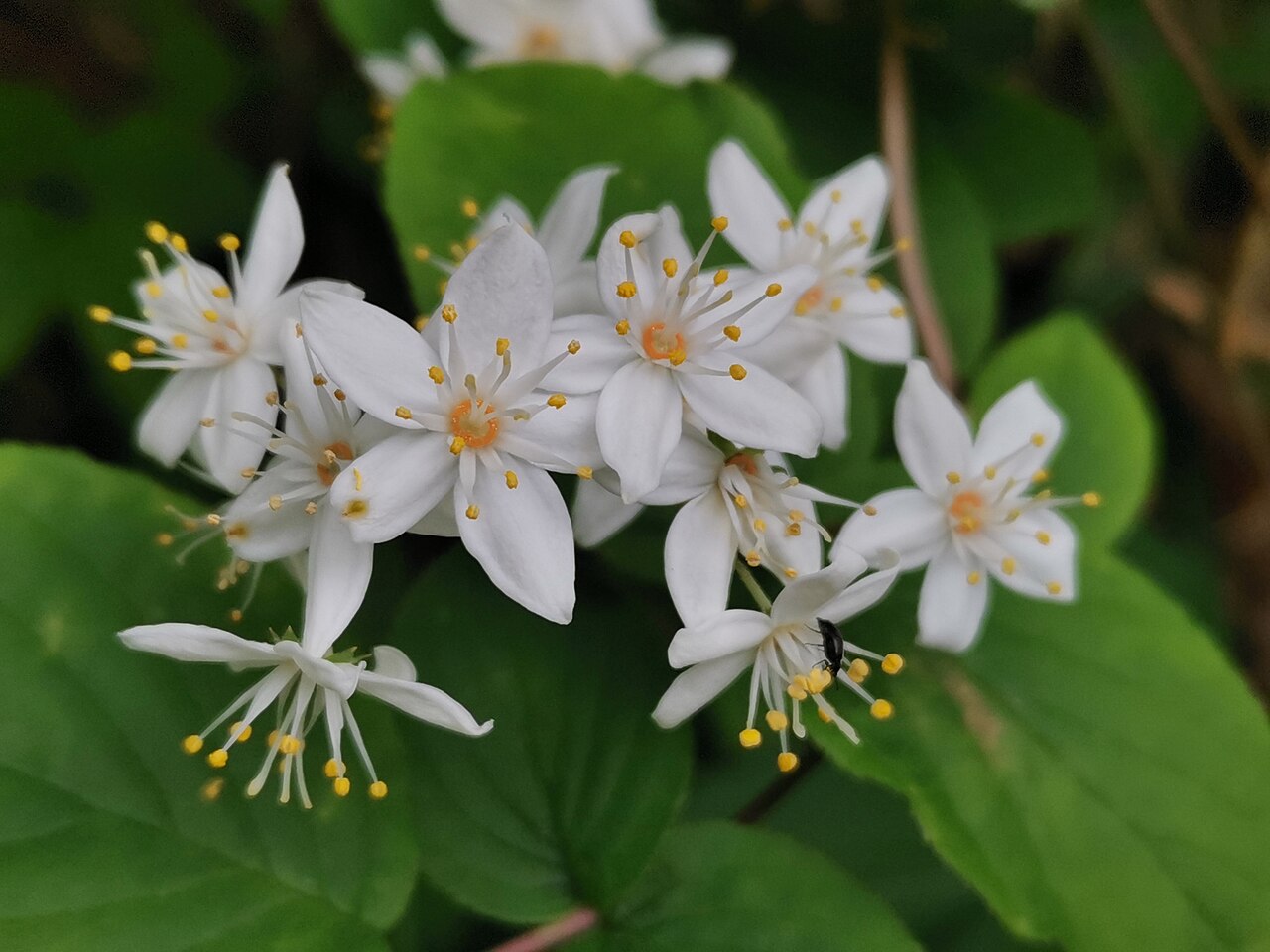
Saving seeds
Read this first: fuzzy deutzia is a plant with wanderlust. It has been reported as invasive by the National Park Service and listed by the Mid-Atlantic Exotic Pest Plant Council, precisely because it self-seeds with enthusiasm and can crowd out native plants where it escapes. Save seed for your own garden, deadhead what you do not need, and never let it loose near natural areas or woodland edges. This is a seed-saving project, not a seed-scattering one.
After the late-spring flower show, the spent panicles develop into small, dry brown capsules. Leave them on the shrub until they are fully brown and papery, then snip whole clusters into a paper bag on a dry day. Crumble the capsules gently over a tray: the seeds inside are tiny, dust-like things, and there will be far more chaff than seed. Winnow lightly or pick out the larger debris by hand rather than trying for laboratory-grade cleanliness.
Sow the seed shallowly, barely covered, in a free-draining seed mix in late winter or early spring under cover. Germination is unhurried: references commonly describe good germination taking one to three months at around 18°C, so sow, keep the mix evenly moist but never soggy, and resist the urge to declare failure in week three. Sources disagree on whether a cold spell helps: some growers chill the seed for about a month in the fridge first to mimic winter, others sow straight without it. If you have plenty of seed, try both and let your own windowsill settle the argument.
Prick seedlings out into individual pots once they are big enough to handle, and grow them on under cover for at least their first winter before planting out after the last frost. Expect to wait a few years for flowers; a seed-grown shrub is a long game, not a quick win. And a word on honesty: seedlings from a named cultivar, especially a double-flowered form like ‘Plena’, will not necessarily look like their parent. If you want an exact copy of a particular shrub, take softwood or semi-hardwood cuttings instead; seed is for the straight species and for happy surprises.
For storage, dry the seed thoroughly, then keep it cool, dark, and dry in a labelled envelope or jar. No firm multi-year shelf life is well established for this species, so the honest rule is to sow within a year and not to build a seed bank on it. In Florida’s humidity, that drying step matters double: damp seed in a sealed jar is a mould farm, not a seed store. Dry it first, then seal it, ideally with a small desiccant packet.
Varieties
Every named variety of Fuzzy Deutzia with its own growing guide:
- Candidissima — The tall white double: pure white, fully double flowers on the biggest fuzzy deutzia of the set.
- Codsall Pink — The pink double: dense, arching, and covered in double light-pink flowers — the cottage garden in one shrub.
- Pink Minor — The small pink one: all the fuzzy deutzia charm — pink flowers, arching habit — in a dwarf shrub that fits a small garden.
- Plena — The bridal wreath: double white flowers tinged rosy-purple outside, blooming a touch later than the rest.
- Pride of Rochester — The scented double: pale pink-and-white double flowers, more fragrant than the species, from a 19th-century American nursery.
- Rosea — The single pink: clear rose-colored single flowers — the fuzzy deutzia for gardeners who prefer simple blooms and bee-friendly flowers.