
✳️ Purple Dome Aster
What it looks like
Why this variety
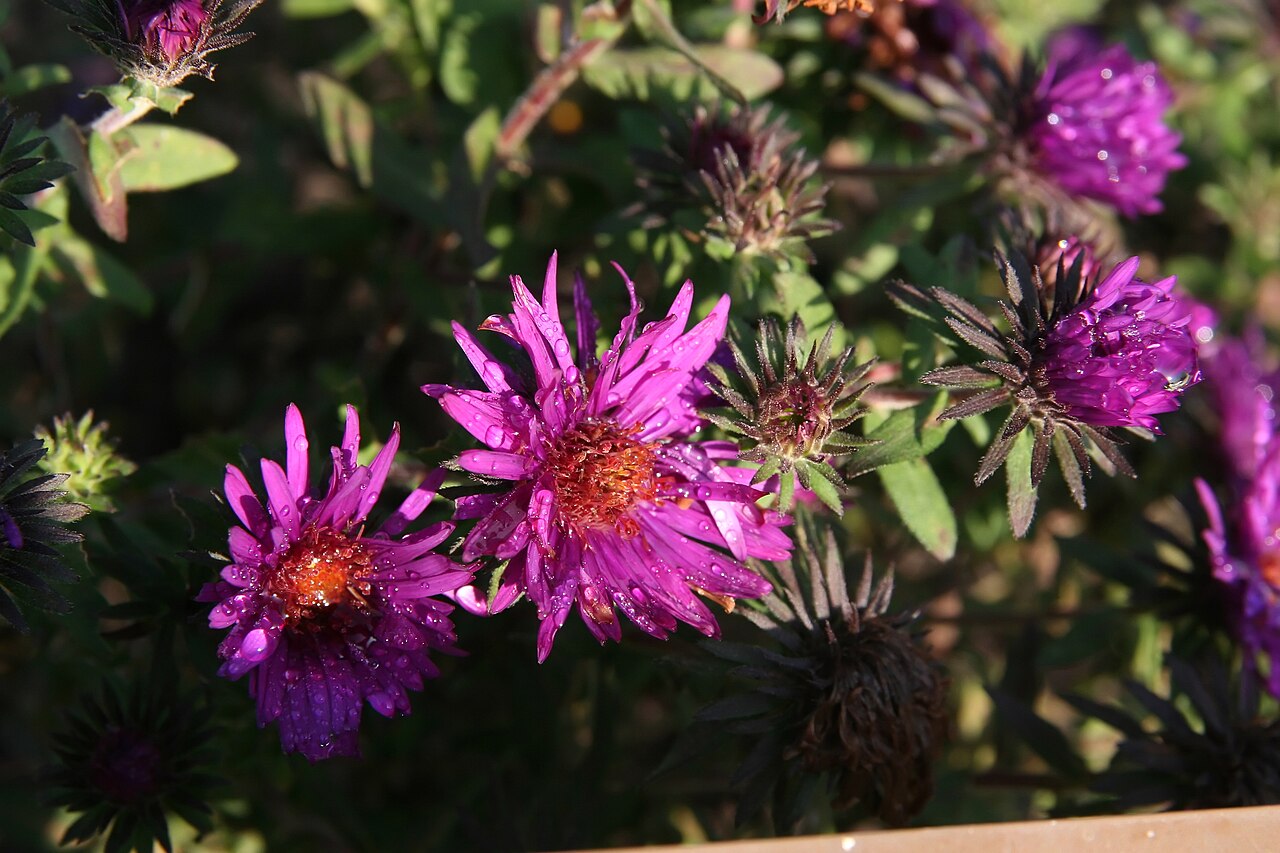
Purple Dome is the New England aster for gardeners who do not have room for a 4-foot aster: a compact, clump-forming perennial, 18 to 24 inches high and wide, that forms a dense, self-supporting mound and then, from late summer into autumn, erupts into deep-purple, semi-double daisies with yellow centers, so prolifically that the foliage sometimes disappears beneath the flowers. Unlike its taller cousins, it does not flop, does not need staking, and does not need a pinching schedule — it is naturally bushy, which is why it is the aster most often recommended for small gardens, containers, and the front of the border.
The trade-off is that compactness comes with a shorter season of structure: Purple Dome is a fall flower, not a summer plant, and for most of the year it is a tidy green mound waiting for its moment. That is fine if you plan for it — pair it with summer perennials that hand off the baton in August — but do not plant a whole border of Purple Dome and expect summer interest. It also wants sun and moisture: in dry shade it will be smaller and thinner, and in soggy soil it will sulk, so give it the sunny, well-drained spot its size suggests it does not need.
If you are new to choosing between cultivars, the Varieties Matter guide explains why the name after the plant matters as much as the plant itself. Purple Dome is a perfect example: it is not just a aster in the abstract, it is a aster with a specific job, a specific history, and specific strengths.
Florida honesty, stated plainly: New England aster cultivars are a North Florida trial, not a statewide promise. They are hardy to zone 8, and Florida’s heat, humidity, and mildew pressure shorten their lives — expect short-lived or foliage-heavy performance south of the Panhandle, and even in North Florida give them full sun, good air circulation, and well-drained soil. Purple Dome’s compact habit is an advantage in a trial — less plant to support through a hot summer — but it does not change the zone math: trial it in a cool, airy corner, and let a second summer be the verdict.
How to grow
Plant in spring or fall in well-drained soil in sun — asters are fall-border plants that want sun, air, and room. Work worm castings into the bed at planting, mulch to hold moisture, and space for airflow, because crowded, humid asters invite powdery mildew. Pinch tall types back until early July for bushier plants, stake if your site is windy, and divide congested clumps every few years in spring to keep them vigorous.
Set plants 18-24 inches apart in soil with a pH around 5.5-7.0. Work worm castings into the bed at planting and mulch to hold moisture. A well-fed aster plant rewards that care directly: steadier growth, better bloom, and a show that actually shows up.
Water & feeding
Keep soil evenly moist but never waterlogged — asters want steady moisture and good drainage, not swamp and not drought. Water at the soil line, mulch to hold moisture, and feed moderately: castings at planting plus a balanced organic feed in spring. Avoid overhead watering where mildew is a problem, and space for air — airflow is pest and disease control that does not come in a bottle.
Common problems
- Powdery mildew — the aster’s chronic complaint in humid, crowded plantings; space for air, water at the soil line, and choose resistant types like aromatic asters where mildew is chronic.
- Aster yellows — a phytoplasma disease spread by leafhoppers that causes distorted, yellowed growth; pull affected plants, control leafhoppers by encouraging predators, and do not compost diseased material.
- Flopping tall types — pinch until early July for bushier plants, stake in windy sites, and do not overfeed, which makes soft, floppy growth.
- Lace bugs and aphids — stippled leaves and clustered aphids; blast with water and encourage predators before reaching for sprays.
- Rust in wet seasons — orange pustules on leaves; remove affected leaves, space for air, and water at the soil line.
Harvest
Cut flowers for bouquets in late summer and fall, when heads are fully open — asters last well in water and their small daisies suit mixed autumn arrangements. Deadhead if you do not want self-seeding, or leave seed heads for birds through winter. Cut the whole plant back in late fall or early spring, divide congested clumps every few years in spring, and leave some stems standing over winter where pollinators overwinter in hollow stems.
Browse all plant & pest guides
Saving seeds
Purple Dome is the New England aster for gardeners who do not have room for a 4-foot aster: a compact, clump-forming perennial, 18 to 24 inches high and wide, that forms a dense, self-supporting mound and then, from late summer into autumn, erupts into deep-purple, semi-double daisies with yellow centers, so prolifically that the foliage sometimes disappears beneath the flowers. Unlike its taller cousins, it does not flop, does not need staking, and does not need a pinching schedule — it is naturally bushy. As a named aster it is kept true by division, not by seed — seedlings would not hold the compact, bushy form or the deep-purple semi-double flowers. Plant in spring or fall in well-drained soil in sun, space for airflow, and divide congested clumps every few years in spring to keep them vigorous. The full method is in the Saving seeds section of the Aster guide.