
🌳 Purple Tower Cottonwood
What it looks like

Why this variety
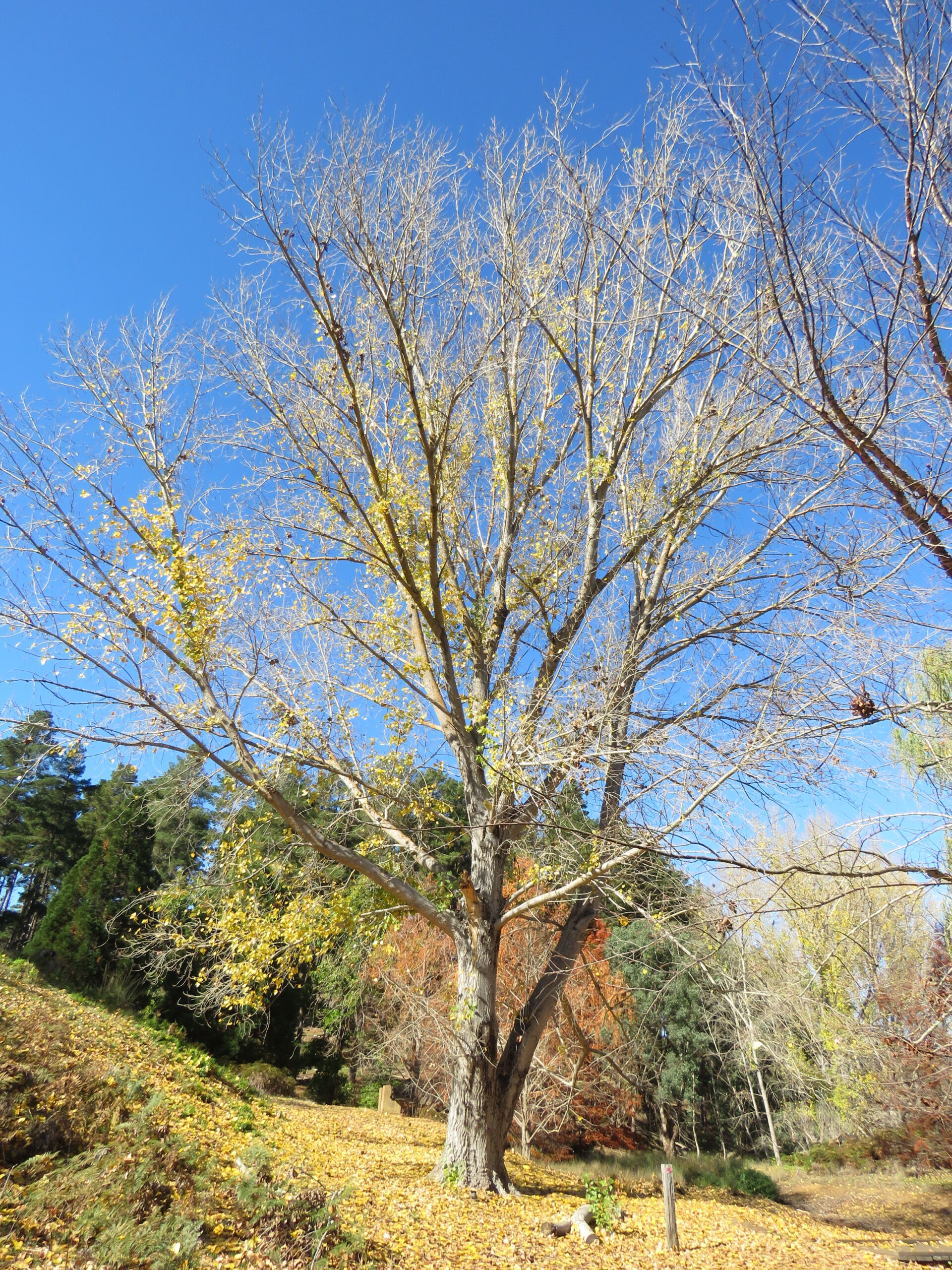
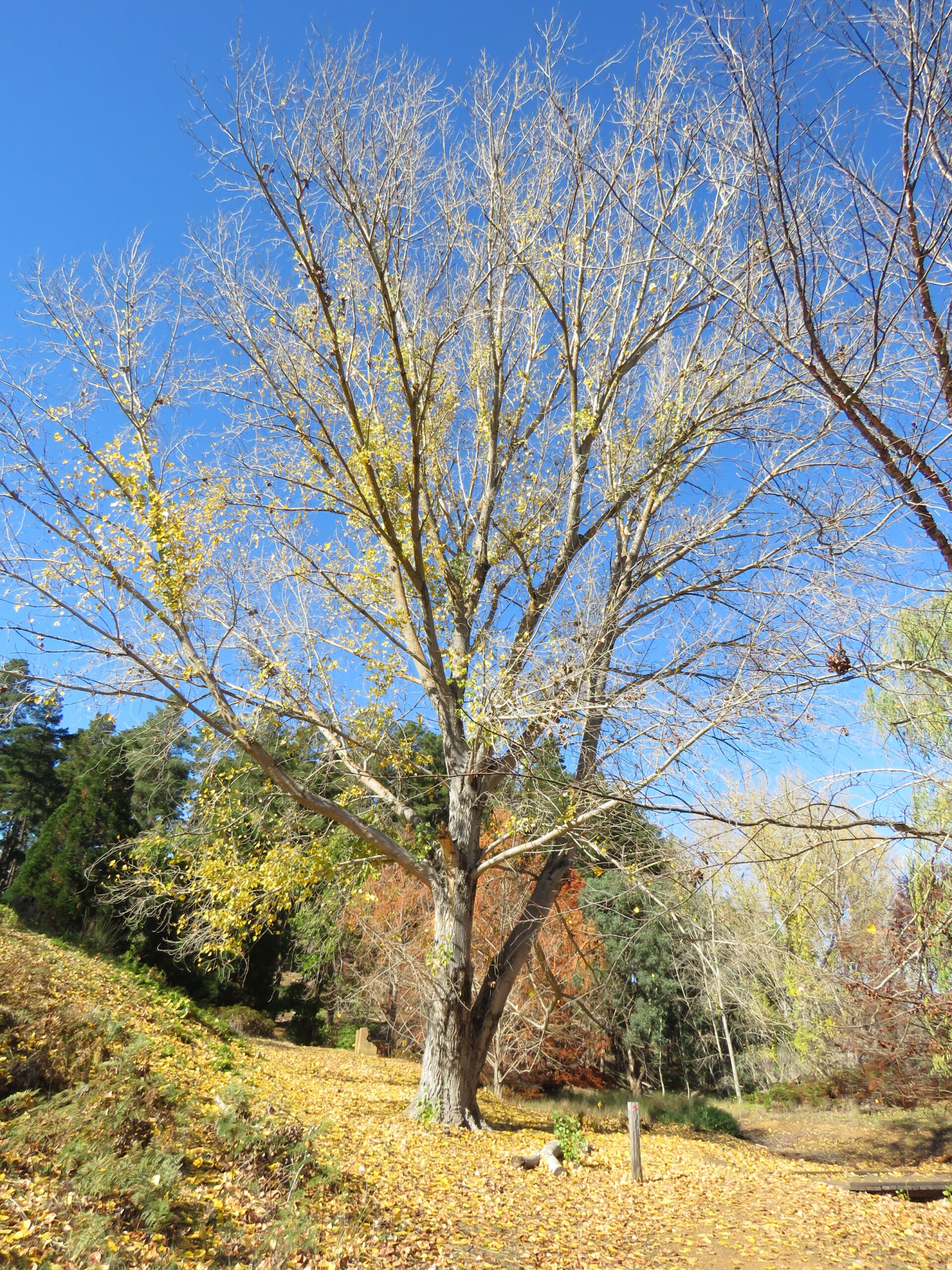
Purple Tower is the cottonwood for gardeners who love the tree and hate that every cottonwood looks the same. It is a genuine eastern cottonwood selection — Populus deltoides, not a hybrid — and its whole selling point is the foliage. The glossy, triangular leaves open a rich bronzy red-purple, scented faintly of balsam when young, and hold dark purple tones through the season before fading toward very dark green late in summer, with hints of yellow in fall. Against a normal green canopy it reads like a bruise in the best possible way: startling, dark, and unmistakably not the tree next door.
Underneath the purple, this is still a cottonwood, with all that implies. It is a fast-growing, upright tree, narrower and more columnar in youth than the broad, open crown of the straight species, and it wants the same deal every cottonwood wants: full sun, deep and fertile soil that stays moist, and room. Sources disagree politely about its ultimate size — one nursery lists about 20 metres (roughly 65 feet) tall with a 10-metre (roughly 33-foot) spread, another describes a medium, upright tree of 10 to 15 metres, and the Royal Horticultural Society notes it may ultimately reach 30 metres but can be kept smaller with annual pruning. Treat 65 feet as the planning number, give it the space a big tree earns, and prune it young if you want it kept in bounds. A tree that can outgrow its sales pitch is a cottonwood tradition, not a defect.
In Florida, Purple Tower is a north-Florida tree with water, and the honest version of that sentence matters. Eastern cottonwood is native to Florida, and this selection has been reported growing incredibly fast in the northern part of the state — but it is still a river tree from a family of thirsty giants. Plant it where the soil stays moist, not on a dry sand hill in the middle of the state, and do not expect a south-Florida miracle. A struggling cottonwood in dry ground is a climate and site verdict, not a care failure, and no purple leaf fixes a missing river.
How to grow
Plant in fall or spring, in full sun, in the moistest decent spot you have — a low spot that drains, a garden that holds water after rain without standing in it, anywhere a willow would look smug. Purple Tower tolerates most soils except ones that are constantly waterlogged, and it does best in deep, fertile, moist but well-drained ground. Dig the hole no deeper than the root ball and two to three times as wide, set the tree at the same depth it grew in the nursery, water it in hard, and mulch widely without piling mulch against the trunk.
Space it like a big tree, because it is one: 30 to 40 feet from its neighbours, and far farther than feels polite from buildings, drains, septic systems, sidewalks, and driveways. Cottonwood and poplar roots hunt water aggressively, and they will find a pipe joint the way a teenager finds the wifi password. The species guide gives the straight species 50 to 75 feet of space; Purple Tower’s narrower, more upright habit earns it a slightly tighter spacing, but “tighter” here still means a whole small garden. This is not a tree for a courtyard, a side yard, or a spot under power lines. If the only space you have is small, the honest answer is a smaller tree, not a pruned cottonwood fighting you forever.
Prune while the tree is young to build one strong central leader and well-spaced branches, and remove dead wood promptly — cottonwood wood is weak and brittle, and a big tree that drops branches is a safety problem, not a character trait. The Royal Horticultural Society notes Purple Tower can be kept smaller with annual pruning, which is true and also a commitment: a fast tree pruned annually is a relationship, not a one-time chore. Propagate it the poplar way, from hardwood cuttings taken in winter, and never from seed — seedlings will not come true to the purple form, and half of them will be the wrong sex for whatever you wanted.
One warning before you buy: unlike the seedless male selections, Purple Tower is not sold as a guaranteed cottonless tree. Cottonwoods are dioecious — male and female flowers grow on separate trees — and sources describe both red male catkins and green female catkins for this cultivar name. A female tree will shed the famous cottony seed in spring. If cotton matters to you, ask the seller which sex their stock is, in writing, before the tree goes in the ground. A purple tree that snows fluff on your porch in April is still a purple tree, but it is not the tree you thought you bought.
Water & feeding
Water deeply and regularly, especially through establishment and in dry spells. Cottonwoods drink heavily and grow in proportion to what they drink; a Purple Tower denied water grows slowly, sulks, and collects problems, which defeats the entire reason for planting a fast tree. In Florida that means supplemental water through dry spring stretches even in the north of the state, and an honest admission that a site you cannot keep moist is the wrong site. Mulch widely — a broad, thick mulch ring keeps roots cool and moist and keeps the mower away from the bark, which is the cheapest insurance a fast tree ever gets.
Feed lightly, if at all. A young tree in fertile, moist soil rarely needs fertiliser, and pushing a cottonwood with nitrogen just grows more weak wood faster, which is the opposite of a favour. If growth is pale or stunted despite steady water, a light spring feed of a balanced fertiliser is reasonable; if growth is pale because the soil is dry, water is the fertiliser. Compost worked into the planting area and a yearly top-dress of mulch will do more for this tree than any bag with a shouting label.
Common problems
Cankers, leaf rust, leaf spots, and borers all visit poplars, and the defence is a vigorous, well-watered tree — stressed poplars collect problems the way a porch collects cotton in April. Give it sun, water, and air, and most years it will outgrow minor leaf-spot damage without you doing anything clever. Prune out cankered branches promptly, cutting back to clean wood, and dispose of the prunings rather than composting diseased material.
Brittle wood is the structural problem, not a disease: branches break in storms, and a big tree over a roof, a driveway, or a play area is a risk calculation, not just a shade calculation. Keep the crown open and well-structured from youth, remove crossing and competing leaders early, and do not let it grow into power lines — at 65 feet, it will get there faster than you expect. Suckers can appear from the roots, especially if roots are damaged; mow them or cut them off rather than letting a thicket form around the trunk.
The other problem is success. A fast tree in a small space becomes a neighbour problem, a pipe problem, and a pruning bill, in that order. Purple Tower’s purple leaves do not make it a small tree, and no amount of admiring the foliage changes the root zone. Plant it where a 65-foot tree with thirsty roots is welcome for decades, or plant something else and admire this one in somebody else’s very large garden.
Harvest
The harvest is shade, fast, in a colour no other cottonwood offers. A Purple Tower planted as a young tree can become a real shade tree within a few years, and its dark foliage makes it a focal point rather than background green — pair it with lime-green or gold neighbours and the contrast does the landscaping for you. The leaves themselves are the show in spring, when the bronzy-purple new growth is at its darkest, and again in fall when the dark green picks up yellow hints.
What you do not harvest is anything to eat, and that is worth saying plainly on a food-growing site: this is an ornamental shade tree, not a crop. Its value is cooling a house, sheltering a garden, feeding caterpillars and birds the way any native cottonwood does, and looking gloriously, unapologetically purple while doing it. If you want a cottonwood that earns its enormous footprint, plant it where its shade lands on something that needs shading, give it the water a river tree expects, and let it be the dark exclamation mark in a green landscape.
Nerdy fact: That balsam scent on Purple Tower’s young purple leaves is the tree advertising its family. Poplars and cottonwoods belong to the willow family, Salicaceae, and their sticky winter buds and young leaves are loaded with resinous, aromatic compounds — the same balsam chemistry that makes balsam poplar buds smell like a medicine cabinet and that once flavoured old-fashioned cough remedies. The purple is anthocyanin pigment, the same class of compound that colours autumn leaves and blueberries, laid over the chlorophyll like a pair of sunglasses: the leaf is still photosynthesizing underneath, just doing it in style.
Browse all plant & pest guides
Saving seeds
Purple Tower is the cottonwood for gardeners who love the tree and hate that every cottonwood looks the same. It is a genuine eastern cottonwood selection — Populus deltoides, not a hybrid — and its whole selling point is the foliage. The glossy, triangular leaves open a rich bronzy red-purple, scented faintly of balsam when young, and hold dark purple tones through the season before fading toward very dark green late in summer, with hints of yellow in fall. As a named cottonwood selection it is kept true by cuttings and grafting, not by seed — seedlings would not hold the bronzy red-purple foliage or the narrower, more columnar form. Plant in fall or spring, in full sun, in the moistest decent spot you have, and space it like a big tree, because it is one: 30 to 40 feet from its neighbours. The full method is in the Saving seeds section of the Cottonwood guide.