
🏮 Redvein Chinese Lantern
What it looks like
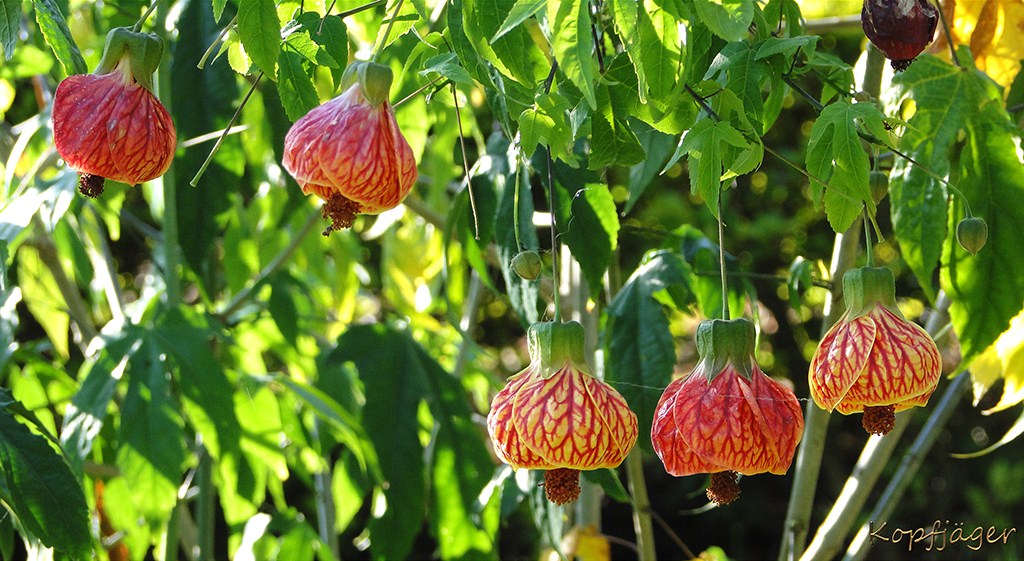
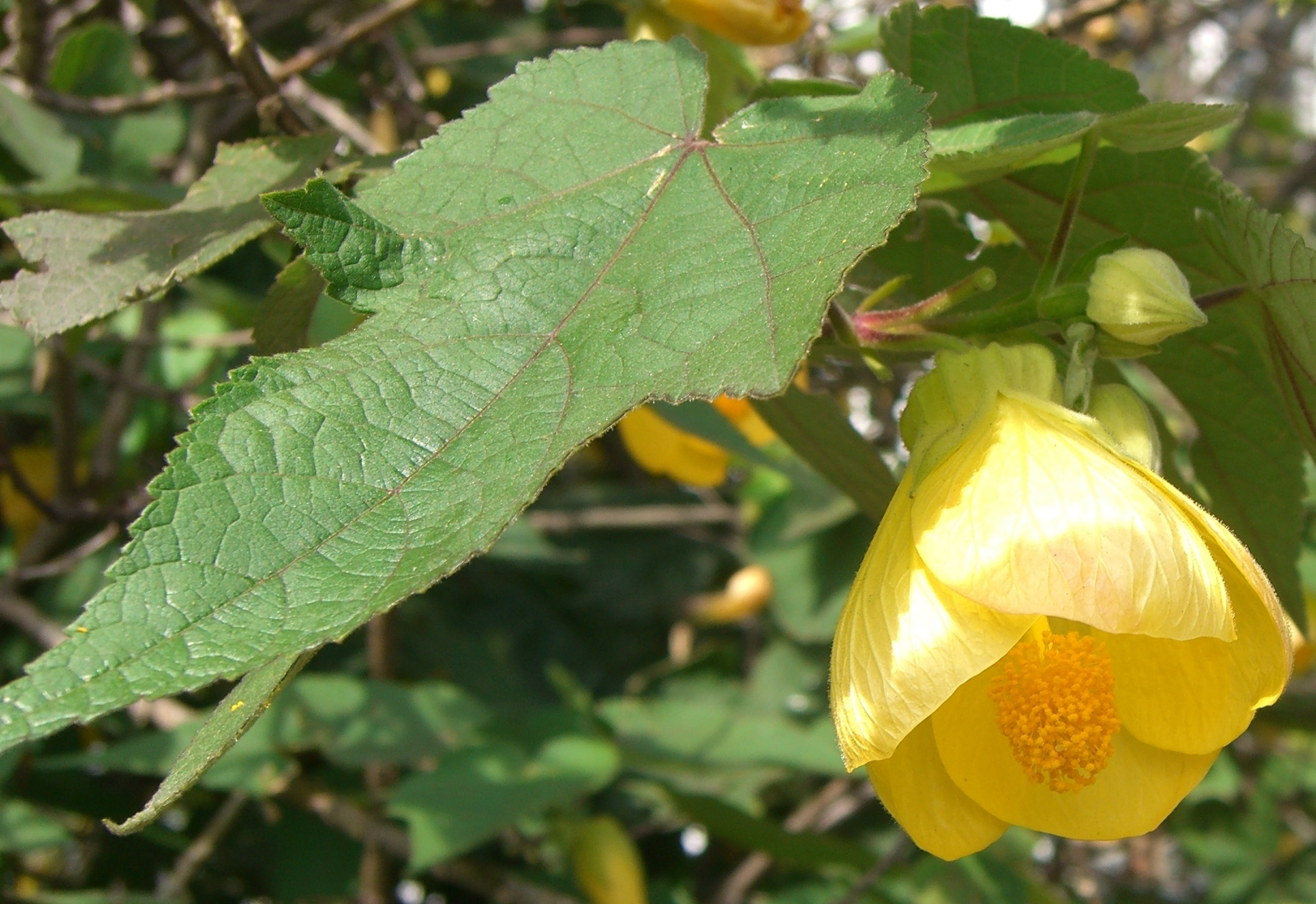
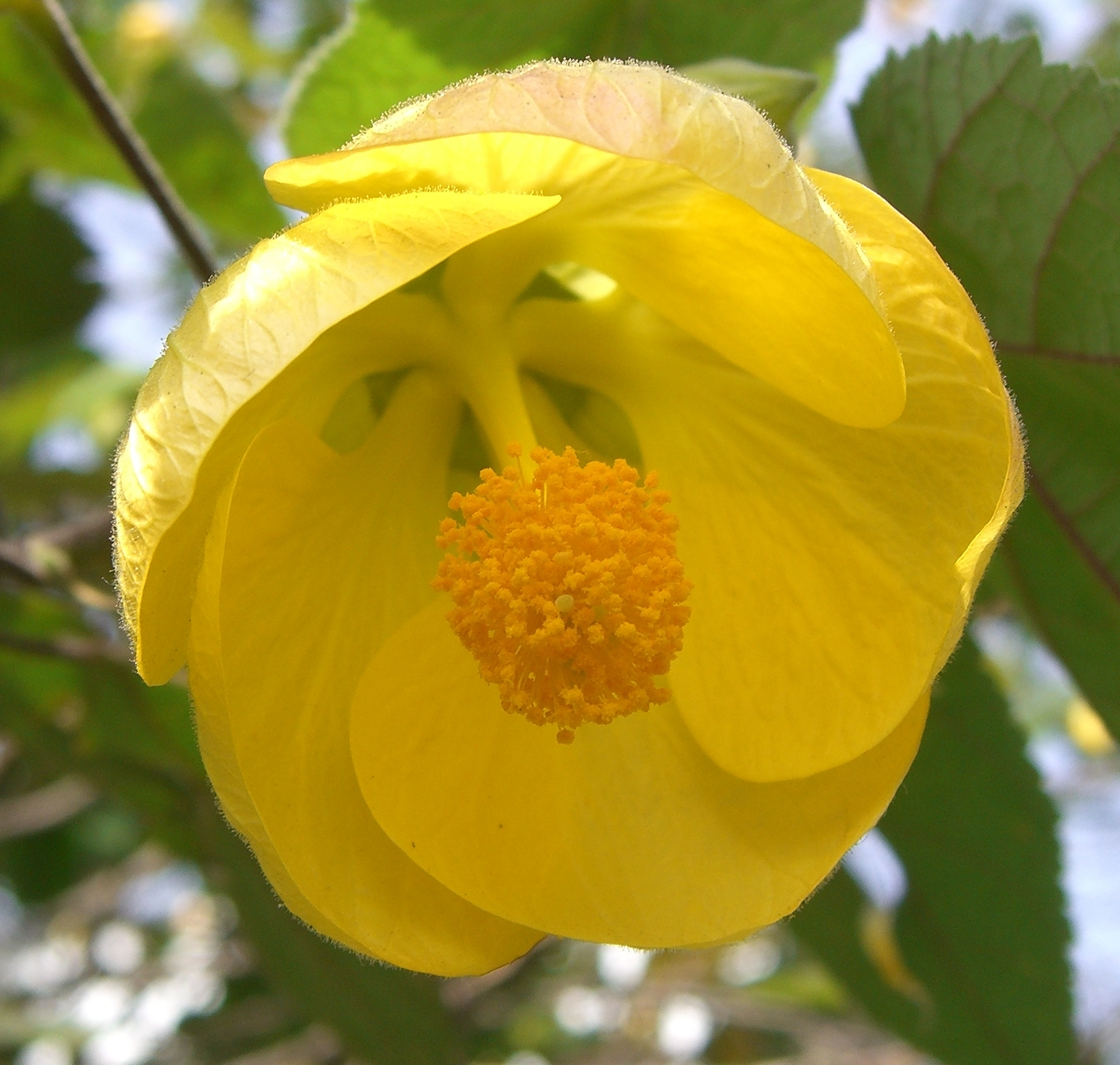
Quick facts
- Scientific name: Callianthe picta (formerly Abutilon pictum; syn. Sida picta; Abutilon striatum is a disputed synonym — see the name game below)
- Family: Malvaceae (the mallow family — hibiscus’s cousins)
- Origin: Southern Brazil, Argentina, Paraguay, and Uruguay — not native to Florida; naturalized in Central America
- Size: An evergreen to semi-evergreen shrub to about 5 metres (16 feet) tall by 2 metres (about 6.5 feet) wide in ideal conditions; in gardens it is usually kept much smaller, roughly 3–10 feet
- Leaves: 5–15 cm long, 3–5 (rarely 7) lobes — the maple look that launched a thousand nicknames
- Flowers: Pendent bells, yellow to orange-red, with five petals 2–4 cm long and prominent dark red veining; blooms April–September, and longer in warm subtropical areas
- Light: Full sun to light shade — in Florida’s hottest months, morning sun with afternoon shade is the safe bet
- Soil: Fertile, moist, well-drained; sandy, loamy, or clay soils are all tolerated
- Water: Consistently moist — it dislikes drought, but never wants to sit soggy
- Hardiness: Frost tender — damaged below 0 °C (32 °F); treat as a zone 9–10 perennial in Florida (see the Florida section, because sources disagree and honesty demands the whole argument)
- Wildlife: Bees and hummingbirds visit the bells
- Propagation: Stem cuttings are the reliable route (they keep the parent’s traits); seed is slower
The name game (or: why your nursery tag disagrees with this guide)
If you go shopping for this plant, you will find it under at least four names, and every one of them is somebody’s correct answer. Botanists moved it into the genus Callianthe in 2012 (Donnell, Ballard & Cantino, Systematic Botany), so the current scientific name is Callianthe picta. Nurseries, older books, and half the internet still call it Abutilon pictum, which was its name for a very long time. Sida picta is an older synonym. And Abutilon striatum is sometimes treated as a synonym and sometimes as a separate-but-tangled relative — sources genuinely dispute it, so this guide will not pretend the argument is settled.
The common names are no tidier: redvein abutilon, red vein Indian mallow, redvein flowering maple, flowering maple, parlour maple, Chinese-lantern, and red vein Chinese lanterns. “Flowering maple” is the one to be careful with — it is not a maple at all. No Acer blood, no maple seeds, no autumn maple show. The leaves just look maple-ish, and gardeners are suckers for a leaf shape.
Rule of thumb: if the tag says Abutilon pictum, flowering maple, or redvein Chinese lantern, and the plant has lobed leaves and veined bells, you are looking at this plant, whatever genus the tag claims.
Florida status — the honest version
Here is what a careful search actually turns up, and what it does not. There is no UF/IFAS assessment for Callianthe picta / Abutilon pictum — a search of the UF/IFAS Assessment site finds no species page for it, so this guide makes no IFAS claim either way. It does not appear on the Florida invasive lists this search checked, and the Flora of North America treatment says it is grown in North American gardens as a perennial in warmer climates and an annual in colder ones, but is “not known to be naturalized in the flora area.” In plain language: it is a garden plant that, so far, has not run off to join the wild Florida flora — which is a very different sentence from “proven safe forever.”
It is also not a stranger to Florida gardens. Gardeners report growing abutilons outdoors across the state, and UF/IFAS Extension’s low-maintenance plant list for South Florida includes Abutilon pictum ‘Aureo-maculatum’. So the Florida verdict is: a well-behaved ornamental guest, unassessed rather than alarming — enjoy it, don’t dump clippings or seed in natural areas (good practice for any non-native), and if its status ever changes, this guide will change with it.
Growing it in Florida
Zones — the sources disagree, so here is the whole argument. One profile says zones 9–10. Another says zone 9 and up as a perennial, zones 6–9 as an annual. Cultivar listings say 8–10. One genus-level source stretches to 8–12, which is the weakest claim of the bunch and this guide is not leaning on it. The practical Florida translation: plan on zones 9–10 for in-ground perennial life. In zone 8, grow it in a container you can shelter, or treat it as an annual and take cuttings before the first frost.
South Florida (zones 10–11): the easy case. A perennial that can bloom for much of the year, given sun, moisture, and room. Central Florida (zone 9): a perennial with a winter plan — plant it against a warm wall, mulch the roots, and throw a cover over it on freeze nights. A hard freeze will damage top growth; in a mild winter it may resprout from the roots, but do not count on it the way you would count on a native. North Florida (zone 8): container life. Keep it in a pot on the patio, bring it indoors before frost, and treat it as a winter houseplant with bright light — sources list exactly that use, and it is the honest way to grow a frost-tender shrub where frost is a regular guest.
Sun: full sun to light shade. In Central and South Florida summers, morning sun with afternoon shade keeps it happier than all-day blazing sun. Soil: Florida sand is fine once you enrich it — dig in compost or other organic matter so the sand holds moisture, because this plant wants fertile, moist, well-drained soil and genuinely dislikes drought. Mulch to hold that moisture. Water: regular and steady; do not let it dry out between waterings, and do not drown it either. Think “wrung-out sponge” soil, not swamp and not beach. Containers: an excellent pot plant — rich potting mix, consistent water, a pot big enough for a shrub that wants to be 6 feet tall, and a winter shelter plan. That is how most zone-8 gardeners should meet this plant.
Pruning and shape
This is a soft-wooded, fast-growing shrub, which is a polite way of saying it will outgrow its welcome if you ignore it. Prune lightly after a bloom flush to keep it bushy instead of leggy, and cut out frost-damaged wood in spring after the last frost, once you can see what is actually dead. Gardeners also train it as a standard (a single-trunk little tree) or as an espalier against a wall — both work because the wood is flexible and the plant forgives a haircut. If it gets rangy, a harder spring prune will push fresh growth; just do not do that in fall, when tender new growth would walk straight into the first cold snap unprepared.
Pests, diseases, and the virus behind the variegation
The usual suspects for this plant are whiteflies, spider mites, scale insects, and mealybugs — the sap-sucking crowd that loves a soft-leaved mallow. Check leaf undersides, and deal with whiteflies promptly, because they stress the plant even before anything else goes wrong.
Then there is the famous one: abutilon mosaic virus (AbMV, a begomovirus). Abutilon pictum itself tends to show it mildly — crinkly leaves, a little mottling. But the mottled, gold-splashed foliage sold as ‘Thompsonii’ or ‘Gold Dust’ is, according to the University of Hawai’i’s extension bulletin on abutilon mosaic, the virus’s handiwork on striatum-type plants — a so-called “beneficial plant disease,” because growers prize the mottling. Read that twice before you pay extra for variegation: you may be buying a virus with really good PR. The pattern can also shift with the seasons, and cuttings taken from a mottled plant carry the infection with them. This guide’s advice is simple: buy this plant for its bells, not for a virus’s paint job.
Wildlife
Bees and hummingbirds visit the bells — the flowers hang down like little lanterns, and hummingbirds are famously unbothered by a flower that makes them work upside down. It is not a host-plant story like a senna or a milkweed; it is a nectar stop, and a good one, blooming over a long season in frost-free gardens.
One sentence on eating it
Sources disagree — one lists the flowers as edible raw or cooked, while other abutilon listings warn that parts of the plant may be upsetting if ingested — so this guide treats it as ornamental only, with no tasting notes and no medicinal claims of any kind.
Not to be confused with
This plant’s nicknames cause at least three mix-ups, and this guide exists partly because of one of them — it was requested after a photo tool offered “redvein Chinese lantern” as an other-possibility for a Turk’s cap photo. So, for the record:
- Turk’s cap (Malvaviscus arboreus): same mallow family, red flowers, totally different bloom. Turk’s cap flowers never fully open — they stay furled like a little turban, which is why it is also called sleeping hibiscus — and it is a tougher, hardier plant with Texas, Mexico, and Central American roots. Redvein bells open wide and show their veining. If the flower looks asleep, it is Turk’s cap; if it looks like a lit lantern, it is this plant. Our Turk’s cap guide has the full story.
- Classic Chinese lantern (Physalis alkekengi): shares only the nickname. That one is a nightshade-family herbaceous perennial whose fame is a papery orange husk around a berry — no bells, no maple leaves, no shrub. Different family, different plant, same lantern word.
- True maples (Acer): “flowering maple” is a leaf-shape compliment, not a family tree. No winged seeds, no maple syrup jokes that land.
Saving seeds
Redvein Chinese lantern seed is easy to save, and the plant is generous about making it. After the flowers fade, small dry capsules form where the blooms were. Let them dry on the plant until they turn tan and papery, then snip them into a paper bag and let them finish drying indoors. Crack the capsules open and save the small kidney-shaped seeds inside. Winnow away the chaff and store the seed in a paper envelope in a cool, dry place. Seed keeps for a few years when it is dry.
Sow in spring, when the weather is warm — this is a heat-loving plant, and its seed germinates best around 70 to 80°F. Surface-sow on a moist, well-draining mix and press the seed in lightly, barely covering it, since it needs light to germinate well. Keep it moist and warm, and expect sprouts in two to three weeks. Seedlings grow fast once they are up, and they can bloom in their first season if they are sown early enough.
The honesty part is the same one that applies to most named flowers: seedlings do not come true. Redvein Chinese lantern is grown for its veined, lantern-like flowers and its variegated leaves, and a seedling may produce plain green leaves or differently marked flowers. Named forms are propagated by cuttings for a reason — take a softwood cutting in warm weather, and you get a true copy of the plant you loved. Seed is for the experiment, for the surprise, and for the gardener who enjoys a mystery.
Save seed from a plant that flowered heavily and showed the veining and variegation you love, and sow more than you need. In Florida, redvein Chinese lantern is a tender perennial for zones 9 to 11 that grows well with afternoon shade and steady moisture, and it can be kept as a shrub or trained as a small tree. Dry your seed thoroughly before storing it, because our humidity is the enemy of stored seed.
Varieties and cultivars
Three names come up often enough to deserve their own guides, and each one now has one — with the taxonomy tangle and the virus story carried into each guide, not hidden from it:
- ‘Thompsonii’ (Thompson’s abutilon): The Victorian variegated flowering maple — yellow-splashed leaves, salmon-orange bells, and a virus with a paintbrush. yellow-mottled, 5–7-lobed leaves and salmon-orange bells; a Victorian favorite, long grown in conservatories and on patios. Its taxonomy is tangled — it is listed under pictum, under striatum, and under Callianthe striata — and its signature mottling is linked to abutilon mosaic virus (see the pests section). A standalone guide would pretend to cleaner distinctions than the sources support.
- ‘Gold Dust’: Light green leaves dusted with dark gold, orange bells, and the same virus-variegation story as Thompsonii — told straight. light green leaves with dark gold mottling and orange flowers. Same virus caveat as ‘Thompsonii’ — the gold dust is, in the Hawaii bulletin’s telling, the virus showing off.
- ‘Aureo-maculatum’ (also sold as ‘Mardi Gras’): Velvety gold-splashed leaves, coral bells with dark veining, and a UF/IFAS low-maintenance nod for South Florida — also sold as ‘Mardi Gras’. velvety 5-lobed leaves with hairy undersides, toothed margins, and yellow markings, with coral flowers and dark veining; reportedly not as floriferous as the hybrids. This is the form UF/IFAS Extension lists among low-maintenance plants for South Florida.
Each cultivar guide states the honest position plainly: the taxonomy is tangled across pictum, striatum, and Callianthe names, and the variegation of Thompsonii and Gold Dust is abutilon mosaic virus showing off. A variety guide that hid that tangle would be worse than no variety guide at all — so these guides do not hide it.
Sources
- Wikipedia, Callianthe picta — description, synonyms, native range, cultivation, mosaic virus note. en.wikipedia.org/wiki/Callianthe_picta
- Plants for a Future, Abutilon pictum — size, hardiness, soils, bloom season. pfaf.org — Abutilon pictum
- Karen’s Garden Tips, Plant Profile: Redvein Abutilon — size, light, soil, hardiness zones 9–10, cultivars. karensgardentips.com — Redvein Abutilon
- University of Hawai’i CTAHR PD-39, Abutilon Mosaic (June 2008) — virus, ‘Thompsonii’ / ‘Gold Dust’, “beneficial plant disease.” ctahr.hawaii.edu — PD-39
- Flora of North America, Abutilon treatment — garden perennial/annual status, “not known to be naturalized in the flora area.” nwwildflowers.com — FNA: Abutilon
- San Marcos Growers, Abutilon pictum ‘Thompsonii’ — cultivar history and description. smgrowers.com — ‘Thompsonii’
- Dave’s Garden PlantFiles, Callianthe picta — sun, water, hardiness reports. davesgarden.com — Callianthe picta
- UF/IFAS Extension ENH854, Low-Maintenance Landscape Plants for South Florida — lists Abutilon pictum ‘Aureo-maculatum’ (text citation; no IFAS assessment page for the species was found).
- Photos: Wikimedia Commons, credited in the captions above.