
🌿 Populus deltoides subsp. wislizeni
Botanical form, not a garden cultivar: this guide covers a naturally occurring variety/subspecies of the species, with the species' growing guidance where variety-specific cultivation notes have not been published separately.
What it looks like
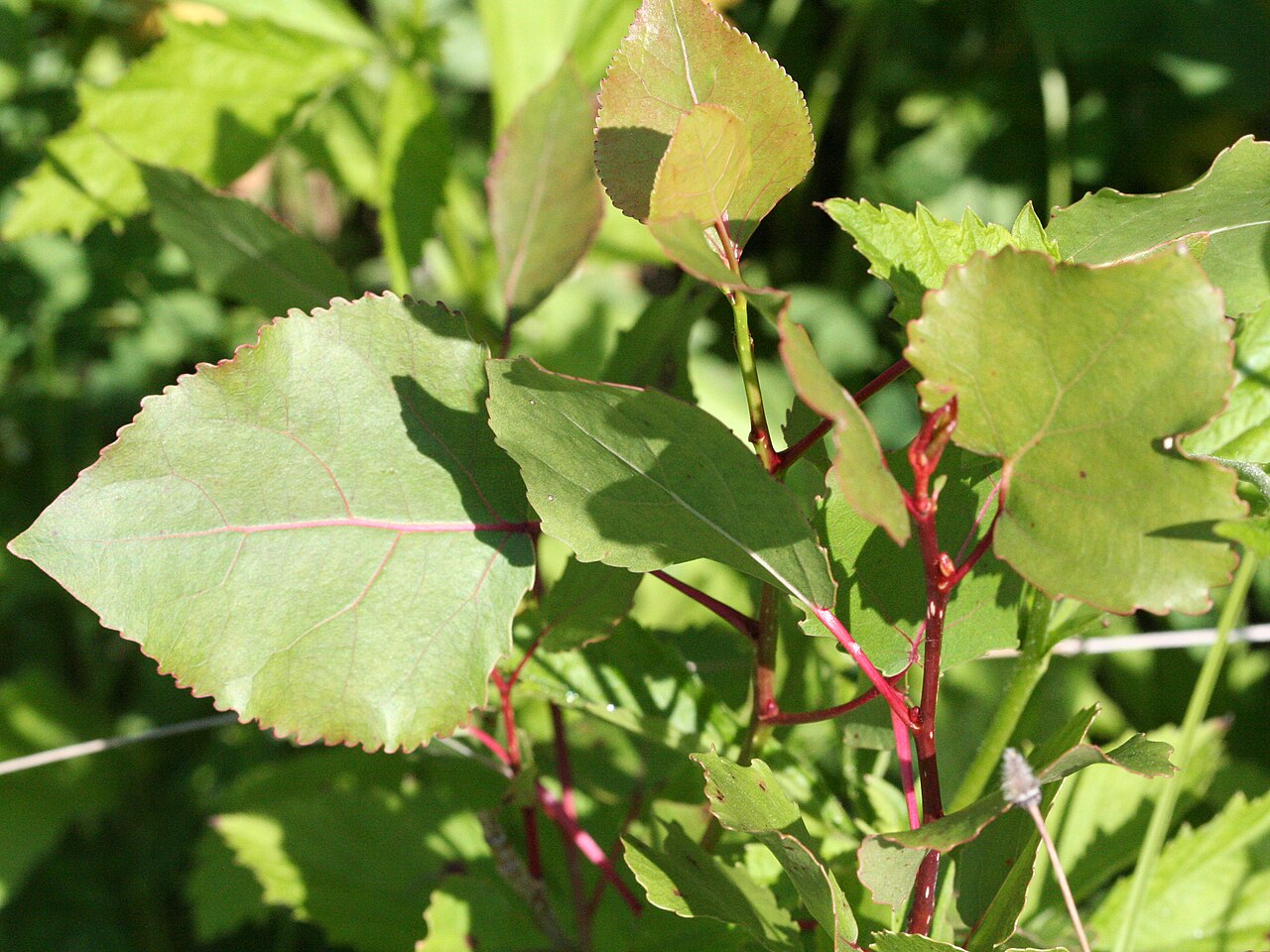
Subsp. wislizeni — Rio Grande cottonwood, once treated as its own species Populus wislizeni — is the southwestern form of eastern cottonwood. It is a large river tree, 50–100 feet tall, with broad leaves and thick, gray bark, growing from southern Colorado south through Texas to northeastern Mexico (Chihuahua and San Luis Potosí), and west to Arizona.
Some descriptions note a narrower crown and leaves more oval than triangular compared with its eastern cousins, but the reliable field marks are range and river: if you are standing on the Rio Grande or a southwestern river and looking at a big cottonwood, this is the form you are most likely looking at.
Why this variety
Plant or protect this form if you steward southwestern river corridors — the bosques — where Rio Grande cottonwood is the defining canopy tree. Bosque cottonwood forest is among the most important wildlife habitat in the arid Southwest: nesting birds, migrating songbirds, and mammals all depend on a canopy that exists only where a river runs through desert.
Its value is ecological before it is ornamental, and its future depends on rivers that still flood — cottonwood seed germinates on bare, moist floodplain soil, so a river that never floods eventually loses its cottonwoods to older, drier woodland.
How to grow
Plant in spring or fall in full sun and moist river-valley soil, 60–100 feet from buildings, drains, and septic systems. Water deeply through establishment; a bosque tree away from a river needs regular deep watering for life, because it evolved with its roots near water.
Prune young trees for structure, then for dead wood; never top a cottonwood.
Water & feeding
Water deeply and regularly — this is a river tree in desert country, and drought stress is its main enemy away from a river. Mulch widely to hold soil moisture, and do not expect it to thrive on xeriscape watering alone.
Feed only if growth is poor; river soils are usually fertile enough.
Common problems
- Weak wood and branch drop — site away from people and property.
- Thirsty roots near drains and foundations — the setback is the prevention.
- Drought stress away from rivers — the main cause of decline in planted trees.
- Loss of floodplain regeneration — without flooding, seedlings cannot establish, and bosques age out.
Harvest
No food harvest; the harvest is bosque shade, wildlife habitat, riverbank stability, and the sound of a cottonwood canopy in desert wind — a sound southwesterners recognize the way easterners recognize rain on a roof.
Its wood, like other cottonwoods, is soft and fast-grown, useful for boxes, pallets, and fuel where it is available, but its greatest timber value is standing: a bosque canopy is worth more alive than cut.
See also: Cottonwood: Growing Guide