
🧡 Salmonberry
What it looks like
How to grow
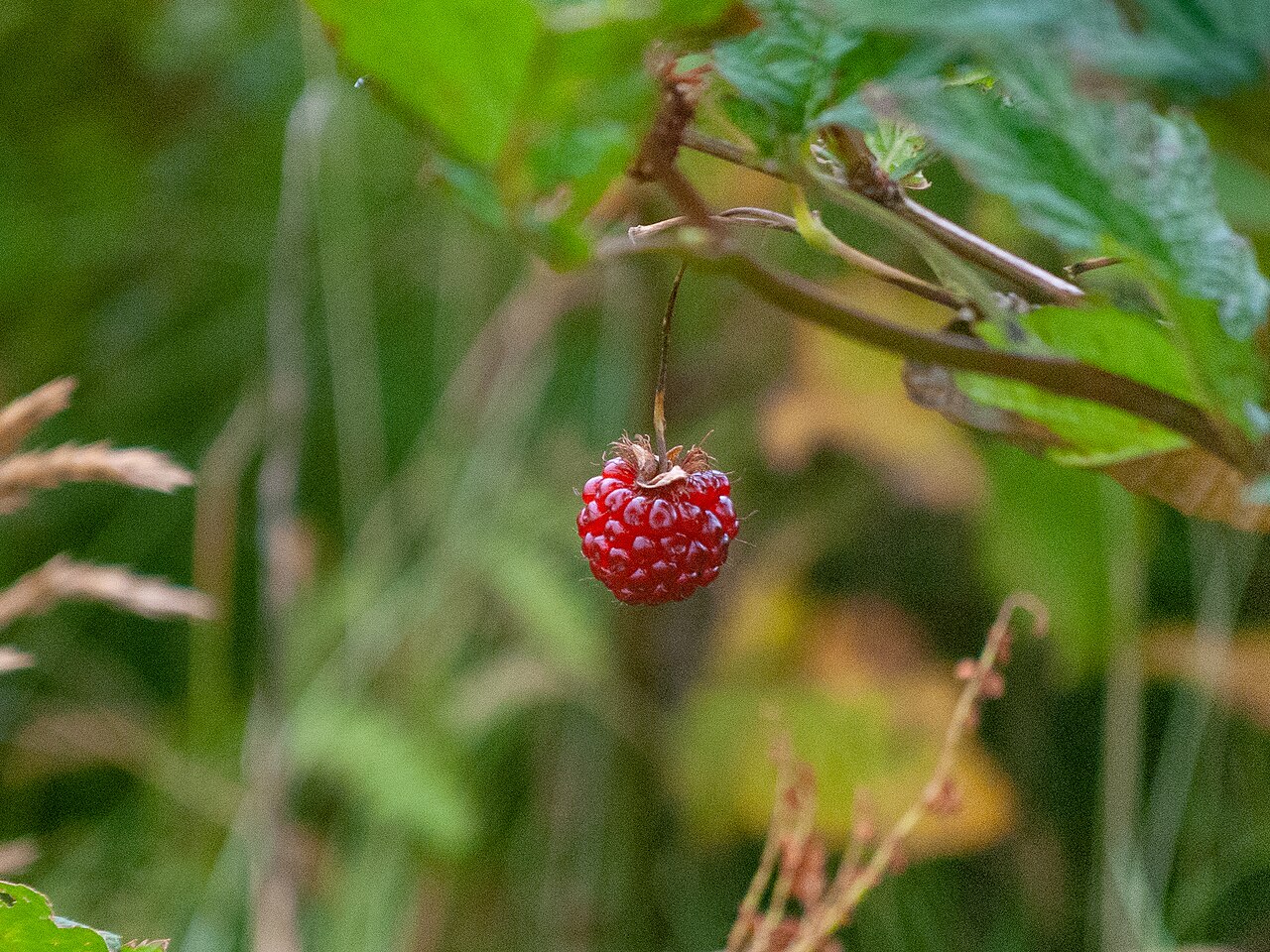
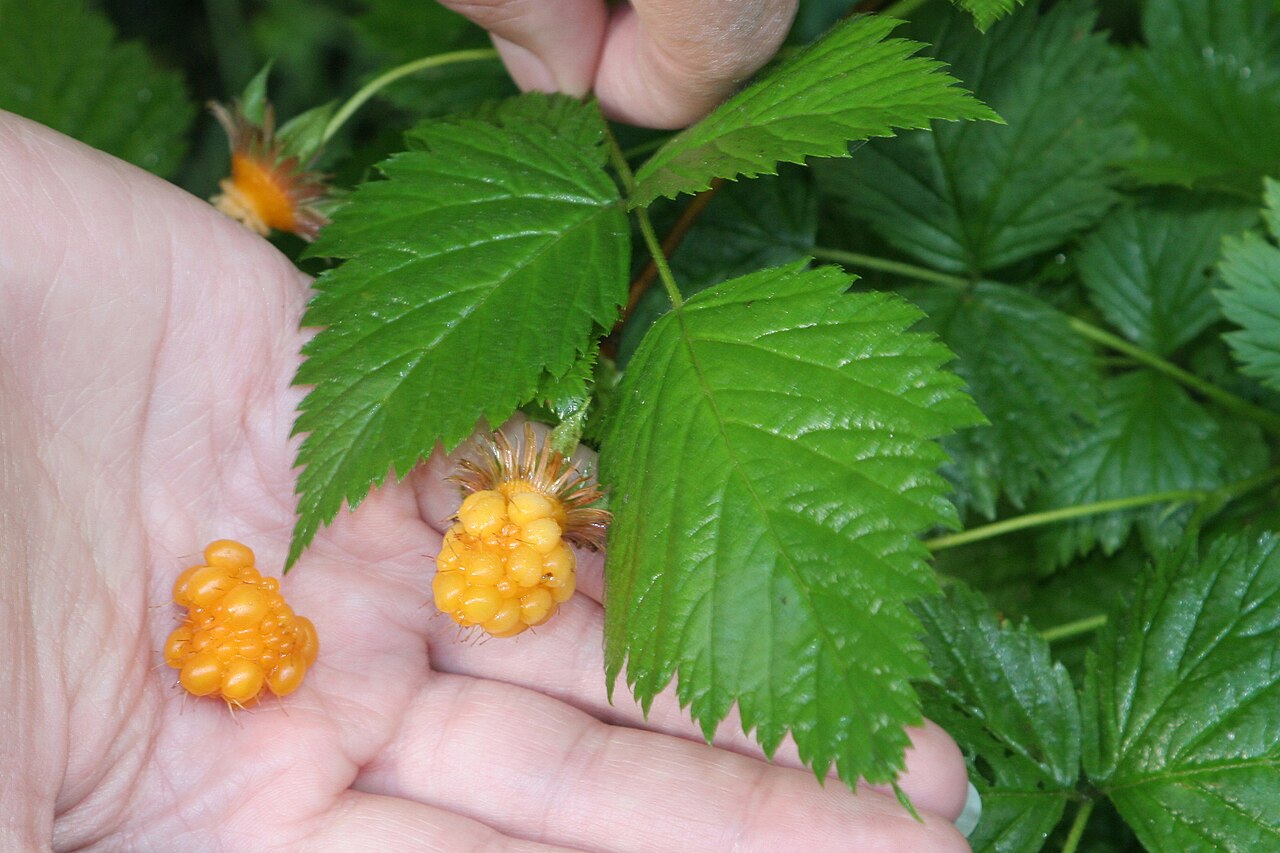
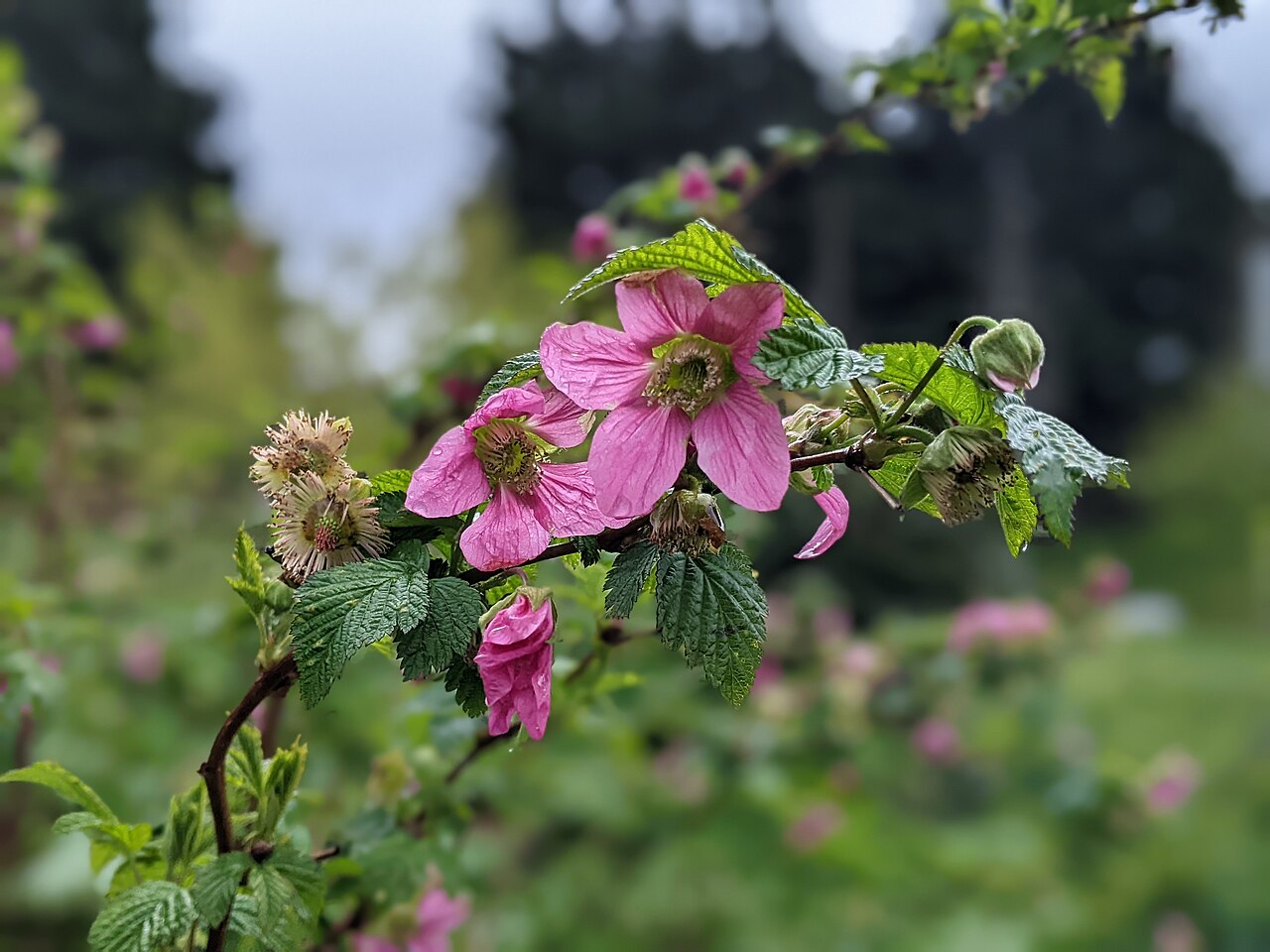
Salmonberry is a large, vigorous Pacific Northwest Rubus with magenta flowers and raspberry-sized fruit in salmon-orange, yellow, or red, depending on the plant. It wants moist, humus-rich, well-drained soil and a cool, woodland-edge spot — it is a streamside plant, not a desert plant, and it sulks in hot, dry gardens. Plant in fall or spring, give it room to form a thicket, and prune out old canes after fruiting, since it fruits on second-year wood like a raspberry. It is less thorny than many brambles and more ornamental in flower, which makes it a good edible hedge for a damp corner. In the Pacific Northwest it can spread enthusiastically, so site it where a thicket is welcome, not where it will swallow a path.
Water & feeding
Water regularly, especially in the first year and in dry summers — salmonberry wants steady moisture. Mulch thickly with wood chips or leaf mold. Feed in spring with compost; it is not a heavy feeder, but poor, dry soil gives small, seedy fruit.
Common problems
- Drought — fruit shrivels and canes die back; mulch and water are the fix.
- Cane borers and raspberry pests — prune out damaged canes and clean up prunings.
- Spreading thickets — mow or cut suckers at the edge if it wanders where it is not wanted.
- Mild flavor in cool summers — fruit is best in warm, sunny summers; in cool ones it can taste watery.
Harvest
Pick when berries are fully colored and pull easily from the core; salmonberry fruit is softer and more fragile than raspberry. Eat fresh, or cook into jam and jelly — the flavor is milder and more floral than raspberry, and the young peeled shoots are also traditionally eaten like asparagus in spring.
Browse all plant & pest guides
Saving seeds
Salmonberry seed takes patience and a little preparation, and it is worth saying up front that almost nobody grows salmonberries from seed on purpose — cuttings and suckers are faster, easier, and true to type. But if you want the experiment, here is how it works. Eat the berries, save the seeds from the ripest ones, and clean the pulp off: mash the berries in a little water, let the pulp float off, and save the small hard seeds that sink. Rinse them and let them dry for a day.
Salmonberry seed needs a cold, moist stretch: mix it with damp sand or vermiculite in a bag and store it in the fridge for two to three months, or sow fresh outdoors in fall and let winter do the work. After stratification, sow shallowly in a moist, well-draining mix and keep it cool and moist. Germination is slow and uneven — some seed sprouts in a few weeks, some takes a couple of months — so do not give up on a pot at four weeks. Seedlings grow steadily once they are up, but they will take a couple of years to fruit, and they will not taste like the parent.
That is the honesty part: a salmonberry seedling is a genetic gamble. The berries vary in color — salmon, gold, red — and in sweetness, and a seedling from a sweet golden berry may produce tart red ones. Named selections are propagated by cuttings or suckers for a reason. Suckers are the practical route: salmonberry spreads by runners, and a sucker dug up in winter with some root attached is a true copy of the plant you loved. Seed is for the experiment and for the gardener with a spare corner and no hurry.
Save seed from berries that were fully ripe, sweet, and true to type, from a healthy cane, and sow more than you need. And a Florida note, because it matters: salmonberry is a Pacific Northwest native that wants cool, moist conditions, and it is not a Florida plant. Our heat and humidity will test it hard. Treat the seed as a curiosity for a cool-climate friend, not a plant for your own garden.
Varieties
Every named variety of Salmonberry with its own growing guide:
- Olympic Double Salmonberry — The raspberry rose: fully double, deep pink, rosette-like flowers with 30 petals — the salmonberry grown for its bloom, not just its berry.
- Pacific Rose Salmonberry — The thornless salmonberry: single pink flowers and sweet yellow-orange to red fruit on a nearly thorn-free shrub — the salmonberry for picking.