
🫐 Scarlet Ovation Evergreen Huckleberry
What it looks like
Why this variety
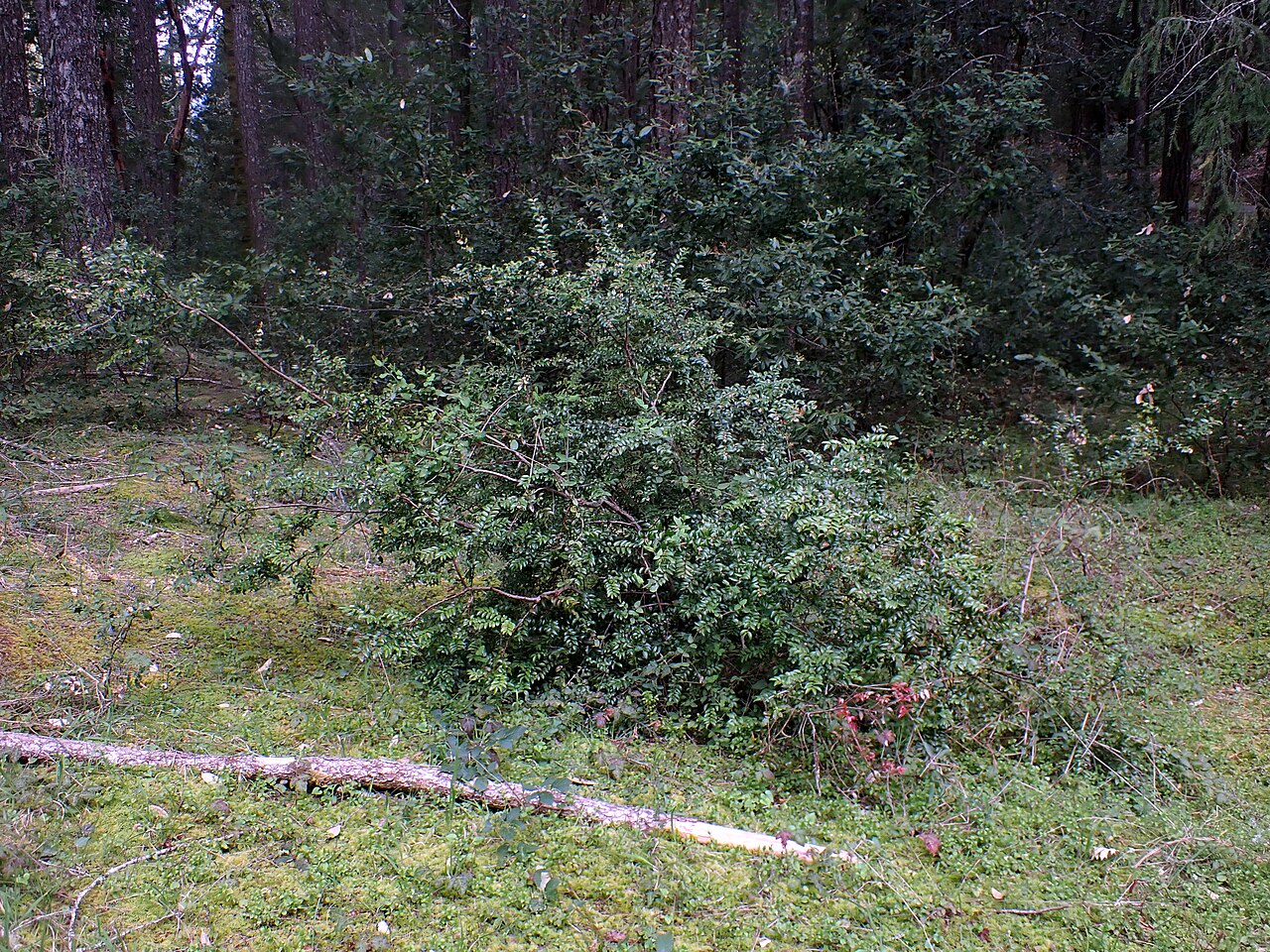
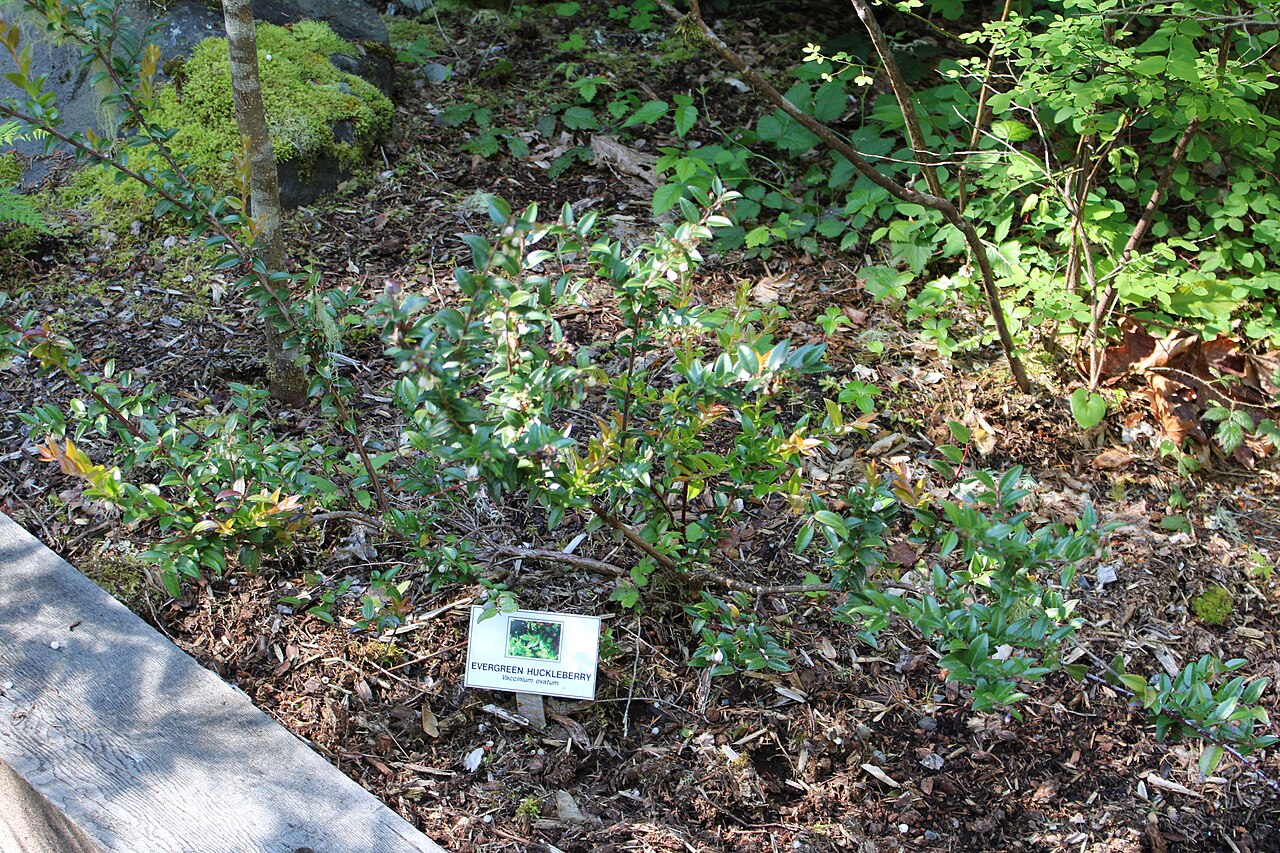
Scarlet Ovation is the evergreen huckleberry selected for drama: a compact selection of the Pacific Northwest’s native evergreen huckleberry, sold under plant patent PP25067 (selection name ‘Vacsid1’), whose spring growth emerges a fiery bronze-red before maturing to dark green. Planted en masse, that spring flush is a genuine event — a whole hedge blushing red at once — and even a single plant earns its place in spring, when the bright new leaves contrast with the neat, dark older foliage.
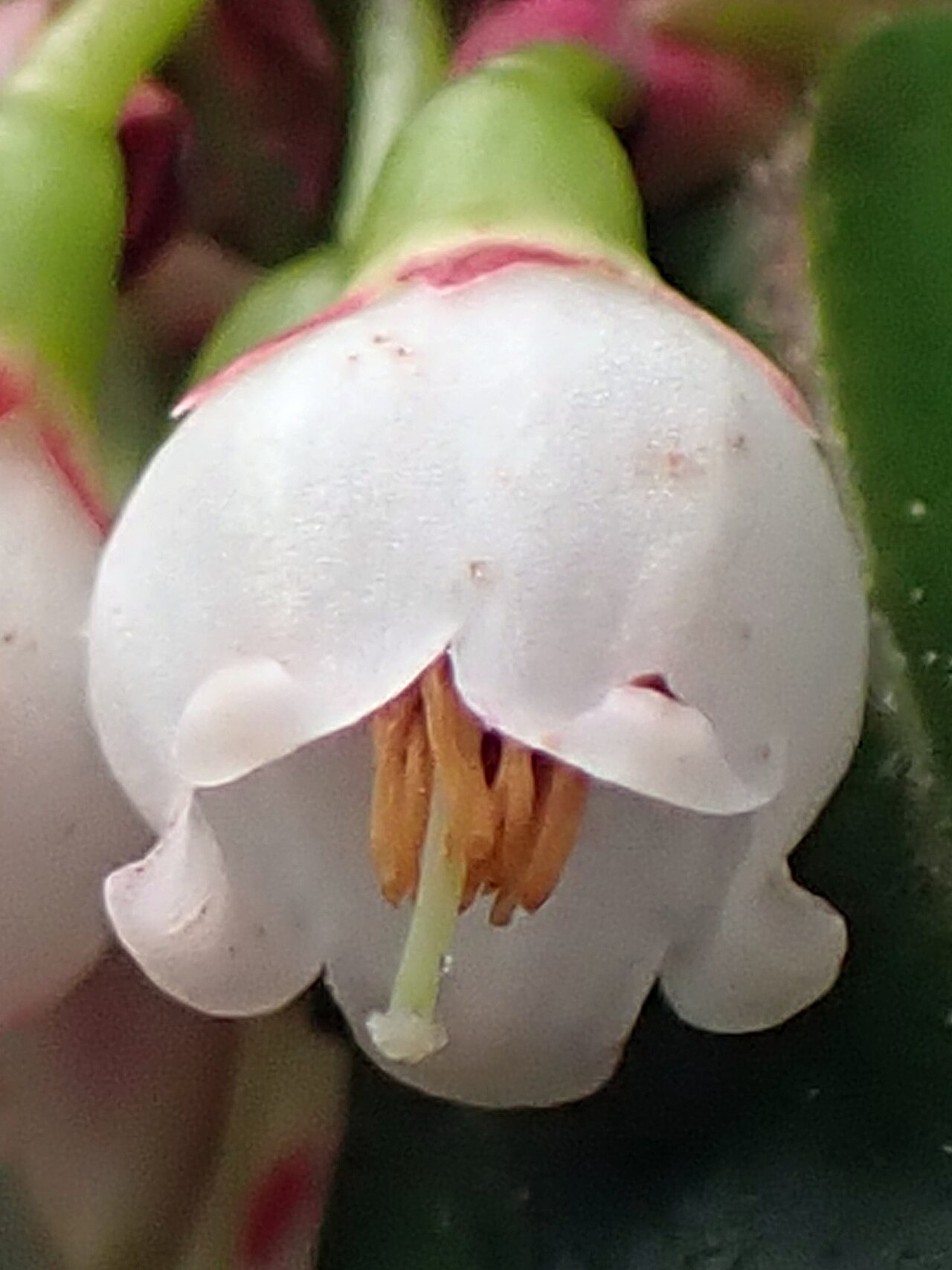
The berries are no afterthought: small, urn-shaped, pinkish-white flowers in spring give way to tasty, dark-blue to near-black berries in late summer, enjoyed by wildlife and people alike, and the plant is self-fertile, so a single Scarlet Ovation fruits without a partner — a convenience wild huckleberries do not always offer. At 2–4 feet tall and wide, it is a true compact shrub: small enough for a foundation planting, a container, or the front of a border, dense enough to read as a solid evergreen mass.
It keeps the species’ practical virtues too: it is reported as fire and deer resistant, its flowers are rich in nectar and attract pollinators including hummingbirds, and its evergreen foliage looks good in every season. The demands are the familiar Vaccinium ones — acidic soil, good drainage, steady moisture — and the reward is a shrub that works as an ornamental first and a fruit plant second, without asking you to choose. If you are new to choosing between cultivars, the Varieties Matter guide explains why the name after the plant matters as much as the plant itself.
Florida honesty: evergreen huckleberry is the most Florida-plausible huckleberry of the bunch, and that still only makes it a North Florida trial, not a statewide promise. It needs acidic soil, afternoon shade, and steady moisture through summer — give it a blueberry-style bed and it has a fighting chance in the Panhandle; further south, the heat wins.
How to grow
Plant Scarlet Ovation in full sun along the coast or part shade inland — it can grow in full sun where summers are mild but wants some shade where summers are hot — in well-drained, humus-rich, acidic soil with a pH of 4.5–6.5. Space plants 3–4 feet apart, work worm castings and organic matter into the planting hole, and mulch with pine bark or pine needles to hold moisture and acidity. Water well through the first year; like all huckleberries it is slow to establish, and steady moisture in year one pays for itself in year two.
Prune lightly after fruiting: remove dead and oldest wood, shape only as needed, and enjoy the fact that a compact selection mostly prunes itself. Do not lime, do not use alkaline fertilizers, and do not plant it where concrete rubble or ash has pushed the soil pH up — Vaccinium roots need acid soil and their mycorrhizal partners to feed, and alkaline soil starves both.
Water & feeding
Water steadily, especially in summer — Scarlet Ovation wants moderate to regular summer water and fruits best with it, though it tolerates some drought once established. Water at the soil line, mulch deeply with acidic organic matter, and feed lightly with castings or an acid-loving-plant feed; heavy fertilizer pushes soft growth and fewer berries, and anything containing lime works directly against the plant.
Common problems
- Chlorosis from alkaline soil — yellow leaves with green veins mean pH too high; acidify with sulfur and organic matter.
- Poor fruiting in deep shade — berries need sun; give it sun to light shade for a crop.
- Bird competition — the dark berries are popular; net for a human share or plant extra.
- Drought during fruiting — small berries follow dry summers; water through fruit set and ripening.
- Mycorrhizal dependence — avoid fungicide drenches and sterile mixes that break the root-fungus partnership huckleberries feed through.
Harvest
Harvest in late summer, when the berries turn fully dark blue to near-black and slip easily from the stem — taste before you strip a whole branch, since berries ripen over days, not all at once. The fruit is small but tasty, good fresh, in pies and jams, or dried, and because Scarlet Ovation is self-fertile, even a single plant gives you a real picking, not a token handful.
Pick gently, leave some for the birds, and prune out the oldest wood after harvest so next year’s berries form on young, vigorous stems — the same simple rhythm that keeps any Vaccinium productive, applied to a shrub that also happens to set the spring garden on fire.
Back to the Evergreen Huckleberry growing guide
Browse all plant & pest guides
Saving seeds
Scarlet Ovation is the evergreen huckleberry selected for drama: a compact selection of the Pacific Northwest’s native evergreen huckleberry, sold under plant patent PP25067 (selection name ‘Vacsid1’), whose spring growth emerges a fiery bronze-red before maturing to dark green. Planted en masse, that spring flush is a genuine event — a whole hedge blushing red at once — and even a single plant earns its place in spring, when the bright new leaves contrast with the neat, dark older foliage. As a patented named huckleberry it is kept true by cuttings, not by seed — plant Scarlet Ovation in full sun along the coast or part shade inland, in well-drained, humus-rich, acidic soil with a pH of 4.5–6.5. Space plants 3–4 feet apart, work worm castings and organic matter into the planting hole, and mulch with pine bark or pine needles to hold moisture and acidity. The full method is in the Saving seeds section of the Evergreen Huckleberry guide.