
🟠 Sea Buckthorn
What it looks like
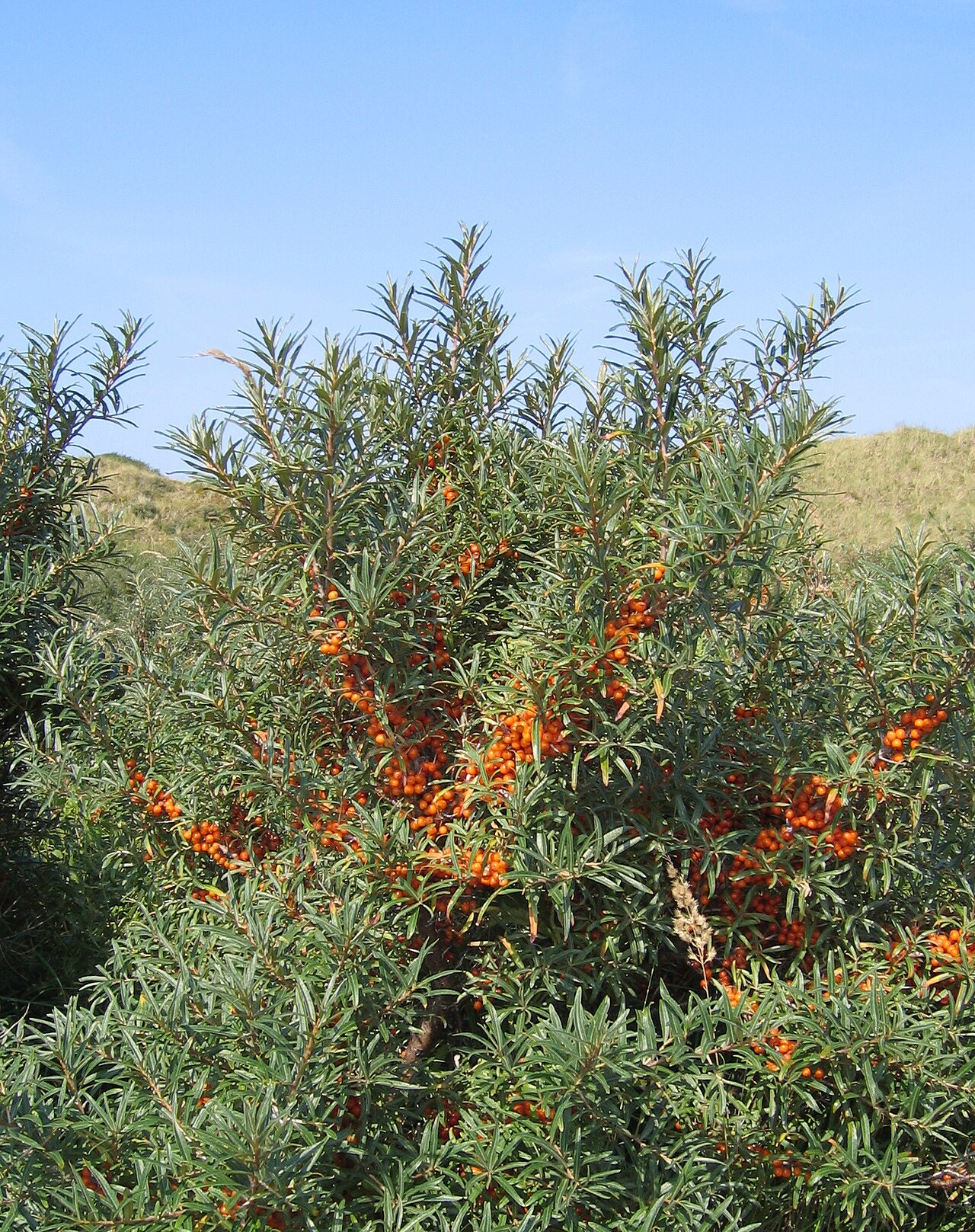
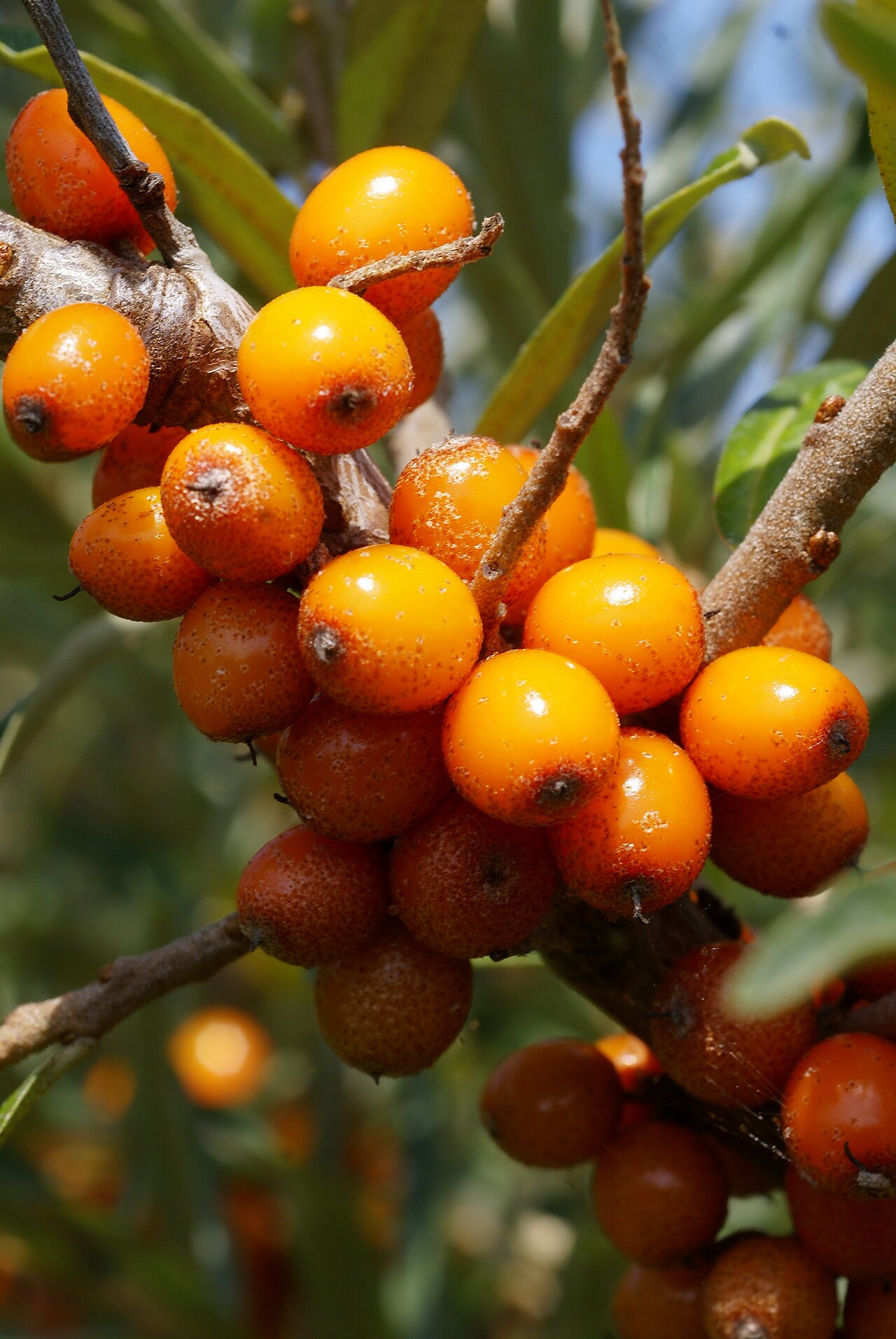
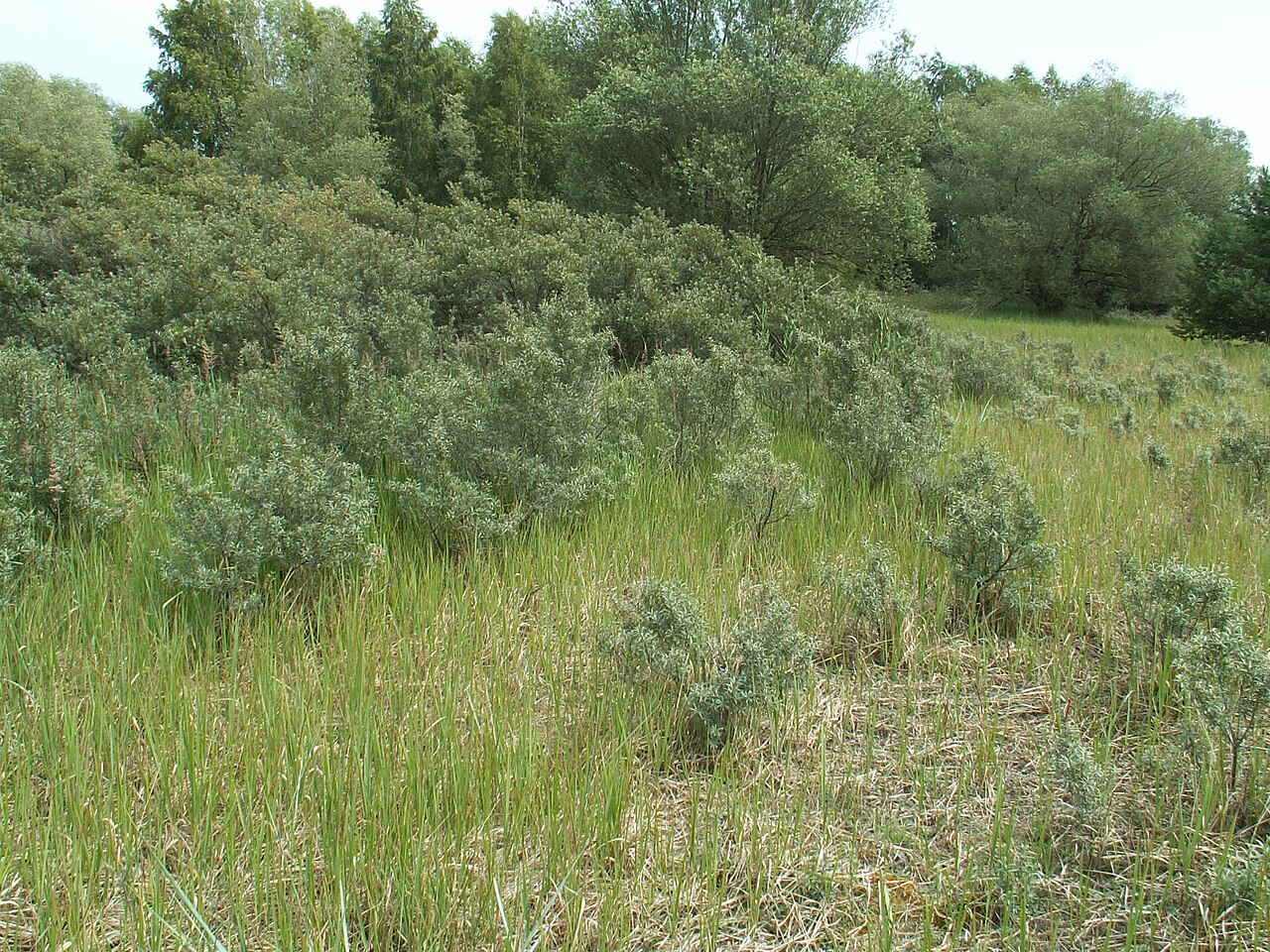
How to grow
Sea buckthorn is a tough, thorny shrub from Eurasia that fixes its own nitrogen, tolerates poor soil, wind, and salt, and produces intensely tart orange berries that are prized for juice. The critical fact is that sea buckthorn is dioecious: you need at least one male plant for every six to eight females, and the male produces no fruit, so label plants at planting time or you will spend years guessing. Plant in spring in well-drained soil — it hates wet feet — and give it full sun. It suckers, so site it where spreading is acceptable or be ready to mow suckers. Prune lightly in winter to keep the shrub open; heavy pruning reduces fruiting wood. Thorniness is real, so plant away from paths and harvest with gloves.
Water & feeding
Water during establishment; mature plants are drought-tolerant and need little supplemental water or fertilizer — in fact, they fix nitrogen, so overfeeding is pointless. Mulch young plants to suppress weeds until established.
Common problems
- No male pollinizer — the most common reason for a flower-covered shrub with no berries
- Thorns making harvest painful — gloves, long sleeves, and the freeze-and-strip method (cut branches, freeze, strip berries) help
- Suckering into lawns and beds — mow or dig suckers annually
- Birds — they take berries, though the tartness means they take fewer than with sweet fruit
Harvest
Pick when the berries are fully orange and soft, usually late summer into fall — they are mouth-puckeringly tart raw, and that is normal. Juice them, cook them into sauces, or freeze for winter; the flavor is bright, citrus-like, and unlike any other garden berry.
Browse all plant & pest guides
Saving seeds
Sea buckthorn seed needs winter before it will sprout, and it needs both sexes in the garden before it will fruit — and both of those things are worth knowing before you start. Collect ripe berries in fall, when they have turned bright orange and are soft. Mash the berries in a little water, let the pulp float off, and save the small hard seeds that sink. Rinse them and let them dry for a day.
The seed needs a cold, moist stretch: scarify it lightly — a gentle rub between two sheets of sandpaper — and then mix it with damp sand or vermiculite in a bag and store it in the fridge for 60 to 90 days, or sow fresh outdoors in fall and let winter do the work. After stratification, soak the seed in water for a day or two, then sow shallowly in a moist, well-draining mix and keep it warm, around 78 to 84°F. Germination usually comes in one to three weeks after stratification, and seedlings grow steadily once they are up.
The honesty part is the same one that applies to most fruit shrubs, with a twist: sea buckthorn is dioecious, so each plant is either male or female, and you cannot tell which until it flowers, usually in year three. From seed, expect roughly a fifty-fifty split, so grow at least eight to ten seedlings to be confident of getting both sexes — one male pollinates up to six or eight females, since the pollen travels on the wind. Named varieties are propagated by cuttings for a reason, and a cutting from a known female gives you fruit without the gamble. Seed is for the experiment and for the gardener who enjoys growing a hedge from scratch.
Save seed from berries that were fully ripe, from a healthy shrub, and sow more than you need. And a Florida note, because it matters: sea buckthorn is a cold-climate shrub for zones 3 to 7 that wants cold winters and cool summers, and it is not a Florida plant. Our heat and humidity will test it hard. Treat the seed as a curiosity for a cool-climate friend, not a plant for your own garden.
Varieties
Every named variety of Sea Buckthorn with its own growing guide:
- Hergo Sea Buckthorn — The German orchard berry: medium, light orange fruit that holds well on the branch, on a sturdy, slower shrub — the most widely planted in Germany.
- Leikora Sea Buckthorn — The standard seaberry: abundant, large, deep orange fruit with very high vitamin C, holding on the branch until frost — the female to plant first.