
🤍 Silver Lace Vine
What it looks like


How to grow
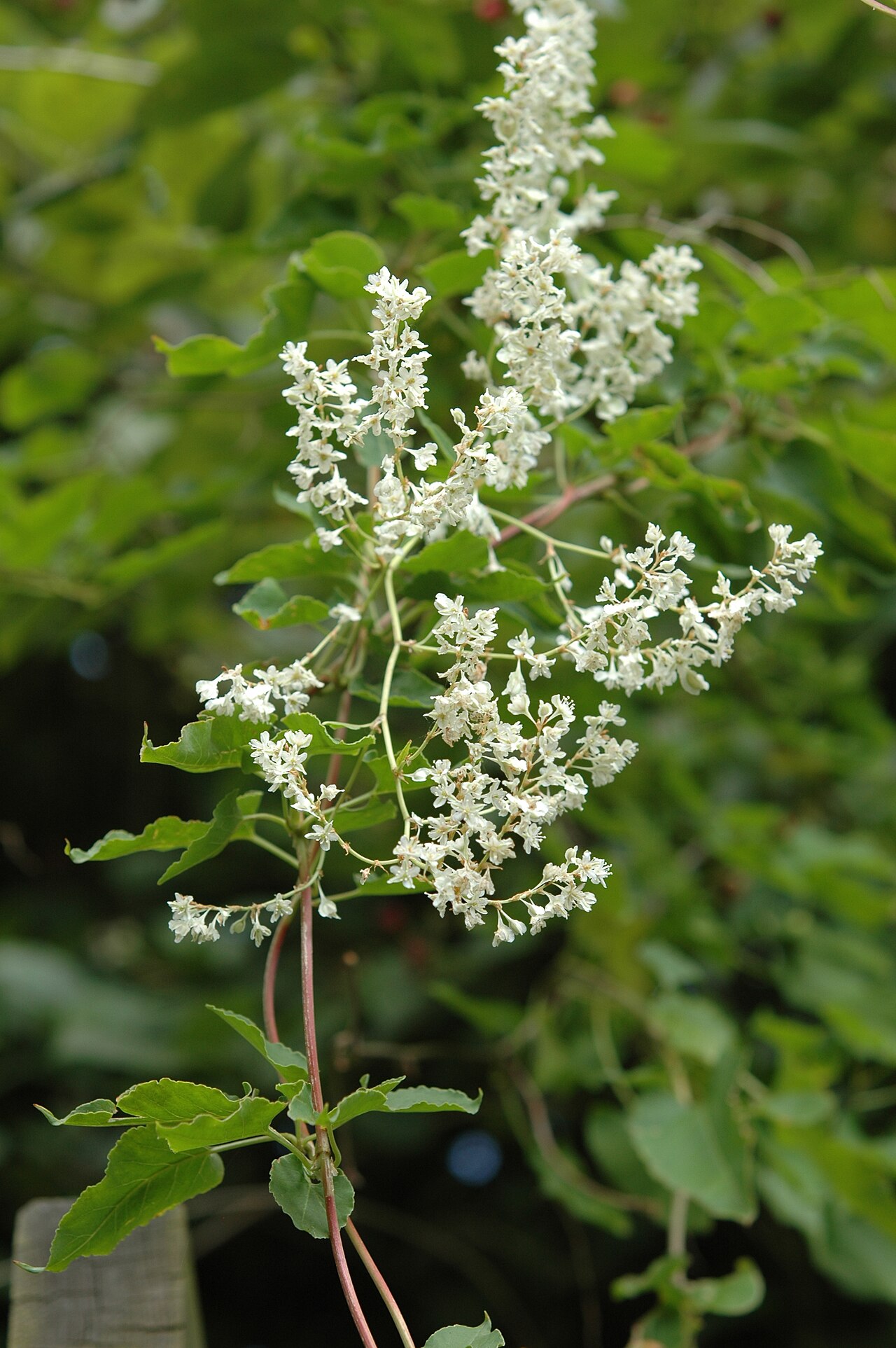
Silver lace vine is a deciduous twining vine famous for speed: given sun and decent soil it can grow many feet in a season and smother a fence, arbor, or ugly wall in frothy white flowers in late summer and fall. Plant one plant, not a row, at the base of a very sturdy support, in moist, well-drained soil. This is not a vine for a delicate trellis or a small garden. Train young shoots sideways along the fence to fill it evenly, tying them in with soft ties, and plan from day one how you will prune it, because you will prune it a lot.
Water & feeding
Water deeply once or twice a week in the first season until roots are established. After that it is surprisingly drought-tolerant, and leaner, drier sites actually help restrain it — one of the few plants where pampering makes the problem worse. Feed sparingly, if at all; rich soil and heavy fertilizer only speed up a vine that is already fast enough. Mulch lightly to hold moisture without creating a soggy root zone.
Common problems
- Escaping its bounds — prune hard at any season to control spread, cut back runners, and never plant it near woodland, streams, or natural areas. It is an aggressive grower and is becoming invasive in some areas, so check your local extension list before planting.
- Weight — a mature vine laden with flowers and rain is heavy; flimsy trellises buckle. Use metal fencing, strong posts, or a masonry wall.
- Japanese beetles — the most serious pest reported on this vine; hand-pick or tolerate light damage, since a vigorous vine outgrows it.
- Smothering neighbours — keep it off trees, shrubs, and gutters, and cut back any shoot heading somewhere it should not go.
Harvest & notes
The harvest is the display: masses of small fragrant white flowers from midsummer into fall, beloved by bees. Cut a few flowering stems for a vase if you like, but do not compost seed heads or prunings where they can root or seed into wild ground. At season’s end, cut back hard to the framework you want to keep, and remove any self-sown seedlings promptly while they are small.
Browse all plant & pest guides
Saving seeds
The caution comes first with this one: silver lace vine is one of the most vigorous vines you can plant. It will cover a fence, a pergola, and then the neighbor’s fence, and in some regions it is invasive. Check before you plant it, and give it a strong structure with room to run. Seed is the least of its powers — it also layers wherever a stem touches soil and suckers from the roots.
Let the flower heads ripen in fall and collect the small, dry seed. It germinates readily with no stratification — sow warm in pots, barely covered, and sprouts usually come in two to three weeks. Sow in pots, not in open ground near anything you love, because a seedling in the wrong place becomes a vine in the wrong place very quickly.
Cuttings root easily in summer, and layering is easier still: pin a stem to the soil, and it roots where it touches. Named forms come only from cuttings. Seed is for starting the species from scratch, and for the gardener who wants a lot of vines in a hurry — which, given this plant, is a wish to make carefully.
In Florida, silver lace vine grows fast in the heat and flowers in a white froth in late summer and fall. Give it a strong arbor and cut it back hard in winter to keep it in bounds, and keep an eye on where it is heading. A well-placed silver lace vine is a wall of flowers; a neglected one is a takeover.
Varieties
Every named variety of Silver Lace Vine with its own growing guide:
- Lemon Lace Silver Lace Vine — The golden silver lace: lemon-yellow foliage and foamy white flowers on a less rampant sport — the silver lace vine you can actually keep in bounds.