
🌿 Solomon’s Seal
What it looks like
How to grow
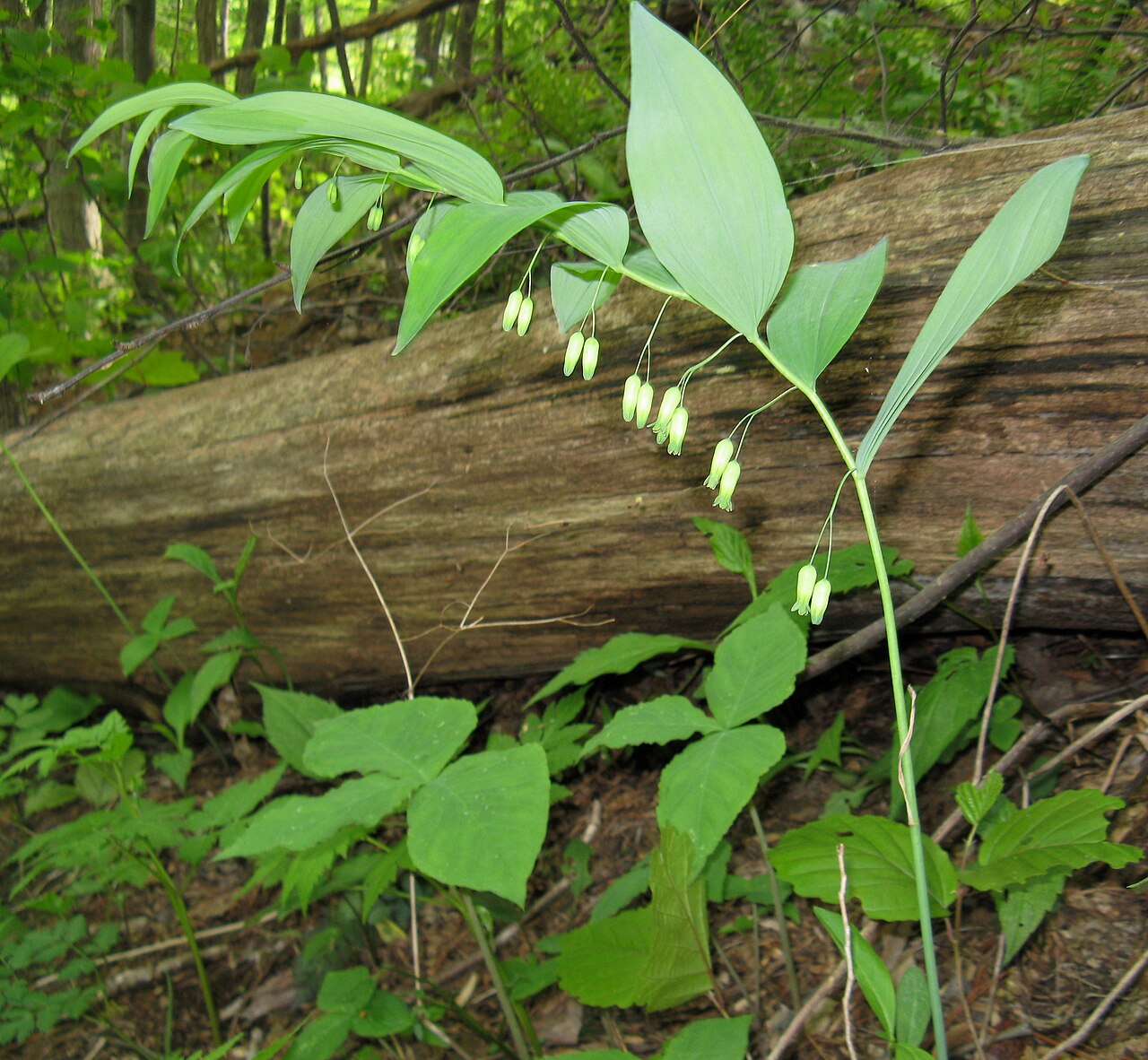
Solomon’s seal is a woodland perennial of quiet elegance: arching stems 2–3 feet tall (varies by species, from 1-foot dwarfs to 5-foot giants) with pairs of oval leaves and small white bell flowers dangling beneath, followed by blue-black berries in fall. It spreads slowly by rhizomes into a graceful colony that needs almost no care once established. Plant rhizomes in spring or fall, 2 inches deep and 12–18 inches apart, in part to full shade in rich, moist, well-drained soil with plenty of leaf mold — it is a forest-floor plant, and it wants forest-floor conditions. It pairs with ferns, hostas, and brunnera, and its arching form softens walls and fences in shade where little else will grow.
Water & feeding
Keep soil evenly moist, especially in the first year; established colonies tolerate some dry shade but look best with regular moisture and a leaf-mold mulch. Feed with compost or leaf mold in fall — that is how the forest does it, and it works. Avoid disturbing the rhizomes.
Common problems
- Slugs and sawfly larvae — slugs chew leaves; Solomon’s seal sawfly larvae can defoliate stems in spring; hand-pick or tolerate, as plants usually regrow.
- Dry shade — mulch and water in dry spells; foliage scorches if soil dries out.
- Slow spread — patience; colonies build over years, not weeks.
- Berries toxic if eaten — ornamental only; keep berries away from curious children.
Notes
Leave stems standing through fall for the golden autumn color, then cut back in late winter. Divide rhizomes in fall or early spring if a colony needs thinning — each piece with a bud makes a new plant. The berries are toxic, so this is a look-don’t-taste plant. Cut stems make lovely, long-lasting foliage for arrangements.
Browse all plant & pest guides
Saving seeds
Solomon’s seal seed is a patience test with double dormancy: it wants a warm spell and then a cold spell, and it may take two years to sprout. Sow fresh seed in summer in a pot of moist mix and leave it outside — the warm months satisfy the first dormancy, winter satisfies the second, and sprouts usually come in the second spring. Or mimic it indoors: a few months warm and moist, then a few months in the fridge, then sow warm. Either way, do not throw the pot out after a year of nothing.
Let the blue-black berries ripen fully in fall, clean the pulp off the seed, and sow right away — Solomon’s seal seed does not store well, and dried seed may never germinate. Sow more than you need, since germination is uneven and slow.
Division is the faithful route: lift the rhizome in spring or fall, cut it into pieces with a growing point each, and replant. Every division is a clone of the parent, and it flowers far sooner than a seedling — three to five years from seed, versus one season from a division. Named forms come only from division.
Solomon’s seal is a woodland plant for shade and moist, humus-rich soil, and in Florida it is a north Florida plant at best — it wants cool summers and a real winter. Give it shade, leaf litter, and patience, and it will reward you with arching stems and dangling white bells for decades.
Varieties
Every named variety of Solomon’s Seal with its own growing guide:
- Silver Wings Solomon’s Seal — The silver-blue seal: leaves silvery blue-green beneath with fragrant white bells — the subtler, cooler variegated form.
- Variegatum Solomon’s Seal — The variegated classic: cream-edged leaves on arching stems with dangling white bells — the shade plant that lights up a dark corner.