
🍈 Soursop
What it looks like
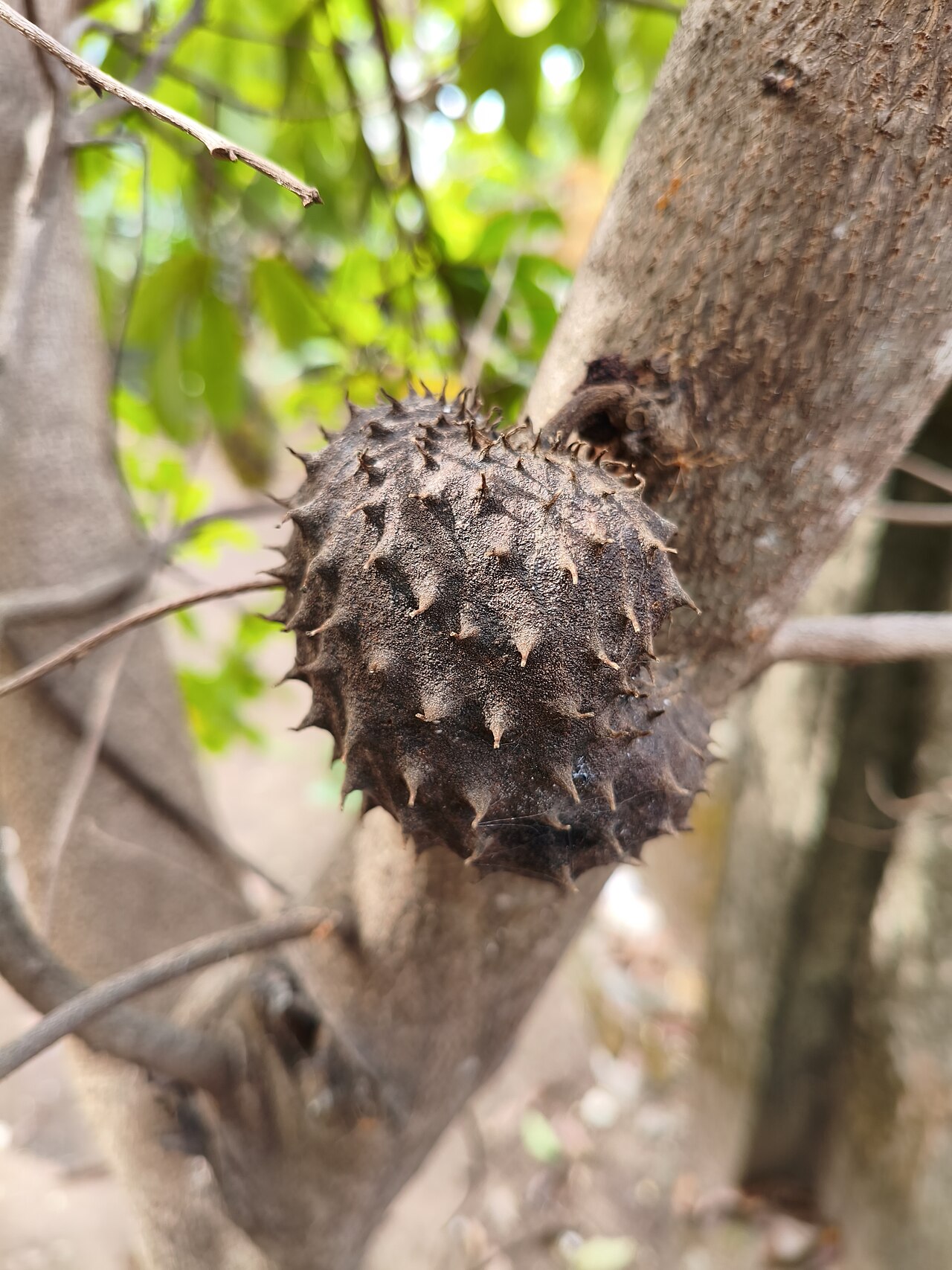
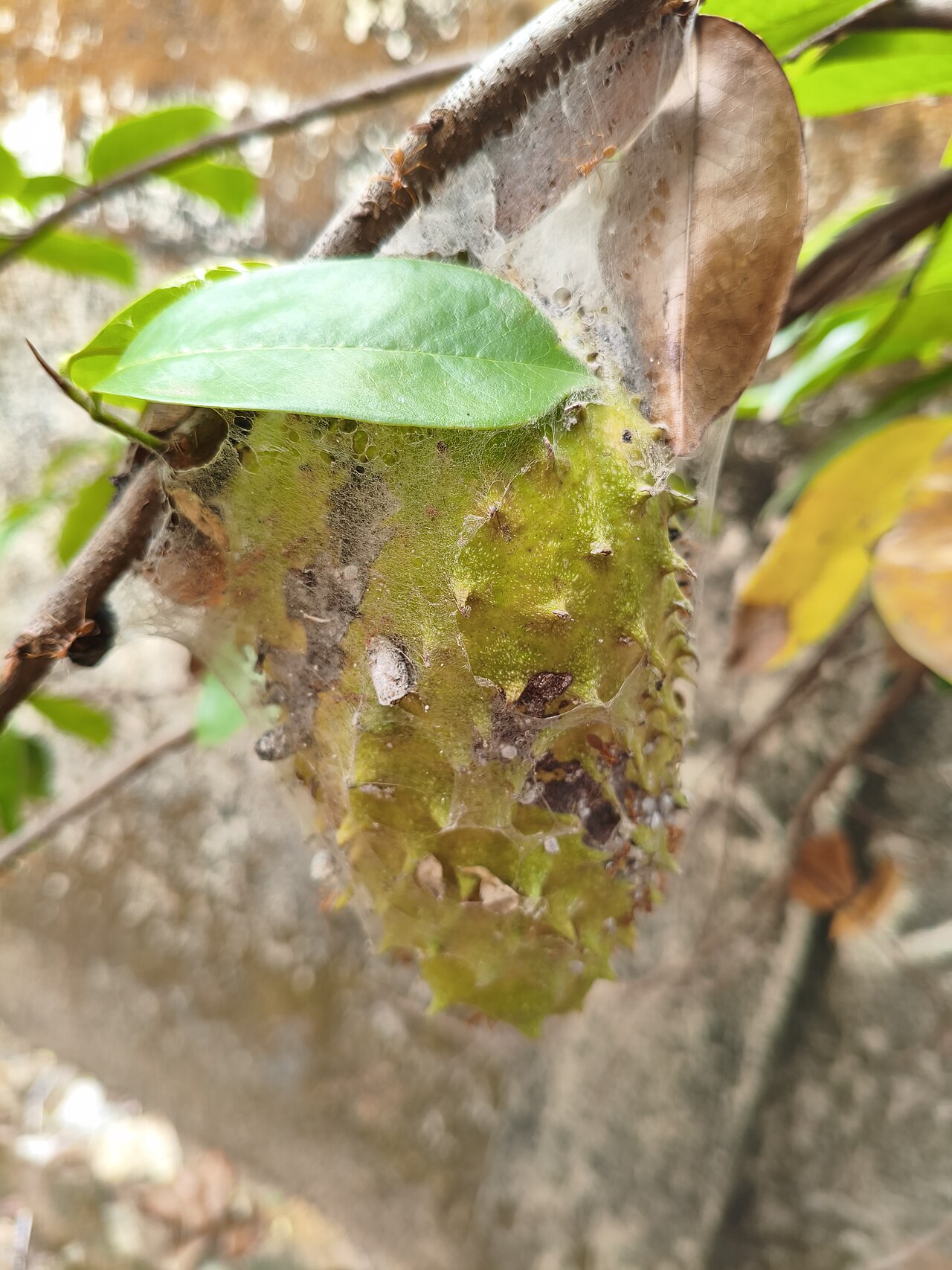
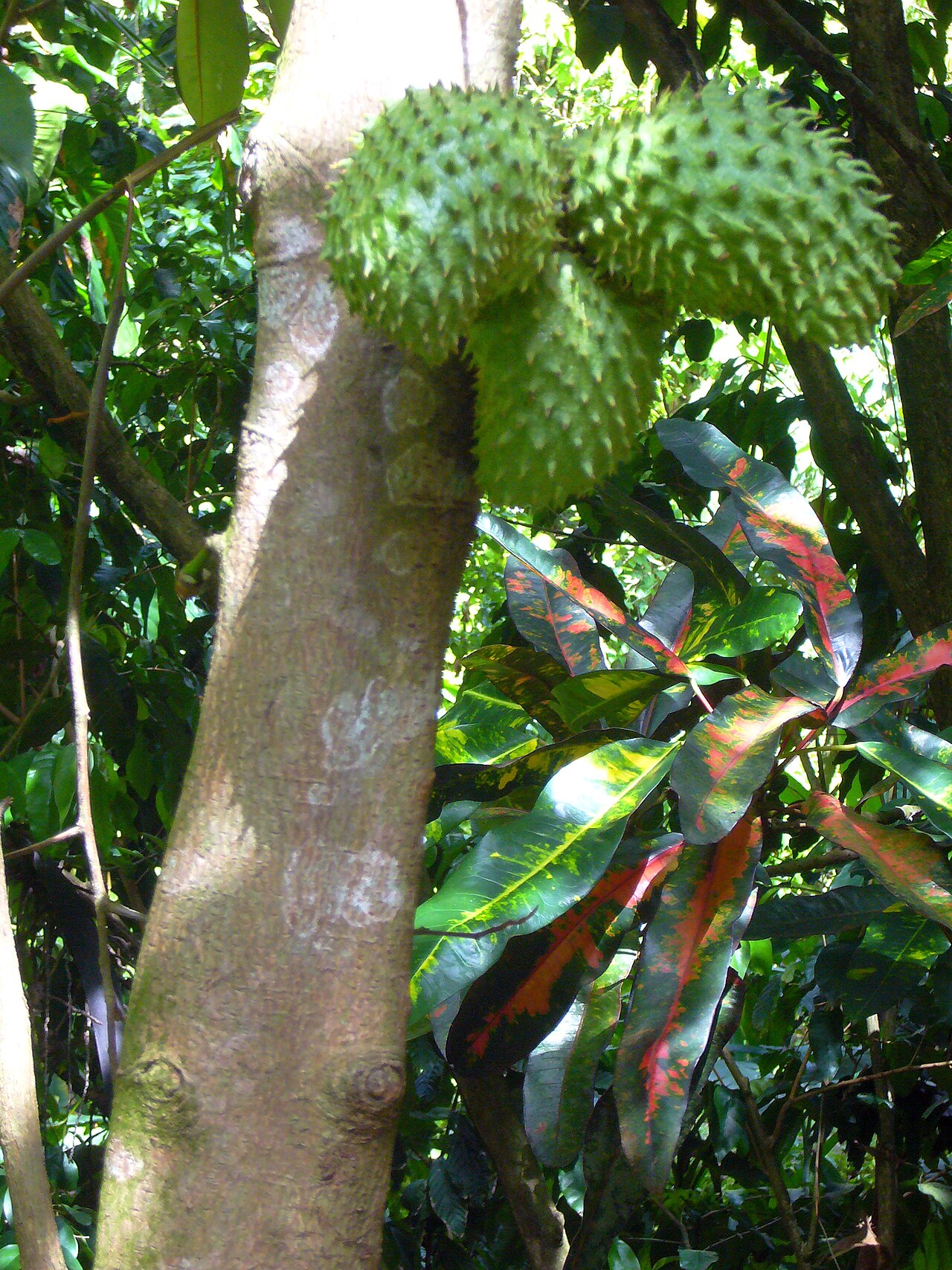
How to grow
Soursop — guanabana in Spanish — is a tropical Annona that produces large, spiky, heart-shaped fruit with white, fibrous, tart-sweet flesh, prized for juice, smoothies, and ice cream across the Caribbean and Latin America. Plant a grafted or seedling tree in spring in rich, well-drained soil, in a sheltered, frost-free spot; soursops are among the most cold-sensitive of the Annona family and are damaged by even light frost. They are self-fertile, so one tree fruits, though hand-pollination improves fruit set and shape, as with cherimoya. Prune to keep the tree low and open — soursops fruit best on a compact, well-lit canopy. The tree grows fast in warm, humid conditions and can reach 20 feet or more if left alone.
Water & feeding
Consistent moisture is essential — soursops drop flowers and fruit in drought and sulk in waterlogged soil. Mulch thickly and water regularly through the growing season. Feed in spring and midsummer with a balanced fertilizer.
Common problems
- Any frost — soursop is a true tropical; container growing is impractical at mature size, so zone 10–11 is the honest range
- Poor fruit set without pollinators — hand-pollinate for fuller, better-shaped fruit
- Fruit flies and seed borers in warm regions — bag developing fruit where pests are bad
- Root rot in poorly drained soil
Harvest
Pick when the fruit is full-sized, the spines have softened, and the skin has lightened to yellow-green — then ripen indoors until soft and fragrant. Scoop the flesh, remove the seeds, and blend for juice or freeze the pulp; soursop is rarely eaten out of hand like an apple, and that is fine, because the juice is the point.
Browse all plant & pest guides
Saving seeds
Soursop seed comes with a deadline: it is recalcitrant, and it does not wait. Clean the pulp off the seed, rinse it, and sow it the same day or within a few days — seed that dries out is dead seed, and seed stored for weeks is mostly dead too. Sow in a warm, moist mix at 75 to 85°F, about an inch deep, and germination usually comes in two to four weeks.
Save seed from fully ripe fruit — the softest, sweetest, most fragrant soursop on a healthy tree — and sow more than you need, since germination is uneven. Seedlings vary in fruit quality, and the only way to lock in a named type is grafting. Seed is for the adventure, and soursop is worth the gamble.
Young seedlings are tender and need shade for the first year, so keep them out of direct sun and sheltered from wind and cold. Growth after germination is steady, and the tree starts fruiting three to five years after sowing in a warm climate.
In Florida, soursop is a warm-climate fruit for zones 10 to 11, happiest in the southern part of the state in a sheltered, frost-free spot. Start seedlings in pots, keep them warm through winter, and plant them out only when the weather is reliably warm — a single cold night can undo a year of growth.
Varieties
Every named variety of Soursop with its own growing guide:
- Bennett Soursop — The blue-green soursop: a 1920 Florida introduction with blue-green skin — the historic soursop of the old Florida groves.
- Cuban Fiberless Soursop — The smooth Cuban soursop: large, sweet fruit with reduced fiber — the fiberless soursop introduced to Florida in 1959.
- Whitman Fiberless Soursop — The Florida fiberless: a Homestead-grown selection with sweet, pineapple-like flesh — the soursop Florida nurseries graft.