
🍋 Variegata Kaffir Lime
What it looks like
Why this variety
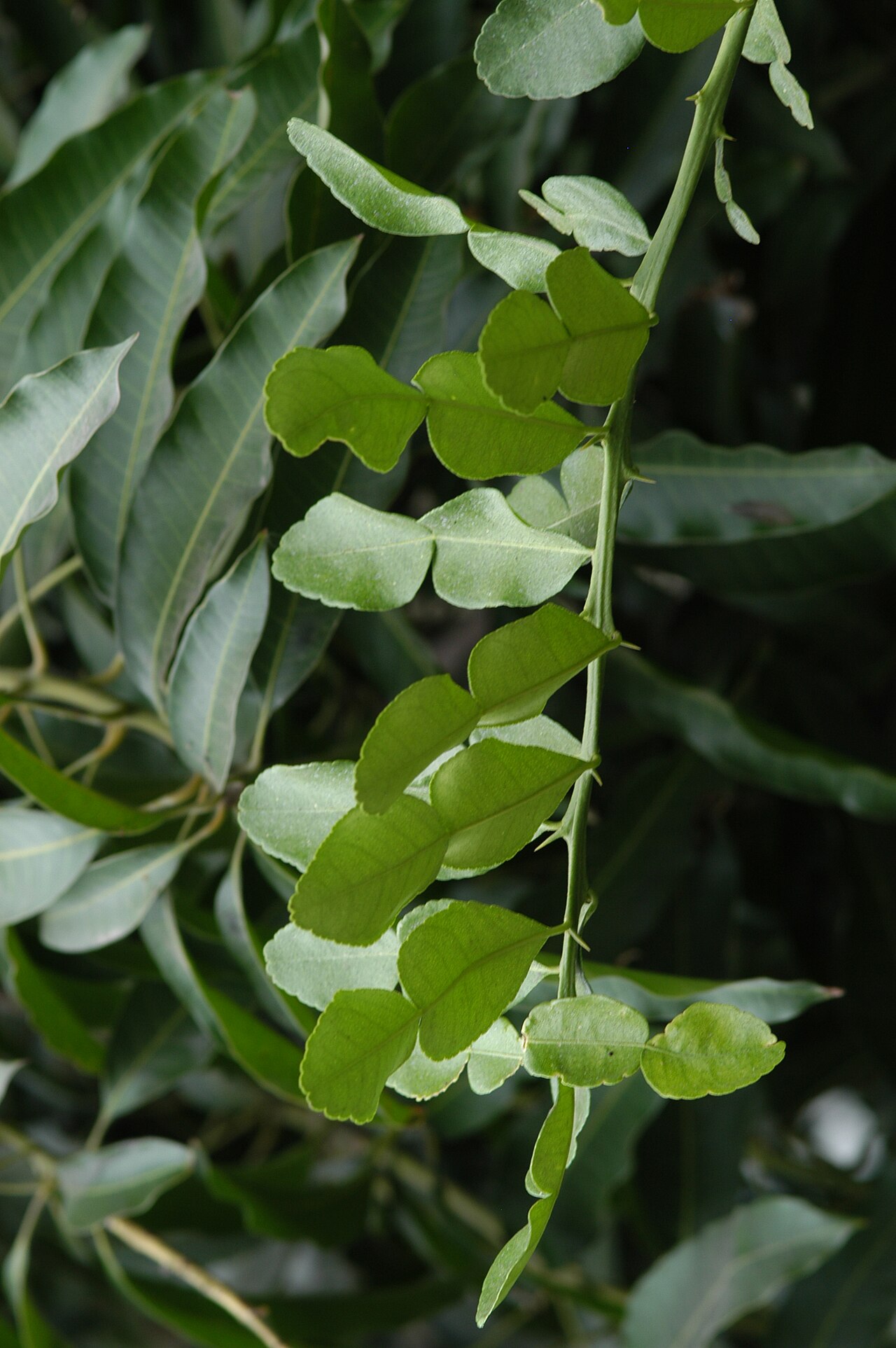
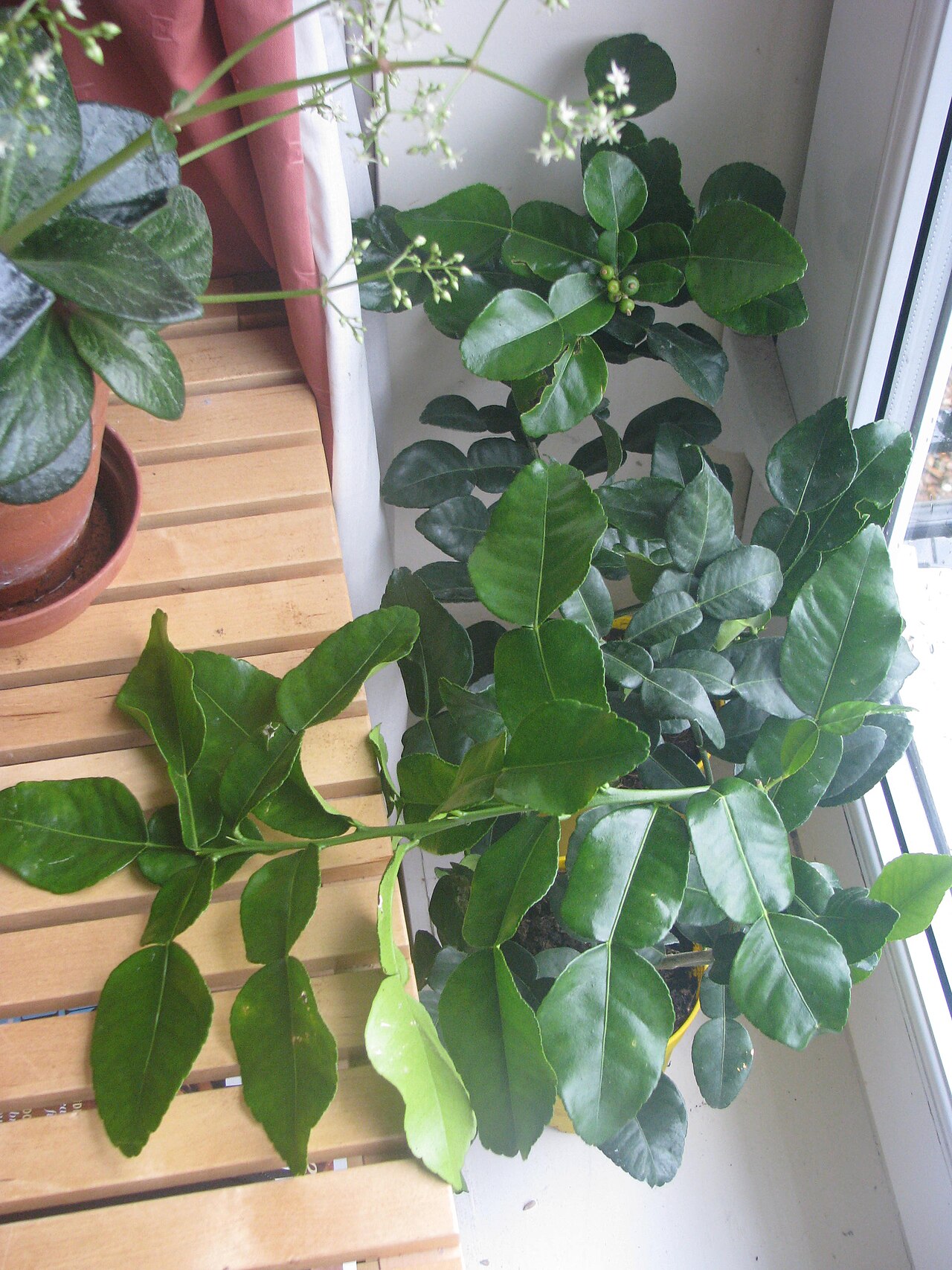
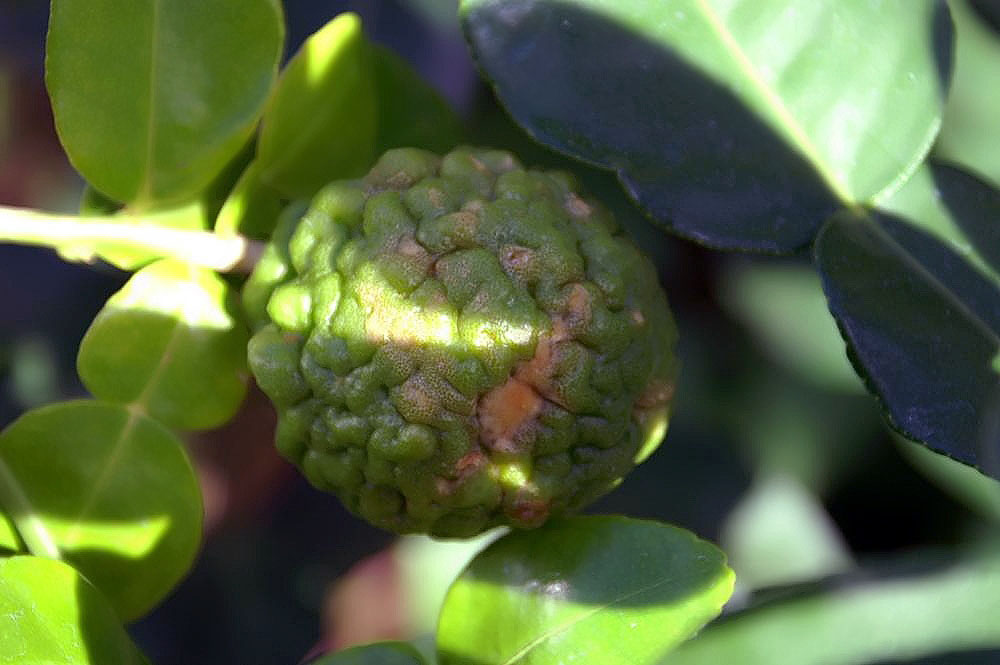
Variegata is the kaffir lime that earns its place in the garden before you ever cook with it: the same intensely aromatic double leaves as the species — the hourglass-shaped leaves that flavor Thai curries, tom yum, and stir-fries — splashed and streaked with cream, so the shrub reads as variegated from across the yard. The leaves carry the same citrus-floral perfume when torn or slivered, the fruit is the same bumpy, warty lime, and the plant is a compact evergreen shrub that suits a large container as well as a garden bed. For a cook who also gardens, Variegata is the rare plant that is both the prettiest shrub on the patio and the most-used herb in the kitchen.
The trade-off is honesty about what Variegata is and about citrus in Florida. Variegata is a variegated form in the nursery trade, not a formally registered cultivar with a breeding pedigree, and its variegation can revert — prune out any all-green shoots promptly, or green growth will take over. And like every Florida citrus, it faces citrus greening disease: buy certified disease-free nursery stock, watch for yellowing shoots and bitter, misshapen fruit, and protect young plants from freezes. Variegated leaves also sunburn more easily than green ones, so give Variegata full sun with a little afternoon protection in the hottest months.
If you are new to choosing between cultivars, the Varieties Matter guide explains why the name after the plant matters as much as the plant itself. Variegata is a perfect example: it is not just a kaffir lime in the abstract, it is a kaffir lime with a specific job, a specific history, and specific strengths.
Florida honesty: kaffir lime is a Central and South Florida citrus outdoors, thriving in warmth and humidity, and it is a superb container plant statewide — a pot on a sunny patio, moved under cover for North Florida freezes, gives you fresh leaves year-round anywhere in the state. Plant it in full sun with well-drained soil, water deeply and infrequently once established, and feed with a citrus fertilizer on schedule. In North Florida, the container is not a compromise; it is the plan, and a five-foot potted kaffir lime is a very good plan indeed.
How to grow
Plant a grafted nursery tree in spring in full sun and well-drained soil, in a hole no deeper than the root ball — citrus hates being planted too deep. Work worm castings and compost into the planting hole, water deeply to establish, and then water deeply and infrequently, letting the soil dry between waterings. Mulch to hold moisture but keep mulch off the trunk, feed with a citrus fertilizer on a regular schedule, and protect young trees from freezes with covers on cold nights. Buy certified disease-free stock, prune out any all-green reverted shoots on Variegata promptly, and watch for greening symptoms.
Set plants 8-10 feet apart; smaller in containers in soil with a pH around 5.5-6.5. Work worm castings into the bed at planting and mulch to hold moisture. A well-fed kaffir lime plant rewards that care directly: steadier growth, better bloom, and a show that actually shows up.
Water & feeding
Water deeply and infrequently — citrus wants a thorough soaking followed by drying, not daily sprinkles, and shallow watering gives shallow roots and a weak tree. Water at the soil line, mulch to hold moisture but keep mulch off the trunk, and feed with a citrus fertilizer on a regular schedule, because citrus are hungry trees and a hungry kaffir lime shows it in yellow leaves and sparse growth. In a dry spell, water young trees weekly; established trees need deep watering through fruit development, and less once fruit is ripe.
Common problems
- Citrus greening (HLB) — yellowing shoots and bitter, misshapen fruit; buy certified disease-free stock, monitor trees, and respond early.
- Freeze damage in North Florida — cover young trees on frost nights and grow in containers that move under cover.
- Variegation reversion on Variegata — all-green shoots appear; prune them out promptly, or green growth will take over.
- Citrus leafminer on new growth — distorted, serpentine-mined leaves; healthy trees outgrow it, and oil sprays help on young trees.
- Root rot in waterlogged soil — citrus wants drainage; do not plant where rain ponds, and never plant deeper than the root ball.
Harvest
Pick leaves year-round, a few at a time, tearing them in half along the waist and slivering them into curries, soups, and stir-fries — kaffir lime leaves are the crop, and a mature tree gives leaves all year in frost-free gardens. Pick fruit in fall and winter, when it is fully sized and aromatic, and use the grated rind in curry paste and the juice sparingly, because it is powerfully sour. Do not strip a young tree bare: the tree needs its foliage to grow, and a kaffir lime picked hard looks stressed for a season. A few leaves per dish is the traditional dose, and it is plenty.
Browse all plant & pest guides
Saving seeds
Variegata is the kaffir lime that earns its place in the garden before you ever cook with it: the same intensely aromatic double leaves as the species — the hourglass-shaped leaves that flavor Thai curries, tom yum, and stir-fries — splashed and streaked with cream, so the shrub reads as variegated from across the yard. The leaves carry the same citrus-floral perfume when torn or slivered, and the fruit is the same bumpy, warty lime. Seed will not repeat this variegated form — seedlings come up plain green — so Variegata is kept true by grafting: buy a grafted tree from certified disease-free nursery stock, and prune out any all-green reverted shoots promptly. The full method is in the Saving seeds section of the Kaffir Lime guide.