
🤍 Walter’s Viburnum
What it looks like
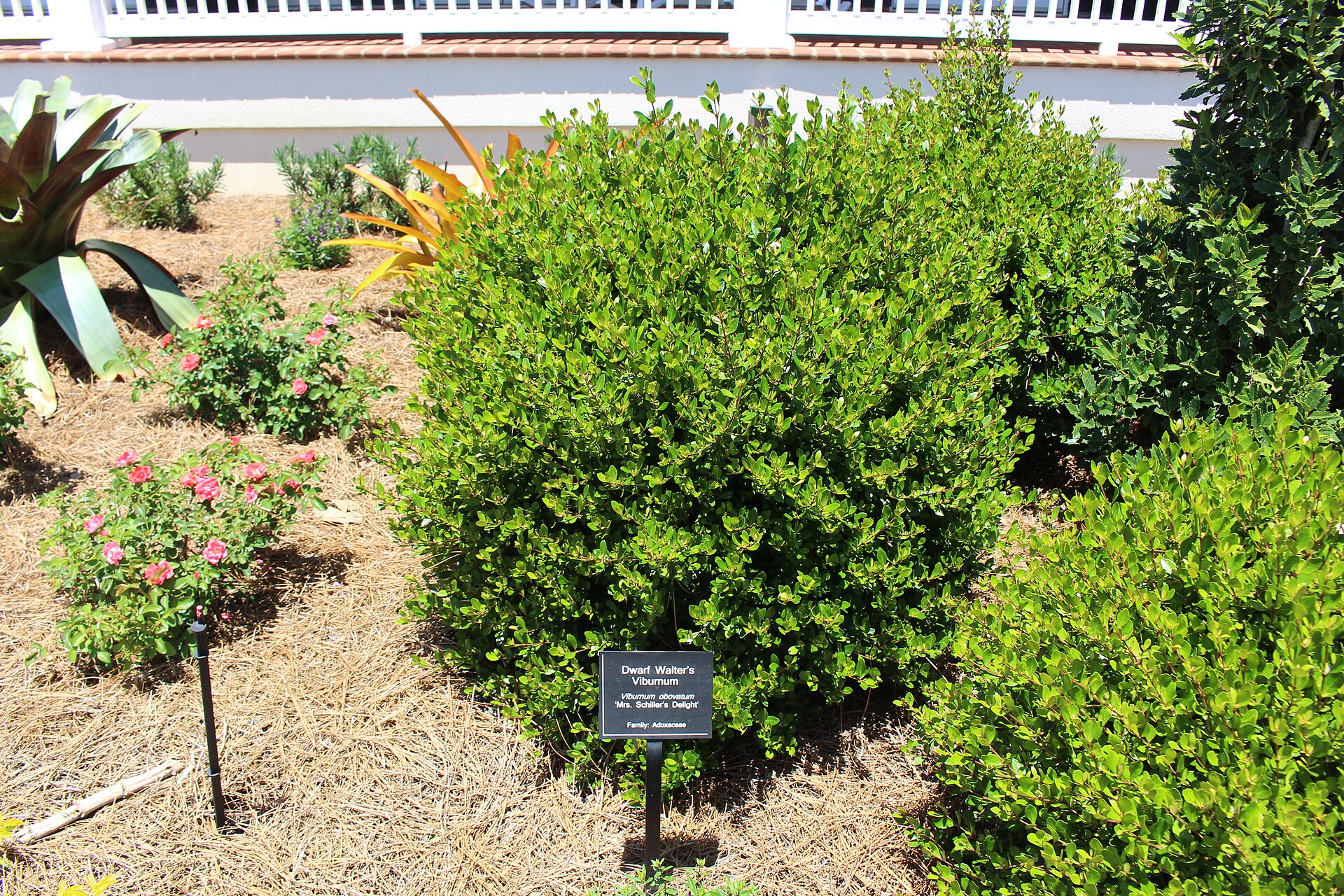
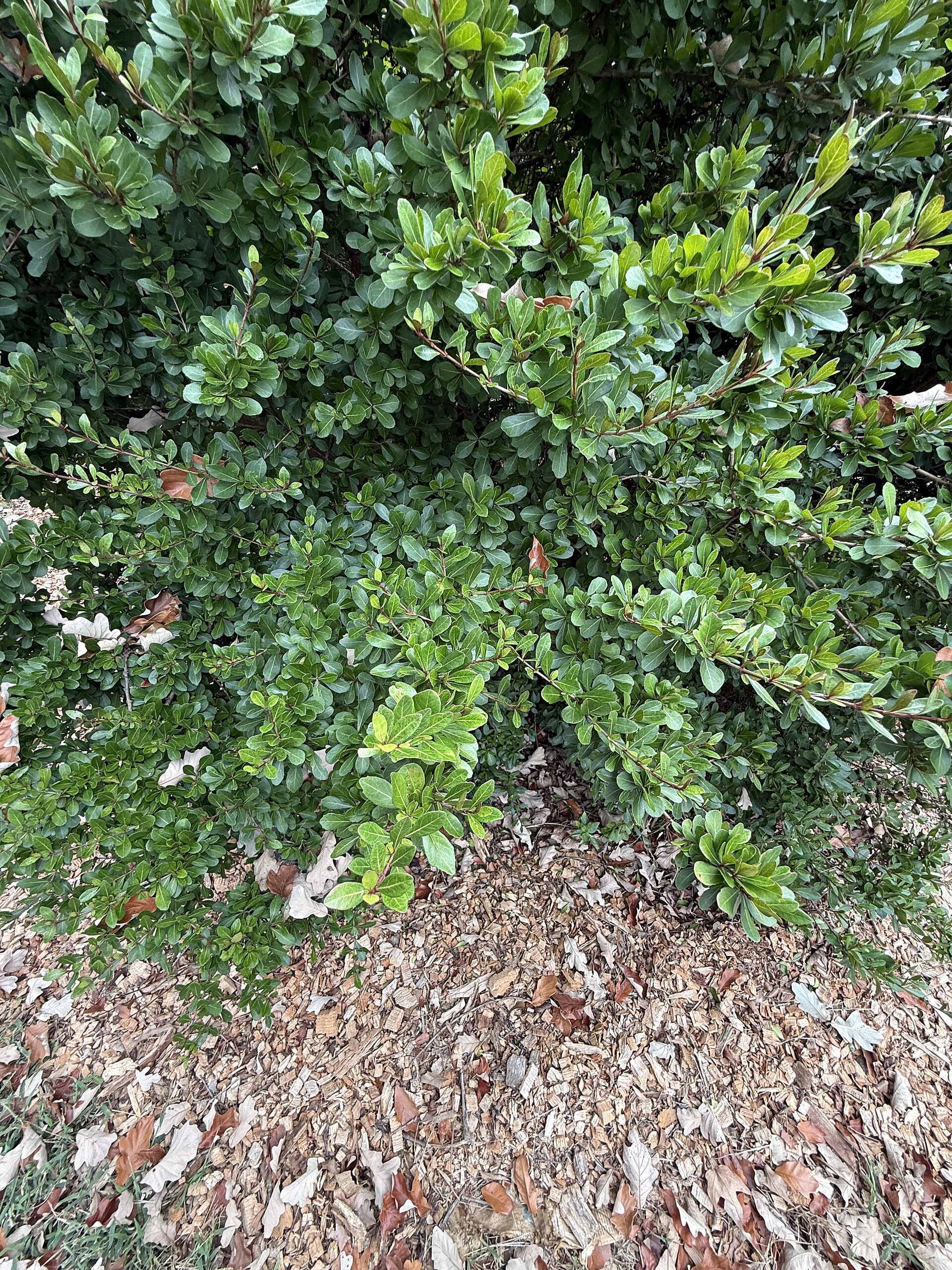
Walter’s viburnum is a dense, twiggy shrub with small, glossy, oval leaves that turn red or maroon in cold weather, a welcome bit of color in a native hedge. In late winter and spring it covers itself in flat clusters of small white flowers, and by fall those become small dark berries that birds eat.
The species form can grow large, 12 feet or more as a shrub or small tree, which is why the dwarf cultivars get most of the garden attention. Left unclipped it is a billowy, multi-stemmed shrub; clipped, it makes one of the best native hedges in Florida, with a fine texture that reads like boxwood from a distance.
Why this variety
Choose Walter’s viburnum when you want a hedge that is native, evergreen to semi-evergreen, and not a water hog. It tolerates clipping, it tolerates a range of soils, and it flowers heavily even when it is hedged, which boxwood never does.
It is also a Florida-Friendly Landscaping favorite for a reason: it works as a specimen, a screen, a hedge, or a mass planting, and it does all of it without the disease problems that plague non-native hedge shrubs in humidity.
How to grow
Plant in sun to part shade in moist, well-drained soil, in fall or spring. Dig a hole twice the pot width, water deeply, and mulch. For a hedge, space the species form 6 to 8 feet apart and let the plants grow together; for a specimen, give it room to reach its natural width.
Prune after flowering to shape it, keeping the top narrower than the base so sunlight reaches the lower leaves. It tolerates hard pruning and regrows well, but if you shear it constantly in summer you will cut off the next flower buds, so do the big shaping in spring after bloom.
Water & feeding
Water deeply once or twice a week while it establishes, then water in dry spells. Walter’s viburnum likes moist soil and tolerates occasional wet feet, but it does not want to sit in standing water for weeks.
Feed with compost in spring. It is not a heavy feeder, and in rich soil it grows fast enough to need more clipping, which is not a reward.
Common problems
Species form too large: if you planted the straight species expecting a 3-foot hedge, you will be disappointed. Plant a dwarf cultivar, or plan to prune the species form as a large screen, not a low hedge.
Root rot in wet soil: Walter’s viburnum tolerates moist soil but not constant sogginess. Improve drainage and do not mulch against the stem.
Leaf spot: usually minor. Rake fallen leaves, improve air flow, and avoid overhead watering late in the day.
Berries and people: the berries are for birds. Do not eat them.
Harvest
There is no edible harvest. The harvest is the late-winter flower show, when a hedge that has been green all winter suddenly turns white, and the fall berries that follow.
A clipped hedge also yields a practical harvest: privacy, wind protection, and a green wall that does not need replacing every few years. That is a harvest worth planting for.
Saving seeds
Walter’s viburnum seed is a patience test with double dormancy: it wants a warm spell and then a cold spell before it will sprout. Sow fresh seed in summer in a pot of moist mix and leave it outside — the warm months satisfy the first dormancy, winter satisfies the second, and sprouts usually come in the second spring. Or mimic it indoors: a few months warm and moist, then a few months in the fridge, then sow warm. Either way, do not throw the pot out after a year of nothing.
Let the berries ripen fully — the darkest blue-black fruit on the healthiest shrub — and clean the pulp off the seed, because pulp inhibits germination. Sow fresh if you can; viburnum seed does not store well, and dried seed may never germinate. The birds will race you for the berries, so net a branch or pick the moment they turn dark.
Cuttings are the faithful route for named forms — softwood cuttings taken in summer root readily, and every cutting is a clone of the parent. Seed is for the species itself and for the patient gardener. A seedling will be a Walter’s viburnum, but it will not be a named cultivar, and it may take a few years to flower.
Walter’s viburnum is a Florida native for sun or part shade with moist soil, a butterfly host and a bird plant, happiest in a damp spot where other shrubs give up. Plant it where the ground stays moist, and let it be the dense, berry-covered native it wants to be.
Varieties
Named Walter’s viburnum cultivars with their own full guides include Mrs. Schiller’s Delight Walter’s Viburnum, Densa Walter’s Viburnum, Whorled Class Walter’s Viburnum, and Withlacoochee Walter’s Viburnum. See also Walter’s Viburnum: All Varieties.