
🌿 Withlacoochee Walter’s Viburnum
What it looks like
Why this variety
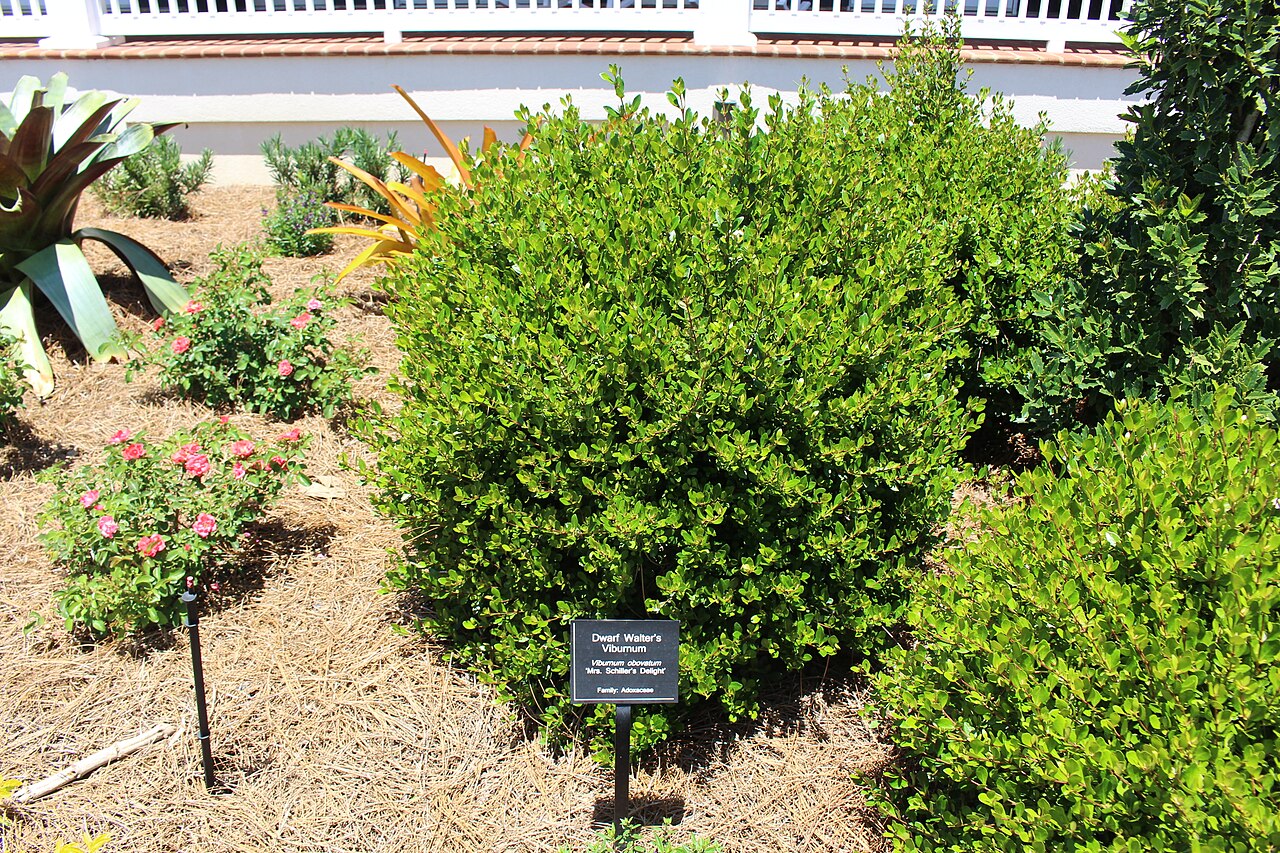
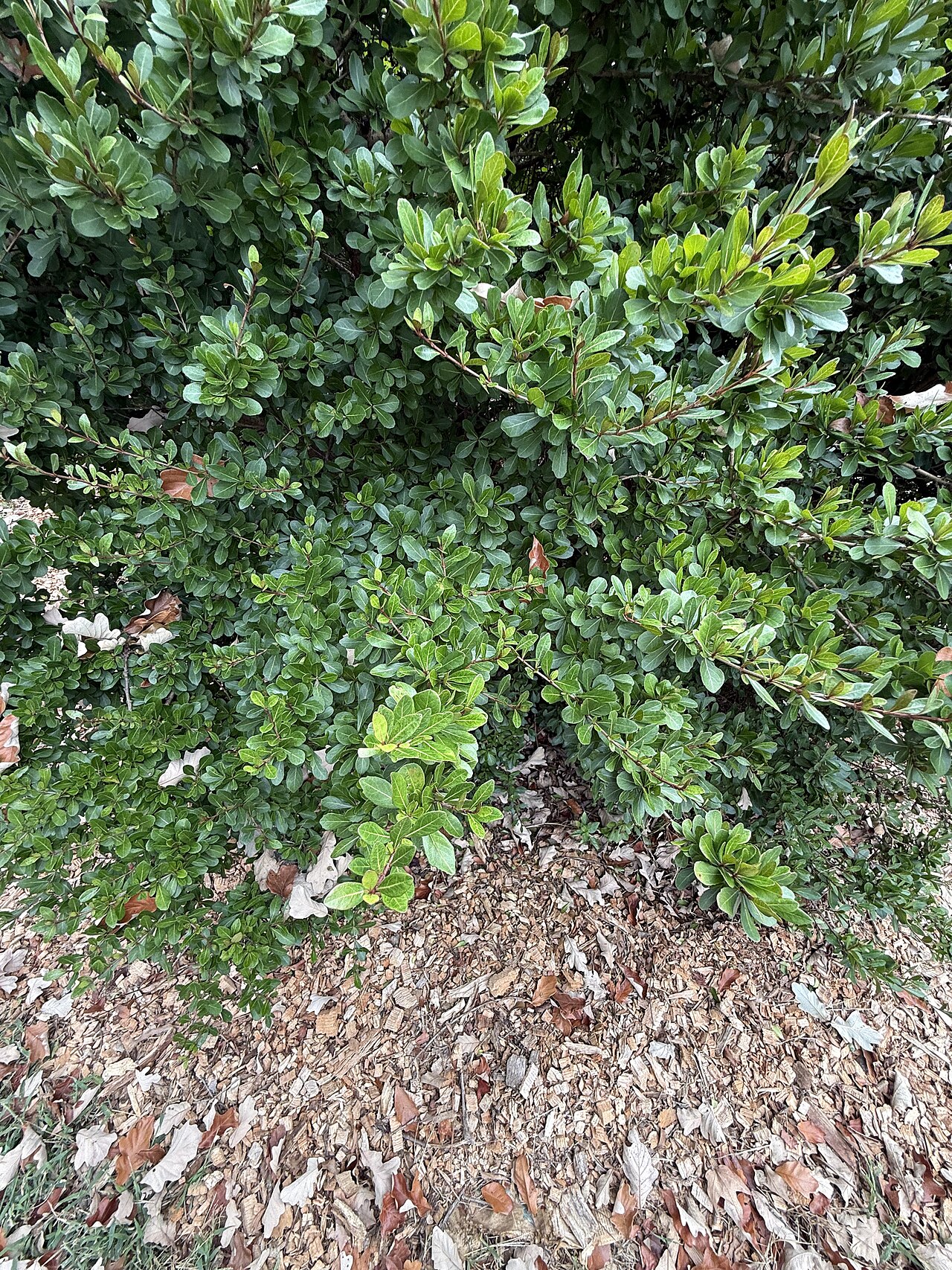
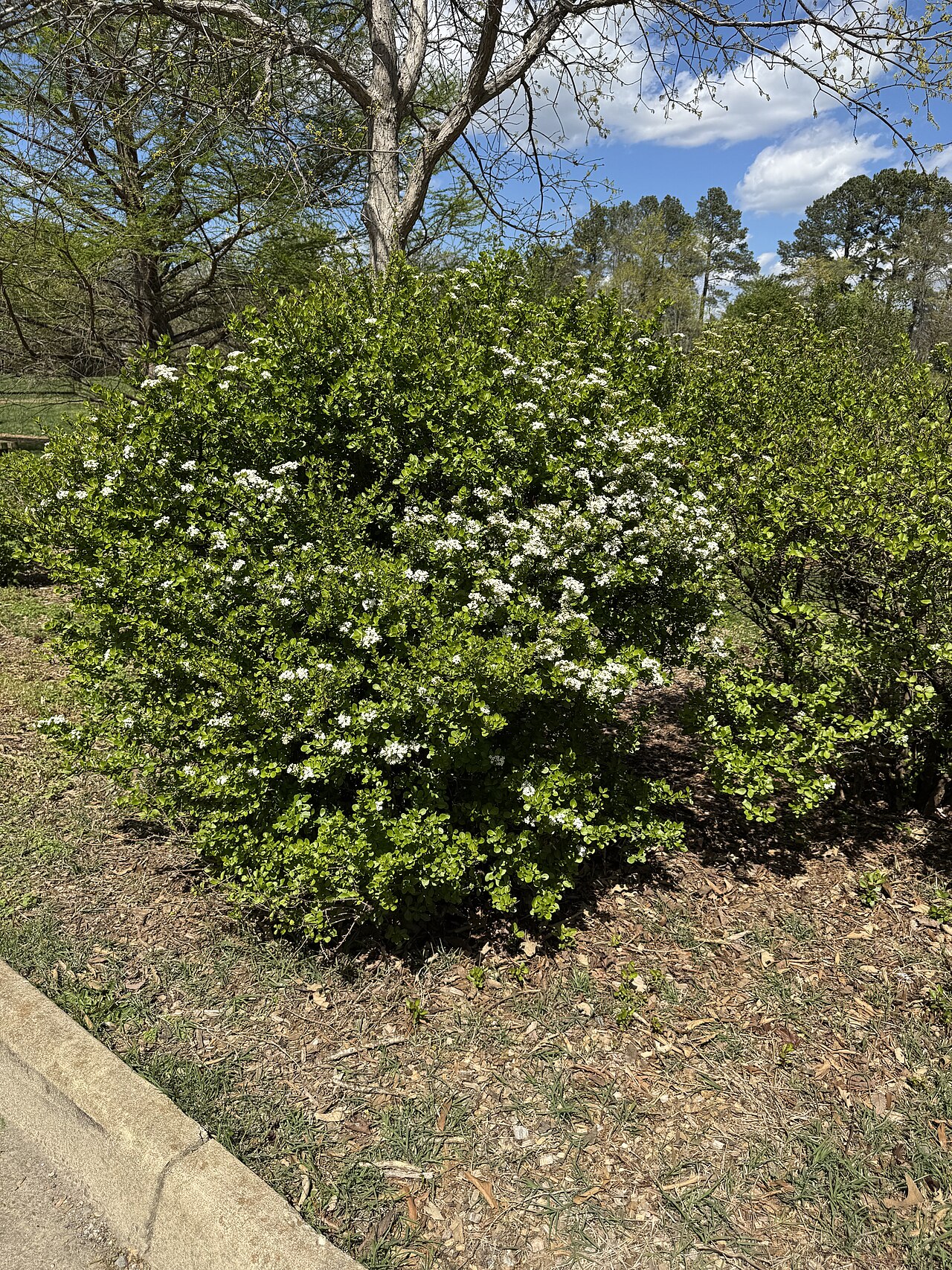
Withlacoochee is the Walter’s viburnum for gardeners who want the wild plant’s presence without its wild variability: an open but uniform growth pattern, reaching about 14 feet unpruned, that UF/IFAS Extension notes can be kept trimmed as a 6- to 7-foot hedge. Where the dwarf cultivars are hedges and edgings, Withlacoochee is a screen, a small tree, or a tall background shrub — the form that gives you the species’ full flower show, its berry display, and its songbird-nesting branch structure at a size you can still manage. It shares its name with the Withlacoochee River of Florida, which suits a plant whose wild home is river floodplains and wet woods.
Choose Withlacoochee when the job is screening, not edging: a property line, a tall hedge along a fence, a small flowering tree in a native border, or a wildlife thicket where birds can nest deep in the twiggy interior. Its open habit means it never looks as dense as Densa without pruning, but it also never looks as stiff — it is the viburnum that reads as a natural shrub rather than a clipped wall. In flower it is spectacular in a quiet way: clouds of small white blooms in late winter and spring, when few other natives are flowering, followed by berries that move from red to black as birds work through them. Plant it where you can see it from a window in February, when its flowers feel like a promise.
How to grow
Walter’s viburnum is Florida’s most common native viburnum, found naturally from Walton County in the panhandle all the way to Monroe County in the south, along river floodplains, pond margins, and wet woods. The wild plant is a densely twiggy, semi-evergreen to evergreen shrub or small tree that can reach 12 to 26 feet, with small obovate leaves, clusters of white flowers in late winter and spring, and berries that ripen through red to black for birds. The cultivars below are the compact, nursery-selected forms that made this plant a landscape staple: they keep the small leaves, the early flowers, and the wildlife value, but at a fraction of the wild plant’s size. That size difference is the whole point — a dwarf viburnum is a native hedge that does not need to be fought into shape every month. Plant in fall or winter, give the roots room, and let the plant’s natural density do the hedging for you.
Plant in fall or winter in full sun to part shade, in well-drained to occasionally wet soil. Set at nursery depth, backfill with native soil and worm castings, mulch 2 to 3 inches off the trunk, and space 6 feet apart for a hedge, 8 feet as specimens. Water deeply the first year; established plants tolerate moderate drought but flower best with steady moisture. For a hedge, shear after flowering and again in early summer if needed, holding it at 6 to 7 feet; for a small tree, select one to three main stems in the first years and remove competing leaders. Do not shear it in late summer — soft regrowth and fall cold are a bad combination.
Water & feeding
Walter’s viburnum likes moisture more than most hedge plants will admit: it tolerates occasionally wet soil and pond margins, and it handles ordinary garden watering without complaint. In sand, water deeply for the first year and mulch well; once established it tolerates moderate drought, but it looks its best — dense, glossy, and floriferous — with steady moisture. Work worm castings into the planting hole and top-dress in spring. It is a light feeder, and it tolerates acid to alkaline soil, which is a genuine advantage in Florida’s patchwork of sandy acid soils and limestone-alkaline pockets.
Common problems
Root rot in poorly drained, compacted soil is the main concern; plant high in heavy ground. Aphids on spring growth and leaf spot in crowded plantings are occasional and rarely serious. As a larger plant, Withlacoochee shows freeze damage more visibly in north Florida — bronze or dropped leaves after a hard freeze — but it recovers from lower stems in spring, so wait before cutting. Its open habit also means a neglected plant can get leggy at the base; renovate by removing a third of the oldest stems to the base each late winter for three years.
Harvest
Harvest shape and bird habitat: prune after flowering, leave berries for birds, and cut flowering branches sparingly in late winter for arrangements — this is one of the earliest native flowers for a vase. A hedge gets its main cut after bloom; a tree form gets structural pruning in late winter, removing crossing branches and keeping the canopy open so light reaches the interior. Berries ripen red to black; leave them, because a Withlacoochee stripped of berries is a bird feeder emptied on purpose.
Nerdy fact: The Withlacoochee River, which shares its name with this cultivar, runs through central Florida and gives its name to a state forest and a state trail — a fitting namesake for a viburnum that belongs along Florida waterways.
Saving seeds
Withlacoochee is the Walter’s viburnum for gardeners who want the wild plant’s presence without its wild variability: an open but uniform growth pattern, reaching about 14 feet unpruned, that UF/IFAS Extension notes can be kept trimmed as a 6- to 7-foot hedge. Where the dwarf cultivars are hedges and edgings, Withlacoochee is a screen, a small tree, or a tall background shrub — the form that gives you the species’ full flower show, its berry display, and its songbird-nesting branch structure at a size you can still manage. It shares its name with the Withlacoochee River of Florida, which suits a plant whose wild home is river floodplains and wet woods. Seed will not repeat it: the open, uniform habit is a selected clone, and seedlings vary in size and form. Keep Withlacoochee true with cuttings — semi-hardwood cuttings taken in summer root well. The full method is in the Saving seeds section of the Walters Viburnum guide.