
⛰️ Western Mountain Huckleberry
What it looks like
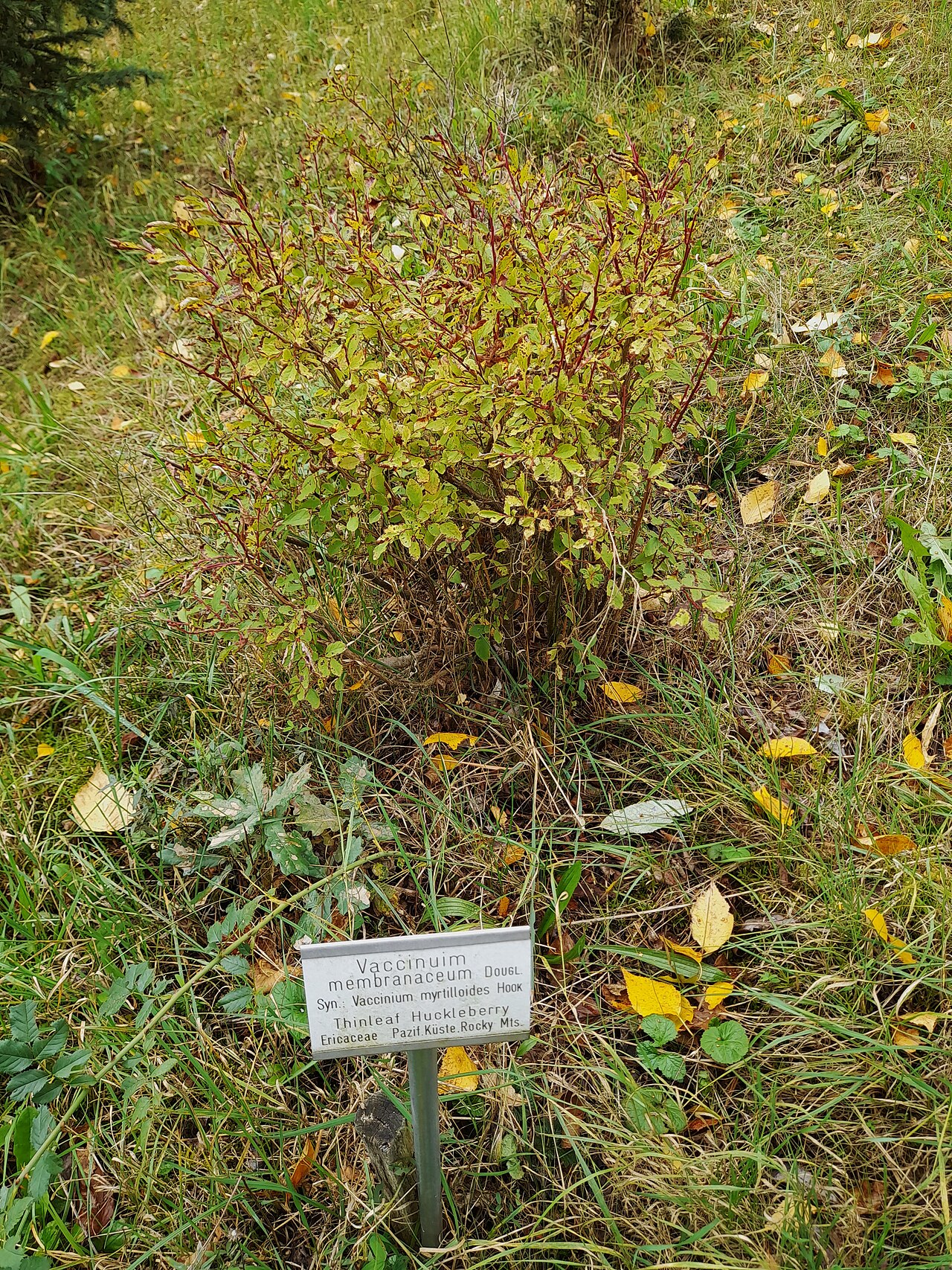
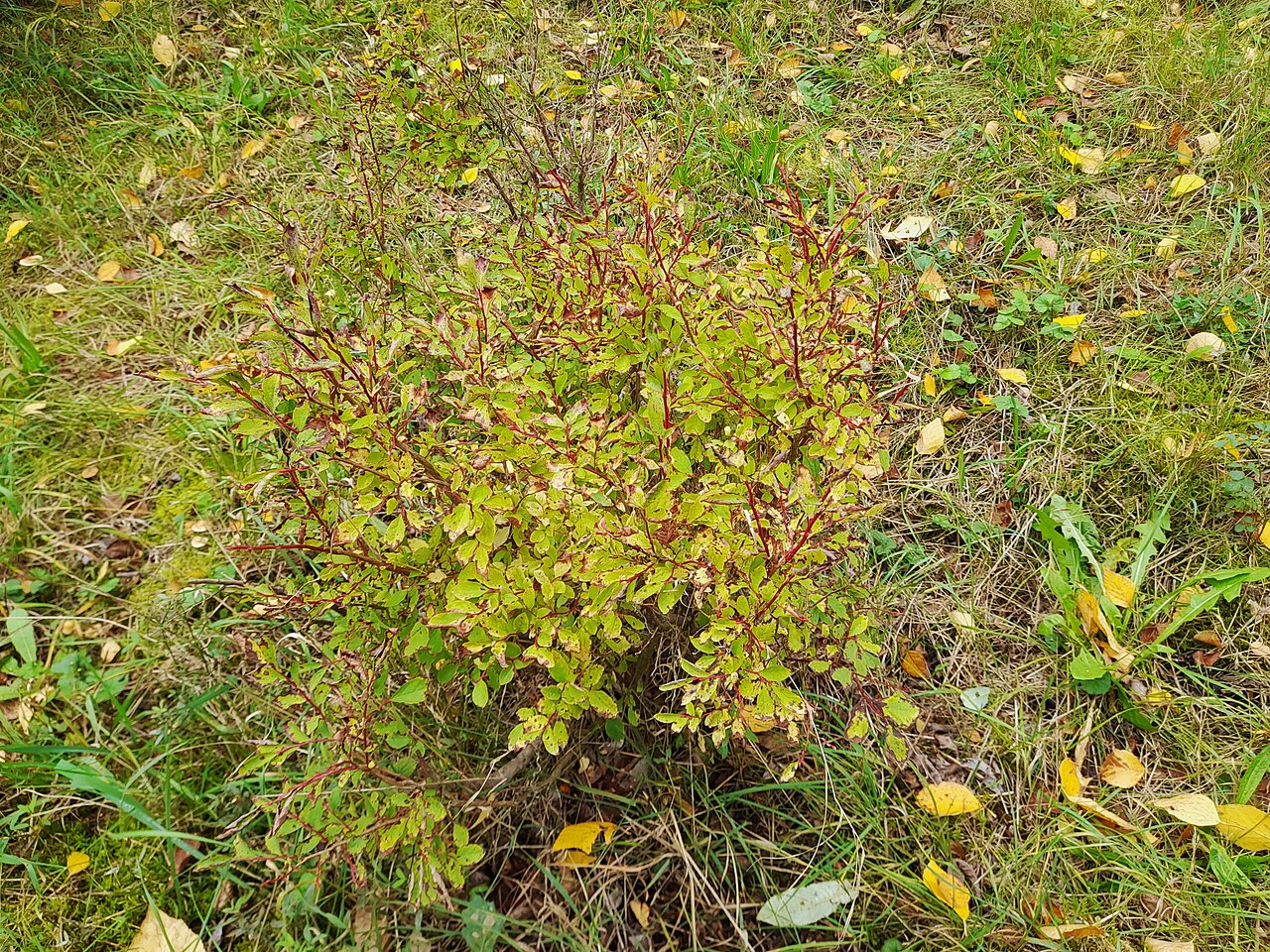
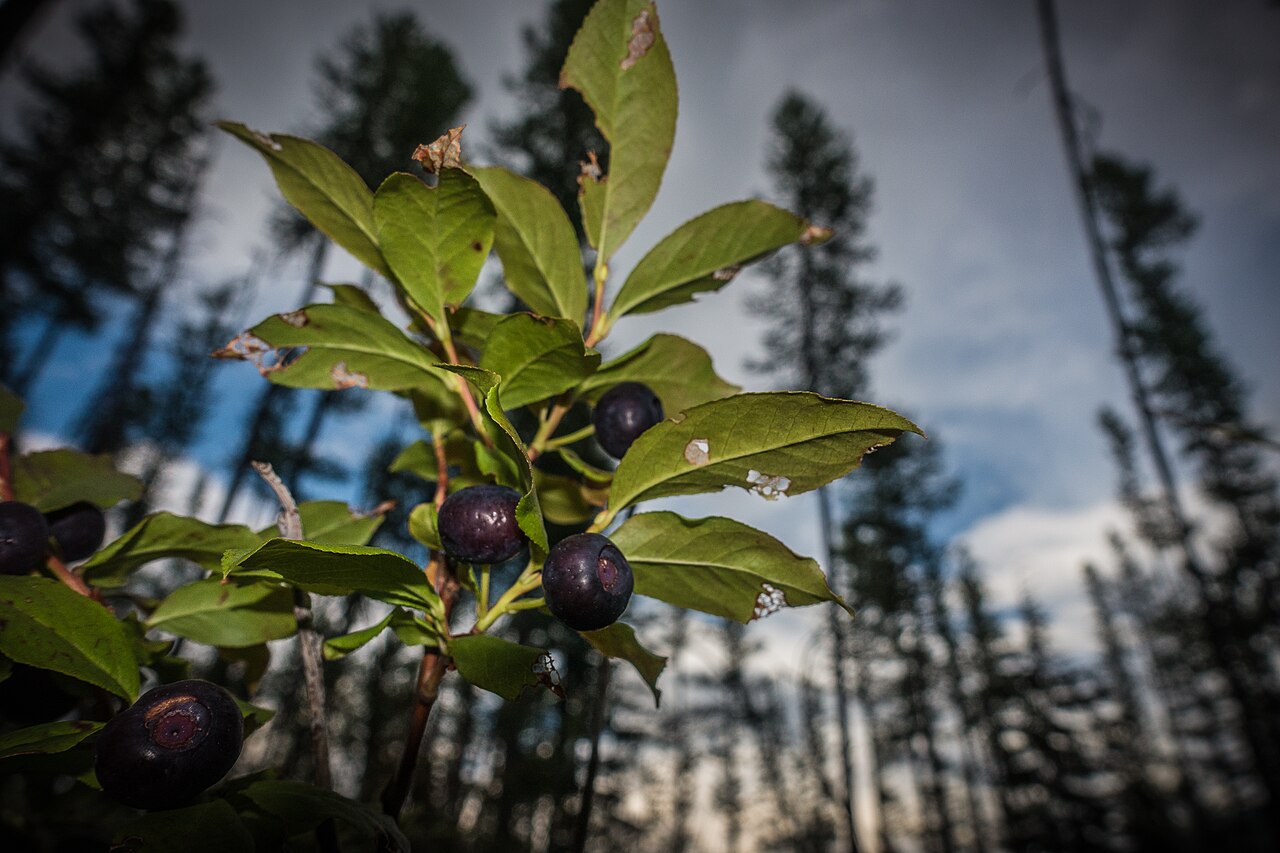
Quick facts
- Sun: Full sun to light shade; fruits best in sun
- Soil: Very acidic (pH 4.5–6.0), sandy or gravelly, well-drained; chlorotic when lime is present
- Spacing: 3–5 feet apart in a garden setting; in the wild it forms extensive clumps
- Mature size: Typically 1–3 feet tall in many sites, occasionally to 9 feet in ideal mountain conditions
- Zones: USDA zones 3–7
- Florida: Not a Florida plant — a high-elevation western reference plant; see the honest Florida note below
What it is
Western mountain huckleberry — also called thinleaf huckleberry, tall huckleberry, big huckleberry, and mountain huckleberry — is the berry the western mountains are famous for. Vaccinium membranaceum is a deciduous, rhizomatous shrub of coniferous woods, clearings, and subalpine slopes from Alaska and western Canada south through the Rockies and Cascades, with outlying populations as far afield as Arizona and the Upper Peninsula of Michigan. It grows mostly at elevations from about 3,000 to nearly 6,000 feet and higher, climbing higher the farther south it goes.
The berries are the point, and they are legendary: large for a wild huckleberry, about a third to half an inch across, ripening from red through purple to deep blue-black, with a sweet, aromatic flavor that foragers rank above every other western berry. In a good year, mountain slopes turn purple with them, and the harvest has fed people for thousands of years — fresh, dried into cakes for winter, baked into pies, and made into jams. It is the most commercially harvested wild western huckleberry, and it is Idaho’s official state fruit. Unlike its eastern cousin in Gaylussacia, this is a true Vaccinium: its berries carry many tiny, soft seeds rather than ten hard nutlets.
One practical warning comes with the romance: this shrub transplants poorly from the wild. Its shallow, fibrous root system is tangled up with soil fungi it depends on, and wild-dug plants usually fail. Garden plants should come from nurseries that propagate it, not from a mountainside — and wild harvesting should always leave plenty behind for bears, birds, and the next forager.
How to grow
In its home range, give it what the mountains give it: very acidic, well-drained, sandy or gravelly soil, sun to light shade, and cool summers. It is hardy to about minus 40 degrees, but cold-hardiness is not the limiting factor — heat is. It is native to higher elevations and is difficult to grow at low elevations, where warm nights and warm soil undo it. Mulch with acidic organic matter, keep the soil consistently moist but never waterlogged, and do not lime, ever: lime-induced chlorosis is the classic symptom of a mountain huckleberry planted in the wrong soil.
Expect slow establishment. Like most wild Vaccinium species, it depends on mycorrhizal fungi — soil fungi that partner with its roots and help it gather nutrients from poor, acidic soil — which is exactly the kind of underground partnership this site never shuts up about, because it is the foundation of soil health. Bare-root or container plants from a reputable native nursery, planted in spring, with a year or two of attentive watering, are the realistic path. Seed germination is possible but slow and variable.
Water & feeding
Water regularly during establishment and through dry periods, aiming for the moist-but-drained balance of a mountain forest floor. Do not fertilize the way you would a vegetable: excess nitrogen and any alkaline amendment do more harm than good. A mulch of pine needles or conifer bark, which breaks down acidic, is both the mulch and the fertilizer this plant wants.
Common problems
The main problems are environmental, not pest-driven: heat, alkaline soil, waterlogging, and root disturbance. Plants moved from the wild usually die, not because the gardener did something wrong in week two, but because the root-fungus partnership was severed in week zero. In the garden, give it space, leave its roots alone once planted, and accept that a mountain plant in a lowland garden will always be a negotiation.
Harvest
Berries ripen from late July into September, depending on elevation — later and higher means later berries. Ripe fruit is deep blue-black, often with a waxy bloom, and slips off the stem easily. Eat fresh, freeze, dry, or bake: the flavor holds up to all of it, which is why mountain communities have built whole late-summer traditions around the harvest. If you are foraging rather than gardening, learn the plant well, be bear-aware, and never strip a bush bare.
The honest Florida note
There is no honest way to recommend this plant for Florida. It is a high-elevation, cool-summer, very-acid-soil mountain shrub, and Florida offers none of those conditions: hot nights, warm soils, alkaline-leaning ground in many areas, and no winter chill to speak of. This guide exists because the plant is named in the Huckleberry group guide and deserves its own full account — as a reference, a foraging lesson, and a reminder that “huckleberry” is not one plant but a whole family of regional specialists. Florida gardeners chasing this flavor should look to heat-adapted blueberries, not to a mountain shrub that would be miserable here.
Nerdy fact: ern mountain huckleberry’s berries each carry around 47 tiny seeds on average — soft, edible, and utterly unlike the ten hard nutlets of an eastern Gaylussacia huckleberry. Same common name, different genus, different seed strategy, different crunch. Common names are folk poetry; Latin names are the filing system.
Where it fits in the Living Root guides
This plant is also covered in our survey guide to the wider group — see Huckleberry: Growing Guide for how it compares with its relatives. Browse all the plant guides in the Plant Guides index.
Saving seeds
Western mountain huckleberry seed needs cold and acid. Let the berries ripen fully — the darkest, sweetest fruit on the healthiest shrub — then crush them gently in water, let the pulp float off, and save the seed that sinks. Give it a cold, moist chill — two to three months is the common figure — by mixing seed with damp peat in a bag and refrigerating it, or by sowing in fall outdoors and letting winter do it. Sow on the surface of moist, acidic mix, and germination usually comes in a few weeks after chilling, and it is slow and uneven.
Seedlings will vary wildly in fruit size and flavor, and the named selections come only from cuttings. Seed is for the species, for the patient gardener, and for the wild — a huckleberry seedling takes three to five years to fruit, and the fruit may be small and sour.
And the soil rule, which is not optional: huckleberry needs acidic soil, pH 4.5 to 5.5, and it will not grow in alkaline soil no matter how good the seed is. Dry the seed thoroughly before storing; it keeps a few years in a cool, dry jar.
And the Florida honesty: western mountain huckleberry is a mountain shrub of the Pacific Northwest, for zones 4 to 8, and it does not grow in Florida. This section is for the reader in a cooler, mountain climate. In Florida, plant a blueberry that likes the weather — or a native that does.