
🌲 White Fir
Abies concolor
White fir is the fir for people who have given up on firs. Of all the true firs, it is the most adaptable — the one that tolerates heat and drought better than its cousins, shrugs at conditions that would flatten a balsam or Fraser fir, and still shows up with soft, silvery-blue needles and a perfect pyramidal shape. It is also called Colorado fir, and it is one of the most commonly grown landscape firs in the United States for exactly that reason: it is a fir that meets you halfway.
Quick facts
- Sun: Full sun to part shade
- Soil: Deep, rich, moist, well-drained soil; dislikes heavy clay and constantly wet soil
- Size: Roughly 30–70 feet tall and 15–30 feet wide in landscapes; taller in the wild
- Life cycle: Evergreen conifer, slow-growing, long-lived
- Zones: USDA zones 3–7
- Native range: Mountains of western North America, from the Rockies to the coastal ranges and into northern Mexico
What it is
White fir (Abies concolor) is an evergreen conifer in the pine family, native to the mountains of western North America at elevations from roughly 6,000 to 11,000 feet. The species name concolor means uniform in color, and it refers to the needles: flat, soft, blue-green to silvery-blue on both sides — unlike most firs, which are green above and white-banded below — with a pleasant citrus scent when crushed. That uniform blue is the tree’s signature, and it is why white fir gets compared to Colorado blue spruce, except without the spruce’s punishingly sharp needles. You can actually brush past a white fir without regret.
The form is a near-perfect pyramid when young, with horizontally tiered branches, maturing into a tall, straight-trunked tree with smooth gray bark that furrows with age. The cones, like all true fir cones, stand upright on the branches, 3–6 inches long, and disintegrate on the tree rather than falling whole. As a cut Christmas tree it stays fresh and holds its needles for two weeks or more if kept watered.
The honest climate note
White fir is the most heat-tolerant fir in common cultivation — and that still does not make it a warm-climate tree. Its range tops out at zone 7, and it wants cool nights, low humidity, and well-drained soil, none of which describe hot, humid, lowland summers. University extension in this state has published on it precisely because it is the best fir for the eastern United States — but “best fir for the East” and “good tree for a subtropical garden” are different claims, and this guide will not blur them. Treat white fir as a reference plant and, at most, a trial in the coolest, best-drained corner of a northern garden. Everywhere warmer, it is a tree to admire on a mountain trip, not to plant in the yard.
How to grow it (where the climate fits)
Site. An open area where lower branches can reach the ground, in full sun to part shade. It needs room — this is a 50-foot tree, not a foundation shrub — and it resents crowding.
Soil. Deep, moist, well-drained loam is ideal. It dislikes heavy clay, constantly wet soil, and high-pH soils. Mulch to conserve moisture, and water during dry spells even though it is drought tolerant once established — “tolerant” means it survives dry periods, not that it enjoys them.
Care. Transplants well balled-and-burlapped if handled properly. Prune little; remove damaged wood and maintain a single leader, and otherwise let the pyramid do its thing.
Trouble spots
Root rots and cankers in wet soil, needle blights, and aphid relatives that distort needles are the usual suspects, but a healthy white fir in the right climate resists most of them. Its real enemy, as with every fir in this guide, is climate mismatch: planted too warm, too humid, or too wet, it declines. Planted right, it is a superb, soft-needled, blue-green evergreen that will outlive the gardener who planted it — some specimens live for centuries.
For the whole fir family, see the Fir guide.
What it looks like
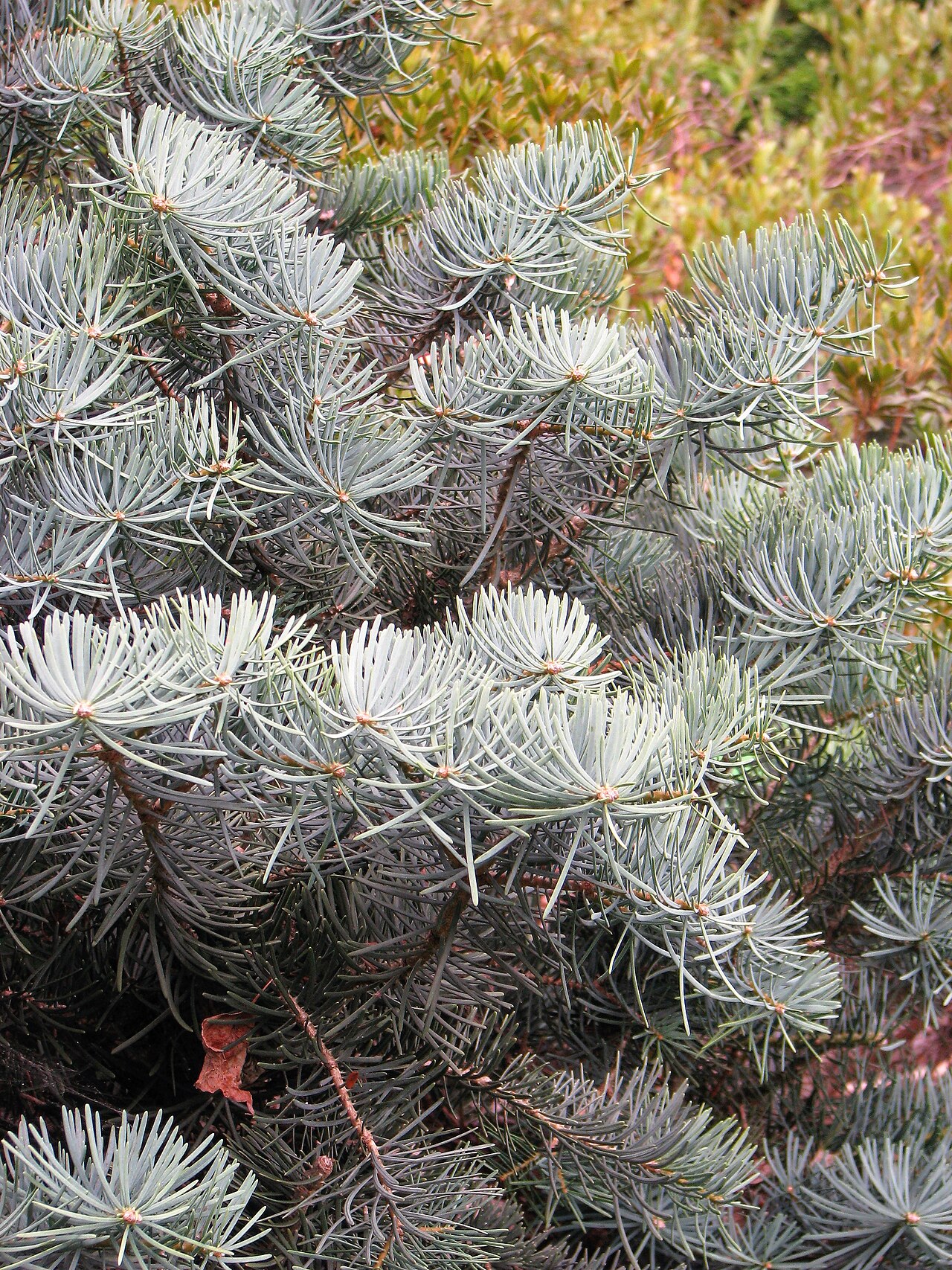
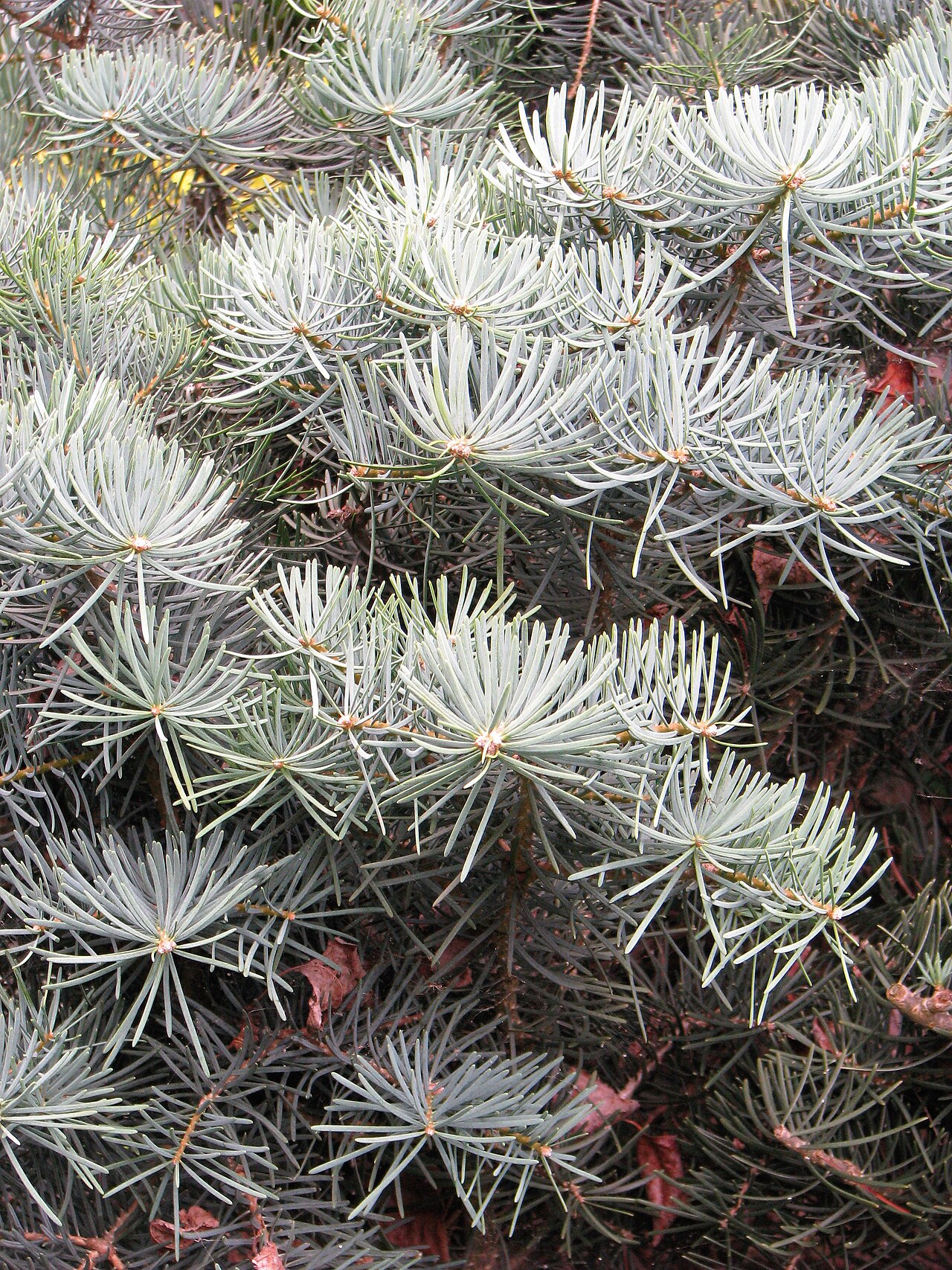
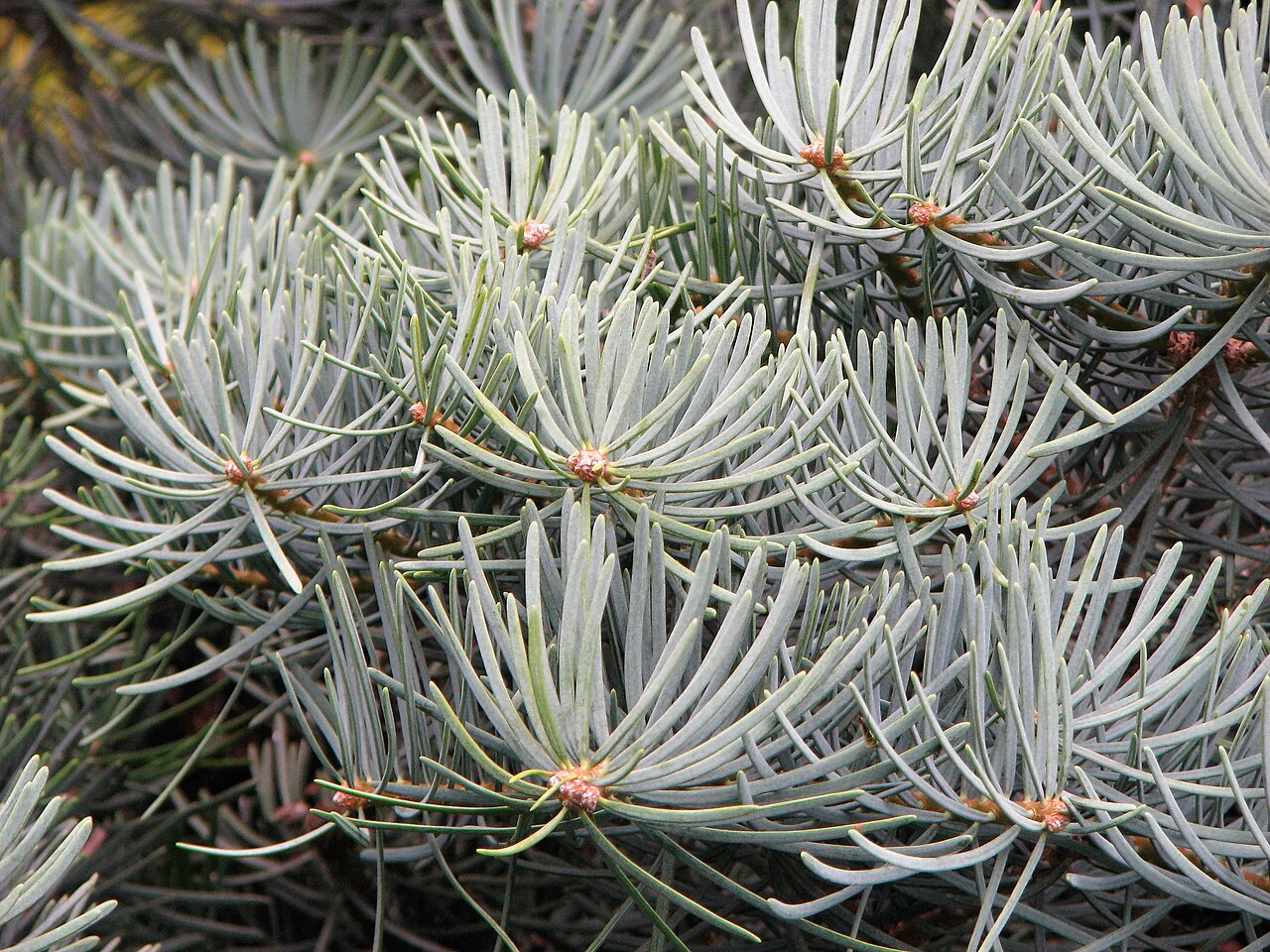
Saving seeds
White fir seed needs winter. Collect the cones in fall, just before they start to fall apart — fir cones disintegrate on the tree, so pick them when they are still firm and the scales are tight. Dry them in a paper bag until they open and the winged seed falls out, then give the seed a cold, moist chill — one to two months is the common figure — by mixing it with damp sand in a bag and refrigerating it, or by sowing in fall outdoors and letting winter do it. Sow in spring in a gritty, well-draining mix, barely covered, and germination usually comes in a few weeks after chilling.
Save seed from the best tree — the straightest trunk, the fullest crown, the healthiest needles — and dry the seed thoroughly before storing; it keeps a few years in a cool, dry jar. Sow more than you need, since germination is uneven, and give the seedlings room — white firs are trees, not shrubs, and they want to be tall.
Seedlings will vary, and the named forms come only from grafting. Seed is for the species, for timber, and for the patient gardener. A seed-grown white fir takes years to size up, so this is the long game.
And the Florida honesty: white fir wants cool summers and a real winter, for zones 3 to 7, and it does not grow in Florida. This section is for the reader in a colder climate. In Florida, plant a pine that likes the weather — or a native that does.
Varieties
Every named variety of White Fir with its own growing guide:
- Candicans White Fir — The bluest white fir: intensely silver-blue needles, perhaps the bluest of all firs, on a full-size tree.
- Compacta White Fir — The dwarf white fir: a handsome, irregular, slow-growing mound with blue needles, about 5 feet in 10 years.
- Blue Cloak White Fir — The weeping white fir: powder-blue needles on drooping branches, a small weeping tree of 8 to 10 feet.