
🌰 American Hazelnut
What it looks like
Quick facts
- Type: Multi-stemmed deciduous shrub, birch family (Betulaceae)
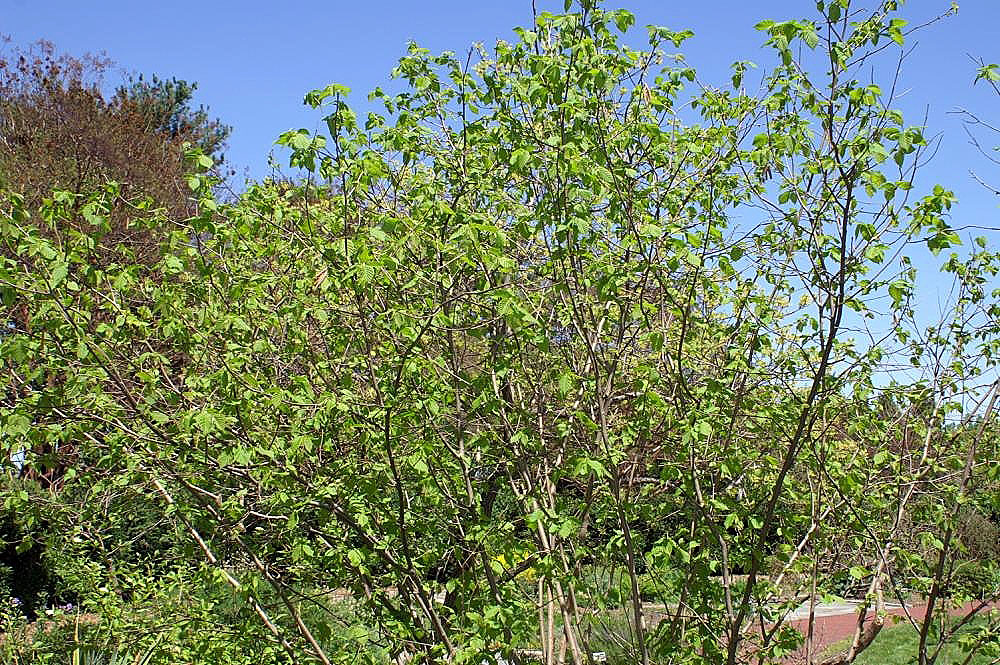
- Height and spread: 8–15 feet tall, 8–12 feet wide (UF/IFAS)
- Sun: Part shade to part sun; give it full sun if nuts are the goal
- Soil: Tolerates sand, loam, and clay, acidic or alkaline — but it must drain; it will not tolerate wet feet
- Water: Moist while establishing; drought tolerance is high once established in a moist site
- Pollination: Plant two or more genetically different plants — one hazelnut alone is an ornamental, two are a crop
- Florida: Native to moist thickets and woodland edges of the eastern United States, reaching into the Florida panhandle; treat it as a North Florida plant, not a statewide one
See also the Florida native profile: American Hazelnut (Corylus americana), and the broader Hazelnut: Growing Guide.
What it is
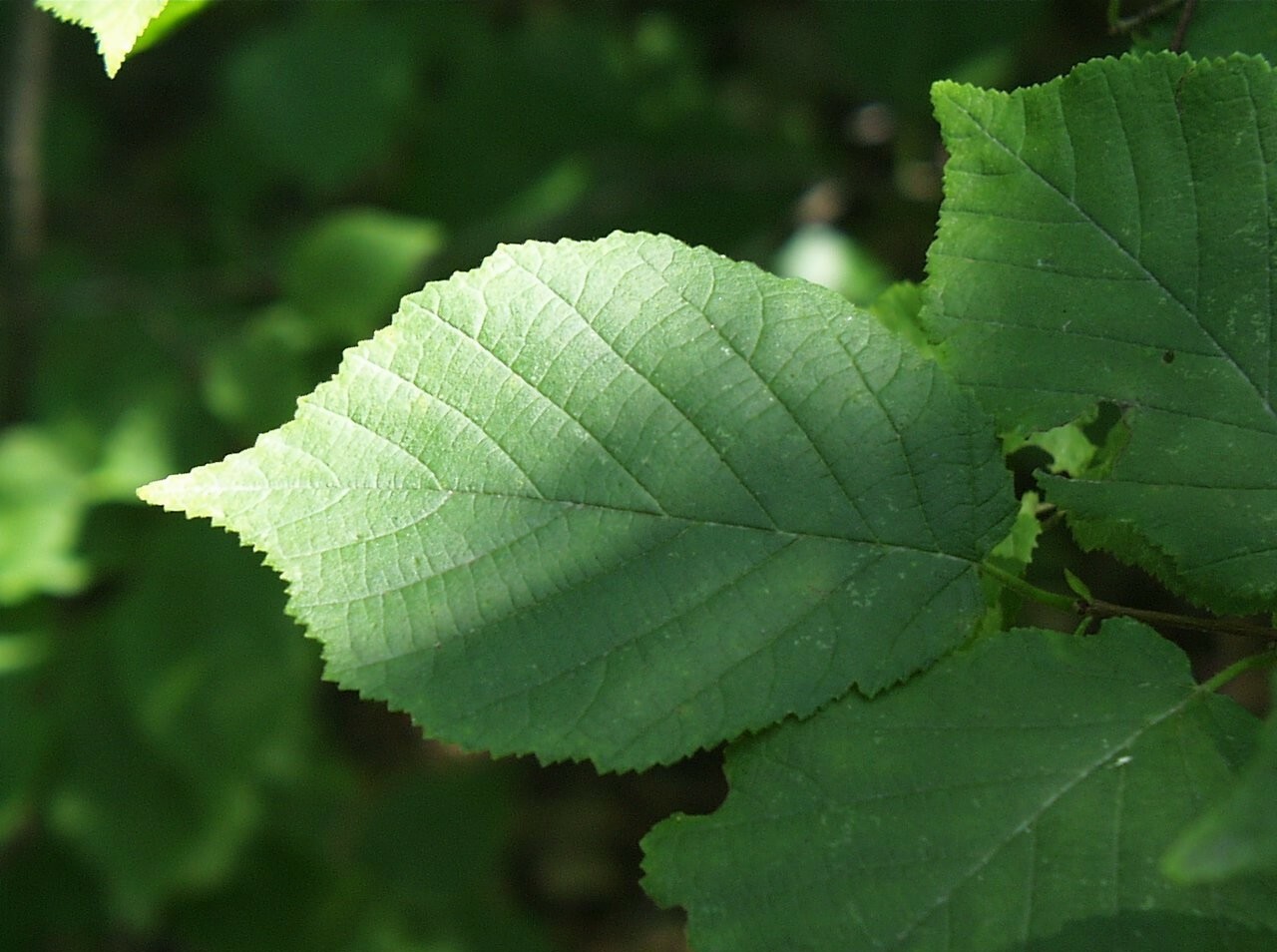
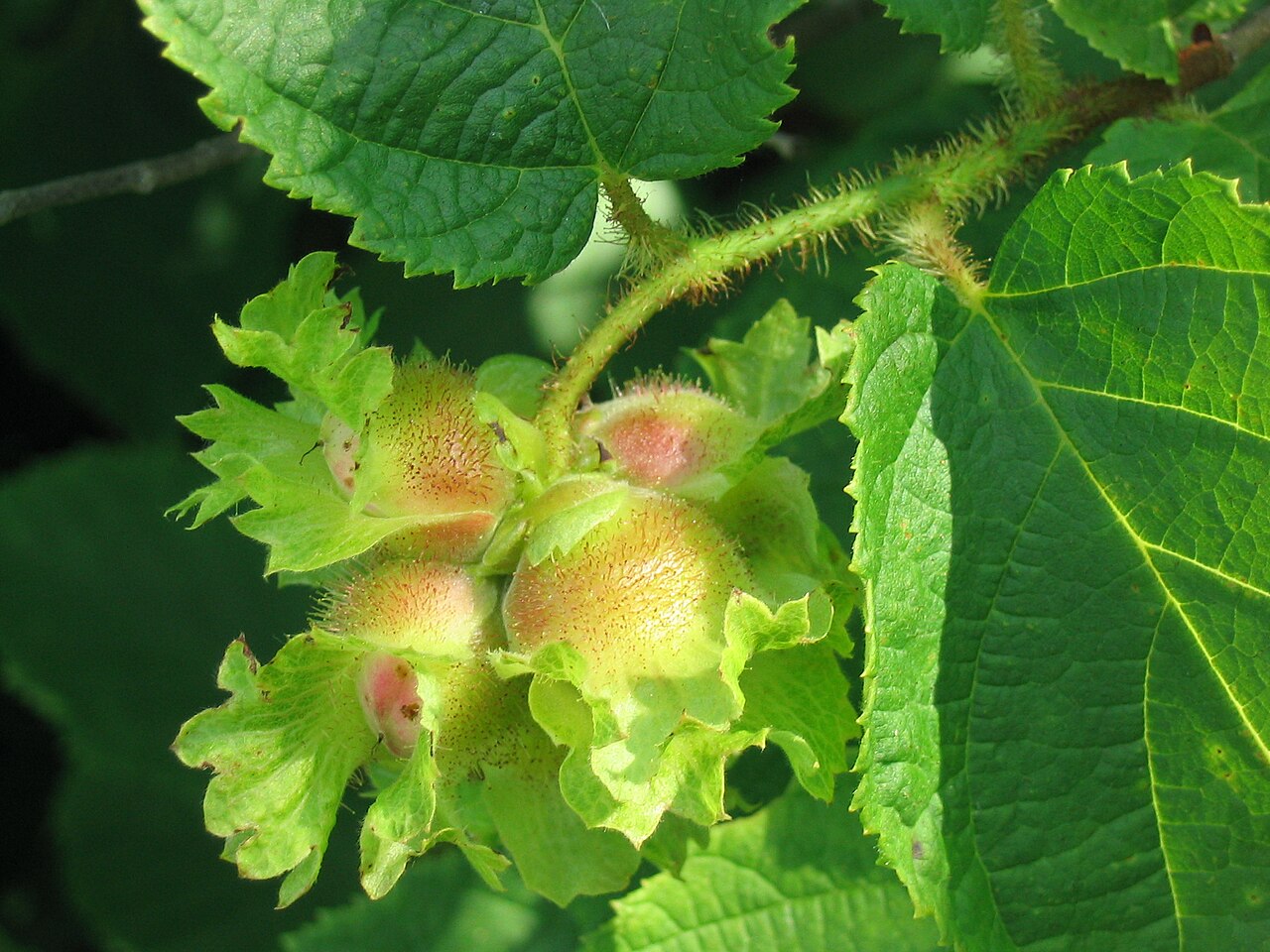
American hazelnut — also called American filbert — is the shrub that goes unnoticed most of the year and then steals the whole show in fall. UF/IFAS puts it plainly: it forms a green mass most of the year, and then the bright orange fall color brings the woods to life. It is a native of moist areas of the eastern United States, a multi-stemmed shrub with oval, finely toothed leaves, bristly twigs, and nuts tucked inside frilly, leaf-like husks called involucres. The involucre is the giveaway: on the American species it extends well beyond the nut, fringed and torn around the edges, like the nut got dressed up and then forgot to stop accessorizing.
The genus name Corylus comes from the Greek word for “helmet,” a nod to the hard shell guarding each nut. The nuts themselves are small and thick-shelled compared with the big commercial European filberts — this is not a factory nut, it is a wild-flavored one, and people who grow it will tell you the flavor is worth the smaller kernel. Think of it as the difference between a farmers-market tomato and a shipping tomato: smaller, fussier to crack, and actually tasting like something.
Botanically, hazelnut is monoecious, which is a fancy way of saying one plant carries both sexes. The male flowers hang in long yellowish-brown catkins in late winter, weeks before the leaves appear, shedding wind-blown pollen while the garden is still half asleep. The female flowers are almost invisible — tiny red styles poking out of a bud — and they are easy to miss entirely, which is why beginners sometimes swear their shrub never flowered. It did. You just needed a magnifying glass and better timing.
Growing American hazelnut in Florida — honestly
Here is the honest Florida paragraph, because this guide would be a liar without it. American hazelnut is a panhandle thicket shrub. Its Florida home is the cooler, moister north of the state, and the broader hazelnut group guide says the same thing in blunter terms: hazelnuts need a winter chilling period and crop best with cool, moist summers, so in Florida they are a long shot outside a cool north-Florida experiment. If you garden in North Florida, plant it with confidence and realistic expectations. If you garden farther south, this is not the nut shrub to bet the backyard on — enjoy it as a plant you admire elsewhere, and put your nut ambitions into something that actually wants your climate.
Within North Florida, give it what it wants in the wild: a woodland edge, a hedgerow, or a shrub border with morning sun and afternoon relief, in soil that holds some moisture without staying soggy. UF/IFAS lists its soil tolerances as acidic, alkaline, sand, loam, and clay — an unusually forgiving list — but drainage is the non-negotiable. Wet feet will kill it faster than any pest will.
Planting and spacing
Plant in fall or early spring, in average, well-drained soil. Dig a hole no deeper than the root ball and twice as wide, settle the plant at its nursery depth, water deeply, and mulch to hold moisture. Water regularly until the plant is established; UF/IFAS notes that once established in a moist area, it will survive and grow with little or no irrigation.
Spacing depends on what job you hired it for. UF/IFAS gives 36 to 60 inches for landscape massing — that is thicket spacing, where several shrubs merge into one wildlife hedge. For a nut planting, where you want airflow, light, and room to actually harvest, the broader hazelnut guide’s 10–15 feet apart is the sane number. Both are right; they are just different jobs. A thicket feeds birds. A spaced-out pair feeds you. Decide which paycheck you want before you dig.
Availability is the other honest note: UF/IFAS says American hazelnut is grown in small quantities by a small number of nurseries. If your local nursery does not carry it, a native-plant nursery or a mail-order native specialist is the realistic route, and ordering early beats hoping for a spring miracle.
Sun, soil, water, and feeding
Sun: part shade to part sun is the UF/IFAS line, and it is true — but nut production is a sun-hungry job. A shrub in shade will grow fine and look perfectly respectable; a shrub in full sun will actually fill those husks. If you must choose between a shady corner and a sunny edge, and nuts matter to you, take the sunny edge.
Soil: this is one of the least fussy native shrubs you can plant, provided it drains. Our site’s standard advice applies here and actually helps: mulch generously and top-dress with compost or worm castings in spring. That feeds the soil life that feeds the shrub, holds moisture through dry spells, and keeps the root zone cool. What you should not do is pour on heavy nitrogen chasing faster growth — too much fertility gives leafy growth at the expense of flowers and nuts, which is the plant equivalent of buying a sports car and only ever driving it to the mailbox.
Water: regular water while establishing and during nut fill, when the kernels are actually forming inside the shells. Drought during nut fill is how you get impressive-looking husks with disappointing kernels. Once established in a moist spot, though, this shrub is famously low-maintenance — UF/IFAS calls it as near to maintenance free as any plant, which for a nut shrub is high praise.
Pollination: the two-plant rule
Hazelnuts are wind-pollinated and largely self-incompatible. One plant by itself will flower, look busy, and then produce mostly blank nuts — husks with nothing worth cracking inside. The fix is not fertilizer, it is a second, genetically different plant blooming at the same time. Plant two or more, ideally three, and let the late-winter wind do the matchmaking. The catkins shed pollen before the leaves appear, one of the earliest pollen sources of the year, so your nut shrub is also running a pollinator diner in February while everything else is still asleep.
Blank nuts are almost always a pollination failure, not a disease. Before you diagnose anything exotic, check: do you have two different plants, are they both actually flowering, and are they close enough for wind to carry pollen between them? If the answer to any of those is no, you have found your problem, and it costs a second shrub, not a spray program.
Pruning and the sucker question
American hazelnut suckers freely from the base and will form a thicket if you let it. That is a feature or a flaw depending on your goal. Want a wildlife hedge or a privacy thicket? Let it sucker and enjoy the colony. Want a tidy multi-stemmed shrub you can harvest from? Remove root suckers promptly and keep a handful of the strongest stems.
Prune in late winter to remove dead wood and keep the center open to light and air. Take out crossing stems, anything dead or damaged, and — if you are managing for nuts — the oldest, least productive stems over a few years, so young wood keeps coming. Do not shear it into a meatball. Hazels are not boxwood, and a sheared hazel is a hazel that has stopped making nuts out of protest.
Common problems
- Squirrels — the eternal hazelnut tax. UF/IFAS warns that once squirrels discover the fruit, they can strip a shrub in a day. Harvest as soon as husks loosen, pick slightly early and finish ripening indoors, net the shrubs, or accept sharing. There is no moral victory in losing every nut to a squirrel with a better calendar than yours.
- Eastern filbert blight — and why the American species is the smart pick. This fungal disease (Anisogramma anomala) is devastating to European hazelnuts in the East, causing cankers and dieback. American hazelnut is the disease’s endemic host and is generally resistant or tolerant — it may form a small number of slowly expanding cankers, but it lives with the disease rather than dying from it. That tolerance is a genuine reason to choose the native species in the eastern United States, and it is why breeders use it to develop resistant hybrids.
- Blank nuts. See pollination above. Two different plants, blooming together, within wind range. Every time.
- Drought during nut fill. Husks without kernels, or shriveled kernels. Water through dry spells while nuts are filling, and mulch so you are not watering bare soil.
Otherwise, UF/IFAS reports that no pests or diseases are normally seen on this plant — a refreshingly short problem list for a plant that also feeds you.
Harvest
Nuts mature in late summer to early fall. Harvest when the husks begin to turn yellow-brown and the nuts loosen inside — you can pick slightly early and finish ripening indoors, which is less a technique than a survival strategy against squirrels. Husk the nuts, dry them thoroughly in a warm, airy spot, and store them in their shells in a cool, dry place. Roast at moderate oven heat until fragrant for eating out of hand, baking, or grinding into flour. Expect first nuts 2–4 years after planting, with heavier crops as the shrub matures and the thicket fills in.
One practical note: small, thick-shelled nuts need a real nutcracker, not optimism and a kitchen towel. Crack over a bowl, pick out the kernels, and forgive the shell fragments. The flavor is the payoff.
Propagation
Sow fresh nuts in fall, or cold-stratify them over winter and plant in spring — fresh seed is the key, since stored hazelnuts lose viability faster than you would like. The easier route, and the one most gardeners actually use, is division: dig and divide root suckers to make new plants, which are genetically identical to the parent. Remember the pollination rule when you do this: a sucker divided from your only plant is still the same plant, genetically speaking, and does not count as your second pollinator. You need a genuinely different plant, not a clone with a new address.
Wildlife value
This shrub earns its keep even in years when you lose the nut war. Squirrels, chipmunks, blue jays, turkeys, and deer compete for the fall nuts, while grouse and turkeys eat the male catkins through winter. Its leaves feed the caterpillars of over a hundred moth and butterfly species, according to the native profile — which makes a hazel thicket a quiet moth nursery all summer. Plant it as a hedgerow or wildlife thicket and let it sucker into a broad colony, and you have built habitat that also happens to produce snacks.
Florida native profile
American hazelnut is a Florida native plant, profiled in our native-plant library: American Hazelnut (Corylus americana). That profile covers its landscape uses, wildlife value, and panhandle range in brief; this guide is the full growing version, with the pollination, pruning, and harvest detail the profile does not have room for.
Sources
- UF/IFAS Extension, FPS-146: Corylus americana, American Filbert — edis.ifas.ufl.edu/fp146
- University of Wisconsin Horticulture Extension: Eastern Filbert Blight — hort.extension.wisc.edu
- Living Root Garden: Hazelnut: Growing Guide and the American Hazelnut native profile