
🌺 Bromeliad
What it looks like
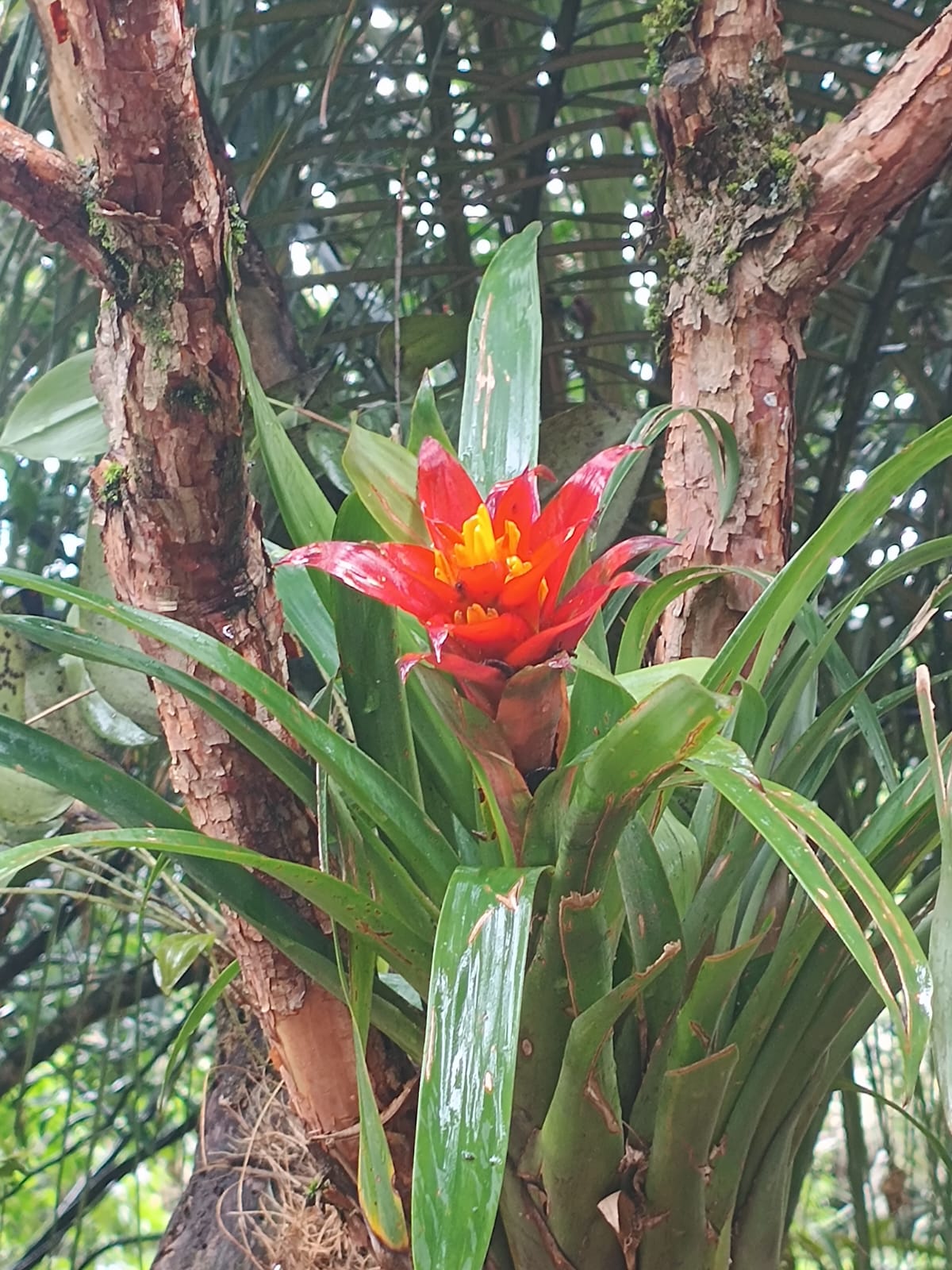

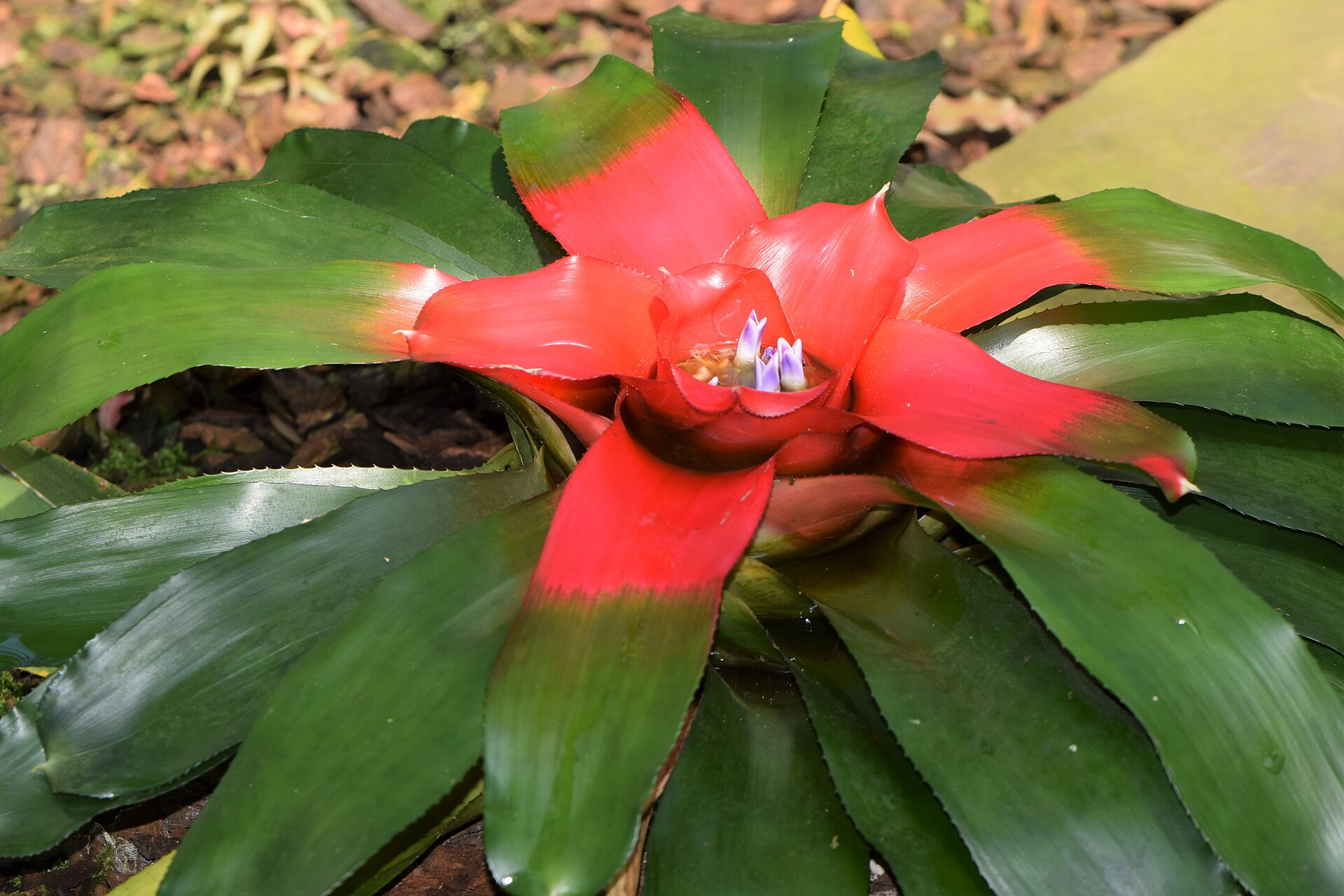
A bromeliad is a rosette with a plan. The leaves grow in a tight spiral that forms a cup — a “tank” — in the center of the plant, and that cup holds water. In the wild, that tank is a whole ecosystem: it catches rain, fallen leaves, and the occasional unlucky insect, and the plant drinks and feeds from it. Frogs raise their tadpoles in it. That is the trick the entire family is built around, and once you see it, you cannot unsee it: a bromeliad is a plant that carries its own pond.
Bromeliaceae is a family of around 3,700 species, almost all native to the tropical Americas, and it contains some of the most familiar plants on Earth. The pineapple is a bromeliad. Spanish moss is a bromeliad. So is the air plant on your wall — Tillandsia is a bromeliad genus, and this family guide is its bigger picture. This guide covers the bromeliads people grow as houseplants: the flowering rosettes sold in every garden center, in the four genera you will meet most often.
The kinds you’ll meet
Guzmania — the classic gift bromeliad. A starburst of smooth, glossy green leaves topped by a tall, waxy flower spike in red, orange, yellow, or pink that lasts for months. The color you are admiring is mostly bracts, not flowers — the true flowers are small and short-lived, tucked among the bracts. Guzmanias want bright indirect light, a filled center cup, and humidity. They are the easiest flowering houseplant in this family and the one most people start with.
Aechmea — the tough one. The best-known species, Aechmea fasciata (silver vase or urn plant), has broad, arching leaves banded in silvery scales and a tall pink flower spike that lasts for months — one of the longest-lasting blooms of any houseplant. Aechmeas tolerate more light and more neglect than Guzmanias, and their stiff, spiny-edged leaves mean business: handle them with respect.
Neoregelia — the foliage star. Neoregelias are grown for their leaves, not for a tall flower spike: the center of the rosette blushes brilliant red, pink, or purple when the plant is about to bloom, and the true flowers are small, nestled right in the cup. The blush lasts for months, and the leaf patterns — stripes, spots, marbling — make every plant look painted. They want bright light to keep their colors strong; in dim light they go green and sulk.
Vriesea — the sword. Vrieseas produce a tall, flattened flower spike that looks like a feather or a sword, in red, yellow, or orange, rising out of a rosette of often beautifully patterned leaves. The spike can last two to four months. They like the same care as Guzmanias — bright indirect light, a full cup, good humidity — and they are the most dramatic silhouette of the four.
And then there is the one you already know: Ananas comosus, the pineapple. It is a bromeliad that traded the ornamental flower spike for an edible fruit, and it grows the same way — a spiky rosette, a central cup, pups at the base after fruiting. If you want to grow one, read our pineapple growing guide, which covers it in full, from grocery-store crown to harvest. This guide will not repeat it — but everything here about cups, pups, and light applies to your pineapple too.
Light: bright, indirect, and the color depends on it
Most bromeliads want bright, indirect light — near a sunny window but out of the direct beam. Guzmania and Vriesea are the most shade-tolerant of the group and will bloom in moderate light; Neoregelia needs the brightest spot of the four, or its colors wash out to plain green; Aechmea sits in the middle and tolerates a little morning sun. Direct midday sun — especially through a south- or west-facing Florida window — scorches the leaves, leaving bleached patches that never recover.
Outdoors in Florida, bromeliads belong in dappled shade: under a tree canopy, on a shaded porch, or on the north side of the house. In South Florida (zones 10b–11) many can live outside year-round; in Central Florida (zone 9b–10a) they summer outside and come in or get covered before a cold snap. Aechmea and Neoregelia are the most cold-sensitive of the common kinds — treat 40°F as the bring-it-in line for the family as a whole, and freezing as fatal. A bromeliad that has been frosted usually tells you by collapsing into a mushy, foul-smelling rosette, which is as sad as it sounds.
Water: fill the cup, not the pot
This is the part that makes bromeliads different from every other houseplant you own. Water goes into the center cup — the tank formed by the leaves — first, and into the soil second. Keep the cup filled with about an inch of water, and flush it out with fresh water every week or two so it does not go stagnant and start smelling like a swamp. (In the wild the tank hosts frogs; in your living room it hosts mosquitoes if you let it sit. Flush it.)
The soil, meanwhile, should be kept only lightly moist, never soggy. Bromeliad roots are mostly for anchoring, not drinking — in the wild, many of these plants grow on trees with their roots gripping bark. That is why the potting mix matters so much: use a very loose, fast-draining mix, like orchid bark with a little potting soil and perlite, or a commercial bromeliad mix. Straight potting soil stays too wet and rots the roots. Water the mix when it dries out, which is far less often than the cup needs topping up.
Use rainwater or distilled water for the cup if you can — Florida rain is free and perfect — because hard tap water leaves mineral crusts on the leaves and in the tank. If you only have tap water, let it sit out overnight first. And here is the Florida bonus: these plants adore humidity. A Florida home at 50–60% humidity is ideal; in dry air-conditioned air, mist the leaves or group plants together. Brown leaf tips are the usual complaint when the air is too dry.
Feeding: a whisper in the cup
Feed lightly, a few times a year in the growing season, and feed the cup, not the soil. A quarter-strength liquid fertilizer — bromeliad, orchid, or balanced houseplant formula — poured into the center cup once a month from spring through fall is plenty, or a sprinkle of worm castings on the surface of the mix for slow, gentle feeding. Bromeliads are light feeders; over-fertilizing burns the leaf tips, salts up the tank, and can damage the foliage. Never put fertilizer granules in the cup, and never feed a plant in winter when it is resting. After blooming, stop feeding the mother plant and let her put her remaining energy into pups.
One thing never to use on bromeliads: copper. Copper-based fungicides and fertilizers are toxic to the family, and copper wire should never be used to mount or hang them. Stainless steel, plastic, or natural fiber ties are safe.
Blooming: once, for months, then the handoff
A bromeliad blooms exactly once, and then the mother plant slowly declines and dies — which sounds tragic until you know the rest of the story. The bloom itself lasts for weeks to months, far longer than most houseplant flowers: a Guzmania spike holds its color for three to six months, an Aechmea for even longer. And while she blooms and after, she makes pups — baby rosettes at her base — that grow up to replace her. One bromeliad becomes a colony. The mother is not dying; she is handing over the house.
If you buy a bromeliad in full bloom, enjoy it, and know that the bloom is the beginning of the pup phase, not the end of the plant. A store-bought bromeliad that never blooms again is not broken — it already bloomed, and its future is in the pups. If you want a repeat flower, grow the pups up: a pup takes one to two years to reach blooming size, and the wait is worth it.
Can you force a bromeliad to bloom? The old grower’s trick is real: a ripe apple in a sealed plastic bag with the plant for a week or so releases ethylene gas, which triggers flowering in many bromeliads. It works, but only on a mature plant — a small pup will not bloom no matter how many apples you offer it. And honestly, a healthy pup grown to size will bloom on its own schedule without the fruit-bowl theater.
Common problems
- Center rosette turning mushy, brown, or foul-smelling: crown rot, usually from a stagnant cup or water sitting in the plant in cold weather. Flush the cup regularly, keep the plant warm, and remove dead leaves. A rotted center rarely recovers — save the pups.
- Brown, crispy leaf tips: dry air, salts from hard water or over-fertilizing, or fluoride in tap water. Switch to rainwater, flush the cup, and ease off the fertilizer.
- Leaves fading to green, colors washing out: not enough light, especially in Neoregelia. Move the plant brighter — color is a light meter you can read.
- Leaves bleaching pale or scorching: too much direct sun. Move it back into bright shade.
- Mealybugs or scale: cottony clumps or small brown bumps in the leaf axils and under the leaves. Rinse the plant, pick off what you can, and treat with insecticidal soap. Check the cup, too — pests love hiding in it.
- Plant never blooms: it may be too young, or the light may be too low. A pup needs one to two years and bright indirect light. Be patient, and keep the cup full.
- Mosquitoes in the cup outdoors: flush the cup weekly, or add a single drop of horticultural oil or a tiny piece of mosquito dunk to the water. Indoors, weekly flushing is enough.
Florida notes: shade gardens, trees, and the pineapple connection
Florida is bromeliad country in a way most of the United States is not. Native bromeliads — including several Tillandsia species and the giant wild pine — grow in the state’s trees, and the climate does most of the work: humidity, warmth, and rain on a regular schedule. In a South Florida shade garden, Guzmania, Aechmea, Neoregelia, and Vriesea can be planted in beds of loose bark mulch or mounted directly onto trees, where they will form colonies over the years. Mounted on a live oak or palm trunk, a cluster of bromeliads looks like it grew there on its own — because, ecologically speaking, that is exactly where it belongs.
Two Florida cautions. First, cold: a freeze will kill most of these outright, so in Central Florida, grow them in pots or mounts you can bring under cover, and watch the forecast from December through February. Second, the tank: an outdoor bromeliad cup is a mosquito nursery if it never gets flushed, so tip the cups out after heavy rains or during mosquito season. The plants will refill them with the next shower.
And if the pineapple connection has you curious — the fruit on your counter is the family’s most famous member, and it grows the same way, cup and all. Our pineapple growing guide walks through growing one from a grocery-store crown, and the pups-and-patience pattern in this guide is the same one that gets you breakfast in two years.
Propagation
Bromeliads propagate by pups — offsets that sprout from the base of the mother plant, usually while she is blooming or in the months after. Wait until a pup is at least a third to half the size of the mother before separating it: it needs her support while it builds its own roots, and a pup taken too early grows slowly and may fail. When it is big enough, cut it away at the base with a clean, sharp knife, keeping a few of its own roots if it has them. Pot it in loose orchid mix, keep the cup filled, and set it in bright indirect light. A pup with no roots at all will usually root on its own in a few weeks — bromeliad pups are determined little things.
You can also leave the pups attached and let the mother plant become a clump. This is the lowest-effort option and often the prettiest: a clump of Neoregelias blushing red in a colony looks like a flower bed that never needs replanting. Eventually the mother dies back and the pups take over the pot. When the clump outgrows its container, divide it in spring, potting each pup separately.
Seeds exist — some bromeliads produce berries or seed pods after flowering — but seed propagation is slow, fussy, and years from a blooming plant. It is a breeder’s project, not a gardener’s. Pups are the method, and one blooming bromeliad can give you a shelf full of them over a couple of years.
🌱 Keep learning
Three related guides worth reading next:
- Pineapple — the most famous bromeliad of all, grown from a grocery-store crown to a fruit in about two years.
- Air Plant — the soilless bromeliads that drink through their leaves and never touch a pot.
- Monstera — another tropical showpiece for the same bright room, with leaves that punch holes in themselves.